

Periodic classification of elements is the systematic arrangement of elements based on similarities in their physical and chemical properties. It helps in studying a large number of elements in an organized manner and in predicting their behavior.
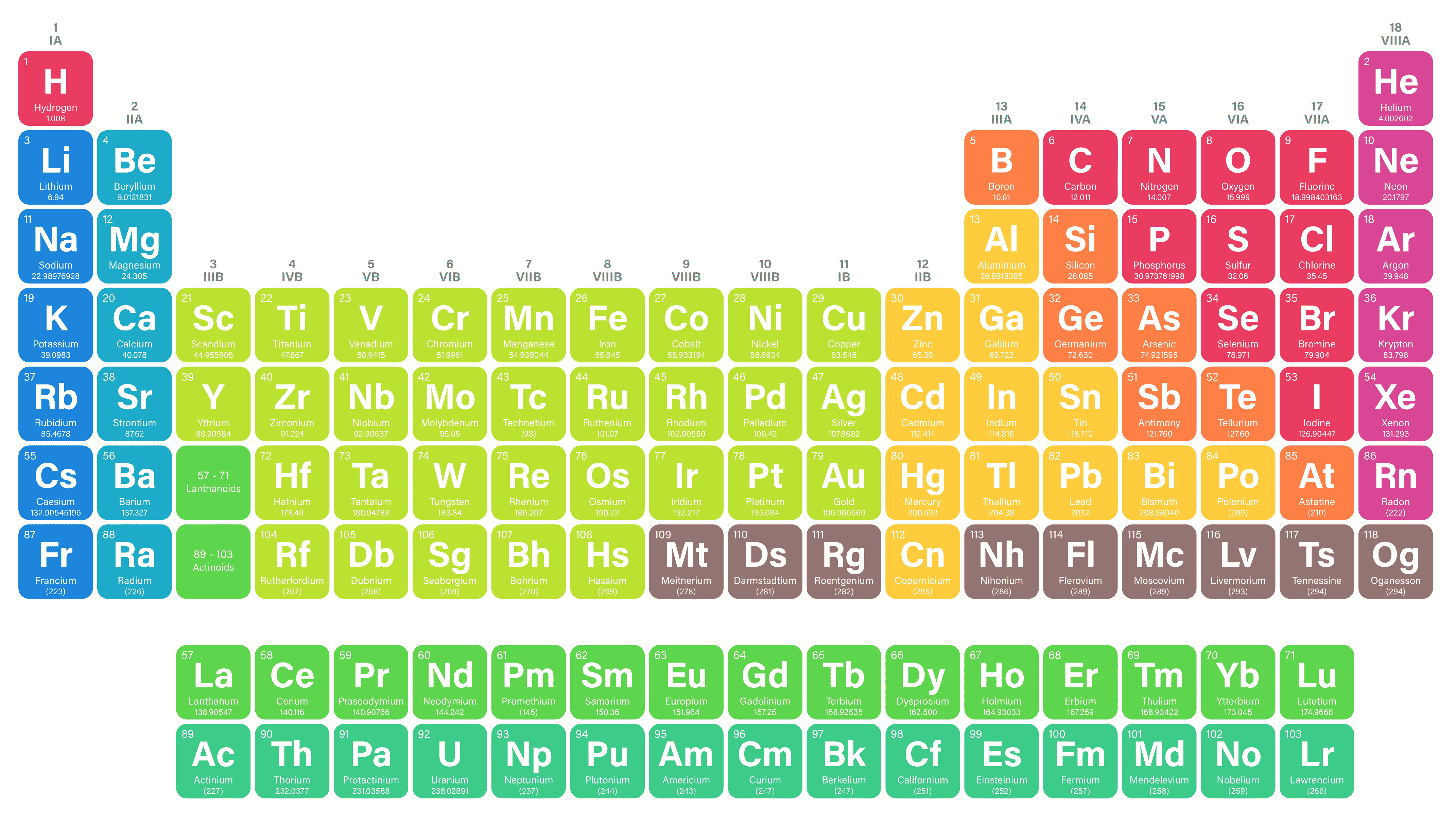
Periodic categorization of elements is a way of grouping elements based on their characteristics, such as keeping elements that are similar in one group and the rest of the elements in the other.
1. Classification Based on Group
In the modern periodic table, the vertical columns are called groups. There are 18 groups in total.
- Elements placed in the same group show similar chemical properties.
- This is because they have the same number of valence electrons (electrons in the outermost shell).
- Since elements in the same group have the same number of valence electrons, they react in a similar way and form similar types of compounds.
Example:
- Group 1 elements have 1 valence electron.
- Group 17 elements have 7 valence electrons.
- Group 18 elements have 8 valence electrons (except helium).
Some important groups are
- Group 1 – Alkali Metals
- Group 2 – Alkaline Earth Metals
- Group 17 – Halogens
- Group 18 – Noble Gases
2. Classification Based on Periods
In the modern periodic table, the horizontal rows are called periods. There are 7 periods in total. Elements placed in the same period have the same number of electron shells (energy levels).
- When elements are arranged in increasing atomic number from left to right, their properties change gradually.
- This gradual change in properties across a row forms a period.
- Each new period begins when a new electron shell starts filling.
Example:
- Period 1 has 1 shell
- Period 2 has 2 shells
- Period 3 has 3 shells
3. Classification Based on Electronic Configuration
In the modern periodic table, elements are also classified based on their electronic configuration — that is, how electrons are arranged in different shells and orbitals. The properties of an element mainly depend on the arrangement of electrons in its outermost shell. Based on this, elements are divided into four blocks:
a) s-Block Elements
- Located in Group 1 and Group 2
- The last electron enters the s orbital.
- Have 1 or 2 valence electrons
- Mostly reactive metals
Example: Lithium (Li), Sodium (Na), Magnesium (Mg), Calcium (Ca)
b) p-Block Elements
- Located in Groups 13 to 18
- The last electron enters the p-orbital
- Generally have 3 to 8 valence electrons in the outermost shell.
Example: Include metals, non-metals, and metalloids
c) d-Block Elements
- Located in Groups 3 to 12
- The last electron enters the d-orbital
- Also called transition elements
- Most are hard metals with relatively high melting points and densities.
- Often form coloured compounds
Example: Iron (Fe), Copper (Cu), Zinc (Zn), Silver (Ag)
d) f-Block Elements
- Placed separately at the bottom of the periodic table
- The last electron enters the f-orbital
- Include Lanthanides and Actinides
- Many are radioactive (especially actinides)
Example: Cerium (Ce), Neodymium (Nd), Europium (Eu), Gadolinium (Gd)
4. Classification Based on Nature of Elements
In the periodic table, elements are also classified according to their physical and chemical properties. Based on their nature, elements are divided into three main categories:
a) Metals
Metals are mostly found on the left-hand side and center of the periodic table.
- Good conductors of heat and electricity
- Malleable (can be beaten into sheets)
- Ductile (can be drawn into wires)
- Lustrous (shiny surface)
- Generally solid at room temperature (except mercury)
- Tend to lose electrons and form positive ions
Examples: Sodium (Na), Iron (Fe), Copper (Cu), Aluminium (Al)
b) Non-Metals
Non-metals are mostly found on the right-hand side of the periodic table.
- Poor conductors of heat and electricity
- Brittle (if solid)
- Not shiny
- May exist as solids, liquids, or gases
- Tend to gain electrons and form negative ions
Examples: Oxygen (O), Nitrogen (N), Sulphur (S), Chlorine (Cl)
c) Metalloids
Metalloids have properties of both metals and non-metals. They are found along the zig-zag line in the periodic table.
- Possess electrical conductivity intermediate between metals and non-metals.
- Sometimes shiny but brittle
- Show mixed chemical behavior
Examples: Boron (B), Silicon (Si), Germanium (Ge), Arsenic (As)
