

Class 11 Biology introduces the fundamental concepts of life sciences and the diversity of living organisms.
- It builds a foundation for understanding the structure and function of living systems, from molecules and cells to tissues and whole organisms.
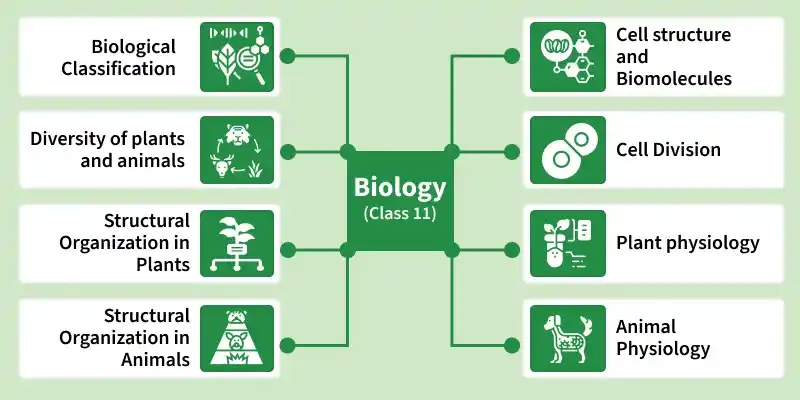
- The syllabus includes topics such as biological classification, plant and animal physiology, cell biology, biomolecules, and structural organization in plants and animals.
The Living World
- Characteristics of Living Organisms
- Diversity in the Living World
- Nomenclature
- Taxonomic Categories
- Taxonomical Aids
Biological Classification
- Five Kingdom Classification
- Kingdom Monera
- Archaebacteria
- Eubacteria
- Kingdom Protista
- Chrysophytes
- Dinoflagellates
- Euglenoids
- Slime Moulds
- Protozoans
- Kingdom Fungi
- Phycomycetes
- Ascomycetes
- Deuteromycetes
- Viruses
- Viroids
- Lichens
The Plant Kingdom
- Classification of the Plant Kingdom
- Algae
- Chlorophyceae
- Phaeophyceae
- Rhodophyceae
- Bryophytes
- Liverworts
- Mosses
- Pteridophytes
- Gymnosperms
- Angiosperms
- Plant Life Cycles and Alternation of Generations
The Animal Kingdom
- Basis of Classification
- Porifera
- Coelenterata
- Ctenophora
- Platyhelminthes
- Aschelminthes
- Annelida
- Arthropoda
- Mollusca
- Echinodermata
- Hemichordata
- Classification of Chordates
Morphology of Flowering Plants
Anatomy of Flowering Plants
- Meristematic Tissues
- Permanent Tissues
- Internal Structure of Dicot Root
- Internal Structure of Monocot Root
- Internal Structure of Dorsiventral Leaf
- Internal Structure of Isobilateral Leaf
- Secondary Growth
Structural Organisation in Animals
Cell
- Cell Theory
- Prokaryotic Cells
- Eukaryotic Cells
- Structure and Function of Cell Organelles
- Cell Membrane
- Cell Wall
- Endoplasmic Reticulum
- Golgi Apparatus
- Lysosomes
- Mitochondria
- Plastids
- Ribosomes
- Cytoskeleton
- Cilia and Flagella
- Nucleus
Biomolecules
- Classification of Biomolecules
- Carbohydrates
- Proteins
- Lipids
- Nucleic Acids
- Enzymes
- Metabolism
- Cofactors
- Metabolites
Cell Cycle and Cell Division
Photosynthesis in Higher Plants
- Introduction to Photosynthesis
- Photosynthetic Pigments
- Chloroplast Structure
- Light Reaction
- Photophosphorylation
- Chemiosmotic Hypothesis
- Dark Reaction (Calvin Cycle)
- C4 Cycle
- CAM
- Photorespiration
- Factors Affecting Photosynthesis
Respiration in Plants
- Types of Respiration
- Glycolysis
- Krebs Cycle
- Electron Transport Chain
- Respiratory Balance Sheet
- Fermentation
- Amphibolic Pathway
- Respiratory Quotient
Plant Growth and Development
- Plant Growth
- Phases of Growth
- Differentiation, Dedifferentiation, and Redifferentiation
- Plant Growth Regulators
- Auxins
- Gibberellins
- Ethylene
- Photoperiodism
- Vernalisation
Breathing and Exchange of Gases
- Respiratory Organs
- Mechanism of Breathing
- Respiratory Volumes and Capacities
- Exchange of Gases
- Transport of Oxygen
- Transport of Carbon Dioxide
- Regulation of Respiration
- Disorders of the Human Respiratory System
Body Fluids and Circulation
- Blood
- Blood Groups
- Lymph
- Human Circulatory System
- Cardiac Cycle
- Regulation of Cardiac Activity
- Double Circulation
- Disorders of the Circulatory System
Excretory Products and Their Elimination
- Human Excretory System
- Structure of the Kidney
- Urine Formation
- Regulation of Kidney Function
- Micturition
- Role of Other Organs in Excretion
- Disorders of the Human Excretory System
Locomotion and Movement
Neural Control and Coordination
- Central Nervous System
- Peripheral Nervous System
- Generation And Conduction Of Nerve Impulse
- Transmission of Nerve Impulses
- Reflex Action
- Sensory Organs
- Human Eye: Anatomy and Physiology
- Human Ear: Anatomy and Physiology
