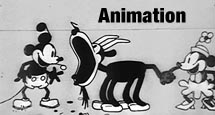


Every month, Animation Resources shares an amazing Reference Pack with its members. These carefully curated collections consist of e-books packed with high resolution scans video downloads of rare animated films set up for still frame study, as well as podcasts and documentaries— all designed to help you become a better artist. Members will have 30 days to download the current batch of treasures from the Animation Archive A new RefPack will be posted at the beginning of the next month. Bookmark the Members Only Page and remember to check back every month, because when the new month starts, the old downloads go POOF!
JOIN TODAY To Access Members Only Content
PDF E-BOOK

Blaeksprutten (Cuttlefish)
1912-1913 Christmas Annuals
Download this article
The Scandinavian countries (Denmark, Sweden, Norway, Finland, & Iceland) have contributed many traditions to the celebration of Christmas around the world: Christmas trees, elves, reindeer, advent calendars, and even Santa Claus. But one of the most unique holiday traditions in Scandinavian countries is the "Christmas book flood". Catalogs are distributed of special books and magazines, and people order them as gifts for friends and family. More books are sold in this part of the world between November and December than the rest of the year. Scandinavians are among the most literate people in the world. Amazingly, 1 in 10 Icelandic residents is a published author. The holiday tradition of giving books as holiday gifts is so ubiquitous, Scandinavians don’t even recognize it as a tradition. They assume all countries buy special books for Christmas.
In addition to books, Norwegian publishers put out annual Christmas magazines, the earliest of which date back to the mid 19th century. These early annuals featured sheet music, stories, humorous cartoons, satirical gossip about local public figures and recipes, and they were usually presented in a horizontal format to set them apart from monthly and weekly periodicals.

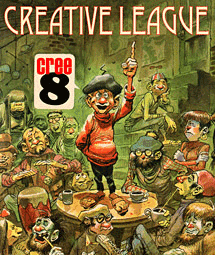
In Copenhagen, a satirical Christmas annual magazine called Blaeksprutten was launched in 1889. The title translates to Cuttlefish, and the idea was that the writers and artists who worked for the magazine had their "tentacles" in all aspects of life in Denmark. The magazine blended both the tradition of the Christmas annual and the satirical magazines flourishing around the world at the time. Beautifully printed, the magazine featured catty theater reviews, humorous stories and poems, and sentimental music; and it was illustrated with panoramic "birds eye view" shots of Danish villages bustling with life, fanciful subjects in lavish color, caricatures and line drawings in ink. The principle artists in the beginning of the 20th century were Alfred Schmidt, a well known caricaturist and poster designer; painters Paul Gustav Fischer and Axel Nygaard; line artists Sven Brasch and Gerda Ploug Sorenson Sarp; and fashion illustrator Gerda Wegener. Blaeksprutten is still being published every Christmas after 125 years.
This publication is pretty much unknown in the United States, but Animation Resources has been working to collect a sampling of these hard-to-find magazines to share with its members. We hope you find it useful to your in your studies.
JOIN TODAY To Access Members Only Content
DVD QUALITY VIDEO: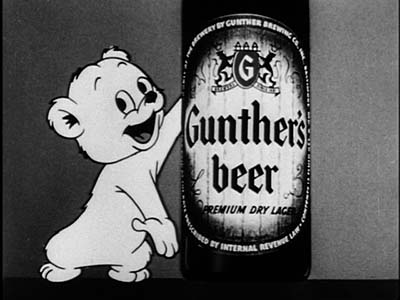
Beer and Automotive Commercial Reels
Paul Fennell Studios (ca. mid 1950s)
As our members already know, the Paul Fennell Studio was a pioneer in animated television advertising. This time, we are featuring two commercial reels from the mid 1950s. The first reel deals with automotive products- tires, gasoline, motor oil… The Shell gasoline commercial designed by Ed Benedict is a real standout with infectious music and animation. Spots like this certainly wouldn’t get tiresome upon repeated viewings. If you compare the Shell Motor Oil spot to our earlier reel of 1940 theatrical commercials, you will see how Fennell repeated and updated certain concepts from his earliest advertising cartoons.
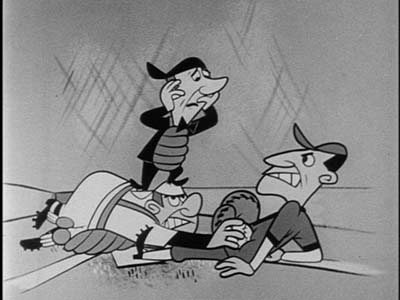
The beer commercial reel includes several commercials each for Gunther’s, Valley Forge, Ram’s Head, and Schaefer Beer. The distinctive designs of Ed Benedict and jazzy musical accompaniment give these spots a very modern feel. They must have seemed unique among contemporary television advertising. It’s interesting to note that the earliest commercials for Gunther’s feature a typical cartoon bear, while the later more modern looking spots all have sports themes. The crew at Fennell was honing in on their target audience to create more effective advertisements.
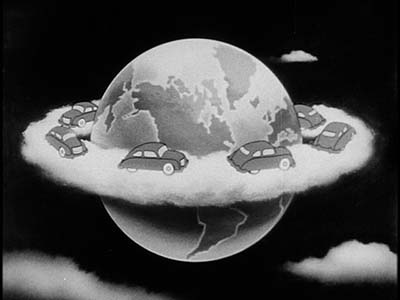
Because of the ephemeral nature of commercials from the early days of television, these prints may be the last surviving copies of these films in existence. Animation Resources thanks the family of Paul Fennell for sharing these with us.
JOIN TODAY To Access Members Only Content

A Collection of Polish Animation
"Dumpling" Lucjan Dembinski (1959) / "Beyond The Wood, Beyond The Forest" Wladyslaw Nehrebecki (1961) / "The Little Quartet" Edward Sturlis (1965) / "A Little Western" Witold Giersz (1960)
Download this article
In one of our previous Reference Packs, we discussed how The Wan Brothers’ "Havok In Heaven" perfectly adapted the format of the animated feature to reflect the art and culture of China. This time we are presenting a couple of films that show how film makers halfway around the globe used animation to reflect a distinctly Polish point of view.

Wycinanki: The art of paper cutting

 Lucjan Dembinski’s "Dumpling" and Wladyslaw Nehrebecki’s "Beyond The Wood, Beyond the Forest" both are styled after traditional Polish folk art.
The folk art form known as wycinanki (pronounced vee-chee-non-kee) originated in the Ukraine at the end of the 15th century. Shepherds would cut designs out of bark and leather, and artists would paint colorful floral patterns on furniture, beams and walls of homes. The art of wycinanki paper-cutting for holidays became very popular in the mid-1800s, and regional styles developed. The tradition still continues with skilled artisans competing to create the most beautiful patterns.

Wladyslaw Nehrebecki, who is best known for the television series "Bolek and Lolek", became interested in the peasant art of his native Poland, and teamed up with a Polish folk art museum to adapt the designs to animation using paper cut outs. The result was "Beyond The Woods, Beyond The Forest". Beautifully composed using a wide screen format, the bright colors and simple shapes are skillfully animated, essentially bringing wycinanki to life. Puppet animator Lucjan Dembinski also mined this rich well of inspiration with a film called "Dumpling" that translated wycinanki designs into three dimensional stop motion animation.

Too often we take culture for granted. As film makers, we look to other films for inspiration instead of seeing the creativity that surrounds us. Obviously in the United States, we don’t have anything like wycinanki, but that doesn’t mean that we can’t draw on our culture for inspiration. Roy Lichtenstein saw comic books as fine art, Andy Warhol painted Campbells soup cans and Edward Hopper created an incredibly powerful image of a diner in the city late at night. Who’s to say that modern highway interchanges, television, neon signs, computer screens or billboards aren’t American equivalents of cultural folk art. As you watch these films, think about the unappreciated man-made beauty that exists in the place you live and try to incorporate that into your work. I guarantee you it will be a lot more engaging and interesting than recycling the same old tired animation tropes and done-to-death styles.
JOIN TODAY To Access Members Only Content

In RefPack 032, we shared a simple film called "Beach" that Edward Sturlis made in 1964. The following year, he made a fantastic puppet film called "The Little Quartet". It’s interesting that Sturlis moved so effortlessly from hand drawn animation to stop motion. He must have seen himself as an animator, not a person who just draws or makes puppets. The two skills might be different from a technical standpoint, but the principles of creating personality and displaying it through timing and movement are the same. A lot of current animators define themselves as 2D or CG or Stop-Mo, but an animator is an animator. Sturlis proves it. As you watch this film check out the wonderful musical timing and expressive posing. It’s pure genius.

Edward Sturlis at work in his studio
Witold Giersz is a towering figure in Polish animation. He pioneered the art form in Poland as early as 1950 and went on to produce fifty films. Michael Sporn’s "Splog" has a great interview with Giersz that you really should make a point of reading. That blog post will give you a sense of his work and biography. But I would like to focus on a specific aspect of his technique here…

"Rooty Toot Toot" / John Hubley / UPA (1951)
In the past decade or so, there has been renewed interest in "modern animation". Books have been written on artists like Mary Blair and studios like UPA. Highly stylized animation is de rigueur for title sequences of CGI features, often looking more expressive and appealing than the film itself. Television animation and internet cartoons are produced with programs like Flash using libraries of modular virtual puppets designed with the flair of the 1950s cartoons and early 60s TV animation. But even though it’s nicely designed and colored, modern stylized animation always seems to look flat compared to films like Rooty Toot Toot and even some of the television commercial reels Animation Resources has shared here in the past. Why is that?

If you analyze Witold Giersz’s film "A Little Western" you will spot the missing element. The film looks deceptively simple— flat featureless shapes, abstract textured blobs for backgrounds, simple bold primary colors. But behind that simple surface, there is a magic trick being performed.
Still frame through a few scenes and you will see simple, elegant flat shapes. Play it in motion and those flat shapes turn into solid volumetric forms. How can it be two dimensional and three dimensional at the same time? The secret is the fourth dimension of time and space. Ward Kimball once said that the art of animation doesn’t exist in individual drawings. The art is in the differences between the drawings. The way those flat shapes change from one to another is the secret that gives it form. Look at Grim Natwick’s animation of the courtroom scene in "Rooty Toot Toot" for another brilliant example of fourth dimensional animation. The characters exist as two dimensional shapes which reveal their three dimensional volume only when they move. Think about that as you watch "A Little Western".
JOIN TODAY To Access Members Only Content
ANALYSIS:

John Sibley
Curated By David Eisman
Download this article
In the past two articles, we broke down the works of Soviet-era filmmakers like József Gémes and Vaclav Mergl. Now, we are returning to the Golden Age of American animation to analyze the techniques of one of the best of the Disney masters, and perhaps the greatest Goofy animator of them all: John Sibley. So much can be said about Sibley. He took Art Babbitt’s loose-limbed but uniform ambles, and introduced a controlled chaos through extreme lines of action and exaggerated squash and stretch. Sibley’s Goofy feels like a rag doll, pushed and pulled by physics.
Sibley was a master of many formal and informal principles: momentum, weight, overshoots, the wave principle, and appeal, just to name a few. Obviously, it would be impossible to tackle every single one of Sibley’s techniques in this singular article. Therefore, we will take a more specific approach to this analysis. First, we will break down Sibley’s use of the wave principle and transformation of s-curves and c-curves in How to Ride a Horse (1950) and How to Play Baseball (1942). Then, we’ll compare Sibley’s Goofy in How to Be a Sailor (1944) to his feature animation of Lackey in Sleeping Beauty (1959), specifically how Sibley animates footwork and maintains clarity during complex movements.
JOIN TODAY To Access Members Only Content
VIDEO PODCAST:

Alexandru Curilov Interview
Animated Discussions 017 / Hosted by Davey Jarrell with Alexandru Curilov
 Alexandru Curilov has worked in animation, filmmaking, gaming, advertising, brand design, and web design for over 20 years in Slovenia. He founded an organization in 2025 called The Toon Room, a network that brings together animators from all over the world. Listen to Alexandru talk all about his creative influences and hopes for the future of animation in the latest episode of Animated Discussions!
JOIN TODAY To Access Members Only Content
Whew! That is an amazing collection of treasures! The most important information isn’t what you already know… It’s the information you should know about, but don’t know yet. We bring that to you every other month.
THIS IS JUST THE TIP OF THE ICEBERG!
Animation Resources has been sharing treasures from the Animation Archive with its members for over a decade. Every month, our members get access to a downloadable Reference Pack, full of information, inspiration and animation. The RefPacks consist of e-books jam packed with high resolution scans of great art, still framable animated films from around the world, documentaries, podcasts, seminars and MORE! The best part is that all of this material has been selected and curated by our Board of professionals to aid you in your self study. Our goal is to help you be a greater artist. Why wouldn’t you want to be a member of a group like that?
Membership comes in two levels. General Members get access to a bi-monthly Reference Pack as well as a Bonus RefPack from past offerings in the in-between months. We offer a discounted Student Membership for full time students and educators.
JOIN TODAY!
https://animationresources.org/membership/levels/
FREE SAMPLES!
Not Convinced Yet? Check out this SAMPLE REFERENCE PACK! It will give you a taste of what Animation Resources members get to download every other month! That’s 560 pages of great high resolution images and nearly an hour of rare animation available to everyone to download for FREE! https://animationresources.org/join-us-sample-reference-pack/
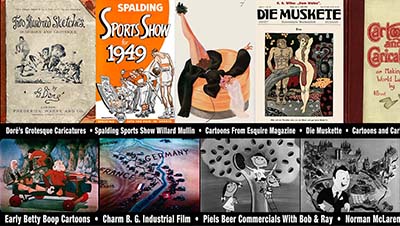
 Animation Resources depends on your contributions to support its projects. Even if you can’t afford to join our group right now, please click the button below to donate whatever you can afford using PayPal.







 by
by