

In information security, integrity means ensuring that data remains accurate, complete, consistent and trustworthy throughout its entire lifecycle. It protects information from unauthorized modification, corruption, deletion or manipulation, whether the changes occur intentionally or accidentally. Integrity is one of the three core principles of the CIA Triad:
- Confidentiality: Protects information from unauthorized access.
- Integrity: Ensures information remains accurate and unmodified.
- Availability: Ensures systems and data are accessible when required.
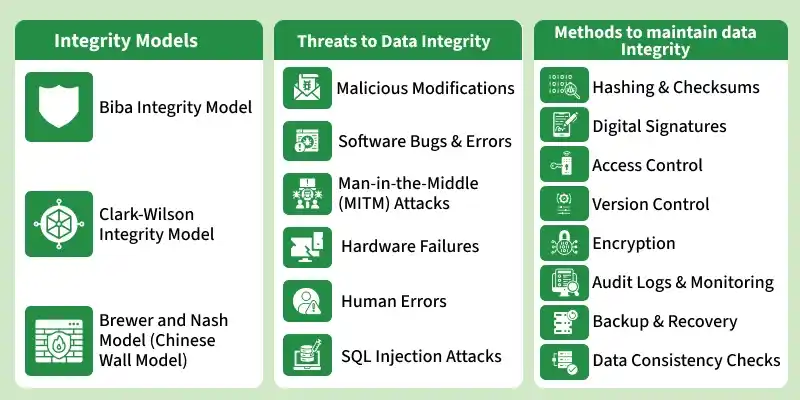
Importance of Integrity in Cyber Security
Maintaining integrity helps organizations ensure that information remains dependable and protected against unauthorized changes. Strong integrity controls provide several important benefits:
- Prevents unauthorized modification of sensitive information.
- Maintains trust in databases, applications and business systems.
- Ensures accurate communication between users and systems.
- Supports regulatory compliance and audit requirements.
- Protects financial, healthcare and operational records from tampering.
- Reduces the risk of fraud, misinformation and system compromise.
Integrity Models in Information Security
Integrity models define rules and mechanisms used to preserve the correctness and consistency of data inside computer systems.
1. Biba Integrity Model
The Biba Model focuses on preventing data corruption by restricting improper data modification.
- Users cannot modify data at a higher integrity level.
- Information should not flow from lower integrity levels to higher levels.
- Prevents untrusted users from contaminating critical data.
- Example: A junior employee should not be allowed to modify highly sensitive financial records maintained by senior management.
2. Clark-Wilson Integrity Model
The Clark-Wilson Model emphasizes data integrity through well-formed transactions and separation of duties.
- Only authorized users can modify sensitive data.
- Transactions must follow predefined rules.
- Integrity verification procedures ensure data consistency.
- Example: In banking systems, money transfers must follow approved transaction procedures with proper authorization.
3. Brewer and Nash Model (Chinese Wall Model)
This model prevents conflicts of interest by restricting access to sensitive information.
- Access decisions depend on previously accessed data.
- Prevents users from accessing competing organizations’ confidential information.
- Commonly used in consulting and financial sectors.
- Example: A consultant working for one company cannot access confidential records of its competitor.
Threats to Data Integrity
Several cyber security risks can compromise data integrity and affect business operations.
1. Malicious Modifications
Attackers or malicious insiders may intentionally alter files, databases or system records to manipulate information for personal gain or sabotage.
- Financial fraud.
- Manipulated reports.
- Altered customer information.
- Unauthorized database changes.
2. Software Bugs and Application Errors
Programming flaws, improper validation or logic errors can unintentionally corrupt stored information.
- Invalid input handling.
- Memory corruption.
- Faulty updates.
- Application crashes.
3. Man-in-the-Middle (MITM) Attacks
In MITM attacks, cybercriminals intercept communication between two systems and modify transmitted data.
- Altered transactions.
- Injected malicious content.
- Modified communication records.
- Session hijacking.
4. Hardware Failures
Physical device failures may damage stored information or make files inaccessible.
- Hard drive corruption.
- Power outages.
- Faulty memory modules.
- Storage device failures.
5. Human Errors
Accidental mistakes by employees or administrators are among the most common causes of integrity violations.
- Incorrect data entry.
- Accidental deletion.
- Misconfigured permissions.
- Improper system updates.
6. SQL Injection Attacks
Attackers exploit insecure database queries to manipulate or modify stored records.
- Unauthorized data modification.
- Database corruption.
- Deletion of records.
- Unauthorized administrative access.
Methods to Maintain Data Integrity
Organizations use multiple security controls and technologies to preserve data integrity and detect unauthorized changes.
1. Hashing and Checksums
Hashing algorithms generate a unique fixed-length value for data. Any modification changes the generated hash value. Common Algorithms SHA-256, SHA-3, MD5 (legacy use only).
- Detects tampering quickly.
- Verifies file integrity.
- Supports secure software distribution.
2. Digital Signatures
Digital signatures verify both the authenticity and integrity of information using cryptographic techniques.
- Detects unauthorized modifications.
- Confirms sender authenticity.
- Protects electronic documents.
3. Access Control Mechanisms
Restricting data modification privileges helps reduce unauthorized or accidental changes. Common Access Controls:
- Role-Based Access Control (RBAC).
- Multi-factor authentication (MFA).
- Least privilege principle.
4. Version Control Systems
Version control helps organizations monitor data changes and restore previous versions when required.
- Tracks modifications.
- Simplifies rollback procedures.
- Improves accountability.
5. Encryption
Encryption protects information from unauthorized viewing and tampering during storage and transmission. Protection Areas:
- Data at rest.
- Data in transit.
- Cloud storage environments.
6. Audit Logs and Monitoring
Audit logging records system activity and helps identify suspicious modifications.
- Detects unauthorized access.
- Supports forensic investigations.
- Improves compliance reporting.
7. Backup and Recovery
Regular backups ensure corrupted or altered data can be restored safely.
- Maintain automated backups.
- Use offsite storage.
- Test recovery procedures regularly.
8. Intrusion Detection Systems (IDS)
IDS solutions continuously monitor systems and networks for suspicious activity that may threaten integrity.
- Unauthorized file changes.
- Suspicious user behavior.
- Malware activity.
- Network anomalies.
9. Data Consistency Checks
Consistency verification tools help ensure that databases and files remain accurate and synchronized.
- Database validation.
- File verification.
- Error detection in transactions.
