

In modern cybersecurity, organizations face continuous threats such as malware, ransomware, phishing attacks, insider threats, credential theft and advanced persistent attacks. Traditional security tools alone are often insufficient because cyber threats evolve rapidly and target networks, cloud environments, endpoints and applications simultaneously. To defend against these risks, organizations rely on a Security Operations Center. A Security Operations Center is a:
- Continuous threat monitoring.
- Faster incident detection and response.
- Centralized visibility into security events.
- Improved compliance and audit readiness.
- Threat intelligence integration.
- Reduced attack surface exposure.
Security Operations Lifecycle
A SOC generally follows a structured operational workflow.
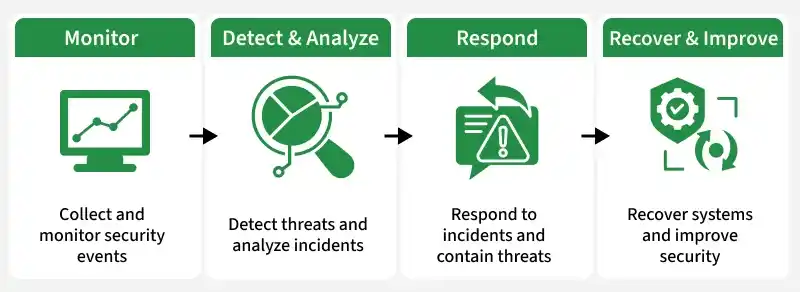
Step 1: Data Collection and Monitoring
The SOC gathers security data from multiple sources across the environment, including: Firewalls, Servers, Endpoints, Cloud platforms, Applications, Routers and switches, Identity systems, Security appliances. Monitoring may involve:
- Collect logs and continuously observe security events.
- Network traffic analysis.
- Login activity review.
- Endpoint behavior inspection.
- Security alert monitoring.
- User activity analysis.
Step 2: Threat Detection and Triage
Security tools identify malicious indicators and generate alerts. Prioritize alerts according to severity and business impact. The SOC detects threats using:
- Signature-based detection.
- Behavioral analysis.
- Threat intelligence feeds.
- Correlation rules.
- Machine learning techniques.
Step 3: Investigation and Analysis
False positives are filtered while genuine incidents receive priority handling. Security analysts investigate alerts to determine:
- Severity of the threat
- Attack source
- Impacted assets
- Attack techniques used
- Scope of compromise
Step 4: Incident Response
Contain and remediate confirmed threats. Rapid response reduces organizational damage. Once a threat is confirmed, the SOC initiates response actions such as:
- Isolating infected systems.
- Blocking malicious IP addresses.
- Disabling compromised accounts.
- Removing malware.
- Containing lateral movement.
Step 5: Recovery and Improvement
After incident containment, organizations recover systems and review lessons learned to improve future defenses.
Core Components of a SOC
A successful SOC combines people, processes and technologies.
- People: Security professionals form the foundation of SOC operations. Key responsibilities include: Threat monitoring, Incident investigation, Threat hunting, Malware analysis, Security engineering, Compliance support.
- Processes: Clearly defined workflows ensure consistent security operations. Common SOC processes include: Incident management, Alert triage, Escalation procedures, Threat intelligence integration, Log analysis, Reporting and documentation.
- Technology: SOC technology provides visibility, detection, automation and response capabilities. Security tools enable analysts to process large volumes of data efficiently.
SOC Team Roles and Responsibilities
Different professionals contribute to SOC operations.
- Tier 1 Analyst(Security Monitoring Analyst): Tier 1 analysts handle initial monitoring activities. Responsibilities include: Reviewing alerts, Performing alert validation, Basic threat investigation, Escalating complex incidents
- Tier 2 Analyst(Incident Responder): Tier 2 analysts conduct deeper investigations. Responsibilities include: Incident analysis, Threat containment, Root cause investigation, Forensic review.
- Tier 3 Analyst (Threat Hunter): Threat hunters proactively search for hidden threats that bypass automated detection systems. Tasks include: Threat hunting, Advanced analytics, Attack pattern analysis, Adversary behavior tracking.
- SOC Manager: The SOC manager oversees operational effectiveness. Responsibilities include: Team coordination, Performance monitoring, Incident oversight, Security strategy implementation.
- Security Engineer: Security engineers maintain SOC infrastructure. Tasks include: Tool configuration, Detection rule creation, Automation setup, Infrastructure optimization.
Tools & Technologies Used in a SOC
Security Operations Centers depend on specialized security technologies.
- SIEM (Security Information and Event Management): SIEM platforms collect, normalize, correlate and analyze security logs. Common functions: Log aggregation, Event correlation, Alert generation, Dashboard visualization.
- EDR (Endpoint Detection and Response): EDR tools provide visibility into endpoint activity. Capabilities include: Threat detection, Malware monitoring, Endpoint isolation, Behavioral analysis
- SOAR (Security Orchestration, Automation and Response): SOAR platforms automate repetitive security tasks. Examples of automated tasks: Ticket creation, Alert enrichment, IP blocking, Incident workflow execution.
- Threat Intelligence Platforms: Threat intelligence platforms provide external threat data such as: Malicious IP addresses, Malware indicators, Domain reputation, Attack techniques.
- Network Security Tools: SOC environments commonly use: Firewalls, IDS/IPS, Network monitoring solutions, Packet analysis tools.
Types of Security Operations Centers
Organizations adopt different SOC models based on business requirements.
- Dedicated SOC: An internal team fully manages security operations. Greater operational control, Organization-specific expertise. High operational cost, Staffing requirements.
- Managed SOC: Security operations are outsourced to a third-party provider. Reduced staffing burden, 24/7 monitoring support. Reduced direct control, Vendor dependency.
- Virtual SOC (vSOC): Security teams operate remotely using cloud-based infrastructure. Flexible deployment, Scalable operations.
- Hybrid SOC: Combines internal security resources with external expertise. Balanced operational model, Expanded security coverage.
Practical Lab: Basic SOC Monitoring Using Windows Event Viewer
This beginner-friendly activity demonstrates basic security monitoring concepts.
- Objective: Observe login-related security events on a Windows system.
- Requirements: Windows machine, Administrator access.
Steps
Step 1: Press Win + R.

Step 2: Type eventvwr.msc
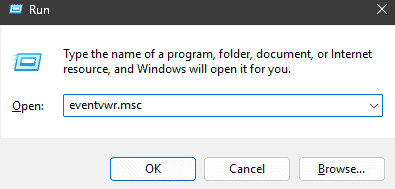
Step 3: Open Windows Logs(Security)
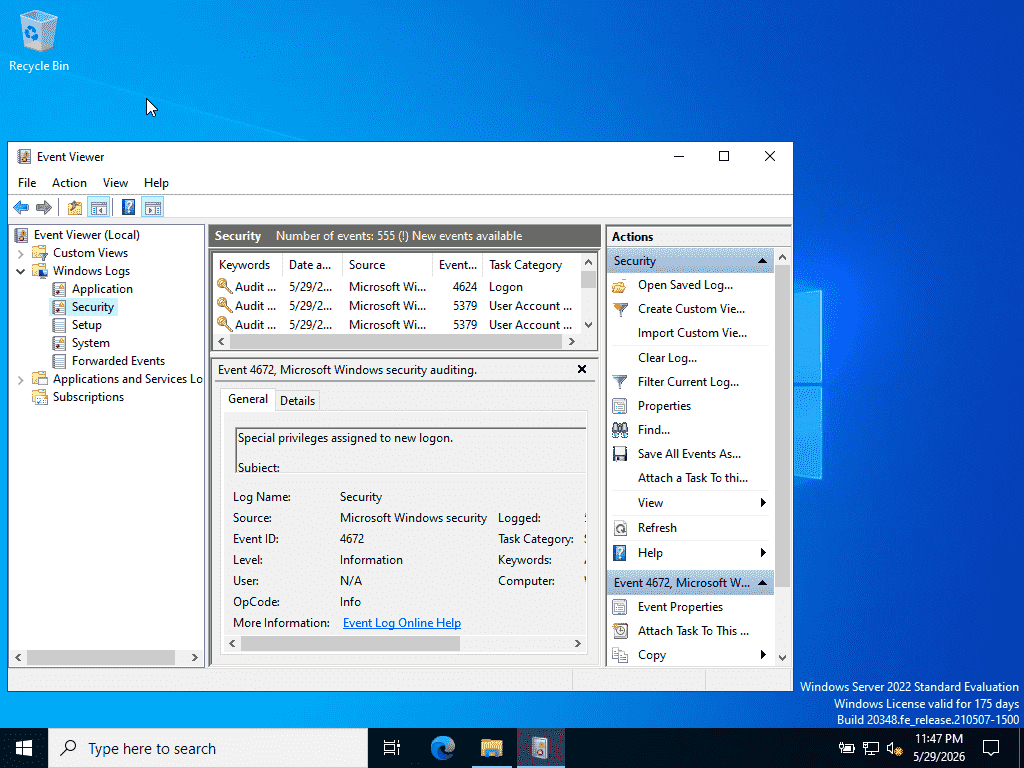
Step 4: Review security events such as:
- Successful logins
- Failed login attempts
- Account activity events
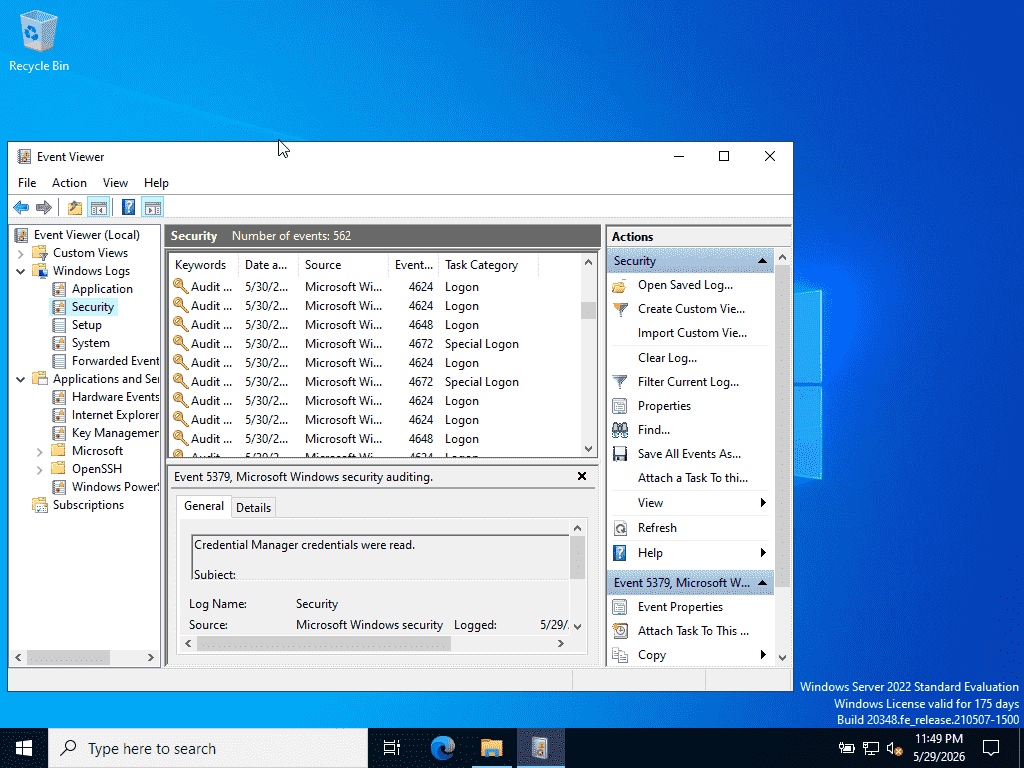
Step 5: Analyze Event timestamps, User accounts, Event IDs, Source systems.
Security Operations Center Best Practices
Organizations can improve SOC effectiveness by following proven practices.
- Implement Strong Log Management: Centralized log collection improves visibility and investigation capability.
- Automate Repetitive Tasks: Automation reduces analyst workload and accelerates response.
- Maintain Updated Threat Intelligence: Current threat data improves detection accuracy.
- Conduct Regular Threat Hunting: Proactive searches help uncover hidden adversary activity.
- Define Incident Response Procedures: Clear workflows support faster decision-making during incidents.
- Continuously Train SOC Teams: Ongoing training improves analytical capability and operational readiness.
Challenges
- Alert Fatigue: Large numbers of alerts can overwhelm analysts.
- Skill Shortage: Cybersecurity talent shortages affect staffing and expertise availability.
- False Positives: Excessive false alarms consume valuable analyst time.
- Tool Complexity: Managing multiple security technologies increases operational complexity.
- Evolving Threat Landscape: Attack techniques constantly change, requiring continuous adaptation.
