Rokid debuts the world's first full-color display, ushering in the "first-generation iPhone" moment for AI glasses.
As AI capabilities are rapidly expanding beyond the mobile phone screen, the way people interact with smart terminals is ushering in a new round of restructuring.
On October 27, at the Jungle2026 launch event themed "Smarter, More Colorful", Rokid launched three new products: Rokid Glasses 2, full-color AI glasses Rokid Color, and interactive ring Rokid Ring, with starting prices of 3,699 yuan, 4,999 yuan and 1,699 yuan respectively. The three products have clear divisions of labor, jointly forming Rokid's complete layout for the next-generation personal AI terminals.
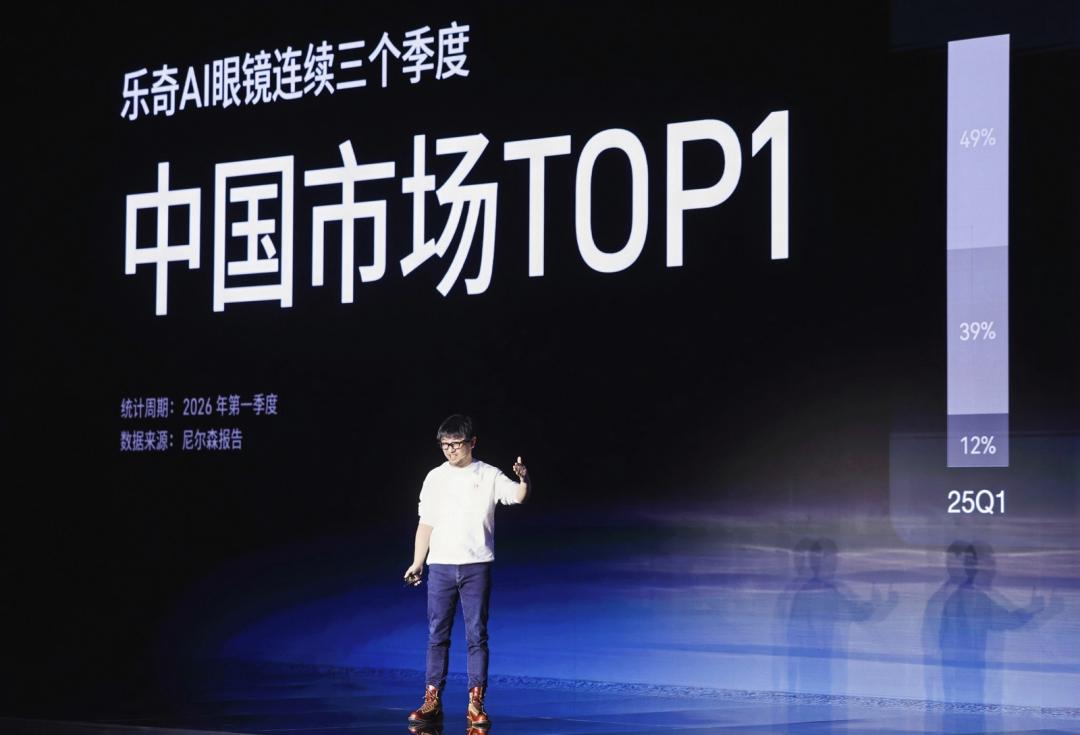
This launch is built on Rokid's existing market foundation. According to Nielsen's report, Rokid AI glasses have ranked first in the Chinese market for three consecutive quarters; Counterpoint Research data shows that in the first half of 2026, Rokid's global market share in display-equipped AI glasses reached 41%, ranking first worldwide.
Behind the launch event lies an industry proposition: with large model capabilities continuing to leap forward, the way to call AI is still highly dependent on mobile phones — taking out the device, unlocking the screen, switching applications, and operating with head down. For AI to truly integrate into daily life, the interaction method also needs to evolve accordingly.
Rokid's launch event this time is centered on this very proposition. When talking about the signal conveyed by the simultaneous release of three new products, Rokid stated: "The 'iPhone 1 moment' for AI glasses has truly arrived." In its view, just as the original iPhone brought changes to display capabilities and interaction methods, AI glasses have also completed long-term accumulation in these two aspects.
In the past few years, AI glasses have gone through the evolution from proof of concept to product implementation, and from novelty consumption to daily use. Rokid believes that AI glasses are gradually moving towards high-frequency daily use.
The industry has thus entered a deep-water zone, and the focus of competition has shifted accordingly: from "whether it can be manufactured" to "whether it can become a device worn every day", and from single hardware indicators to the systematic experience of wearing, display, interaction, AI and ecosystem.
Against this backdrop, the criteria for measuring personal AI terminals have become increasingly clear: helping people accomplish more things while occupying less of their hands and attention.
01. From "Wearable" to "Wearable All Day Long", New Terminals Must First Become Daily Necessities
The primary criterion for a new terminal to enter daily life is whether users are willing to wear it for a long time.
For AI glasses, behind this criterion is a set of mutually restricted indicators. Rokid told Hard-Kr that performance, battery life and weight form the "impossible triangle" of the AI glasses industry — improved performance means more chips and sensors, longer battery life relies on larger capacity batteries, and as a device worn on the face, even subtle changes in weight will directly affect the experience. How to balance the three is the core topic for the category to move into daily use, and it is also the key direction that Glasses 2 focuses on overcoming.
For this trade-off problem, Rokid said that from the experience of the first-generation product, the hardest thing for the team to give up is functions. "We don't really want to make trade-offs, but hope to bring more functions to users." To this end, on the basis of a 25% increase in battery capacity, Glasses 2 adopts a collaborative architecture of dual chips Snapdragon AR1+ and BES2800BP, as well as dual systems Android and RTOS, to flexibly allocate performance and power consumption according to task requirements. The overall battery life of Glasses 2 is 50% higher than that of the previous generation. This improvement does not simply come from battery capacity expansion, but also benefits from the underlying system optimization and the iterative cooperation of various capabilities.
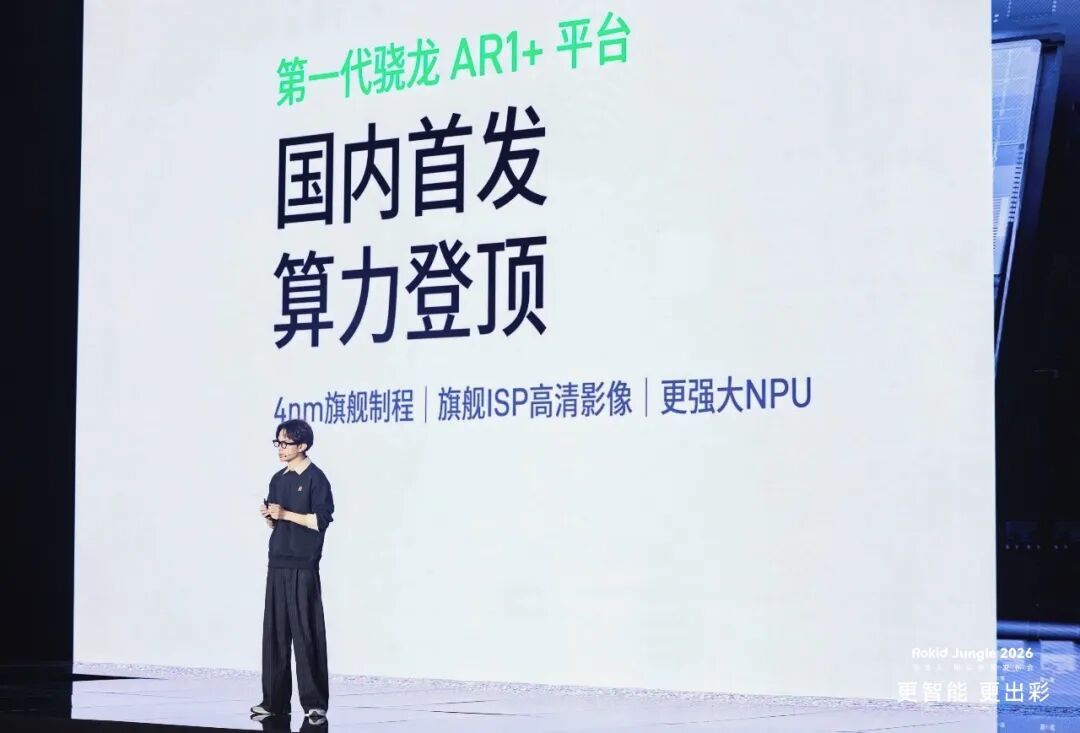
Wearing and display are also designed around daily scenarios. The optical engine of Glasses 2 is 30% smaller than that of the previous generation. The flexible temple and larger contact area of the nose pad further improve the fit. The magnetic customized lens scheme can adapt to different vision needs such as myopia, astigmatism and presbyopia. In terms of display, through new coating and grating design, rainbow patterns and reflection interference are significantly reduced, and the overall shape of Glasses 2 is closer to that of ordinary glasses.
Rokid summarizes the evolution of the two generations of products as: the first generation solves the problem of "being wearable", and the second generation pursues "being wearable all day long".
Another meaning of "wearable all day long" lies in the continuous value after wearing. In terms of imaging, Glasses 2 is close to the camera capability of mobile phones, with significantly improved anti-shake and night shooting performance; the newly added "preview before shooting" function allows users to confirm the framing range before pressing the shutter, so first-person perspective recording has evolved from accidental capture to more conscious composition, which can serve daily creation, as well as professional scenarios requiring special camera positions such as intangible cultural heritage skill recording and people's livelihood media reports.
In terms of AI capabilities, Glasses 2 is evolving from answering questions to assisting in recording and understanding. AI meeting minutes can sort out meeting summaries and to-do items by combining sound and first-person perspective images; AI call translation supports 89 languages, covering scenarios such as WeChat calls and Feishu meetings; the instant backtracking and full-day backtracking functions can help users retrieve key information such as "what did I just promise".
Accessibility experience is an important direction of this upgrade. For visually impaired people, Rokid cooperated with JD Exploration Research Institute to introduce the capability of the JoyAI-VL-Interaction model, and reshape the sense of security for visually impaired people through "active protection" functions such as visual prompts, obstacle reminders, active object searching and real-time voice feedback; for hearing-impaired users, the product provides capabilities such as multi-speaker distinction and subtitle recording.
Rokid has its own set of indicators to measure "daily use": on the basis of leading sales, it pays more attention to the usage duration and repurchase of existing users. Rokid revealed that calculated by wearing duration, the average daily wearing time of users has exceeded 6 hours; teleprompter, translation and navigation are the three most commonly used functions by users. In Rokid's view, whether a new category can go far depends on whether users can continue to use it after purchase.
These habits are precipitated in specific life scenarios: visually impaired users perceive the surrounding environment with the help of glasses; parents who take care of their children alone can also complete navigation and payment when their hands are occupied; when cross-national family members communicate, translated subtitles can be presented directly in front of their eyes. The value of AI glasses is reflected in these daily details — it effectively solves users' practical problems without interrupting the rhythm of life.
In high-frequency scenarios such as navigation, payment, translation and teleprompter, AI glasses allow users to reduce the frequency of taking out their mobile phones. In Rokid's view, the value of AI glasses is to provide a more natural and efficient experience for these scenarios; for this reason, the product experience needs to reach more than 80 points to truly stay in users' daily lives.
New terminals should not only be eye-catching, but also make people willing to wear them every day. When "wearable all day long" becomes a reality, new problems arise: after information enters the field of vision, how should the interaction method be reorganized?
02. "View, Select, Confirm" is Rewritten, Personal Computing Interface Moves to the Field of Vision
Looking back at the development history of personal computing, every change in the interaction method has reshaped the relationship between people and machines. The graphical interface pushed personal computers to the public, and multi-touch made smartphones a personal portable digital entry. In the next stage, the interaction interface is moving from the palm to the field of vision.
Compared with smart headphones that also focus on freeing hands, the advantage of AI glasses lies in wider and richer interaction capabilities. Headphones take voice as the main input and output method, with limited information receiving efficiency; glasses can carry both vision and voice, and support capabilities such as "AI seeing the world" and first-person shooting. At present, Rokid AI glasses have been implemented in many fields such as industry, cultural tourism, and medical care.

Shooting effect of Rokid Glasses 2
On this basis, Rokid Color and Rokid Ring expand the boundary of interaction from the two ends of "viewing" and "operation" respectively. According to Rokid's product division, Glasses 2 is mainly tool-oriented, while Color is oriented to content and social interaction, with greater room for imagination.
Rokid Color points to the next stage of daily use. The product adopts Rokid's customized 0.16cc Micro-LED full-color optical engine, which is only the size of a mung bean, and the product weighs 55 grams (excluding the nose pad). Full-color display upgrades the information in the field of vision from simple prompts to classified and visualized presentation. For example, when users check stock quotes, the rise and fall are distinguished by red and green, which is clear at a glance; navigation directions, task progress and information priority can also be expressed more clearly with the help of colors; browsing content such as videos and pictures is also possible.
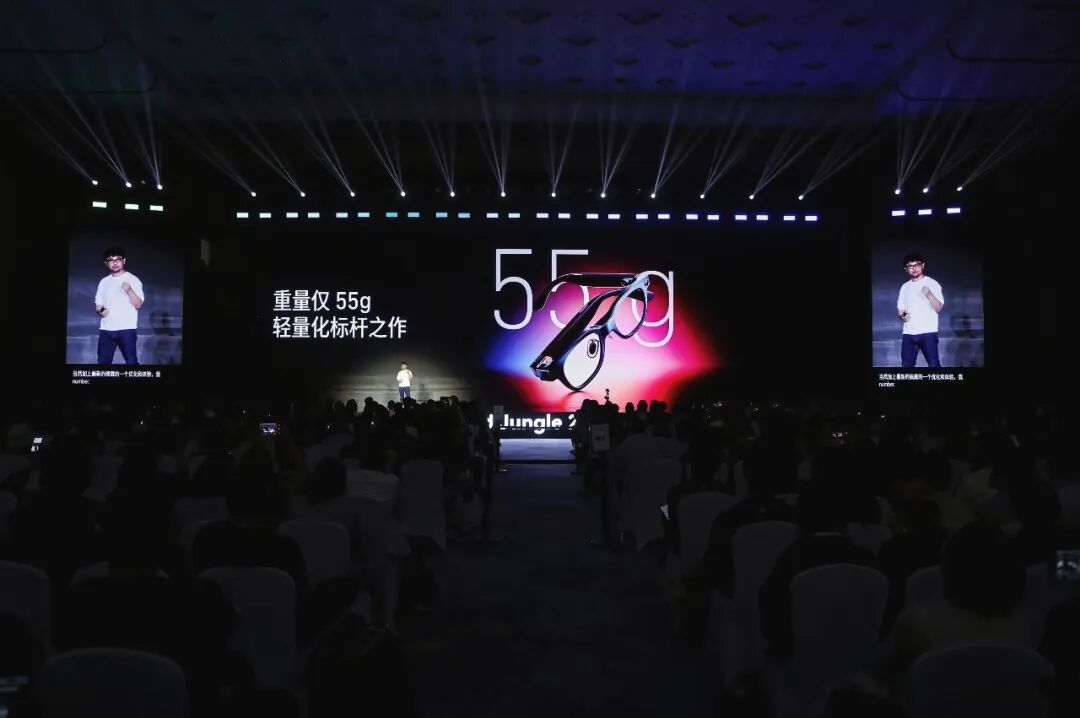
This means that AI glasses are evolving from "telling users what is happening" to "allowing users to see content, understand differences and make judgments". The addition of full-color display allows AI to move from "answering" to "displaying", and the expression method is closer to human intuition.
Rokid introduced that single green and full-color belong to different optical technology routes, and the two complement each other. Among them, the single green solution is lighter, more power-saving, has longer battery life, and is more affordable, which is suitable for high-frequency needs such as teleprompter and translation; the full-color solution can explore more diverse applications such as photography, providing users with rich, real and clear color presentation.
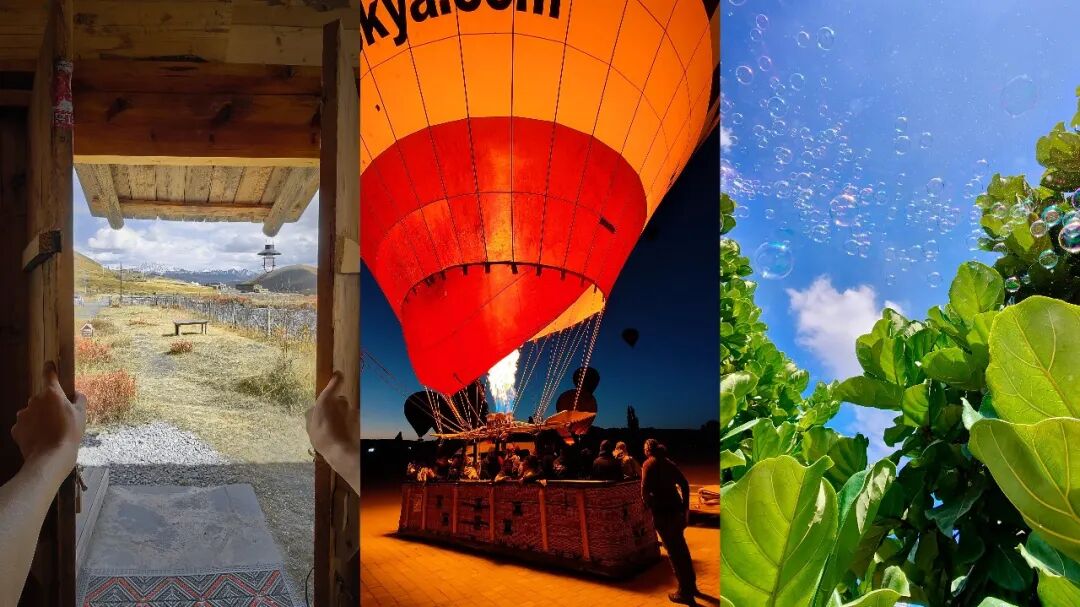
Shooting effect of Rokid Glasses 2
Rokid Ring responds to another question: after information enters the field of vision, how to complete the operation with less interruption.
As an optional peripheral for AI glasses, Rokid Ring can adapt to all Rokid glasses, forming a complement to temple touch and voice wake-up. The ring introduces micro-gestures such as left and right swipe, single click, and double click into glasses operation. In scenarios where it is inconvenient to speak or continuous browsing is required, users can complete the operation with smaller hand movements. Compared with raising hands to touch or voice commands, the subtle movements of fingertips are more concealed and more natural.
Overall, the three products have a clear division of labor: Rokid Glasses 2 lays the practical foundation for daily use, Color and Ring open up the imagination space for future interaction, and the product paths support each other. Glasses undertake visual presentation, the ring undertakes lightweight operation, and AI undertakes demand understanding. The basic interaction actions of "view, select, confirm" are being reorganized: "viewing" happens in the field of vision, while "selecting" and "confirming" are completed on the fingertips. The relationship between people and devices has thus evolved from "finding functions and operating item by item" to "expressing intentions, viewing results, and interacting naturally".
Interaction is moving from "holding the screen" to "vision + fingertips", which is the essence of "from looking down to looking up".
03. Competition Goes Beyond Hardware, Whoever Makes Technology Enter Life Naturally Will Define the Category
The accelerated move of AI glasses into daily life is inseparable from the overall maturity of the industrial chain.
In Rokid's view, one of the most critical changes in the current industry is the gradual maturity of the supply chain. Leading consumer electronics manufacturing enterprises such as Lens Technology (300433.SZ), Goertek (002241.SZ), and Luxshare Precision (002475.SZ) are importing the refined manufacturing capabilities accumulated over years of serving Apple into the AI glasses field, and jointly exploring higher-standard manufacturing processes with brand owners. For example, behind many details such as the temple gap controlled to be free of grinding feeling when worn, and the grating area becoming more and more invisible, there is a systematic improvement in the manufacturing capability of the supply chain. In the future, with the implementation of technologies such as solid-state batteries, the foundation of the product experience of AI glasses will be further consolidated.
As the supply chain becomes increasingly mature, products at various price points emerge one after another, the category enters a period of rapid development, and users' requirements for experience also increase simultaneously. The more solid the hardware foundation is, the more the focus of competition shifts to the system experience and ecosystem that are more difficult to replicate.
Facing this trend, Rokid first adheres to experience standards. As an emerging category, the first impression of AI glasses on users is crucial. To this end, Rokid insists on not reducing the specifications of core components such as chips and cameras to ensure that the product experience meets the standards, and at the same time strengthens the collaboration of software and hardware to ensure the smoothness of the full-link interaction.
On top of the experience, Rokid focuses on building a neutral and open large model and service ecosystem. As an independent hardware brand, Rokid has reached cooperation with many large model manufacturers, and can flexibly access mainstream large models such as Qwen, DeepSeek, and Doubao. On this basis, Rokid cooperates with Qwen Office and WorkBuddy to expand AI office scenarios, and explores initiating AI programming tasks through glasses with Qoder; it cooperates with platforms such as Xiaohongshu, Meituan, Tencent Mobility Services, and Smzdm to cover daily needs such as local life search, takeout information prompts and scanning codes to open cabinets, one-sentence taxi calling, and commodity recognition.
These cooperations point to the same direction: reduce users' operations of finding entrances and switching interfaces, make demands reach services more directly, and thus AI glasses evolve from "being able to answer" to "being able to handle affairs". In addition, Rokid has also launched an agent store, bringing together third-party applications covering different scenarios such as life, work, entertainment and learning.
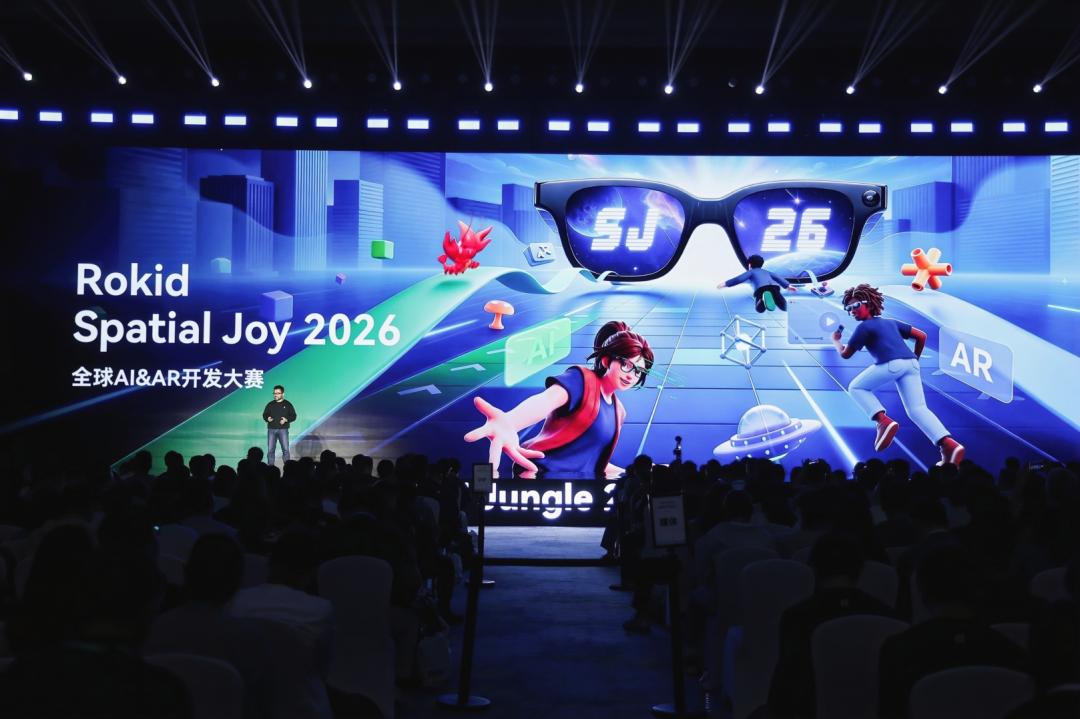
At the same time, Rokid opens APIs to developers to promote the spontaneous formation of scenario closed loops. According to the data released by Rokid, its platform has more than 45,000 registered developers, more than 12,000 developed agents, and more than 700 launched agents. Individual and enterprise
