
Metaschoderite
A valid IMA mineral species
This page is currently not sponsored. Click here to sponsor this page.
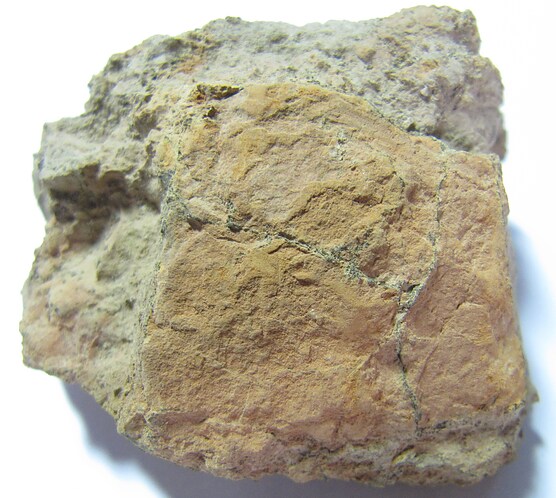


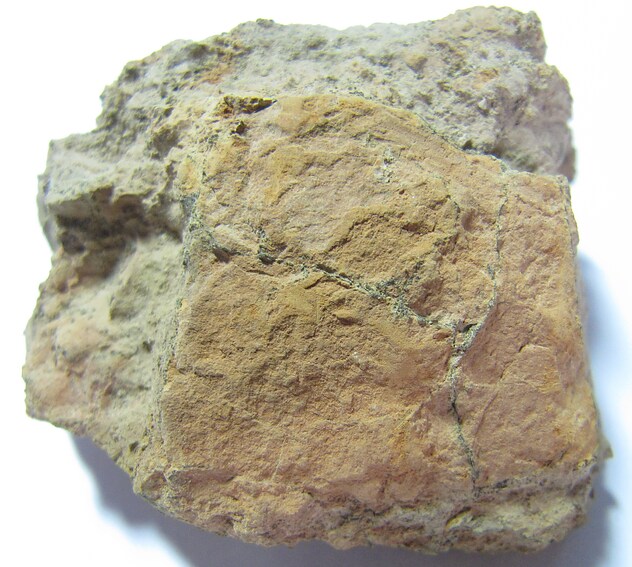
About Metaschoderite
Formula:
Al2(PO4)(VO4) · 6H2O
Colour:
Yellowish orange
Hardness:
2
Crystal System:
Monoclinic
Name:
Named as a dehydration product (=meta) of schoderite. The root name is for William Paul Schoder (1900-1977) research chemist, Union Carbide Nuclear Company, for his outstanding contributions to the metallurgy of vanadium.
Unique Identifiers
Mindat ID:
2683
Long-form identifier:
mindat:1:1:2683:9
IMA Classification of Metaschoderite
Approved
IMA Formula:
Al2(PO4)(V5+O4)·6H2O
Approval year:
1960
First published:
1962
Approval history:
Approved special procedure IMA 1962.
(L2)IMA 24-E: Proposal to change the formula of metaschoderite back to Al2(PO4)(VO4)·6H2O (Erika Kiechle and Thomas Witzke)
Proposal 24-E on metaschoderite is accepted, and the formula of this species is changed back to Al2(PO4)(VO4)·6H2O, according to the original description.
(L2)IMA 24-E: Proposal to change the formula of metaschoderite back to Al2(PO4)(VO4)·6H2O (Erika Kiechle and Thomas Witzke)
Proposal 24-E on metaschoderite is accepted, and the formula of this species is changed back to Al2(PO4)(VO4)·6H2O, according to the original description.
Classification of Metaschoderite
8.CE.70
8 : PHOSPHATES, ARSENATES, VANADATES
C : Phosphates without additional anions, with H2O
E : With only medium-sized cations, RO4:H2O about 1:2.5
8 : PHOSPHATES, ARSENATES, VANADATES
C : Phosphates without additional anions, with H2O
E : With only medium-sized cations, RO4:H2O about 1:2.5
43.3.1.2
43 : COMPOUND PHOSPHATES, ETC.
3 : Hydrated Normal Compound Phosphates, etc·
43 : COMPOUND PHOSPHATES, ETC.
3 : Hydrated Normal Compound Phosphates, etc·
21.3.3
21 : Vanadates (and vanadates with arsenate or phosphate)
3 : Vanadates of Al, rare earths, Pb, V or Bi
21 : Vanadates (and vanadates with arsenate or phosphate)
3 : Vanadates of Al, rare earths, Pb, V or Bi
Mineral Symbols
As of 2021 there are now IMA–CNMNC approved mineral symbols (abbreviations) for each mineral species, useful for tables and diagrams.
| Symbol | Source | Reference for Standard |
|---|---|---|
| Msdr | IMA–CNMNC | Warr, L.N. (2021). IMA–CNMNC approved mineral symbols. Mineralogical Magazine, 85(3), 291-320. doi:10.1180/mgm.2021.43 |
Physical Properties of Metaschoderite
Optical Data of Metaschoderite
Type:
Biaxial (+)
RI values:
nα = 1.598 nβ = 1.604 nγ = 1.626
2V:
Measured: 59° , Calculated: 56°
Max. Birefringence:
δ = 0.028
Based on recorded range of RI values above.
Based on recorded range of RI values above.
Interference Colours:
The colours simulate birefringence patterns seen in thin section under crossed polars. They do not take into account mineral colouration or opacity.
Michel-Levy Bar The default colours simulate the birefringence range for a 30 µm thin-section thickness. Adjust the slider to simulate a different thickness.
Grain Simulation You can rotate the grain simulation to show how this range might look as you rotated a sample under crossed polars. Each grain retains its interference colour (retardation) while its brightness falls to black at extinction and reaches a maximum between extinction positions.
The colours simulate birefringence patterns seen in thin section under crossed polars. They do not take into account mineral colouration or opacity.
Michel-Levy Bar The default colours simulate the birefringence range for a 30 µm thin-section thickness. Adjust the slider to simulate a different thickness.
Grain Simulation You can rotate the grain simulation to show how this range might look as you rotated a sample under crossed polars. Each grain retains its interference colour (retardation) while its brightness falls to black at extinction and reaches a maximum between extinction positions.
Surface Relief:
High (positive)
Relative to Canada balsam mounting medium (n ≈ 1.537).
Relative to Canada balsam mounting medium (n ≈ 1.537).
This shows the grain boundary and Becke line effect under plane-polarised
light, based on the contrast between this mineral's average refractive
index and the mounting medium. It does not take into account mineral
colouration.
In focus
Interference Figure:
This shows the idealized biaxial acute bisectrix (Bxa) interference figure
- the conoscopic view for a grain cut perpendicular to the acute bisectrix, using
this mineral's 2V. The two small white dots mark the melatopes - the points
where the two optic axes emerge - and are shown only when they fall within the
field of view. The coloured bands are isochromatics, and the dark bands are
isogyres.
Rotate the stage: at 0°/90° the isogyres form a cross through the melatopes; at 45° they pull apart into curved hyperbolas. That splitting on rotation - absent in a uniaxial figure - is the standard diagnostic test for telling biaxial minerals from uniaxial ones. If 2V is large, the melatopes may fall outside the field of view, as they often do at the microscope too.
Rotate the stage: at 0°/90° the isogyres form a cross through the melatopes; at 45° they pull apart into curved hyperbolas. That splitting on rotation - absent in a uniaxial figure - is the standard diagnostic test for telling biaxial minerals from uniaxial ones. If 2V is large, the melatopes may fall outside the field of view, as they often do at the microscope too.
Dispersion:
r < v weak
Chemistry of Metaschoderite
Mindat Formula:
Al2(PO4)(VO4) · 6H2O
Element Weights:
Crystallography of Metaschoderite
Crystal System:
Monoclinic
Class (H-M):
2/m - Prismatic
Space Group:
P2/m
Setting:
P2/m
Cell Parameters:
a = 11.4 Å, b = 14.9 Å, c = 9.2 Å
β = 79°
β = 79°
Ratio:
a:b:c = 0.765 : 1 : 0.617
Unit Cell V:
1,534.00 ų (Calculated from Unit Cell)
Z:
4
Morphology:
Pseudomorphs after bladed to scaly crystals or spherulitic aggregates.
X-Ray Powder Diffraction
Powder Diffraction Data:
| d-spacing | Intensity |
|---|---|
| 14.9 Å | (60) |
| 11.1 Å | (40) |
| 9.6 Å | (15) |
| 7.5 Å | (100) |
| 5.68 Å | (8) |
| 4.92 Å | (10) |
| 3.02 Å | (20) |
Geological Environment
Paragenetic Mode(s):
| Paragenetic Mode | Earliest Age (Ga) |
|---|---|
| Stage 7: Great Oxidation Event | <2.4 |
| 47a : [Near-surface hydration of prior minerals] | |
| 47c : [Carbonates, phosphates, borates, nitrates] |
Type Occurrence of Metaschoderite
Other Language Names for Metaschoderite
Common Associates
Associations Based on Photo Data:
| 3 photos of Metaschoderite associated with Vashegyite | Al11(PO4)9(OH)6 · 38H2O |
| 2 photos of Metaschoderite associated with Vanoxite | V4+4V5+2O13 · 8H2O |
| 2 photos of Metaschoderite associated with Schoderite | Al2(PO4)(VO4) · 8H2O |
Related Minerals - Strunz-mindat Grouping
| 8.CE. | Monteneroite | Cu2+Mn2+2(AsO4)2 · 8H2O |
| 8.CE. | Belmonteite | CaMn2(AsO4)2 · 7H2O |
| 8.CE. | Zincocabrerite | ZnMg2(AsO4)2(H2O)8 |
| 8.CE.X | Babánekite | Cu3(AsO4)2 · 8H2O |
| 8.CE.05 | Chudobaite | Mg5(AsO4)2(AsO3OH)2 · 10H2O |
| 8.CE.05 | Geigerite | Mn2+5(AsO4)2(HAsO4)2 · 10H2O |
| 8.CE.10 | Newberyite | Mg(PO3OH) · 3H2O |
| 8.CE.10 | Manganonewberyite | Mn(PO3OH)(H2O)3 |
| 8.CE.15 | Fanguangite | (MoO2)(PO3OH) · 4H2O |
| 8.CE.15 | Brassite | Mg(HAsO4) · 4H2O |
| 8.CE.20 | Phosphorrösslerite | Mg(PO3OH) · 7H2O |
| 8.CE.20 | Rösslerite | Mg(HAsO4) · 7H2O |
| 8.CE.25 | Switzerite | Mn2+3(PO4)2 · 7H2O |
| 8.CE.25 | Metaswitzerite | Mn2+3(PO4)2 · 4H2O |
| 8.CE.30 | Pradetite | CoCu4(AsO4)2(HAsO4)2 · 9H2O |
| 8.CE.30 | Veselovskýite | ZnCu4(AsO4)2(HAsO4)2 · 9H2O |
| 8.CE.30 | Lindackerite | CuCu4(AsO4)2(HAsO4)2 · 9H2O |
| 8.CE.30 | Klajite | MnCu4(AsO4)2(HAsO4)2 · 9-10H2O |
| 8.CE.30 | Hloušekite | (Ni,Co)Cu4(AsO4)2(AsO3OH)2 · 9H2O |
| 8.CE.30 | Ondrušite | CaCu4(AsO4)2(HAsO4)2 · 10H2O |
| 8.CE.35 | Bobierrite | Mg3(PO4)2 · 8H2O |
| 8.CE.40 | Barićite | (Mg,Fe)3(PO4)2 · 8H2O |
| 8.CE.40 | Parasymplesite | Fe2+3(AsO4)2 · 8H2O |
| 8.CE.40 | Gritsenkoite | CoMg2(AsO4)2(H2O)8 |
| 8.CE.40 | Cabrerite | NiMg2(AsO4)2 · 8H2O |
| 8.CE.40 | Pakhomovskyite | Co3(PO4)2 · 8H2O |
| 8.CE.40 | Vivianite | Fe2+Fe2+2(PO4)2 · 8H2O |
| 8.CE.40 | Arupite | Ni3(PO4)2 · 8H2O |
| 8.CE.40 | Erythrite | Co3(AsO4)2 · 8H2O |
| 8.CE.40 | Hörnesite | Mg3(AsO4)2 · 8H2O |
| 8.CE.40 | Manganohörnesite | Mn2+3(AsO4)2 · 8H2O |
| 8.CE.40 | Köttigite | Zn3(AsO4)2 · 8H2O |
| 8.CE.40 | Ferrisymplesite | Fe3+3(AsO4)2(OH)3 · 5H2O |
| 8.CE.40 | Annabergite | Ni3(AsO4)2 · 8H2O |
| 8.CE.45 | Symplesite | Fe2+3(AsO4)2 · 8H2O |
| 8.CE.50 | Cattiite | Mg3(PO4)2 · 22H2O |
| 8.CE.55 | Koninckite | Fe3+PO4 · 3H2O |
| 8.CE.60 | Kaňkite | FeAsO4 · 3.5H2O |
| 8.CE.60 | Hilarionite | Fe3+2(SO4)(AsO4)(OH) · 6H2O |
| 8.CE.65 | Steigerite | Al(VO4) · 3H2O |
| 8.CE.70 | Schoderite | Al2(PO4)(VO4) · 8H2O |
| 8.CE.75 | Zigrasite | MgZr(PO4)2 · 4H2O |
| 8.CE.75 | 'UM2009-11-PO:CaHZr' | CaZr[PO4]2 · 4H2O |
| 8.CE.75 | Malhmoodite | FeZr(PO4)2 · 4H2O |
| 8.CE.80 | Santabarbaraite | Fe3+3(PO4)2(OH)3 · 5H2O |
| 8.CE.85 | Metaköttigite | (Zn,Fe,Fe)3(AsO4)2 · 8(H2O,OH) |
| 8.CE.90 | Slavkovite | Cu13(AsO4)6(AsO3OH)4 · 23H2O |
Other Information
Health Risks:
No information on health risks for this material has been entered into the database. You should always treat mineral specimens with care.
Internet Links for Metaschoderite
mindat.org URL:
https://www.mindat.org/min-2683.html
Please feel free to link to this page.
Please feel free to link to this page.
Search Engines:
External Links:
Mineral Dealers:
References for Metaschoderite
Reference List:
Hausen, Donald M. (1962) Schoderite, a new phosphovanadate mineral from Nevada. American Mineralogist, 47 (5-6) 637-648
(1962) International Mineralogical Association: Commission on New Minerals and Mineral Names. Mineralogical Magazine and Journal of the Mineralogical Society, 33 (258) 260-263 doi:10.1180/minmag.1962.033.258.09
Localities for Metaschoderite
Showing 3 localities.
 symbol to view information about a locality.
The
symbol to view information about a locality.
The Locality List
 - This locality has map coordinates listed.
- This locality has estimated coordinates.
ⓘ - Click for references and further information on this occurrence.
? - Indicates mineral may be doubtful at this locality.
- This locality has map coordinates listed.
- This locality has estimated coordinates.
ⓘ - Click for references and further information on this occurrence.
? - Indicates mineral may be doubtful at this locality.
 - Good crystals or important locality for species.
 - World class for species or very significant.
(TL) - Type Locality for a valid mineral species.
(FRL) - First Recorded Locality for everything else (eg varieties).
- World class for species or very significant.
(TL) - Type Locality for a valid mineral species.
(FRL) - First Recorded Locality for everything else (eg varieties).
All localities listed without proper references should be considered as questionable.
USA | |
| Evans et al. (1984) |
| [Anthony (1997) |
| Pabst (1979) +3 other references |
Quick NavTopAbout MetaschoderiteUnique IdentifiersIMA Classification Classification Mineral SymbolsPhysical Properties Optical Data Chemistry Crystallography X-Ray Powder DiffractionGeological EnvironmentType Occurrence Other LanguagesCommon AssociatesStrunz-MindatOther InformationInternet Links References Localities Locality List

Gibellini Vanadium Project, Fish Creek Range, Gibellini Mining District, Eureka County, Nevada, USA