
datetime --- 基本的な日付と時間の型
ソースコード: Lib/datetime.py
datetime モジュールは、日付や時刻を操作するためのクラスを提供しています。
日付や時刻に対する算術がサポートされている一方、実装では出力のフォーマットや操作のための効率的な属性の抽出に重点を置いています。
Tip
書式コード に飛ぶ。
参考
calendarモジュール汎用のカレンダー関連関数。
timeモジュール時刻へのアクセスと変換。
zoneinfoモジュールIANAタイムゾーンデータベースを表す具体的なタイムゾーン。
- dateutil パッケージ
拡張タイムゾーンと構文解析サポートのあるサードパーティーライブラリ。
- DateType パッケージ
Third-party library that introduces distinct static types to for example, allow static type checkers to differentiate between naive and aware datetimes.
Aware and naive objects
日時のオブジェクトは、それらがタイムゾーンの情報を含んでいるかどうかによって "aware" あるいは "naive" に分類されます。
タイムゾーンや夏時間の情報のような、アルゴリズム的で政治的な適用可能な時間調節に関する知識を持っているため、 aware オブジェクトは他の aware オブジェクトとの相対関係を特定できます。 aware オブジェクトは解釈の余地のない特定の実時刻を表現します。 [1]
naive オブジェクトには他の日付時刻オブジェクトとの相対関係を把握するのに足る情報が含まれません。あるプログラム内の数字がメートルを表わしているのか、マイルなのか、それとも質量なのかがプログラムによって異なるように、naive オブジェクトが協定世界時 (UTC) なのか、現地時間なのか、それとも他のタイムゾーンなのかはそのプログラムに依存します。Naive オブジェクトはいくつかの現実的な側面を無視してしまうというコストを無視すれば、簡単に理解でき、うまく利用することができます。
For applications requiring aware objects, datetime and time
objects have an optional time zone information attribute, tzinfo, that
can be set to an instance of a subclass of the abstract tzinfo class.
These tzinfo objects capture information about the offset from UTC
time, the time zone name, and whether daylight saving time is in effect.
ただ一つの具象 tzinfo クラスである timezone クラスが datetime モジュールで提供されています。 timezone クラスは、UTCからのオフセットが固定である単純なタイムゾーン(例えばUTCそれ自体)、および北アメリカにおける東部標準時(EST)/東部夏時間(EDT)のような単純ではないタイムゾーンの両方を表現できます。より深く詳細までタイムゾーンをサポートするかはアプリケーションに依存します。世界中の時刻の調整を決めるルールは合理的というよりかは政治的なもので、頻繁に変わり、UTC を除くと都合のよい基準というものはありません。
定数
datetime モジュールでは以下の定数を公開しています:
- datetime.UTC
UTCタイムゾーンシングルトン
datetime.timezone.utcの別名。Added in version 3.11.
Available types
- class datetime.date
理想的な naive な日付で、これまでもこれからも現在のグレゴリオ暦 (Gregorian calender) が有効であることを仮定しています。 属性は
year,month,およびdayです。
- class datetime.time
理想的な時刻で、特定の日から独立しており、毎日が厳密に 24*60*60 秒であると仮定しています。("うるう秒: leap seconds" の概念はありません。) 属性は
hour,minute,second,microsecond, およびtzinfoです。
- class datetime.datetime
日付と時刻を組み合わせたものです。 属性は
year,month,day,hour,minute,second,microsecond, およびtzinfoです。
- class datetime.tzinfo
タイムゾーン情報オブジェクトの抽象基底クラスです。
datetimeおよびtimeクラスで用いられ、カスタマイズ可能な時刻修正の概念 (たとえばタイムゾーンや夏時間の計算) を提供します。
- class datetime.timezone
tzinfo抽象基底クラスを UTC からの固定オフセットとして実装するクラスです。Added in version 3.2.
これらの型のオブジェクトは変更不可能 (immutable) です。
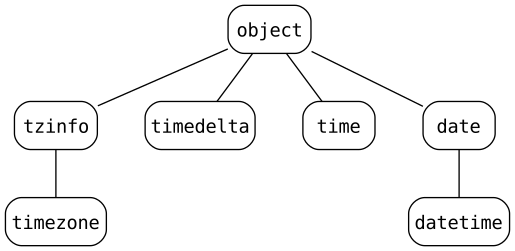
Subclass relationships:
Common properties
Determining if an object is aware or naive
date 型のオブジェクトは常に naive です。
time 型あるいは datetime 型のオブジェクトは aware か naive のどちらかです。
次の条件を両方とも満たす場合、 datetime オブジェクト d は aware です:
d.tzinfoがNoneでないd.tzinfo.utcoffset(d)がNoneを返さない
どちらかを満たさない場合は、 d は naive です。
次の条件を両方とも満たす場合、 time オブジェクト t は aware です:
t.tzinfoがNoneでないt.tzinfo.utcoffset(None)がNoneを返さない
どちらかを満たさない場合は、 t は naive です。
aware なオブジェクトと naive なオブジェクトの区別は timedelta オブジェクトにはあてはまりません。
timedelta objects
timedelta オブジェクトは経過時間、すなわち二つの datetime または date のインスタンスの差を表します。
- class datetime.timedelta(days=0, seconds=0, microseconds=0, milliseconds=0, minutes=0, hours=0, weeks=0)
全ての引数がオプションで、デフォルト値は0です。 引数は整数、浮動小数点数でもよく、正でも負でもかまいません。
days, seconds, microseconds だけが内部的に保持されます。 引数は以下のようにして変換されます:
1 ミリ秒は 1000 マイクロ秒に変換されます。
1 分は 60 秒に変換されます。
1 時間は 3600 秒に変換されます。
1 週間は 7 日に変換されます。
さらに、値が一意に表されるように days, seconds, microseconds が以下のように正規化されます
0 <= microseconds < 10000000 <= seconds < 3600*24(一日中の秒数)-999999999 <= days <= 999999999
次の例は、 days, seconds, microseconds に加えて任意の引数がどう "集約" され、最終的に3つの属性に正規化されるかの説明をしています:
>>> import datetime as dt
>>> delta = dt.timedelta(
...     days=50,
...     seconds=27,
...     microseconds=10,
...     milliseconds=29000,
...     minutes=5,
...     hours=8,
...     weeks=2
... )
>>> # Only days, seconds, and microseconds remain
>>> delta
datetime.timedelta(days=64, seconds=29156, microseconds=10)
Tip
import datetime as dtinstead ofimport datetimeorfrom datetime import datetimeto avoid confusion between the module and the class. See How I Import Python’s datetime Module.引数のいずれかが浮動小数点であり、小数のマイクロ秒が存在する場合、小数のマイクロ秒は全ての引数から一度取り置かれ、それらの和は最近接偶数のマイクロ秒に丸められます。浮動小数点の引数がない場合、値の変換と正規化の過程は厳密な (失われる情報がない) ものとなります。
日の値を正規化した結果、指定された範囲の外側になった場合には、
OverflowErrorが送出されます。負の値を正規化すると、最初は混乱するような値になります。例えば:
>>> import datetime as dt
>>> d = dt.timedelta(microseconds=-1)
>>> (d.days, d.seconds, d.microseconds)
(-1, 86399, 999999)
Since the string representation of
timedeltaobjects can be confusing, use the following recipe to produce a more readable format:>>> def pretty_timedelta(td): ... if td.days >= 0: ... return str(td) ... return f'-({-td!s})' ... >>> d = timedelta(hours=-1) >>> str(d) # not human-friendly '-1 day, 23:00:00' >>> pretty_timedelta(d) '-(1:00:00)'
以下にクラス属性を示します:
- timedelta.max
最大の値を表す
timedeltaオブジェクトで、timedelta(days=999999999, hours=23, minutes=59, seconds=59, microseconds=999999)です。
正規化のために、 timedelta.max は -timedelta.min より大きいことに注意してください。 -timedelta.max は timedelta オブジェクトとして表現することができません。
インスタンスの属性 (読み出しのみ):
- timedelta.days
両端値を含む-999,999,999 から 999,999,999 の間
- timedelta.seconds
両端値を含む 0 から 86,399 の間
注意
It is a somewhat common bug for code to unintentionally use this attribute when it is actually intended to get a
total_seconds()value instead:>>> import datetime as dt >>> duration = dt.timedelta(seconds=11235813) >>> duration.days, duration.seconds (130, 3813) >>> duration.total_seconds() 11235813.0
- timedelta.microseconds
両端値を含む 0 から 999,999 の間
サポートされている演算を以下に示します:
演算 |
結果 |
|---|---|
|
|
|
|
|
時間差と整数の積。演算後、 |
一般的に、 |
|
|
時間差と浮動小数点の積。結果は最近接偶数への丸めを利用して最も近い timedelta.resolution の倍数に丸められます。 |
|
|
|
時間差を浮動小数点や整数で除したもの。結果は最近接偶数への丸めを利用して最も近い timedelta.resolution の倍数に丸められます。 |
|
floor が計算され、余りは (もしあれば) 捨てられます。後者の場合、整数が返されます。(3) |
|
剰余が |
|
商と剰余が計算されます: |
|
同じ値を持つ |
|
|
|
|
|
|
|
|
注釈:
この演算は正確ですが、オーバフローするかもしれません。
この演算は正確であり、オーバフローし得ません。
0 による除算は
ZeroDivisionErrorを送出します。-timedelta.maxはtimedeltaオブジェクトで表現することができません。timedeltaオブジェクトの文字列表現は内部表現に類似した形に正規化されます。そのため負の timedelta は少し変な結果になります。例えば:>>> timedelta(hours=-5) datetime.timedelta(days=-1, seconds=68400) >>> print(_) -1 day, 19:00:00
t3 が
timedelta.maxのときを除けば、式t2 - t3は常に、式t2 + (-t3)と同等です。t3 がtimedelta.maxの場合、前者の式は結果の値が出ますが、後者はオーバーフローを起こします。
上に列挙した操作に加え timedelta オブジェクトは date および datetime オブジェクトとの間で加減算をサポートしています (下を参照してください)。
バージョン 3.2 で変更: Floor division and true division of a timedelta object by another
timedelta object are now supported, as are remainder operations and
the divmod() function. True division and multiplication of a
timedelta object by a float object are now supported.
timedelta オブジェクトは等価性と順序の比較をサポートします。
ブール演算コンテキストでは、 timedelta オブジェクトは timedelta(0) に等しくない場合かつそのときに限り真となります。
インスタンスメソッド:
- timedelta.total_seconds()
Return the total number of seconds contained in the duration. Equivalent to
td / timedelta(seconds=1). For interval units other than seconds, use the division form directly (for example,td / timedelta(microseconds=1)).非常に長い期間 (多くのプラットフォームでは270年以上) については、このメソッドはマイクロ秒の精度を失うことがあることに注意してください。
Added in version 3.2.
Examples of usage: timedelta
正規化の追加の例です:
>>> # Components of another_year add up to exactly 365 days
>>> import datetime as dt
>>> year = dt.timedelta(days=365)
>>> another_year = dt.timedelta(weeks=40, days=84, hours=23,
...                             minutes=50, seconds=600)
>>> year == another_year
True
>>> year.total_seconds()
31536000.0
timedelta の計算の例です:
>>> import datetime as dt
>>> year = dt.timedelta(days=365)
>>> ten_years = 10 * year
>>> ten_years
datetime.timedelta(days=3650)
>>> ten_years.days // 365
10
>>> nine_years = ten_years - year
>>> nine_years
datetime.timedelta(days=3285)
>>> three_years = nine_years // 3
>>> three_years, three_years.days // 365
(datetime.timedelta(days=1095), 3)
date objects
date オブジェクトは、両方向に無期限に拡張された現在のグレゴリオ暦という理想化された暦の日付 (年月日) を表します。
1 年 1 月 1 日は日番号 1、1 年 1 月 2 日は日番号 2 と呼ばれ、他も同様です。 [2]
- class datetime.date(year, month, day)
全ての引数が必須です。 引数は整数で、次の範囲に収まっていなければなりません:
MINYEAR <= year <= MAXYEAR1 <= month <= 121 <= day <= 指定された月と年における日数
範囲を超えた引数を与えた場合、
ValueErrorが送出されます。
他のコンストラクタ、および全てのクラスメソッドを以下に示します:
- classmethod date.today()
現在のローカルな日付を返します。
date.fromtimestamp(time.time())と等価です。
- classmethod date.fromtimestamp(timestamp)
Return the local date corresponding to the POSIX timestamp, such as is returned by
time.time().timestamp がプラットフォームの C 関数
localtime()がサポートする値の範囲から外れていた場合、OverflowErrorを送出するかもしれません。またlocaltime()呼び出しが失敗した場合にはOSErrorを送出するかもしれません。この範囲は通常は 1970 年から 2038 年までに制限されています。タイムスタンプの表記にうるう秒を含める非 POSIX なシステムでは、うるう秒はfromtimestamp()では無視されます。バージョン 3.3 で変更: timestamp がプラットフォームの C 関数
localtime()のサポートする値の範囲から外れていた場合、ValueErrorではなくOverflowErrorを送出するようになりました。localtime()の呼び出し失敗でValueErrorではなくOSErrorを送出するようになりました。バージョン 3.15 で変更: Accepts any real number as timestamp, not only integer or float.
- classmethod date.fromordinal(ordinal)
Return the date corresponding to the proleptic Gregorian ordinal, where January 1 of year 1 has ordinal 1.
1 <= ordinal <= date.max.toordinal()でない場合、ValueErrorが送出されます。 任意の日付dに対し、date.fromordinal(d.toordinal()) == dとなります。
- classmethod date.fromisoformat(date_string)
以下の例外を除く、有効な ISO 8601 フォーマットで与えられた date_string に対応する
dateを返します :精度の低い日付は現在サポートされていません(
YYYY-MM,YYYY)。拡張された日付表現は現在サポートされていません(
±YYYYYY-MM-DD)。序数の日付は現在サポートされていません(
YYYY-OOO)。
例:
>>> import datetime as dt
>>> dt.date.fromisoformat('2019-12-04')
datetime.date(2019, 12, 4)
>>> dt.date.fromisoformat('20191204')
datetime.date(2019, 12, 4)
>>> dt.date.fromisoformat('2021-W01-1')
datetime.date(2021, 1, 4)
Added in version 3.7.
バージョン 3.11 で変更: 以前はこのメソッドは
YYYY-MM-DDフォーマットのみをサポートしていました。
- classmethod date.fromisocalendar(year, week, day)
Return a
datecorresponding to the ISO calendar date specified by year, week and day. This is the inverse of the functiondate.isocalendar().Added in version 3.8.
- classmethod date.strptime(date_string, format)
Return a
datecorresponding to date_string, parsed according to format. This is equivalent to:date(*(time.strptime(date_string, format)[0:3]))
date_string と format が
time.strptime()で構文解析できない場合や、この関数が時刻タプルを返してこない場合にはValueErrorを送出します。strftime() and strptime() behavior およびdate.fromisoformat()も参照してください。注釈
If format specifies a day of month (
%d) without a year,ValueErroris raised. This is to avoid a quadrennial leap year bug in code seeking to parse only a month and day as the default year used in absence of one in the format is not a leap year. The workaround is to always include a year in your format. If parsing date_string values that do not have a year, explicitly add a year that is a leap year before parsing:>>> import datetime as dt >>> date_string = "02/29" >>> when = dt.date.strptime(f"{date_string};1984", "%m/%d;%Y") # Avoids leap year bug. >>> when.strftime("%B %d") 'February 29'
Added in version 3.14.
以下にクラス属性を示します:
- date.min
表現できる最も古い日付で、
date(MINYEAR, 1, 1)です。
- date.max
表現できる最も新しい日付で、
date(MAXYEAR, 12, 31)です。
- date.resolution
等しくない日付オブジェクト間の最小の差で、
timedelta(days=1)です。
インスタンスの属性 (読み出しのみ):
- date.month
両端値を含む 1 から 12 までの値です。
- date.day
1 から与えられた月と年における日数までの値です。
サポートされている演算を以下に示します:
演算 |
結果 |
|---|---|
|
|
|
|
|
(3) |
date1 == date2date1 != date2 |
等価性の比較。(4) |
date1 < date2date1 > date2date1 <= date2date1 >= date2 |
順序の比較。(5) |
注釈:
date2 は、
timedelta.days > 0の場合は進む方向に、timedelta.days < 0の場合は戻る方向に移動します。 演算後はdate2 - date1 == timedelta.daysが成立します。timedelta.secondsおよびtimedelta.microsecondsは無視されます。date2.yearがMINYEARになってしまったり、MAXYEARより大きくなってしまう場合にはOverflowErrorが送出されます。timedelta.secondsとtimedelta.microsecondsは無視されます。この演算は厳密で、オーバフローしません。
timedelta.secondsおよびtimedelta.microsecondsは 0 で、演算後にはdate2 + timedelta == date1となります。同じ日を表す
dateオブジェクトは等しいです。datetimeのインスタンスではないdateオブジェクトは、同じ日を表していても、datetimeオブジェクトとは決して等価にはなりません。date1 is considered less than date2 when date1 precedes date2 in time. In other words,
date1 < date2if and only ifdate1.toordinal() < date2.toordinal().Order comparison between a
dateobject that is not also adatetimeinstance and adatetimeobject raisesTypeError.
バージョン 3.13 で変更: Comparison between datetime object and an instance of
the date subclass that is not a datetime subclass
no longer converts the latter to date, ignoring the time part
and the time zone.
The default behavior can be changed by overriding the special comparison
methods in subclasses.
ブール演算コンテキストでは、全ての time オブジェクトは真とみなされます。
インスタンスメソッド:
- date.replace(year=self.year, month=self.month, day=self.day)
Return a new
dateobject with the same values, but with specified parameters updated.以下はプログラム例です:
>>> import datetime as dt
>>> d = dt.date(2002, 12, 31)
>>> d.replace(day=26)
datetime.date(2002, 12, 26)
The generic function
copy.replace()also supportsdateobjects.
- date.timetuple()
time.localtime()が返すようなtime.struct_timeを返します。時分秒が 0 で、 DST フラグが -1 です。
d.timetuple()は次の式と等価です:time.struct_time((d.year, d.month, d.day, 0, 0, 0, d.weekday(), yday, -1))
ここで、
yday = d.toordinal() - date(d.year, 1, 1).toordinal() + 1は本年の 1 月 1 日を 1 としたときの日付番号です。
- date.toordinal()
先発グレゴリオ暦における日付序数を返します。 1 年の 1 月 1 日が序数 1 となります。任意の
dateオブジェクトdについて、date.fromordinal(d.toordinal()) == dとなります。
- date.weekday()
月曜日を 0、日曜日を 6 として、曜日を整数で返します。例えば、
date(2002, 12, 4).weekday() == 2であり、水曜日を示します。isoweekday()も参照してください。
- date.isoweekday()
月曜日を 1,日曜日を 7 として、曜日を整数で返します。例えば、
date(2002, 12, 4).isoweekday() == 3であり、水曜日を示します。weekday(),isocalendar()も参照してください。
- date.isocalendar()
year、week、weekdayの3つで構成された named tuple を返します。ISO 暦はグレゴリオ暦の変種として広く用いられています。 [3]
ISO 年は完全な週が 52 週または 53 週あり、週は月曜から始まって日曜に終わります。ISO 年でのある年における最初の週は、その年の木曜日を含む最初の (グレゴリオ暦での) 週となります。この週は週番号 1 と呼ばれ、この木曜日での ISO 年はグレゴリオ暦における年と等しくなります。
例えば、2004 年は木曜日から始まるため、ISO 年の最初の週は 2003 年 12 月 29 日、月曜日から始まり、2004 年 1 月 4 日、日曜日に終わります
>>> import datetime as dt
>>> dt.date(2003, 12, 29).isocalendar()
datetime.IsoCalendarDate(year=2004, week=1, weekday=1)
>>> dt.date(2004, 1, 4).isocalendar()
datetime.IsoCalendarDate(year=2004, week=1, weekday=7)
バージョン 3.9 で変更: 結果が タプル から named tuple へ変更されました。
- date.isoformat()
日付を ISO 8601 書式の
YYYY-MM-DDで表した文字列を返します:>>> import datetime as dt >>> dt.date(2002, 12, 4).isoformat() '2002-12-04'
- date.ctime()
日付を表す文字列を返します:
>>> import datetime as dt
>>> dt.date(2002, 12, 4).ctime()
'Wed Dec  4 00:00:00 2002'
d.ctime()は次の式と等価です:time.ctime(time.mktime(d.timetuple()))
これが等価になるのは、 (
time.ctime()に呼び出され、date.ctime()に呼び出されない) ネイティブの C 関数ctime()が C 標準に準拠しているプラットフォーム上でです。
- date.strftime(format)
明示的な書式文字列で制御された、日付を表現する文字列を返します。 時間、分、秒を表す書式コードは値 0 になります。 strftime() and strptime() behavior および
date.isoformat()も参照してください。
- date.__format__(format)
date.strftime()と等価です。 これにより、 フォーマット済み文字列リテラル の中やstr.format()を使っているときにdateオブジェクトの書式文字列を指定できます。 strftime() and strptime() behavior およびdate.isoformat()も参照してください。
Examples of usage: date
イベントまでの日数を数える例を示します:
>>> import time
>>> import datetime as dt
>>> today = dt.date.today()
>>> today
datetime.date(2007, 12, 5)
>>> today == dt.date.fromtimestamp(time.time())
True
>>> my_birthday = dt.date(today.year, 6, 24)
>>> if my_birthday < today:
...     my_birthday = my_birthday.replace(year=today.year + 1)
...
>>> my_birthday
datetime.date(2008, 6, 24)
>>> time_to_birthday = abs(my_birthday - today)
>>> time_to_birthday.days
202
さらなる date を使う例:
>>> import datetime as dt
>>> d = dt.date.fromordinal(730920) # 730920th day after 1. 1. 0001
>>> d
datetime.date(2002, 3, 11)

>>> # Methods related to formatting string output
>>> d.isoformat()
'2002-03-11'
>>> d.strftime("%d/%m/%y")
'11/03/02'
>>> d.strftime("%A %d. %B %Y")
'Monday 11. March 2002'
>>> d.ctime()
'Mon Mar 11 00:00:00 2002'
>>> 'The {1} is {0:%d}, the {2} is {0:%B}.'.format(d, "day", "month")
'The day is 11, the month is March.'

>>> # Methods for extracting 'components' under different calendars
>>> t = d.timetuple()
>>> for i in t:
...     print(i)
2002                # year
3                   # month
11                  # day
0
0
0
0                   # weekday (0 = Monday)
70                  # 70th day in the year
-1
>>> ic = d.isocalendar()
>>> for i in ic:
...     print(i)
2002                # ISO year
11                  # ISO week number
1                   # ISO day number ( 1 = Monday )

>>> # A date object is immutable; all operations produce a new object
>>> d.replace(year=2005)
datetime.date(2005, 3, 11)
datetime objects
datetime オブジェクトは date オブジェクトおよび time オブジェクトの全ての情報が入っている単一のオブジェクトです。
Like a date object, datetime assumes the current Gregorian
calendar extended in both directions; like a time object,
datetime assumes there are exactly 3600*24 seconds in every day.
以下にコンストラクタを示します:
- class datetime.datetime(year, month, day, hour=0, minute=0, second=0, microsecond=0, tzinfo=None, *, fold=0)
year, month, day 引数は必須です。 tzinfo は
Noneまたはtzinfoサブクラスのインスタンスです。 残りの引数は次の範囲の整数でなければなりません:MINYEAR <= year <= MAXYEAR,1 <= month <= 12,1 <= day <= 指定された月と年における日数,0 <= hour < 24,0 <= minute < 60,0 <= second < 60,0 <= microsecond < 1000000,fold in [0, 1].
範囲を超えた引数を与えた場合、
ValueErrorが送出されます。バージョン 3.6 で変更: fold パラメータが追加されました。
他のコンストラクタ、および全てのクラスメソッドを以下に示します:
- classmethod datetime.today()
tzinfoがNoneである現在のローカルの日付および時刻を返します。次と等価です:
datetime.fromtimestamp(time.time())
now(),fromtimestamp()も参照してください。このメソッドの機能は
now()と等価ですが、tz引数はありません。
- classmethod datetime.now(tz=None)
現在のローカルな日時を返します。
オプションの引数 tz が
Noneであるか指定されていない場合、このメソッドはtoday()と同様ですが、可能ならばtime.time()タイムスタンプを通じて得ることができる、より高い精度で時刻を提供します (例えば、プラットフォームが C 関数gettimeofday()をサポートする場合には可能なことがあります)。tz が
Noneでない場合、 tz はtzinfoのサブクラスのインスタンスでなければならず、現在の日付および時刻は tz のタイムゾーンに変換されます。today()およびutcnow()よりもこの関数を使う方が好ましいです。注釈
Subsequent calls to
datetime.now()may return the same instant depending on the precision of the underlying clock.
- classmethod datetime.utcnow()
tzinfoがNoneである現在の UTC の日付および時刻を返します。このメソッドは
now()と似ていますが、 naive なdatetimeオブジェクトとして現在の UTC 日付および時刻を返します。 aware な現在の UTC datetime はdatetime.now(timezone.utc)を呼び出すことで取得できます。now()も参照してください。警告
naive な
datetimeオブジェクトは多くのdatetimeメソッドでローカルな時間として扱われるため、 aware な datetime を使って UTC の時刻を表すのが好ましいです。 そのため、 UTC での現在の時刻を表すオブジェクトの作成ではdatetime.now(timezone.utc)を呼び出す方法が推奨されます。バージョン 3.12 で非推奨: Use
datetime.now()withUTCinstead.
- classmethod datetime.fromtimestamp(timestamp, tz=None)
time.time()が返すような、 POSIX タイムスタンプに対応するローカルな日付と時刻を返します。オプションの引数 tz がNoneであるか、指定されていない場合、タイムスタンプはプラットフォームのローカルな日付および時刻に変換され、返されるdatetimeオブジェクトは naive なものになります。tz が
Noneでない場合、 tz はtzinfoのサブクラスのインスタンスでなければならず、タイムスタンプは tz のタイムゾーンに変換されます。タイムスタンプがプラットフォームの C 関数
localtime()やgmtime()でサポートされている範囲を超えた場合、fromtimestamp()はOverflowErrorを送出することがあります。この範囲はよく 1970 年から 2038 年に制限されています。 またlocaltime()やgmtime()が失敗した際はOSErrorを送出します。 うるう秒がタイムスタンプの概念に含まれている非 POSIX システムでは、fromtimestamp()はうるう秒を無視します。 このため、秒の異なる二つのタイムスタンプが同一のdatetimeオブジェクトとなることが起こり得ます。utcfromtimestamp()よりも、このメソッドの方が好ましいです。バージョン 3.3 で変更: timestamp がプラットフォームの C 関数
localtime()もしくはgmtime()のサポートする値の範囲から外れていた場合、ValueErrorではなくOverflowErrorを送出するようになりました。localtime()もしくはgmtime()の呼び出し失敗でValueErrorではなくOSErrorを送出するようになりました。バージョン 3.6 で変更:
fromtimestamp()はfoldを1にしてインスタンスを返します。バージョン 3.15 で変更: Accepts any real number as timestamp, not only integer or float.
- classmethod datetime.utcfromtimestamp(timestamp)
POSIX タイムスタンプに対応する、
tzinfoがNoneの UTC でのdatetimeを返します。(返されるオブジェクトは naive です。)タイムスタンプがプラットフォームにおける C 関数
localtime()でサポートされている範囲を超えている場合にはOverflowErrorを、gmtime()が失敗した場合にはOSErrorを送出します。 これはたいてい 1970 年から 2038 年に制限されています。aware な
datetimeオブジェクトを得るにはfromtimestamp()を呼んでください:datetime.fromtimestamp(timestamp, timezone.utc)
POSIX 互換プラットフォームでは、これは以下の表現と等価です:
datetime(1970, 1, 1, tzinfo=timezone.utc) + timedelta(seconds=timestamp)
後者を除き、式は常に年の全範囲 (
MINYEARからMAXYEARを含みます) をサポートします。警告
naive な
datetimeオブジェクトは多くのdatetimeメソッドでローカルな時間として扱われるため、 aware な datetime を使って UTC の時刻を表すのが好ましいです。 そのため、 UTC でのある特定のタイムスタンプを表すオブジェクトの作成ではdatetime.fromtimestamp(timestamp, tz=timezone.utc)を呼び出す方法が推奨されます。バージョン 3.3 で変更: timestamp がプラットフォームの C 関数
gmtime()のサポートする値の範囲から外れていた場合、ValueErrorではなくOverflowErrorを送出するようになりました。gmtime()の呼び出し失敗でValueErrorではなくOSErrorを送出するようになりました。バージョン 3.15 で変更: Accepts any real number as timestamp, not only integer or float.
バージョン 3.12 で非推奨: Use
datetime.fromtimestamp()withUTCinstead.
- classmethod datetime.fromordinal(ordinal)
1 年 1 月 1 日を序数 1 とする早期グレゴリオ暦序数に対応する
datetimeオブジェクトを返します。1 <= ordinal <= datetime.max.toordinal()でなければValueErrorが送出されます。 返されるオブジェクトの時間、分、秒、およびマイクロ秒はすべて 0 で、tzinfoはNoneとなっています。
- classmethod datetime.combine(date, time, tzinfo=time.tzinfo)
Return a new
datetimeobject whose date components are equal to the givendateobject's, and whose time components are equal to the giventimeobject's. If the tzinfo argument is provided, its value is used to set thetzinfoattribute of the result, otherwise thetzinfoattribute of the time argument is used. If the date argument is adatetimeobject, its time components andtzinfoattributes are ignored.For any
datetimeobjectd,d == datetime.combine(d.date(), d.time(), d.tzinfo).バージョン 3.6 で変更: tzinfo 引数が追加されました。
- classmethod datetime.fromisoformat(date_string)
以下の例外を除く、有効な ISO 8601 フォーマットで与えられた date_string に対応する
datetimeを返します :小数の秒があるタイムゾーンオフセット。
Tセパレーターを他の1文字のユニコードに置き換えたもの。少数の時と分はサポートされていません。
精度の低い日付は現在サポートされていません(
YYYY-MM,YYYY)。拡張された日付表現は現在サポートされていません(
±YYYYYY-MM-DD)。序数の日付は現在サポートされていません(
YYYY-OOO)。
例:
>>> import datetime as dt
>>> dt.datetime.fromisoformat('2011-11-04')
datetime.datetime(2011, 11, 4, 0, 0)
>>> dt.datetime.fromisoformat('20111104')
datetime.datetime(2011, 11, 4, 0, 0)
>>> dt.datetime.fromisoformat('2011-11-04T00:05:23')
datetime.datetime(2011, 11, 4, 0, 5, 23)
>>> dt.datetime.fromisoformat('2011-11-04T00:05:23Z')
datetime.datetime(2011, 11, 4, 0, 5, 23, tzinfo=datetime.timezone.utc)
>>> dt.datetime.fromisoformat('20111104T000523')
datetime.datetime(2011, 11, 4, 0, 5, 23)
>>> dt.datetime.fromisoformat('2011-W01-2T00:05:23.283')
datetime.datetime(2011, 1, 4, 0, 5, 23, 283000)
>>> dt.datetime.fromisoformat('2011-11-04 00:05:23.283')
datetime.datetime(2011, 11, 4, 0, 5, 23, 283000)
>>> dt.datetime.fromisoformat('2011-11-04 00:05:23.283+00:00')
datetime.datetime(2011, 11, 4, 0, 5, 23, 283000, tzinfo=datetime.timezone.utc)
>>> dt.datetime.fromisoformat('2011-11-04T00:05:23+04:00')
datetime.datetime(2011, 11, 4, 0, 5, 23,
    tzinfo=datetime.timezone(datetime.timedelta(seconds=14400)))
Added in version 3.7.
バージョン 3.11 で変更: Previously, this method only supported formats that could be emitted by
date.isoformat()ordatetime.isoformat().
- classmethod datetime.fromisocalendar(year, week, day)
Return a
datetimecorresponding to the ISO calendar date specified by year, week and day. The non-date components of the datetime are populated with their normal default values. This is the inverse of the functiondatetime.isocalendar().Added in version 3.8.
- classmethod datetime.strptime(date_string, format)
date_string に対応した
datetimeを返します。 format にしたがって構文解析されます。format がマイクロ秒やタイムゾーン情報を含まない場合は、以下と等価です:
datetime(*(time.strptime(date_string, format)[0:6]))
date_string と format が
time.strptime()で構文解析できない場合や、この関数が時刻タプルを返してこない場合にはValueErrorを送出します。strftime() and strptime() behavior およびdatetime.fromisoformat()も参照してください。バージョン 3.15 で変更: If format specifies a day of month (
%d) without a year,ValueErroris raised. This is to avoid a quadrennial leap year bug in code seeking to parse only a month and day as the default year used in absence of one in the format is not a leap year. The workaround is to always include a year in your format. If parsing date_string values that do not have a year, explicitly add a year that is a leap year before parsing:>>> import datetime as dt >>> date_string = "02/29" >>> when = dt.datetime.strptime(f"{date_string};1984", "%m/%d;%Y") # Avoids leap year bug. >>> when.strftime("%B %d") 'February 29'
以下にクラス属性を示します:
インスタンスの属性 (読み出しのみ):
- datetime.month
両端値を含む 1 から 12 までの値です。
- datetime.day
1 から与えられた月と年における日数までの値です。
- datetime.hour
in
range(24)を満たします。
- datetime.minute
in
range(60)を満たします。
- datetime.second
in
range(60)を満たします。
- datetime.microsecond
in
range(1000000)を満たします。
- datetime.fold
[0, 1]のどちらかです。 繰り返し期間中の実時間の曖昧さ除去に使われます。 (繰り返し期間は、夏時間の終わりに時計が巻き戻るときや、現在のゾーンの UTC オフセットが政治的な理由で減少するときに発生します。) 0または1という値は、同じ実時間で表現される 2 つの時刻のうちのそれぞれ早い方または遅い方を表します。Added in version 3.6.
サポートされている演算を以下に示します:
演算 |
結果 |
|---|---|
|
(1) |
|
(2) |
|
(3) |
datetime1 == datetime2datetime1 != datetime2 |
等価性の比較。(4) |
datetime1 < datetime2datetime1 > datetime2datetime1 <= datetime2datetime1 >= datetime2 |
順序の比較。(5) |
datetime2はdatetime1から時間timedelta移動したもので、timedelta.days > 0の場合未来へ、timedelta.days < 0の場合過去へ移動します。 結果は入力の datetime と同じtzinfo属性を持ち、演算後にはdatetime2 - datetime1 == timedeltaとなります。datetime2.yearがMINYEARよりも小さいか、MAXYEARより大きい場合にはOverflowErrorが送出されます。 入力が aware なオブジェクトの場合でもタイムゾーン修正は全く行われません。datetime2 + timedelta == datetime1となるようなdatetime2を計算します。 ちなみに、結果は入力の datetime と同じtzinfo属性を持ち、入力が aware だとしてもタイムゾーン修正は全く行われません。Subtraction of a
datetimefrom adatetimeis defined only if both operands are naive, or if both are aware. If one is aware and the other is naive,TypeErroris raised.If both are naive, or both are aware and have the same
tzinfoattribute, thetzinfoattributes are ignored, and the result is atimedeltaobjecttsuch thatdatetime2 + t == datetime1. No time zone adjustments are done in this case.If both are aware and have different
tzinfoattributes,a-bacts as ifaandbwere first converted to naive UTC datetimes. The result is(a.replace(tzinfo=None) - a.utcoffset()) - (b.replace(tzinfo=None) - b.utcoffset())except that the implementation never overflows.datetimeオブジェクトはタイムゾーンを考慮して同じ日付と時刻を表す場合、等しいです。Naive and aware
datetimeobjects are never equal.If both comparands are aware, and have the same
tzinfoattribute, thetzinfoandfoldattributes are ignored and the base datetimes are compared. If both comparands are aware and have differenttzinfoattributes, the comparison acts as comparands were first converted to UTC datetimes except that the implementation never overflows.datetimeinstances in a repeated interval are never equal todatetimeinstances in other time zone.タイムゾーンを考慮して、datetime1 が時刻として datetime2 よりも前を表す場合に、datetime1 は datetime2 よりも小さいと見なされます。
Order comparison between naive and aware
datetimeobjects raisesTypeError.If both comparands are aware, and have the same
tzinfoattribute, thetzinfoandfoldattributes are ignored and the base datetimes are compared. If both comparands are aware and have differenttzinfoattributes, the comparison acts as comparands were first converted to UTC datetimes except that the implementation never overflows.
バージョン 3.13 で変更: Comparison between datetime object and an instance of
the date subclass that is not a datetime subclass
no longer converts the latter to date, ignoring the time part
and the time zone.
The default behavior can be changed by overriding the special comparison
methods in subclasses.
インスタンスメソッド:
- datetime.time()
同じhour、minute、second、microsecond 及び foldを持つ
timeオブジェクトを返します。tzinfoはNoneです。timetz()も参照してください。バージョン 3.6 で変更: 値 foldは返される
timeオブジェクトにコピーされます。
- datetime.timetz()
同じhour、minute、second、microsecond、fold および tzinfo 属性を持つ
timeオブジェクトを返します。time()メソッドも参照してください。バージョン 3.6 で変更: 値 foldは返される
timeオブジェクトにコピーされます。
- datetime.replace(year=self.year, month=self.month, day=self.day, hour=self.hour, minute=self.minute, second=self.second, microsecond=self.microsecond, tzinfo=self.tzinfo, *, fold=0)
Return a new
datetimeobject with the same attributes, but with specified parameters updated. Note thattzinfo=Nonecan be specified to create a naive datetime from an aware datetime with no conversion of date and time data.datetimeオブジェクトは汎用的な関数copy.replace()にもサポートされています。バージョン 3.6 で変更: fold パラメータが追加されました。
- datetime.astimezone(tz=None)
tz を新たに
tzinfo属性 として持つdatetimeオブジェクトを返します。 日付および時刻データを調整して、返り値が self と同じ UTC 時刻を持ち、 tz におけるローカルな時刻を表すようにします。もし与えられた場合、 tz は
tzinfoのサブクラスのインスタンスでなければならず、 インスタンスのutcoffset()およびdst()メソッドはNoneを返してはなりません。もし self が naive ならば、おそらくシステムのタイムゾーンで時間を表現します。引数無し (もしくは
tz=Noneの形 ) で呼び出された場合、システムのローカルなタイムゾーンが変更先のタイムゾーンだと仮定されます。 変換後の datetime インスタンスの.tzinfo属性には、 OS から取得したゾーン名とオフセットを持つtimezoneインスタンスが設定されます。self.tzinfoが tz の場合、self.astimezone(tz)は self に等しくなります。つまり、date および time に対する調整は行われません。そうでない場合、結果はタイムゾーン tz におけるローカル時刻で、 self と同じ UTC 時刻を表すようになります。これは、astz = dt.astimezone(tz)とした後、astz - astz.utcoffset()は通常dt - dt.utcoffset()と同じ date および time を持つことを示します。単に
timezoneオブジェクト tz をdatetimeオブジェクト dt に追加したいだけで、日付や時刻データへの調整を行わないのなら、dt.replace(tzinfo=tz)を使ってください。単に aware なdatetimeオブジェクト dt からtimezoneオブジェクトを除去したいだけで、日付や時刻データの変換を行わないのなら、dt.replace(tzinfo=None)を使ってください。デフォルトの
tzinfo.fromutc()メソッドをtzinfoのサブクラスで上書きして,astimezone()が返す結果に影響を及ぼすことができます。エラーの場合を無視すると、astimezone()は以下のように動作します:def astimezone(self, tz): if self.tzinfo is tz: return self # Convert self to UTC, and attach the new timezone object. utc = (self - self.utcoffset()).replace(tzinfo=tz) # Convert from UTC to tz's local time. return tz.fromutc(utc)
バージョン 3.3 で変更: tz が省略可能になりました。
バージョン 3.6 で変更:
datetime.datetime.astimezone()メソッドを naive なインスタンスに対して呼び出せるようになりました。これは、システムのローカルな時間を表現していると想定されます。
- datetime.utcoffset()
tzinfoがNoneの場合、Noneを返し、そうでない場合にはself.tzinfo.utcoffset(self)を返します。 後者の式がNoneあるいは 1 日以下の大きさを持つtimedeltaオブジェクトのいずれかを返さない場合には例外を送出します。バージョン 3.7 で変更: UTC オフセットが分単位でなければならない制限が無くなりました。
- datetime.dst()
tzinfoがNoneの場合Noneを返し、そうでない場合にはself.tzinfo.dst(self)を返します。 後者の式がNoneもしくは、1 日未満の大きさを持つtimedeltaオブジェクトのいずれかを返さない場合には例外を送出します。バージョン 3.7 で変更: DST オフセットが分単位でなければならない制限が無くなりました。
- datetime.tzname()
tzinfoがNoneの場合Noneを返し、そうでない場合にはself.tzinfo.tzname(self)を返します。 後者の式がNoneか文字列オブジェクトのいずれかを返さない場合には例外を送出します。
- datetime.timetuple()
time.localtime()が返すようなtime.struct_timeを返します。d.timetuple()は次の式と等価です:time.struct_time((d.year, d.month, d.day, d.hour, d.minute, d.second, d.weekday(), yday, dst))
ここで
yday = d.toordinal() - date(d.year, 1, 1).toordinal() + 1はその年の1月1日を 1 としたときのその日の位置です。 返されるタプルのtm_isdstフラグはdst()メソッドに従って設定されます:tzinfoがNoneかdst()がNoneを返す場合、tm_isdstは-1に設定されます; そうでない場合、dst()がゼロでない値を返すとtm_isdstは1となります; それ以外の場合にはtm_isdstは0に設定されます。
- datetime.utctimetuple()
If
datetimeinstancedis naive, this is the same asd.timetuple()except thattm_isdstis forced to 0 regardless of whatd.dst()returns. DST is never in effect for a UTC time.If
dis aware,dis normalized to UTC time, by subtractingd.utcoffset(), and atime.struct_timefor the normalized time is returned.tm_isdstis forced to 0. Note that anOverflowErrormay be raised ifd.yearwasMINYEARorMAXYEARand UTC adjustment spills over a year boundary.警告
naive な
datetimeオブジェクトは多くのdatetimeメソッドでローカルな時間として扱われるため、 aware な datetime を使って UTC の時刻を表すのが好ましいです。結果として、datetime.utctimetuple()は誤解を招きやすい返り値を返すかもしれません。 UTC を表す naive なdatetimeがあった場合、datetime.timetuple()が使えるところではdatetime.replace(tzinfo=timezone.utc)で aware にします。
- datetime.toordinal()
先発グレゴリオ暦における日付序数を返します。
self.date().toordinal()と同じです。
- datetime.timestamp()
datetimeインスタンスに対応する POSIX タイムスタンプを返します。 返り値はtime.time()で返される値に近いfloatです。Naive
datetimeinstances are assumed to represent local time and this method relies on platform C functions to perform the conversion. Sincedatetimesupports a wider range of values than the platform C functions on many platforms, this method may raiseOverflowErrororOSErrorfor times far in the past or far in the future.aware な
datetimeインスタンスに対しては以下のように返り値が計算されます:(dt - datetime(1970, 1, 1, tzinfo=timezone.utc)).total_seconds()
注釈
UTC 時刻を表す naive な
datetimeインスタンスから直接 POSIX タイムスタンプを取得するメソッドはありません。 アプリケーションがその変換を使っており、システムのタイムゾーンが UTC に設定されていなかった場合、tzinfo=timezone.utcを引数に与えることで POSIX タイムスタンプを取得できます:timestamp = dt.replace(tzinfo=timezone.utc).timestamp()
もしくは直接タイムスタンプを計算することもできます:
timestamp = (dt - datetime(1970, 1, 1)) / timedelta(seconds=1)
Added in version 3.3.
バージョン 3.6 で変更: The
timestamp()method uses thefoldattribute to disambiguate the times during a repeated interval.バージョン 3.6 で変更: This method no longer relies on the platform C
mktime()function to perform conversions.
- datetime.weekday()
月曜日を 0、日曜日を 6 として、曜日を整数で返します。
self.date().weekday()と同じです。isoweekday()も参照してください。
- datetime.isoweekday()
月曜日を 1、日曜日を 7 として、曜日を整数で返します。
self.date().isoweekday()と等価です。weekday()、isocalendar()も参照してください。
- datetime.isocalendar()
year、week、weekdayの3つで構成された named tuple を返します。self.date().isocalendar()と等価です。
- datetime.isoformat(sep='T', timespec='auto')
日時を ISO 8601 書式で表した文字列で返します:
microsecondが 0 でない場合はYYYY-MM-DDTHH:MM:SS.ffffffmicrosecondが 0 の場合はYYYY-MM-DDTHH:MM:SS
utcoffset()がNoneを返さない場合は、文字列の後ろに UTC オフセットが追記されます:microsecondが 0 でない場合はYYYY-MM-DDTHH:MM:SS.ffffff+HH:MM[:SS[.ffffff]]microsecondが 0 の場合はYYYY-MM-DDTHH:MM:SS+HH:MM[:SS[.ffffff]]
例:
>>> import datetime as dt
>>> dt.datetime(2019, 5, 18, 15, 17, 8, 132263).isoformat()
'2019-05-18T15:17:08.132263'
>>> dt.datetime(2019, 5, 18, 15, 17, tzinfo=dt.timezone.utc).isoformat()
'2019-05-18T15:17:00+00:00'
オプションの引数 sep (デフォルトでは
'T'です) は 1 文字のセパレータで、結果の文字列の日付と時刻の間に置かれます。例えば:>>> import datetime as dt >>> class TZ(dt.tzinfo): ... """A time zone with an arbitrary, constant -06:39 offset.""" ... def utcoffset(self, when): ... return dt.timedelta(hours=-6, minutes=-39) ... >>> dt.datetime(2002, 12, 25, tzinfo=TZ()).isoformat(' ') '2002-12-25 00:00:00-06:39' >>> dt.datetime(2009, 11, 27, microsecond=100, tzinfo=TZ()).isoformat() '2009-11-27T00:00:00.000100-06:39'
オプション引数 timespec は、含める追加の時間の要素の数を指定します(デフォルトでは
'auto'です)。以下の内一つを指定してください。'auto':microsecondが0である場合'seconds'と等しく、そうでない場合は'microseconds'と等しくなります。'hours':hourを2桁のHH書式で含めます。'milliseconds': 全ての時刻を含みますが、小数第二位をミリ秒に切り捨てます。HH:MM:SS.sssの書式で表現します。'microseconds': 全ての時刻をHH:MM:SS.mmmmmmの書式で含めます。
注釈
除外された要素は丸め込みではなく、切り捨てされます。
不正な timespec 引数には
ValueErrorがあげられます:>>> import datetime as dt >>> dt.datetime.now().isoformat(timespec='minutes') '2002-12-25T00:00' >>> my_datetime = dt.datetime(2015, 1, 1, 12, 30, 59, 0) >>> my_datetime.isoformat(timespec='microseconds') '2015-01-01T12:30:59.000000'
バージョン 3.6 で変更: timespec パラメータを追加しました.
- datetime.ctime()
日付および時刻を表す文字列を返します:
>>> import datetime as dt
>>> dt.datetime(2002, 12, 4, 20, 30, 40).ctime()
'Wed Dec  4 20:30:40 2002'
出力文字列は入力が aware であれ naive であれ、タイムゾーン情報を含み ません。
d.ctime()は次の式と等価です:time.ctime(time.mktime(d.timetuple()))
これが等価になるのは、 (
time.ctime()に呼び出され、datetime.ctime()に呼び出されない) ネイティブの C 関数ctime()が C 標準に準拠しているプラットフォーム上でです。
- datetime.strftime(format)
明示的な書式文字列で制御された、日付および時刻を表現する文字列を返します。strftime() and strptime() behavior および
datetime.isoformat()も参照してください。
- datetime.__format__(format)
datetime.strftime()と等価です。 これにより、 フォーマット済み文字列リテラル の中やstr.format()を使っているときにdatetimeオブジェクトの書式文字列を指定できます。 strftime() and strptime() behavior およびdatetime.isoformat()も参照してください。
Examples of usage: datetime
datetime オブジェクトを使う例:
>>> import datetime as dt

>>> # Using datetime.combine()
>>> d = dt.date(2005, 7, 14)
>>> t = dt.time(12, 30)
>>> dt.datetime.combine(d, t)
datetime.datetime(2005, 7, 14, 12, 30)

>>> # Using datetime.now()
>>> dt.datetime.now()
datetime.datetime(2007, 12, 6, 16, 29, 43, 79043)   # GMT +1
>>> dt.datetime.now(dt.timezone.utc)
datetime.datetime(2007, 12, 6, 15, 29, 43, 79060, tzinfo=datetime.timezone.utc)

>>> # Using datetime.strptime()
>>> my_datetime = dt.datetime.strptime("21/11/06 16:30", "%d/%m/%y %H:%M")
>>> my_datetime
datetime.datetime(2006, 11, 21, 16, 30)

>>> # Using datetime.timetuple() to get tuple of all attributes
>>> tt = my_datetime.timetuple()
>>> for it in tt:
...     print(it)
...
2006    # year
11      # month
21      # day
16      # hour
30      # minute
0       # second
1       # weekday (0 = Monday)
325     # number of days since 1st January
-1      # dst - method tzinfo.dst() returned None

>>> # Date in ISO format
>>> ic = my_datetime.isocalendar()
>>> for it in ic:
...     print(it)
...
2006    # ISO year
47      # ISO week
2       # ISO weekday

>>> # Formatting a datetime
>>> my_datetime.strftime("%A, %d. %B %Y %I:%M%p")
'Tuesday, 21. November 2006 04:30PM'
>>> 'The {1} is {0:%d}, the {2} is {0:%B}, the {3} is {0:%I:%M%p}.'.format(my_datetime, "day", "month", "time")
'The day is 21, the month is November, the time is 04:30PM.'
下にある例では、1945年までは +4 UTC 、それ以降は +4:30 UTC を使用しているアフガニスタンのカブールのタイムゾーン情報を表現する tzinfo のサブクラスを定義しています:
import datetime as dt

class KabulTz(dt.tzinfo):
    # Kabul used +4 until 1945, when they moved to +4:30
    UTC_MOVE_DATE = dt.datetime(1944, 12, 31, 20, tzinfo=dt.timezone.utc)

    def utcoffset(self, when):
        if when.year < 1945:
            return dt.timedelta(hours=4)
        elif (1945, 1, 1, 0, 0) <= when.timetuple()[:5] < (1945, 1, 1, 0, 30):
            # An ambiguous ("imaginary") half-hour range representing
            # a 'fold' in time due to the shift from +4 to +4:30.
            # If when falls in the imaginary range, use fold to decide how
            # to resolve. See PEP 495.
            return dt.timedelta(hours=4, minutes=(30 if when.fold else 0))
        else:
            return dt.timedelta(hours=4, minutes=30)

    def fromutc(self, when):
        # Follow same validations as in datetime.tzinfo
        if not isinstance(when, dt.datetime):
            raise TypeError("fromutc() requires a datetime argument")
        if when.tzinfo is not self:
            raise ValueError("when.tzinfo is not self")

        # A custom implementation is required for fromutc as
        # the input to this function is a datetime with utc values
        # but with a tzinfo set to self.
        # See datetime.astimezone or fromtimestamp.
        if when.replace(tzinfo=dt.timezone.utc) >= self.UTC_MOVE_DATE:
            return when + dt.timedelta(hours=4, minutes=30)
        else:
            return when + dt.timedelta(hours=4)

    def dst(self, when):
        # Kabul does not observe daylight saving time.
        return dt.timedelta(0)

    def tzname(self, when):
        if when >= self.UTC_MOVE_DATE:
            return "+04:30"
        return "+04"
上に出てきた KabulTz の使い方:
>>> tz1 = KabulTz()

>>> # Datetime before the change
>>> dt1 = dt.datetime(1900, 11, 21, 16, 30, tzinfo=tz1)
>>> print(dt1.utcoffset())
4:00:00

>>> # Datetime after the change
>>> dt2 = dt.datetime(2006, 6, 14, 13, 0, tzinfo=tz1)
>>> print(dt2.utcoffset())
4:30:00

>>> # Convert datetime to another time zone
>>> dt3 = dt2.astimezone(dt.timezone.utc)
>>> dt3
datetime.datetime(2006, 6, 14, 8, 30, tzinfo=datetime.timezone.utc)
>>> dt2
datetime.datetime(2006, 6, 14, 13, 0, tzinfo=KabulTz())
>>> dt2 == dt3
True
time objects
time オブジェクトは (ローカルの) 日中時刻を表現します。
この時刻表現は特定の日の影響を受けず、 tzinfo オブジェクトを介した修正の対象となります。
- class datetime.time(hour=0, minute=0, second=0, microsecond=0, tzinfo=None, *, fold=0)
全ての引数はオプションです。 tzinfo は
Noneまたはtzinfoクラスのサブクラスのインスタンスにすることができます。残りの引数は整数で、以下のような範囲に入らなければなりません:0 <= hour < 24,0 <= minute < 60,0 <= second < 60,0 <= microsecond < 1000000,fold in [0, 1].
引数がこれらの範囲外にある場合、
ValueErrorが送出されます。 tzinfo のデフォルト値がNoneである以外のデフォルト値は0です。
以下にクラス属性を示します:
- time.resolution
等しくない
timeオブジェクト間の最小の差で、timedelta(microseconds=1)ですが,timeオブジェクト間の四則演算はサポートされていないので注意してください。
インスタンスの属性 (読み出しのみ):
- time.hour
in
range(24)を満たします。
- time.minute
in
range(60)を満たします。
- time.second
in
range(60)を満たします。
- time.microsecond
in
range(1000000)を満たします。
- time.fold
[0, 1]のどちらかです。 繰り返し期間中の実時間の曖昧さ除去に使われます。 (繰り返し期間は、夏時間の終わりに時計が巻き戻るときや、現在のゾーンの UTC オフセットが政治的な理由で減少するときに発生します。) 0または1という値は、同じ実時間で表現される 2 つの時刻のうちのそれぞれ早い方または遅い方を表します。Added in version 3.6.
time objects support equality and order comparisons,
where a is considered less than b when a precedes b in time.
Naive and aware time objects are never equal.
Order comparison between naive and aware time objects raises
TypeError.
比較対象が両方とも aware であり、同じ tzinfo 属性を持つ場合、 tzinfo と fold 属性は無視され時間だけで比較が行われます。比較対象が両方とも aware であり、異なる tzinfo 属性を持つ場合、まず最初に (self.utcoffset() で取得できる) それぞれの UTC オフセットを引く調整が行われます。
ブール値の文脈では、 time オブジェクトは常に真とみなされます。
バージョン 3.5 で変更: Before Python 3.5, a time object was considered to be false if it
represented midnight in UTC. This behavior was considered obscure and
error-prone and has been removed in Python 3.5. See bpo-13936 for more
information.
Other constructors:
- classmethod time.fromisoformat(time_string)
以下の例外を除く、有効な ISO 8601 フォーマットで与えられた time_string に対応する
timeを返します :小数の秒があるタイムゾーンオフセット。
The leading
T, normally required in cases where there may be ambiguity between a date and a time, is not required.Fractional seconds may have any number of digits (anything beyond 6 will be truncated).
少数の時と分はサポートされていません。
例:
>>> import datetime as dt
>>> dt.time.fromisoformat('04:23:01')
datetime.time(4, 23, 1)
>>> dt.time.fromisoformat('T04:23:01')
datetime.time(4, 23, 1)
>>> dt.time.fromisoformat('T042301')
datetime.time(4, 23, 1)
>>> dt.time.fromisoformat('04:23:01.000384')
datetime.time(4, 23, 1, 384)
>>> dt.time.fromisoformat('04:23:01,000384')
datetime.time(4, 23, 1, 384)
>>> dt.time.fromisoformat('04:23:01+04:00')
datetime.time(4, 23, 1, tzinfo=datetime.timezone(datetime.timedelta(seconds=14400)))
>>> dt.time.fromisoformat('04:23:01Z')
datetime.time(4, 23, 1, tzinfo=datetime.timezone.utc)
>>> dt.time.fromisoformat('04:23:01+00:00')
datetime.time(4, 23, 1, tzinfo=datetime.timezone.utc)
Added in version 3.7.
バージョン 3.11 で変更: Previously, this method only supported formats that could be emitted by
time.isoformat().
- classmethod time.strptime(date_string, format)
Return a
timecorresponding to date_string, parsed according to format.format がマイクロ秒やタイムゾーン情報を含まない場合は、以下と等価です:
time(*(time.strptime(date_string, format)[3:6]))
ValueErroris raised if the date_string and format cannot be parsed bytime.strptime()or if it returns a value which is not a time tuple. See also strftime() and strptime() behavior andtime.fromisoformat().Added in version 3.14.
インスタンスメソッド:
- time.replace(hour=self.hour, minute=self.minute, second=self.second, microsecond=self.microsecond, tzinfo=self.tzinfo, *, fold=0)
Return a new
timewith the same values, but with specified parameters updated. Note thattzinfo=Nonecan be specified to create a naivetimefrom an awaretime, without conversion of the time data.timeオブジェクトは汎用的な関数copy.replace()にもサポートされています。バージョン 3.6 で変更: fold パラメータが追加されました。
- time.isoformat(timespec='auto')
時刻を ISO 8601 書式で表した次の文字列のうち1つを返します:
microsecondが 0 でない場合はHH:MM:SS.ffffffmicrosecondが 0 の場合はHH:MM:SSutcoffset()がNoneを返さない場合、HH:MM:SS.ffffff+HH:MM[:SS[.ffffff]]microsecondが 0 でutcoffset()がNoneを返さない場合、HH:MM:SS+HH:MM[:SS[.ffffff]]
オプション引数 timespec は、含める追加の時間の要素の数を指定します(デフォルトでは
'auto'です)。以下の内一つを指定してください。'auto':microsecondが0である場合'seconds'と等しく、そうでない場合は'microseconds'と等しくなります。'hours':hourを2桁のHH書式で含めます。'milliseconds': 全ての時刻を含みますが、小数第二位をミリ秒に切り捨てます。HH:MM:SS.sssの書式で表現します。'microseconds': 全ての時刻をHH:MM:SS.mmmmmmの書式で含めます。
注釈
除外された要素は丸め込みではなく、切り捨てされます。
不正な timespec 引数には
ValueErrorがあげられます。以下はプログラム例です:
>>> import datetime as dt
>>> dt.time(hour=12, minute=34, second=56, microsecond=123456).isoformat(timespec='minutes')
'12:34'
>>> my_time = dt.time(hour=12, minute=34, second=56, microsecond=0)
>>> my_time.isoformat(timespec='microseconds')
'12:34:56.000000'
>>> my_time.isoformat(timespec='auto')
'12:34:56'
バージョン 3.6 で変更: timespec パラメータを追加しました.
- time.__str__()
For a time
t,str(t)is equivalent tot.isoformat().
- time.strftime(format)
明示的な書式文字列で制御された、時刻を表現する文字列を返します。strftime() and strptime() behavior および
time.isoformat()も参照してください。
- time.__format__(format)
time.strftime()と等価です。 これにより、 フォーマット済み文字列リテラル の中やstr.format()を使っているときにtimeオブジェクトの書式文字列を指定できます。 strftime() and strptime() behavior およびtime.isoformat()も参照してください。
- time.utcoffset()
tzinfoがNoneの場合、Noneを返し、そうでない場合にはself.tzinfo.utcoffset(None)を返します。 後者の式がNoneあるいは 1 日以下の大きさを持つtimedeltaオブジェクトのいずれかを返さない場合には例外を送出します。バージョン 3.7 で変更: UTC オフセットが分単位でなければならない制限が無くなりました。
- time.dst()
tzinfoがNoneの場合Noneを返し、そうでない場合にはself.tzinfo.dst(None)を返します。 後者の式がNoneもしくは、1 日未満の大きさを持つtimedeltaオブジェクトのいずれかを返さない場合には例外を送出します。バージョン 3.7 で変更: DST オフセットが分単位でなければならない制限が無くなりました。
- time.tzname()
tzinfoがNoneの場合Noneを返し、そうでない場合にはself.tzinfo.tzname(None)を返します。 後者の式がNoneか文字列オブジェクトのいずれかを返さない場合には例外を送出します。
Examples of usage: time
time オブジェクトを使う例:
>>> import datetime as dt
>>> class TZ1(dt.tzinfo):
...     def utcoffset(self, when):
...         return dt.timedelta(hours=1)
...     def dst(self, when):
...         return dt.timedelta(0)
...     def tzname(self, when):
...         return "+01:00"
...     def  __repr__(self):
...         return f"{self.__class__.__name__}()"
...
>>> t = dt.time(12, 10, 30, tzinfo=TZ1())
>>> t
datetime.time(12, 10, 30, tzinfo=TZ1())
>>> t.isoformat()
'12:10:30+01:00'
>>> t.dst()
datetime.timedelta(0)
>>> t.tzname()
'+01:00'
>>> t.strftime("%H:%M:%S %Z")
'12:10:30 +01:00'
>>> 'The {} is {:%H:%M}.'.format("time", t)
'The time is 12:10.'
tzinfo objects
- class datetime.tzinfo
This is an abstract base class, meaning that this class should not be instantiated directly. Define a subclass of
tzinfoto capture information about a particular time zone.An instance of (a concrete subclass of)
tzinfocan be passed to the constructors fordatetimeandtimeobjects. The latter objects view their attributes as being in local time, and thetzinfoobject supports methods revealing offset of local time from UTC, the name of the time zone, and DST offset, all relative to a date or time object passed to them.You need to derive a concrete subclass, and (at least) supply implementations of the standard
tzinfomethods needed by thedatetimemethods you use. Thedatetimemodule providestimezone, a simple concrete subclass oftzinfowhich can represent time zones with fixed offset from UTC such as UTC itself or North American EST and EDT.pickle 化についての特殊な要求事項:
tzinfoのサブクラスは引数なしで呼び出すことのできる__init__()メソッドを持たなければなりません。そうでなければ、 pickle 化することはできますがおそらく unpickle 化することはできないでしょう。これは技術的な側面からの要求であり、将来緩和されるかもしれません。tzinfoの具体的なサブクラスでは、以下のメソッドを実装する必要があります。厳密にどのメソッドが必要なのかは、 aware なdatetimeオブジェクトがこのサブクラスのインスタンスをどのように使うかに依存します。不確かならば、単に全てを実装してください。
- tzinfo.utcoffset(dt)
ローカル時間の UTC からのオフセットを、 UTC から東向きを正とした
timedeltaオブジェクトで返します。ローカル時間が UTC の西側にある場合、この値は負になります。このメソッドは UTC からのオフセットの 総計 を表しています。例えば、
tzinfoオブジェクトがタイムゾーンと DST 修正の両方を表現する場合、utcoffset()はそれらの合計を返さなければなりません。 UTC オフセットが未知である場合、Noneを返します。 そうでない場合には、返される値は-timedelta(hours=24)からtimedelta(hours=24)までのtimedelta境界を含まないオブジェクトでなければなりません (オフセットの大きさは 1 日より短くなければなりません)。 ほとんどのutcoffset()実装は、おそらく以下の二つのうちの一つに似たものになるでしょう:return CONSTANT # fixed-offset class return CONSTANT + self.dst(dt) # daylight-aware class
utcoffset()がNoneを返さない場合、dst()もNoneを返してはなりません。utcoffset()のデフォルトの実装はNotImplementedErrorを送出します。バージョン 3.7 で変更: UTC オフセットが分単位でなければならない制限が無くなりました。
- tzinfo.dst(dt)
夏時間 (DST) 修正を、
timedeltaオブジェクトで返します。 DST 情報が未知の場合、Noneが返されます。DST が有効でない場合には
timedelta(0)を返します。 DST が有効の場合、オフセットはtimedeltaオブジェクトで返します (詳細はutcoffset()を参照してください)。 DST オフセットが利用可能な場合、この値はutcoffset()が返す UTC からのオフセットには既に加算されているため、 DST を個別に取得する必要がない限りdst()を使って問い合わせる必要はないので注意してください。 例えば、datetime.timetuple()はtzinfo属性のdst()メソッドを呼んでtm_isdstフラグがセットされているかどうか判断し、tzinfo.fromutc()はdst()タイムゾーンを移動する際に DST による変更があるかどうかを調べます。標準および夏時間の両方をモデル化している
tzinfoサブクラスのインスタンス tz は以下の式:tz.utcoffset(dt) - tz.dst(dt)must return the same result for every
datetimedt withdt.tzinfo == tz. For sanetzinfosubclasses, this expression yields the time zone's "standard offset", which should not depend on the date or the time, but only on geographic location. The implementation ofdatetime.astimezone()relies on this, but cannot detect violations; it's the programmer's responsibility to ensure it. If atzinfosubclass cannot guarantee this, it may be able to override the default implementation oftzinfo.fromutc()to work correctly withastimezone()regardless.ほとんどの
dst()実装は、おそらく以下の二つのうちの一つに似たものになるでしょう:import datetime as dt def dst(self, when): # a fixed-offset class: doesn't account for DST return dt.timedelta(0)
もしくは:
import datetime as dt

def dst(self, when):
    # Code to set dston and dstoff to the time zone's DST
    # transition times based on the input when.year, and expressed
    # in standard local time.

    if dston <= when.replace(tzinfo=None) < dstoff:
        return dt.timedelta(hours=1)
    else:
        return dt.timedelta(0)
デフォルトの
dst()実装はNotImplementedErrorを送出します。バージョン 3.7 で変更: DST オフセットが分単位でなければならない制限が無くなりました。
- tzinfo.tzname(dt)
Return the time zone name corresponding to the
datetimeobject dt, as a string. Nothing about string names is defined by thedatetimemodule, and there's no requirement that it mean anything in particular. For example,"GMT","UTC","-500","-5:00","EDT","US/Eastern","America/New York"are all valid replies. ReturnNoneif a string name isn't known. Note that this is a method rather than a fixed string primarily because sometzinfosubclasses will wish to return different names depending on the specific value of dt passed, especially if thetzinfoclass is accounting for daylight time.デフォルトの
tzname()実装はNotImplementedErrorを送出します。
These methods are called by a datetime or time object, in
response to their methods of the same names. A datetime object passes
itself as the argument, and a time object passes None as the
argument. A tzinfo subclass's methods should therefore be prepared to
accept a dt argument of None, or of class datetime.
None が渡された場合、最良の応答方法を決めるのはクラス設計者次第です。例えば、このクラスが tzinfo プロトコルと関係をもたないということを表明させたければ、 None が適切です。標準時のオフセットを見つける他の手段がない場合には、標準 UTC オフセットを返すために utcoffset(None) を使うともっと便利かもしれません。
When a datetime object is passed in response to a datetime
method, dt.tzinfo is the same object as self. tzinfo methods can
rely on this, unless user code calls tzinfo methods directly. The
intent is that the tzinfo methods interpret dt as being in local
time, and not need worry about objects in other time zones.
サブクラスでオーバーライドすると良い、もう 1 つの tzinfo のメソッドがあります:
- tzinfo.fromutc(dt)
デフォルトの 実装で呼び出されます。
datetime.astimezone()から呼ばれた場合、dt.tzinfoは self であり、 dt の日付および時刻データは UTC 時刻を表しているものとして見えます。fromutc()の目的は、 self のローカル時刻に等しいdatetimeオブジェクトを返すことにより日付と時刻データメンバを修正することにあります。ほとんどの
tzinfoサブクラスではデフォルトのfromutc()実装を問題なく継承できます。デフォルトの実装は、固定オフセットのタイムゾーンや、標準時と夏時間の両方について記述しているタイムゾーン、そして DST 移行時刻が年によって異なる場合でさえ、扱えるくらい強力なものです。デフォルトのfromutc()実装が全ての場合に対して正しく扱うことができないような例は、標準時の (UTCからの) オフセットが引数として渡された特定の日や時刻に依存するもので、これは政治的な理由によって起きることがあります。デフォルトのastimezone()やfromutc()の実装は、結果が標準時オフセットの変化にまたがる何時間かの中にある場合、期待通りの結果を生成しないかもしれません。エラーの場合のためのコードを除き、デフォルトの
fromutc()の実装は以下のように動作します:import datetime as dt def fromutc(self, when): # raise ValueError error if when.tzinfo is not self dtoff = when.utcoffset() dtdst = when.dst() # raise ValueError if dtoff is None or dtdst is None delta = dtoff - dtdst # this is self's standard offset if delta: when += delta # convert to standard local time dtdst = when.dst() # raise ValueError if dtdst is None if dtdst: return when + dtdst else: return when
次の tzinfo_examples.py ファイルには、 tzinfo クラスの例がいくつか載っています:
import datetime as dt

# A class capturing the platform's idea of local time.
# (May result in wrong values on historical times in
#  timezones where UTC offset and/or the DST rules had
#  changed in the past.)
import time

ZERO = dt.timedelta(0)
HOUR = dt.timedelta(hours=1)
SECOND = dt.timedelta(seconds=1)

STDOFFSET = dt.timedelta(seconds=-time.timezone)
if time.daylight:
    DSTOFFSET = dt.timedelta(seconds=-time.altzone)
else:
    DSTOFFSET = STDOFFSET

DSTDIFF = DSTOFFSET - STDOFFSET


class LocalTimezone(dt.tzinfo):

    def fromutc(self, when):
        assert when.tzinfo is self
        stamp = (when - dt.datetime(1970, 1, 1, tzinfo=self)) // SECOND
        args = time.localtime(stamp)[:6]
        dst_diff = DSTDIFF // SECOND
        # Detect fold
        fold = (args == time.localtime(stamp - dst_diff))
        return dt.datetime(*args, microsecond=when.microsecond,
                           tzinfo=self, fold=fold)

    def utcoffset(self, when):
        if self._isdst(when):
            return DSTOFFSET
        else:
            return STDOFFSET

    def dst(self, when):
        if self._isdst(when):
            return DSTDIFF
        else:
            return ZERO

    def tzname(self, when):
        return time.tzname[self._isdst(when)]

    def _isdst(self, when):
        tt = (when.year, when.month, when.day,
              when.hour, when.minute, when.second,
              when.weekday(), 0, 0)
        stamp = time.mktime(tt)
        tt = time.localtime(stamp)
        return tt.tm_isdst > 0


Local = LocalTimezone()


# A complete implementation of current DST rules for major US time zones.

def first_sunday_on_or_after(when):
    days_to_go = 6 - when.weekday()
    if days_to_go:
        when += dt.timedelta(days_to_go)
    return when


# US DST Rules
#
# This is a simplified (i.e., wrong for a few cases) set of rules for US
# DST start and end times. For a complete and up-to-date set of DST rules
# and timezone definitions, visit the Olson Database (or try pytz):
# http://www.twinsun.com/tz/tz-link.htm
# https://sourceforge.net/projects/pytz/ (might not be up-to-date)
#
# In the US, since 2007, DST starts at 2am (standard time) on the second
# Sunday in March, which is the first Sunday on or after Mar 8.
DSTSTART_2007 = dt.datetime(1, 3, 8, 2)
# and ends at 2am (DST time) on the first Sunday of Nov.
DSTEND_2007 = dt.datetime(1, 11, 1, 2)
# From 1987 to 2006, DST used to start at 2am (standard time) on the first
# Sunday in April and to end at 2am (DST time) on the last
# Sunday of October, which is the first Sunday on or after Oct 25.
DSTSTART_1987_2006 = dt.datetime(1, 4, 1, 2)
DSTEND_1987_2006 = dt.datetime(1, 10, 25, 2)
# From 1967 to 1986, DST used to start at 2am (standard time) on the last
# Sunday in April (the one on or after April 24) and to end at 2am (DST time)
# on the last Sunday of October, which is the first Sunday
# on or after Oct 25.
DSTSTART_1967_1986 = dt.datetime(1, 4, 24, 2)
DSTEND_1967_1986 = DSTEND_1987_2006


def us_dst_range(year):
    # Find start and end times for US DST. For years before 1967, return
    # start = end for no DST.
    if 2006 < year:
        dststart, dstend = DSTSTART_2007, DSTEND_2007
    elif 1986 < year < 2007:
        dststart, dstend = DSTSTART_1987_2006, DSTEND_1987_2006
    elif 1966 < year < 1987:
        dststart, dstend = DSTSTART_1967_1986, DSTEND_1967_1986
    else:
        return (dt.datetime(year, 1, 1), ) * 2

    start = first_sunday_on_or_after(dststart.replace(year=year))
    end = first_sunday_on_or_after(dstend.replace(year=year))
    return start, end


class USTimeZone(dt.tzinfo):

    def __init__(self, hours, reprname, stdname, dstname):
        self.stdoffset = dt.timedelta(hours=hours)
        self.reprname = reprname
        self.stdname = stdname
        self.dstname = dstname

    def __repr__(self):
        return self.reprname

    def tzname(self, when):
        if self.dst(when):
            return self.dstname
        else:
            return self.stdname

    def utcoffset(self, when):
        return self.stdoffset + self.dst(when)

    def dst(self, when):
        if when is None or when.tzinfo is None:
            # An exception may be sensible here, in one or both cases.
            # It depends on how you want to treat them.  The default
            # fromutc() implementation (called by the default astimezone()
            # implementation) passes a datetime with when.tzinfo is self.
            return ZERO
        assert when.tzinfo is self
        start, end = us_dst_range(when.year)
        # Can't compare naive to aware objects, so strip the timezone from
        # when first.
        when = when.replace(tzinfo=None)
        if start + HOUR <= when < end - HOUR:
            # DST is in effect.
            return HOUR
        if end - HOUR <= when < end:
            # Fold (an ambiguous hour): use when.fold to disambiguate.
            return ZERO if when.fold else HOUR
        if start <= when < start + HOUR:
            # Gap (a non-existent hour): reverse the fold rule.
            return HOUR if when.fold else ZERO
        # DST is off.
        return ZERO

    def fromutc(self, when):
        assert when.tzinfo is self
        start, end = us_dst_range(when.year)
        start = start.replace(tzinfo=self)
        end = end.replace(tzinfo=self)
        std_time = when + self.stdoffset
        dst_time = std_time + HOUR
        if end <= dst_time < end + HOUR:
            # Repeated hour
            return std_time.replace(fold=1)
        if std_time < start or dst_time >= end:
            # Standard time
            return std_time
        if start <= std_time < end - HOUR:
            # Daylight saving time
            return dst_time


Eastern  = USTimeZone(-5, "Eastern",  "EST", "EDT")
Central  = USTimeZone(-6, "Central",  "CST", "CDT")
Mountain = USTimeZone(-7, "Mountain", "MST", "MDT")
Pacific  = USTimeZone(-8, "Pacific",  "PST", "PDT")
標準時および夏時間の両方を記述している tzinfo のサブクラスでは、夏時間の移行のときに、回避不能の難解な問題が年に 2 度あるので注意してください。
具体的な例として、東部アメリカ時刻 (US Eastern, UTC -0500) を考えます。
EDT は 3 月の第二日曜日の 1:59 (EST) の 1 分後に開始し、11 月の最初の日曜日の (EDTの) 1:59 に終了します:
  UTC   3:MM  4:MM  5:MM  6:MM  7:MM  8:MM
  EST  22:MM 23:MM  0:MM  1:MM  2:MM  3:MM
  EDT  23:MM  0:MM  1:MM  2:MM  3:MM  4:MM

start  22:MM 23:MM  0:MM  1:MM  3:MM  4:MM

  end  23:MM  0:MM  1:MM  1:MM  2:MM  3:MM
DSTの開始 ("start" ライン) で、ローカルの実時間は 1:59 から 3:00 に飛びます。
この日には、 2:MM という形式の実時間は意味をなさないので、 DST が始まった日に astimezone(Eastern) は hour == 2 となる結果を返すことはありません。
例として、 2016 年の春方向の移行では、次のような結果になります:
>>> import datetime as dt
>>> from tzinfo_examples import HOUR, Eastern
>>> u0 = dt.datetime(2016, 3, 13, 5, tzinfo=dt.timezone.utc)
>>> for i in range(4):
...     u = u0 + i*HOUR
...     t = u.astimezone(Eastern)
...     print(u.time(), 'UTC =', t.time(), t.tzname())
...
05:00:00 UTC = 00:00:00 EST
06:00:00 UTC = 01:00:00 EST
07:00:00 UTC = 03:00:00 EDT
08:00:00 UTC = 04:00:00 EDT
DST が終了 ("end" ライン) で、更なる問題が潜んでいます: ローカルの実時間で、曖昧さ無しに時を綴れない 1 時間が存在します: それは夏時間の最後の 1 時間です。
東部では、夏時間が終了する日の UTC での 5:MM 形式の時間がそれです。
ローカルの実時間は (夏時間の) 1:59 から (標準時の) 1:00 に再び巻き戻されます。
ローカルの時刻における 1:MM は曖昧です。
そして astimezone() は 2 つの隣り合う UTC 時間を同じローカルの時間に対応付けて、ローカルの時計の振る舞いを真似ます。
東部の例では、 5:MM および 6:MM という形式の UTC 時刻は両方とも東部時刻に変換された際に 1:MM に対応付けられますが、それ以前の時間は fold 属性を 0 にし、以降の時間では 1 にします。例えば、 2016 年での秋方向の移行では、次のような結果になります:
>>> import datetime as dt
>>> from tzinfo_examples import HOUR, Eastern
>>> u0 = dt.datetime(2016, 11, 6, 4, tzinfo=dt.timezone.utc)
>>> for i in range(4):
...     u = u0 + i*HOUR
...     t = u.astimezone(Eastern)
...     print(u.time(), 'UTC =', t.time(), t.tzname(), t.fold)
...
04:00:00 UTC = 00:00:00 EDT 0
05:00:00 UTC = 01:00:00 EDT 0
06:00:00 UTC = 01:00:00 EST 1
07:00:00 UTC = 02:00:00 EST 0
fold 属性が異なるだけの datetime インスタンスは比較において等しいとみなされることに注意してください。
Applications that can't bear wall-time ambiguities should explicitly check the
value of the fold attribute or avoid using hybrid
tzinfo subclasses; there are no ambiguities when using timezone,
or any other fixed-offset tzinfo subclass (such as a class representing
only EST (fixed offset -5 hours), or only EDT (fixed offset -4 hours)).
参考
zoneinfo
datetimeモジュールには (UTC からの任意の固定オフセットを扱う) 基本的なtimezoneクラスと、(UTCtimezoneのインスタンスである)timezone.utc属性があります。
zoneinfoは Python に IANA タイムゾーンデータベース (オルソンデータベースとしても知られています) を導入するもので、これを使うことが推奨されています。
- IANA タイムゾーンデータベース
(しばしば tz、tzdata や zoneinfo と呼ばれる) タイムゾーンデータベースはコードとデータを保持しており、それらは地球全体にわたる多くの代表的な場所のローカル時刻の履歴を表しています。政治団体によるタイムゾーンの境界、UTC オフセット、夏時間のルールの変更を反映するため、定期的にデータベースが更新されます。
timezone objects
timezone クラスは tzinfo のサブクラスで、各インスタンスは UTC からの固定されたオフセットで定義されたタイムゾーンを表しています。
このクラスのオブジェクトは、一年のうち異なる日に異なるオフセットが使われていたり、常用時 (civil time) に歴史的な変化が起きた場所のタイムゾーン情報を表すのには使えないので注意してください。
- class datetime.timezone(offset[, name])
ローカル時刻と UTC の差分を表す
timedeltaオブジェクトを offset 引数に指定しなくてはいけません。これは-timedelta(hours=24)からtimedelta(hours=24)までの両端を含まない範囲に収まっていなくてはなりません。そうでない場合ValueErrorが送出されます。name 引数は必須ではありません。もし指定された場合、その値は
datetime.tzname()メソッドの返り値として使われる文字列でなければなりません。Added in version 3.2.
バージョン 3.7 で変更: UTC オフセットが分単位でなければならない制限が無くなりました。
- timezone.utcoffset(dt)
timezoneインスタンスが構築されたときに指定された固定値を返します。dt 引数は無視されます。 返り値は、ローカル時刻と UTC の差分に等しい
timedeltaインスタンスです。バージョン 3.7 で変更: UTC オフセットが分単位でなければならない制限が無くなりました。
- timezone.tzname(dt)
timezoneインスタンスが構築されたときに指定された固定値を返します。name が構築時に与えられなかった場合、
tzname(dt)によって返される name は以下の様にoffsetの値から生成されます。 offset がtimedelta(0)であった場合、 name は "UTC"になります。 それ以外の場合、 'UTC±HH:MM' という書式の文字列になり、± はoffsetを、HH と MM はそれぞれ二桁のoffset.hoursとoffset.minutesを表現します。バージョン 3.6 で変更:
offset=timedelta(0)によって生成される名前はプレーンな 'UTC' であり'UTC+00:00'ではありません。
- timezone.dst(dt)
常に
Noneを返します。
- timezone.fromutc(dt)
dt + offsetを返します。 dt 引数はtzinfoがselfになっている aware なdatetimeインスタンスでなければなりません。
以下にクラス属性を示します:
- timezone.utc
UTC タイムゾーン
timezone(timedelta(0))です。
strftime() and strptime() behavior
date, datetime, time オブジェクトは全て strftime(format) メソッドをサポートし、時刻を表現する文字列を明示的な書式文字列で統制して作成しています。
Conversely, the date.strptime(), datetime.strptime() and
time.strptime() class methods create an object from a string
representing the time and a corresponding format string.
下の表は strftime() と strptime() との高レベルの対比を表しています。
|
|
|
|---|---|---|
使用法 |
オブジェクトを与えられた書式に従って文字列に変換する |
Parse a string into an object given a corresponding format |
メソッドの種類 |
インスタンスメソッド |
クラスメソッド |
シグネチャ |
|
|
strftime() and strptime() format codes
These methods accept format codes that can be used to parse and format dates:
>>> import datetime as dt
>>> dt.datetime.strptime('31/01/22 23:59:59.999999',
...                      '%d/%m/%y %H:%M:%S.%f')
datetime.datetime(2022, 1, 31, 23, 59, 59, 999999)
>>> _.strftime('%a %d %b %Y, %I:%M%p')
'Mon 31 Jan 2022, 11:59PM'
The following is a list of all the format codes that the 2011 C standard requires, and these work on all supported platforms.
ディレクティブ |
意味 |
使用例 |
注釈 |
|---|---|---|---|
|
ロケールの曜日名を短縮形で表示します。 |
Sun, Mon, ..., Sat
(en_US);
So, Mo, ..., Sa
(de_DE)
|
(1) |
|
ロケールの曜日名を表示します。 |
Sunday, Monday, ...,
Saturday (en_US);
Sonntag, Montag, ...,
Samstag (de_DE)
|
(1) |
|
ロケールの月名を短縮形で表示します。 |
Jan, Feb, ..., Dec
(en_US);
Jan, Feb, ..., Dez
(de_DE)
|
(1) |
|
ロケールの月名を表示します。 |
January, February,
..., December (en_US);
Januar, Februar, ...,
Dezember (de_DE)
|
(1) |
|
ロケールの日時を適切な形式で表します。 |
Tue Aug 16 21:30:00
1988 (en_US);
Di 16 Aug 21:30:00
1988 (de_DE)
|
(1) |
|
The year divided by 100 and truncated to an integer as a zero-padded decimal number. |
01, 02, ..., 99 |
(0) |
|
0埋めした10進数で表記した月中の日にち。 |
01, 02, ..., 31 |
(9), (10) |
|
Equivalent to |
11/28/25 |
(9) |
|
The day of the month as a space-padded decimal number. |
␣1, ␣2, ..., 31 |
(10) |
|
Equivalent to |
2025-10-11, 1001-12-30 |
|
|
Last 2 digits of ISO 8601 year
representing the year that
contains the greater part of
the ISO week ( |
00, 01, ..., 99 |
(0) |
|
ISO week( |
0001, 0002, ..., 2013, 2014, ..., 9998, 9999 |
(8) |
|
Equivalent to |
See |
(0) |
|
0埋めした10進数で表記した時 (24時間表記)。 |
00, 01, ..., 23 |
(9) |
|
0埋めした10進数で表記した時 (12時間表記)。 |
01, 02, ..., 12 |
(9) |
|
0埋めした10進数で表記した年中の日にち。 |
001, 002, ..., 366 |
(9) |
|
0埋めした10進数で表記した月。 |
01, 02, ..., 12 |
(9) |
|
0埋めした10進数で表記した分。 |
00, 01, ..., 59 |
(9) |
|
The newline character
( |
|
|
|
ロケールの AM もしくは PM と等価な文字列になります。 |
AM, PM (en_US);
am, pm (de_DE)
|
(1), (3) |
|
Locale's 12-hour clock time. |
12:00:00 AM |
(1), (0) |
|
Equivalent to |
10:01 |
|
|
0埋めした10進数で表記した秒。 |
00, 01, ..., 59 |
(4), (9) |
|
The tab character ( |
|
|
|
ISO 8601 time format,
equivalent to |
10:01:59 |
|
|
1 を月曜日を表す 10進数表記の ISO 8601 weekday です。 |
1, 2, ..., 7 |
|
|
0埋めした10進数で表記した年中の週番号 (週の始まりは日曜日とする)。新年の最初の日曜日に先立つ日は 0週に属するとします。 |
00, 01, ..., 53 |
(7), (9) |
|
週で最初の月曜日を始めとする ISO 8601 week です。Week 01 は 1月4日を含みます。 |
01, 02, ..., 53 |
(8), (9) |
|
曜日を10進表記した文字列を表示します。0 が日曜日で、6 が土曜日を表します。 |
0, 1, ..., 6 |
|
|
0埋めした10進数で表記した年中の週番号 (週の始まりは月曜日とする)。新年の最初の月曜日に先立つ日は 0週に属するとします。 |
00, 01, ..., 53 |
(7), (9) |
|
ロケールの日付を適切な形式で表します。 |
08/16/88 (None);
08/16/1988 (en_US);
16.08.1988 (de_DE)
|
(1) |
|
ロケールの時間を適切な形式で表します。 |
21:30:00 (en_US);
21:30:00 (de_DE)
|
(1) |
|
0埋めした10進数で表記した世紀無しの年。 |
00, 01, ..., 99 |
(9) |
|
西暦 ( 4桁) の 10 進表記を表します。 |
0001, 0002, ..., 2013, 2014, ..., 9998, 9999 |
(2) |
|
UTCオフセットを |
(空文字列), +0000, -0400, +1030, +063415, -030712.345216 |
(6) |
|
タイムゾーンの名前を表示します (オブジェクトがnaiveであれば空文字列)。 |
(空文字列), UTC, GMT |
(6) |
|
文字 |
% |
The ISO 8601 year and ISO 8601 week directives are not interchangeable
with the year and week number directives above. Calling strptime() with
incomplete or ambiguous ISO 8601 directives will raise a ValueError.
Several additional directives not required by the C11 standard are included for convenience.
ディレクティブ |
意味 |
使用例 |
注釈 |
|---|---|---|---|
|
10進数で表記したマイクロ秒 (6桁に0埋めされます)。 |
000000, 000001, ..., 999999 |
(5) |
|
UTCオフセットを |
(空文字列), +00:00, -04:00, +10:30, +06:34:15, -03:07:12.345216 |
(6) |
Python はプラットフォームの C ライブラリの strftime() 関数を呼び出していて、プラットフォームごとにその実装が異なるのはよくあることなので、サポートされる書式コード全体はプラットフォームごとに様々です。
手元のプラットフォームでサポートされているフォーマット記号全体を見るには、 strftime(3) のドキュメントを参照してください。
サポートされていないフォーマット指定子の扱いもプラットフォーム間で差異があります。
Added in version 3.6: %G, %u および %V が追加されました。
Added in version 3.12: %:z was added for strftime().
Added in version 3.15: %D, %F, %n, %t, and %:z were added for
strptime().
Technical detail
大雑把にいうと、 d.strftime(fmt) は time モジュールの time.strftime(fmt, d.timetuple()) のように動作します。ただし全てのオブジェクトが timetuple() メソッドをサポートしているわけではありません。
For the datetime.strptime() and date.strptime() class methods,
the default value is 1900-01-01T00:00:00.000: any components not specified
in the format string will be pulled from the default value.
注釈
Format strings without separators can be ambiguous for parsing. For
example, with %Y%m%d, the string 2026111 may be parsed either as
2026-11-01 or as 2026-01-11.
Use separators to ensure the input is parsed as intended.
注釈
When used to parse partial dates lacking a year, datetime.strptime()
and date.strptime() will raise when encountering February 29 because
the default year of 1900 is not a leap year. Always add a default leap
year to partial date strings before parsing.
>>> import datetime as dt
>>> value = "2/29"
>>> dt.datetime.strptime(value, "%m/%d")
Traceback (most recent call last):
...
ValueError: day 29 must be in range 1..28 for month 2 in year 1900
>>> dt.datetime.strptime(f"1904 {value}", "%Y %m/%d")
datetime.datetime(1904, 2, 29, 0, 0)
datetime.strptime(date_string, format) は次の式と等価です:
datetime(*(time.strptime(date_string, format)[0:6]))
ただし、 datetime.strptime はサポートしているが time.strptime には無い、秒未満の単位やタイムゾーンオフセットの情報が format に 含まれているときは除きます。
time オブジェクトには、年、月、日の値がないため、それらを書式コードを使うことができません。
無理矢理使った場合、年は1900に置き換えられ、月と日は1に置き換えられます。
date オブジェクトには、時、分、秒、マイクロ秒の値がないため、それらの書式コードを使うことができません。
無理矢理使った場合、これらの値は0に置き換えられます。
同じ理由で、現在のロケールの文字集合で表現できない Unicode コードポイントを含む書式文字列の対処もプラットフォーム依存です。
あるプラットフォームではそういったコードポイントはそのまま出力に出される一方、他のプラットフォームでは strftime が UnicodeError を送出したり、その代わりに空文字列を返したりするかもしれません。
注釈:
This format code is currently unsupported by
strptime().Because the format depends on the current locale, care should be taken when making assumptions about the output value. Field orderings will vary (for example, "month/day/year" versus "day/month/year"), and the output may contain non-ASCII characters.
strptime()メソッドは [1, 9999] の範囲の年数全てを構文解析できますが、 year < 1000 の範囲の年数は 0 埋めされた 4 桁の数字でなければなりません。バージョン 3.2 で変更: 以前のバージョンでは、
strftime()メソッドは years >= 1900 の範囲の年数しか扱えませんでした。バージョン 3.3 で変更: バージョン 3.2 では、
strftime()メソッドは years >= 1000 の範囲の年数しか扱えませんでした。strptime()メソッドと共に使われた場合、%p指定子は出力の時間フィールドのみに影響し、%I指定子が使われたかのように振る舞います。timeモジュールと違い、datetimeモジュールはうるう秒をサポートしていません。strptime()メソッドと共に使われた場合、%f指定子は 1 桁から 6 桁の数字を受け付け、右側から0埋めされます。%fは C 標準規格の書式文字セットの拡張です (とは言え、 datetime モジュールのオブジェクトそれぞれに実装されているので、どれででも使えます)。naive オブジェクトでは、書式コード
%z、%:zおよび%Zは空文字列に置き換えられます。aware オブジェクトでは次のようになります:
%zutcoffset()は±HHMM[SS[.ffffff]]形式の文字列に変換されます。ここで、HHは UTC オフセットの時間を表す 2 桁の文字列、MMは UTC オフセットの分数を表す 2 桁の文字列、SSは UTC オフセットの秒数を表す 2 桁の文字列、ffffffは UTC オフセットのマイクロ秒数を表す 6 桁の文字列です。 オフセットに秒未満の端数が無いときはffffff部分は省略され、オフセットに分未満の端数が無いときはffffff部分もSS部分も省略されます。 例えば、utcoffset()がtimedelta(hours=-3, minutes=-30)を返す場合、%zは文字列'-0330'に置き換えられます。
バージョン 3.7 で変更: UTC オフセットが分単位でなければならない制限が無くなりました。
バージョン 3.7 で変更: When the
%zdirective is provided to thestrptime()method, the UTC offsets can have a colon as a separator between hours, minutes and seconds. For example, both'+010000'and'+01:00:00'will be parsed as an offset of one hour. In addition, providing'Z'is identical to'+00:00'.%:zWhen used with
strftime(), behaves exactly as%z, except that a colon separator is added between hours, minutes and seconds.When used with
strptime(), the UTC offset is required to have a colon as a separator between hours, minutes and seconds. For example,'+01:00:00'(but not'+010000') will be parsed as an offset of one hour. In addition, providing'Z'is identical to'+00:00'.%ZIn
strftime(),%Zis replaced by an empty string iftzname()returnsNone; otherwise%Zis replaced by the returned value, which must be a string.strptime()は%Zに特定の値のみを受け入れます:使用しているマシンのロケールによる
time.tznameの任意の値ハードコードされた値
UTCまたはGMT
つまり、日本に住んでいる場合は
JST,UTCとGMTが有効な値であり、ESTはおそらく無効な値となります。無効な値の場合はValueErrorを送出します。
バージョン 3.2 で変更:
%z指定子がstrptime()メソッドに与えられた場合、 aware なdatetimeオブジェクトが作成されます。返り値のtzinfoはtimezoneインスタンスになっています。strptime()メソッドと共に使われた場合、%Uと%W指定子は、曜日と年(%Y)が指定された場合の計算でのみ使われます。%Uおよび%Wと同様に、%Vは曜日と ISO 年 (%G) がstrptime()の書式文字列の中で指定された場合に計算でのみ使われます。%Gと%Yは互いに完全な互換性を持たないことにも注意してください。strptime()メソッドと共に使われるとき、書式%d,%m,%H,%I,%M,%S,%j,%U,%W,%Vでは先行ゼロは任意です。 書式%yでは先行ゼロは必須です。When parsing a month and day using
strptime(), always include a year in the format. If the value you need to parse lacks a year, append an explicit dummy leap year. Otherwise your code will raise an exception when it encounters leap day because the default year used by the parser (1900) is not a leap year. Users run into that bug every leap year.>>> month_day = "02/29" >>> dt.datetime.strptime(f"{month_day};1984", "%m/%d;%Y") # No leap year bug. datetime.datetime(1984, 2, 29, 0, 0)
バージョン 3.15 で変更: Using
%dwithout a year now raisesValueError.バージョン 3.15 で非推奨、バージョン 3.17 で削除予定:
strptime()calls using a format string containing%ewithout a year now emit aDeprecationWarning.
脚注
