
Your robots, ready for factories, ports, manufacturing plants and mines.
Measure reliability. Find the root cause. Before every rollout, policy, deployment and change.
Free for macOS, Linux and Windows. Need a pilot? Book a 30-minute call ↗
In the field with
One run, replayed
Every run leaves a trace.
A recorded pick-and-return, played back. RunFP follows the robot’s own signals and checks each step of the task as it happens.
RUN 0412 / PICK + RETURN
- Acquire
- Lift ≥ 20 cm
- Hold ≥ 1 s
- Return + release
- Phase
- Approach
- Lift
- 0.0 cm
- Grip
- 80 mm
RUN 0412 · Waiting for the acquisition step.
02 / THE DEPLOYMENT GAP
From demo
to deployment.
Robots running AI never behave the same way twice. When a deployment slips, engineering, the integrator and the site each have a theory, and nobody can show whether a change made things better or worse. How to close that gap is in our guides to robot deployment and robot policy evaluation.
- 01
How reliable is this deployment?
A confidence score per task and per operating condition, across every run, with the conditions nobody has tested listed as untested.
- 02
What changed when it failed?
The root cause, ranked: code, model, dependencies, hardware, environment or setup.
- 03
Can your customer trust the numbers?
A record of every run, kept on your premises, that your team and your customer can both check.
| Effort step | Reliability |
|---|---|
| 1 | 2% |
| 2 | 8% |
| 3 | 18% |
| 4 | 32% |
| 5 | 48% |
| 6 | 64% |
| 7 | 76% |
| 8 | 84% |
| 9 | 89% |
| 10 | 90% |
| 11 | 91% |
| 12 | 92% |
| 13 | 93% |
| 14 | 95% |
| 15 | 96.5% |
| 16 | 98% |
| 17 | 99.2% |
ILLUSTRATIVE CURVE / THE EFFORT BETWEEN A WORKING DEMO AND A DEPENDABLE DEPLOYMENT
FROM A PILOT / END-OF-LINE QA
4 days → 20 minutes to root cause30% of an actuator maker’s units started failing on the QA line and stayed that way for weeks. Engineering, the integrator and the site each had a theory. RunFP traced it to an HVAC unit reporting the wrong temperature.
03 / OUR HARDWARE
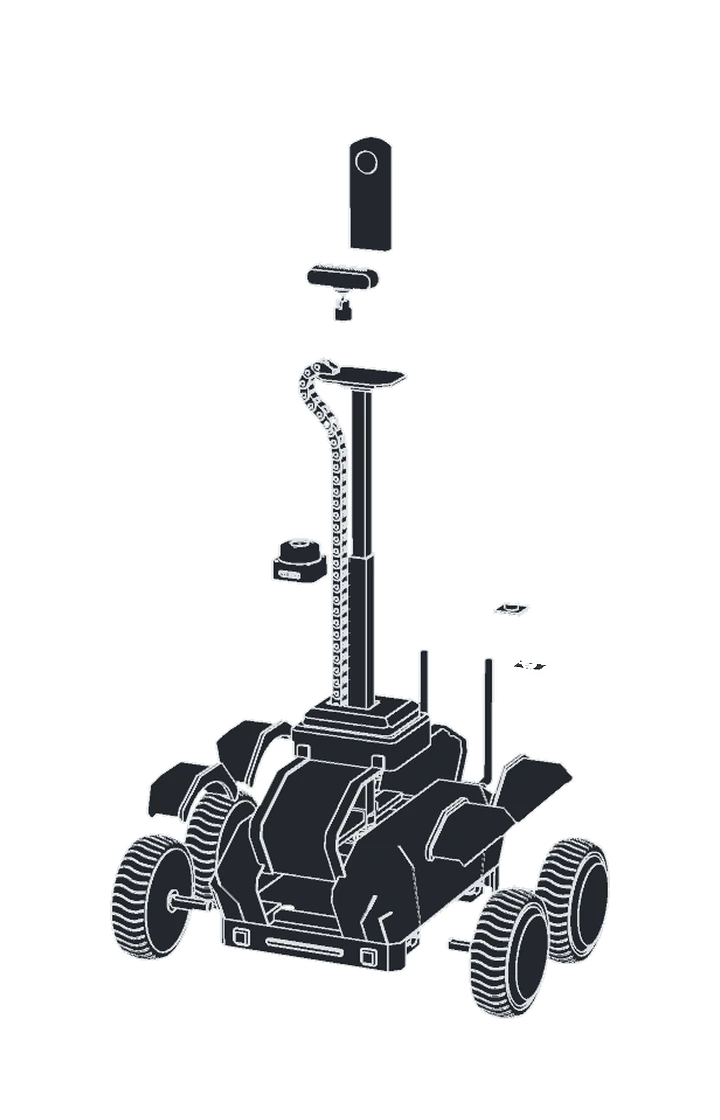
Robot fleet supervisor guideMobile Station
Eyes that move with your fleet.
A fleet supervisor on four wheels that drives with your robots. Its mast rises to see over the work, and it records the conditions of every run and syncs them with RunFP, wherever the fleet goes.
Simulated // readout
Mobile Station06 PARTS
What the Mobile Station carries
- 5 sensors
- 1 edge computer
- Processed on board
Tracks00/04
04 / USE CASES
One reliability layer,
every kind of robot.
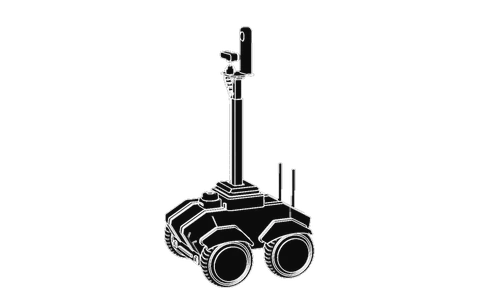
AMRs & mobile fleets
Mobile fleets in changing environments.
Live AMR experiment: from ROS bag to run breakdown.
What breaks
- Layout changes cause localization drift
- Sensor topics drop to 0 Hz
- Uneven motor wear across the fleet
What OORB records
- ROS bags
- Motor telemetry
- TF / odometry
- Topic rates
- Firmware / config
One investigation, ranked by signal
RunFP ranked 7 changes against the baseline run. The leading signal: camera topics had dropped to 0 Hz.
Seconds
from ROS bag to run breakdown
NEXT / ROBOT ARMS & LEARNED POLICIES
01 / 03
Same task, next run
When a run breaks, you see why.
Joint feedback drops out for six seconds. RunFP marks the gap and reports the run as unverified, instead of guessing whether it passed.
RUN 0413 / PICK + RETURN
- Acquire
- Lift ≥ 20 cm
- Hold ≥ 1 s
- Return + release
- Phase
- Approach
- Lift
- 0.0 cm
- Grip
- 80 mm
RUN 0413 · Waiting for the acquisition step.
05 / YOUR DATA
Your data stays with you.
Runs on your premises
RunFP installs on your own machines. Recordings, results and reports stay on your network.
Starts from what you record
ROS bags, MCAP files and test-rig exports. No changes to your robot to get started.
A record you can show
Every result keeps the code, model, hardware and conditions behind it, so a claim can be checked.
QUESTIONS WE GET
What does OORB do, in one line?
RunFP records every robot run with the code, model, hardware and conditions behind it, measures reliability per task and condition across all of them, and ranks what changed when results drop. The Station adds an outside view of the conditions around your robots.
Where does my data go?
Nowhere you don’t choose. RunFP runs on your own machines and your recordings stay on your network.
Which robots and data do you work with?
Mobile robots and AMRs, robot arms running learned policies, bimanual setups and end-of-line test rigs. We read ROS bags, MCAP files and test-rig exports. If you record something else, tell us.
How does the free reliability audit work?
Pick one robot behavior and share the run data you already have. We come back with how reliable it is by operating condition, where it fails, and what changed when it did.
How is it priced?
Per robot, billed monthly, quarterly or yearly. The audit is free, and we quote once we know your fleet.
Does OORB replace our fleet management software?
No. A fleet manager dispatches and routes your robots. OORB works beside it: RunFP measures how reliably the work gets done, and what changed when it stops. What robot fleet management covers.
Do I need the Station?
No. RunFP works on its own from the data your robots already record. The Station is our hardware: a small mobile unit that records the conditions around a run and syncs them with RunFP.
06 / LET’S TALK
Your next deployment.
Let’s make it work.
Start with a free reliability audit: share run data from one robot behavior and we’ll show you where it fails and why. Built for teams that make robots and the integrators who deploy them.
OR SEND US A MESSAGE
