

Table of contents

12 powerful examples of retrieval-augmented generation (RAG)


Jon Gitlin
Retrieval-augmented generation (RAG) can help your models access reliable and rich data sets, which help them provide more accurate and personalized outputs, consistently.
To help you better understand the benefits of RAG and implement the technique across your models successfully, we’ll break down several customer-facing examples, some of which are used by real-world companies.
But let’s first align on how RAG works.
What is retrieval-augmented generation (RAG)?
It involves retrieving relevant data from external sources (such as databases, APIs, or documents) and feeding that data to a large language model (LLM), which uses this context to generate more personalized and accurate outputs.
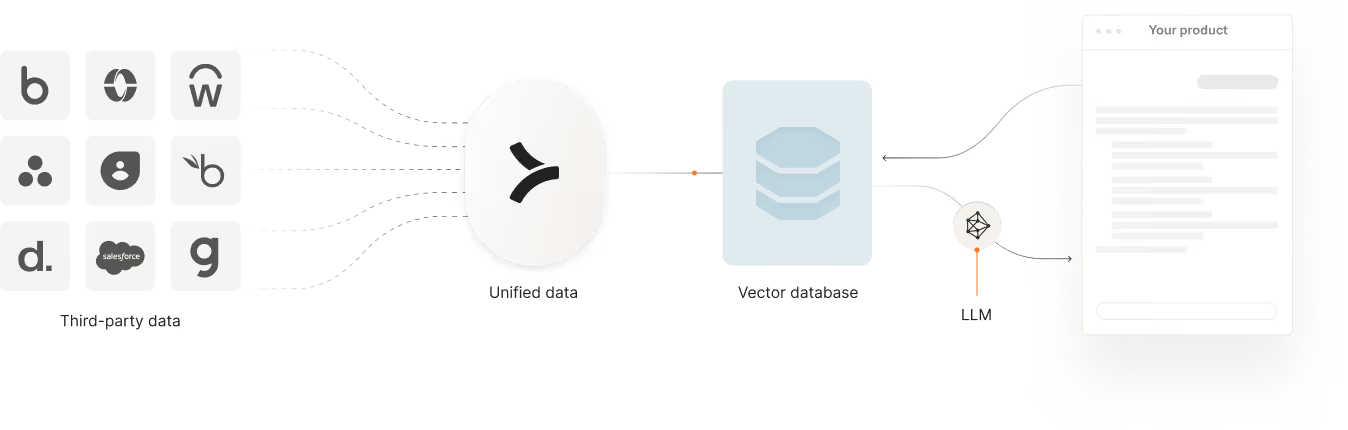
More specifically, it involves embedding a user’s input, using that embedding to find the most semantically-similar embeddings in a vector database, and then feeding the identified embeddings to the LLM—which uses the input and fetched embeddings to generate an output.

RAG examples
Let's take a look at several powerful RAG use cases.
Provide highly-personalized lead recommendations
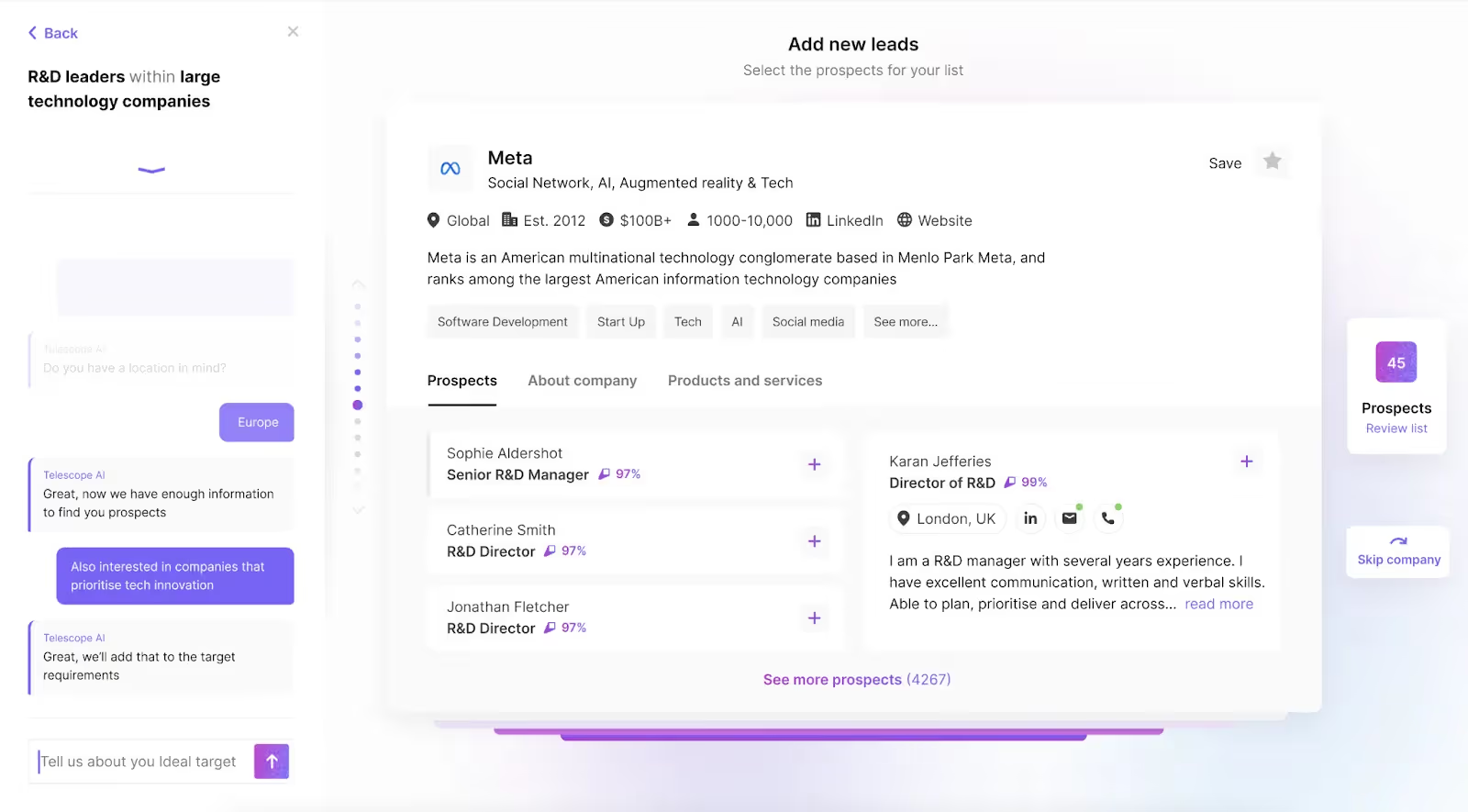
Telescope, a sales automation platform, provides customers with recommendations on leads.
To ensure its recommendations are valuable to each and every customer over time, the platform integrates with customers’ CRM systems and feeds its machine learning model data from these systems, such as the opportunities that have been lost or won, and the contacts at these accounts.
Moreover, since data in customers’ CRM systems is constantly updated, Telescope’s machine learning model can retrieve and use up-to-date information when generating recommendations.
Related: Examples of using the Model Context Protocol
Help employees prepare for their upcoming interviews
You can offer an AI agent that can work in a business communications platform (e.g., Slack) and use data from customers' applicant tracking systems (ATSs) to enable interviewers.
For example, a recruiting coordinator can tell your AI agent to “Remind every interviewer at 8am to review prep notes on the day of their interview. Also, link out to the most helpful prep notes.”
Assuming the AI agent is integrated with the customer’s ATS, it can gather the data and documents needed to enable interviewers. This includes context like the time an interview is slated to take place, the job the candidate is interviewing for, a brief description of the candidate’s background, and the links to any attachments the candidate provided as part of their application.

https://www.merge.dev/blog/agentic-rag?blog-related=image
Provide insights on headcount spend
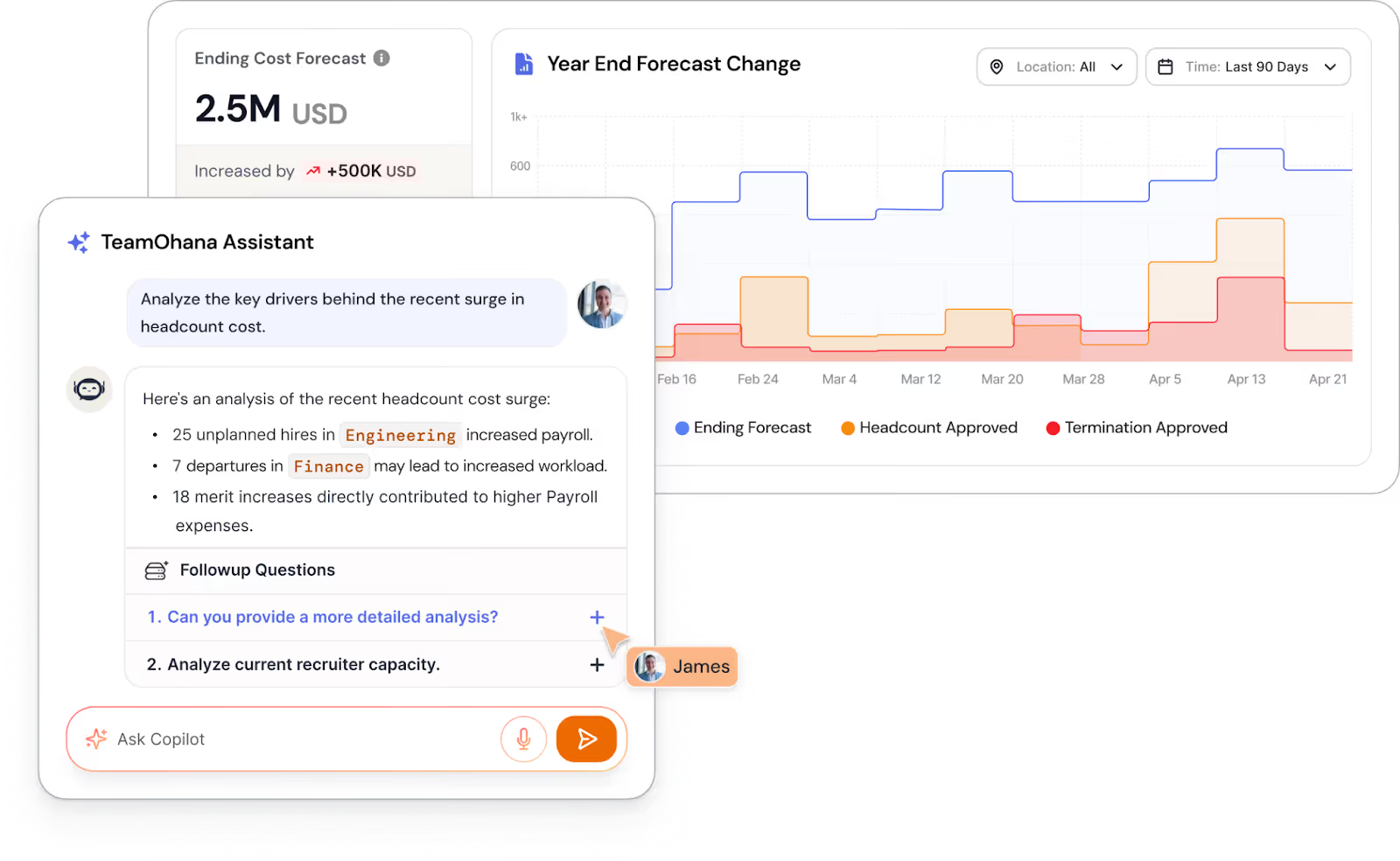
If you offer a headcount management platform, you may want to use RAG to help users (e.g., HR leaders) identify key trends in costs.
To help facilitate this, you can integrate with customers’ HRISs (to track new/departing employees and role changes) and accounting systems (to track payroll costs). You can then implement a RAG pipeline that uses this data to auto-generate intelligent responses to questions like “Analyze the key drivers behind the recent surge in headcount cost.”
Enable managers to better support their teams
Say you offer a performance enablement platform that helps people managers handle processes like establishing career paths and providing coaching to direct reports.
To help them manage their teams effectively over time, you can integrate with their HRISs to sync employee data, like meeting notes from 1:1s, and use the context to support RAG pipelines that answer a wide range of questions.
For example, a people manager can ask for a summary of the topics that’ve been discussed across their direct reports. Your RAG pipeline can then produce a bulleted breakdown from the last 12 months.

Generate actionable reports for sales leadership
Your AI agent can help sales leaders create custom reports on their reps’ performance through plain text by using customers’ CRM and ERP data.
For example, a sales leader can ask your agent to create a report that shows the reps’ quota attainment last quarter—along with their previous quota attainments over the past fiscal year.
Your AI agent can then retrieve the sales reps’ full names, job titles, historical quotas, and closed-won revenues each quarter, and display this information in a format that’s relatively easy to comprehend and action on.

Offer insightful and actionable feedback from sales meetings
Say you offer a virtual ride-along software that helps field sales teams record and analyze their appointments with clients and prospects.
To help your machine learning model offer valuable takeaways on what went well and what could have gone better from a given appointment, you can—similar to the previous RAG use case—integrate your software with customers’ CRM systems and provide your ML model data on the opportunities that've been marked as closed-won or closed-lost, along with various activities and notes logged from these opportunities.
{{this-blog-only-cta}}
Surface the top issues and opportunities for product teams
Imagine you provide an AI copilot that helps product teams uncover the top issues or areas of opportunity over time.
To help your copilot not only do this but also offer sources that support its insights—allowing users to learn more and trust the insights—you can integrate your product with customers’ ticketing tools and feed your ML model information on the customers’ tickets.
Leverage information from a trusted online dictionary when giving feedback on copy
Let’s assume you offer an AI writing assistant that helps users avoid grammatical errors and general writing mistakes.
Your ML model can incorporate new words that enter the mainstream vocabulary and provide consistently accurate and helpful grammar suggestions by scraping online dictionaries, such as Merriam Webster. For a given suggestion, your AI writing assistant can also link back to the relevant link from the scraped site(s), enabling the user to learn more about the suggestion.
Related: 3 best practices for using RAG
Answer a wide range of questions from employees
Assembly, an HR platform, provides—among other offerings—an intranet solution for employers.
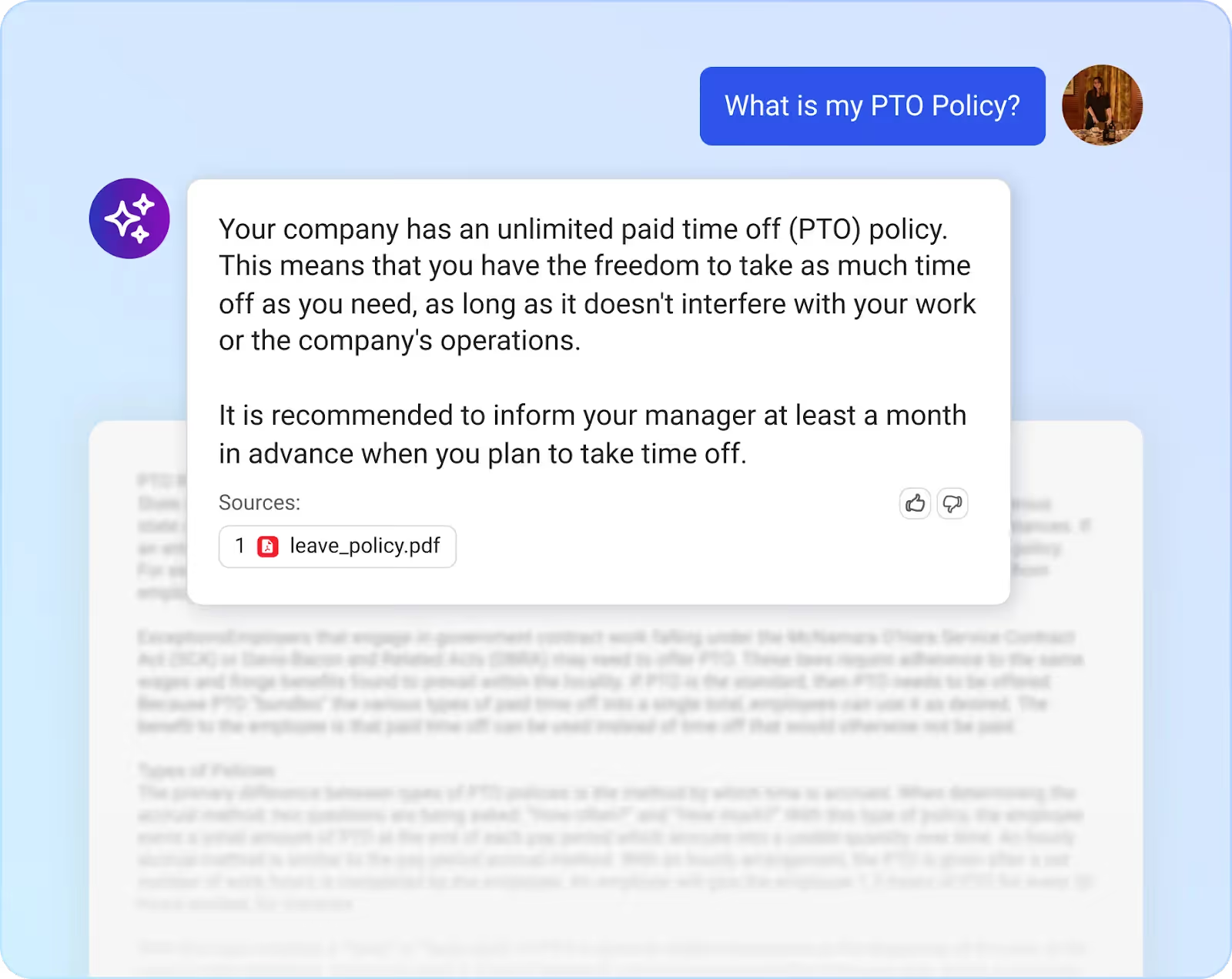
To ensure the intranet solution can help users find answers quickly and easily, Assembly integrates with clients’ file storage solutions and feeds employee-related documents to its machine learning model, “Dora AI.” From there, Dora AI can answer questions like “What is my PTO policy?” directly as well as link to the document it pulled from.
Deliver high-fit candidate recommendations
Say you offer an AI platform that uses machine learning to provide recommendations on candidates for specific open roles.
You can generate candidates that are best positioned to thrive for a given role by integrating with the customers’ HRIS solutions and feeding your ML model data on employees, including their performance ratings, locations, and years of experience. You can also scrape specific sites to give your ML model data on working professionals’ previous roles and employers.
Related: Obstacles to using RAG
Calculate key financial metrics and present them in a customizable model
Causal, a financial planning tool, wants to help users analyze financial data quickly so that they can arrive at critical business decisions in as little time as possible.
To help facilitate this, they offer integrations with accounting tools, like Xero and Quickbooks, to ingest customers’ P&L statements. Their users can then request specific metrics, like gross profit or runway, with the click of a button and the machine learning model can not only calculate them but also display them in a model that the client can modify as needed.

https://www.merge.dev/blog/rag-vs-mcp?blog-related=image
Help employees troubleshoot equipment and application issues
Imagine you provide an AI-powered IT service management platform that helps customers manage their employees’ devices and equipment.
To help employees avoid contacting and working directly with IT, your product can integrate with applications that have context on certain processes, such as requesting a new laptop. Your product can then use this context to auto-generate responses based on the latest information from these systems.
For example, if a user asks for help with resetting the password for accessing their laptop, your product can use a RAG pipeline to identify the appropriate steps in their knowledge management platform (e.g., Notion) and use that context to generate an answer.
Adopt RAG with ease by using Merge
Merge, the leading unified API solution, lets you add hundreds of integrations to your product through a single integration build, enabling your machine learning model to use integration data across your customer base.
Merge also offers normalized data to your product, making your LLM better positioned to generate high quality output more consistently.
To learn more about Merge and how it can support your RAG use cases, you can schedule a demo with one of our integration experts.
Jon Gitlin


Ready to leverage RAG in your product?
Merge lets you add 100s of integrations to your product through a single API, enabling your machine learning model to use integration data across your customer base.


But Merge isn’t just a Unified
API product. Merge is an integration platform to also manage customer integrations. gradient text
But Merge isn’t just a Unified
API product. Merge is an integration platform to also manage customer integrations. gradient text
But Merge isn’t just a Unified
API product. Merge is an integration platform to also manage customer integrations. gradient text
But Merge isn’t just a Unified
API product. Merge is an integration platform to also manage customer integrations. gradient text
