

Table of contents

5 Prismatic alternatives to consider in 2026


Jon Gitlin
Prismatic offers an embedded integration platform as a service (iPaaS) that lets you build integrations and workflow automations between your product and your customers’ applications.
To help you evaluate the platform and determine whether it’s the best product integration solution for your business, we’ll compare it to its top competitors.
Merge
Merge lets B2B SaaS companies offer hundreds of integrations to their products through its unified APIs.
Top features
- Cross-category support: Merge lets you add file storage, CRM, ticketing, ATS, HRIS, and accounting integrations to your product
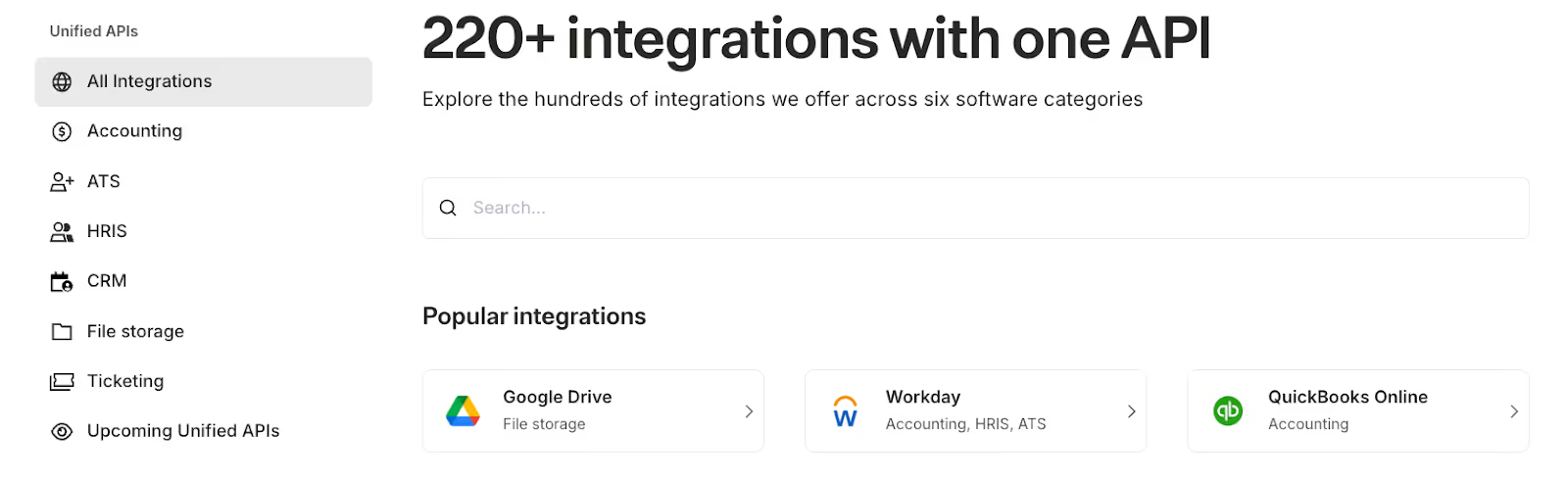
- Integration observability: You can use Merge’s fully-searchable logs, automated issue detection functionality, holistic dashboard, and more to enable your customer-facing teams to detect, diagnose, and address any integration issues caused by your customers (e.g., expired API keys)
- Maintenance support: Merge’s engineers proactively maintain all of the supported integrations on your behalf, ensuring that they’re reliable and performant
When to choose Merge over Prismatic
- You need to scale your integration offerings, quickly. Prismatic forces your team to build one integration at a time—which can be time intensive and lead to delays. Merge, on the other hand, lets you offer all the integrations your product needs through a single build
- Your engineers don’t have time to get comfortable with Prismatic. While the embedded integration platform claims to offer a low-code UX, it’ll still require technical expertise and force your engineers to learn how to use it. Since Merge just requires an initial implementation (which takes anywhere from a few days to a couple of weeks), the learning curve and time commitment is negligible in comparison
For example, Shubham Bansal, the VP of Engineering at Firstbase, an IT asset management platform, had this to say about the technical complexity of using an embedded iPaaS:
“Our embedded iPaaS solution forced our team to build all the data transformation logic for each integration. This meant we’d have to become experts in HRIS integrations, and that was unsustainable.”
- You don’t want to work outside of your software development lifecycle (SDLC). Unlike Merge, Prismatic’s integrations need to be built in their workflow builder. Since this isn’t part of your code base, the integrations won’t be evaluated thoroughly from a performance and security perspective—which can lead to security, compliance, and syncing issues
{{this-blog-only-cta}}
Workato
Workato offers both an iPaaS and an embedded iPaaS to help you build integrations and workflow automations in your product and across your internal applications.
Top features
- Workato GO: Workato lets you build an enterprise search that lets employees find information and perform actions quickly across their applications, workflows, and teams

- API management platform: Your team can use Workato to develop, publish, modify, and analyze API endpoints
- Pre-built connectors: Workato offers thousands of API connectors across software categories to help you build integrations and automations quickly
When to choose Workato over Prismatic
- You also want to build internal integrations and automations. Prismatic only supports customer-facing integrations while Workato lets you implement both
- You want to invest in a larger, more mature integration company. Workato has been around since 2013 (Prismatic was founded in 2019) and they have a larger list of case studies from enterprise brands. For their embedded offering, this includes brands like Zendesk, Epicor, and Autodesk
- You’d like to incorporate chatbots in your workflow automations. Workato offers Workbot®, which lets your customers access and interact with your product’s data and workflows from Slack or Microsoft Teams
Related: Workato alternatives to consider in 2025
Apideck
Apideck offers unified APIs for several software categories, including file storage, ecommerce, ticketing, and accounting.
Top features
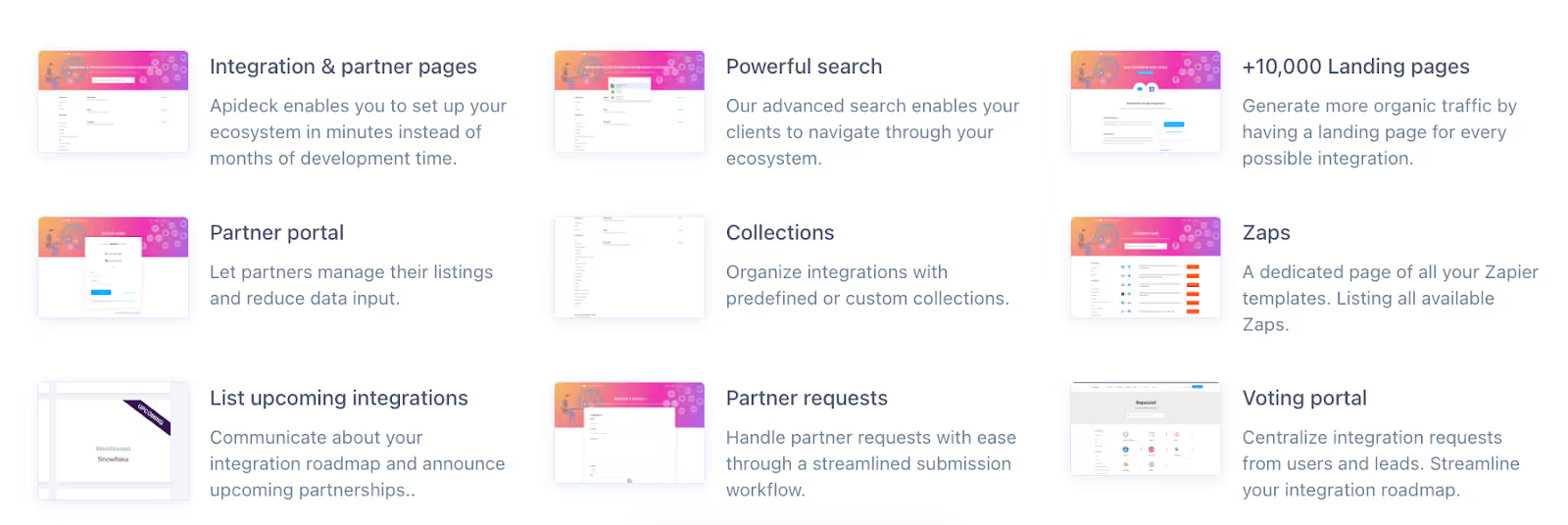
- Embedded marketplace: You can build and modify integration marketplace experiences for customers, potential partners, and prospects—allowing them to discover your integrations, adopt them, and/or modify their listings
- Custom field mapping: You can use Apideck’s mapping tools to access and sync custom data across your customers’ applications
- Vault: You can provide a UI component (“Vault”) that provides your customers with a few guided steps to authenticate your integrations
When to choose Apideck over Prismatic
- You want a solution that offers transparent pricing. Unlike Prismatic, which doesn’t offer specific pricing estimates, Apideck offers predefined prices across its plans (e.g., its Launch plan is $299 per month)
- You need help with building an integration marketplace. Apideck provides a comprehensive integration marketplace product, while Prismatic doesn’t
- You’d like to avoid building one integration at a time. Like Merge, Apideck lets you add numerous integrations through a single build
Related: A guide to Apideck’s alternatives
Tray.ai
Tray.ai offers an internal and embedded iPaaS to help you build a wide range of integrations and workflow automations. They’re also offering an increasing number of AI solutions that leverage integrated data or help you build integrations and automations.
Top features
- Merlin Agent Builder: Lets you design and deploy secure AI agents that can interact with certain applications and data. You can also choose where these agents live (e.g., in Slack), select the specific LLM each uses, and use audit trails to monitor their activities
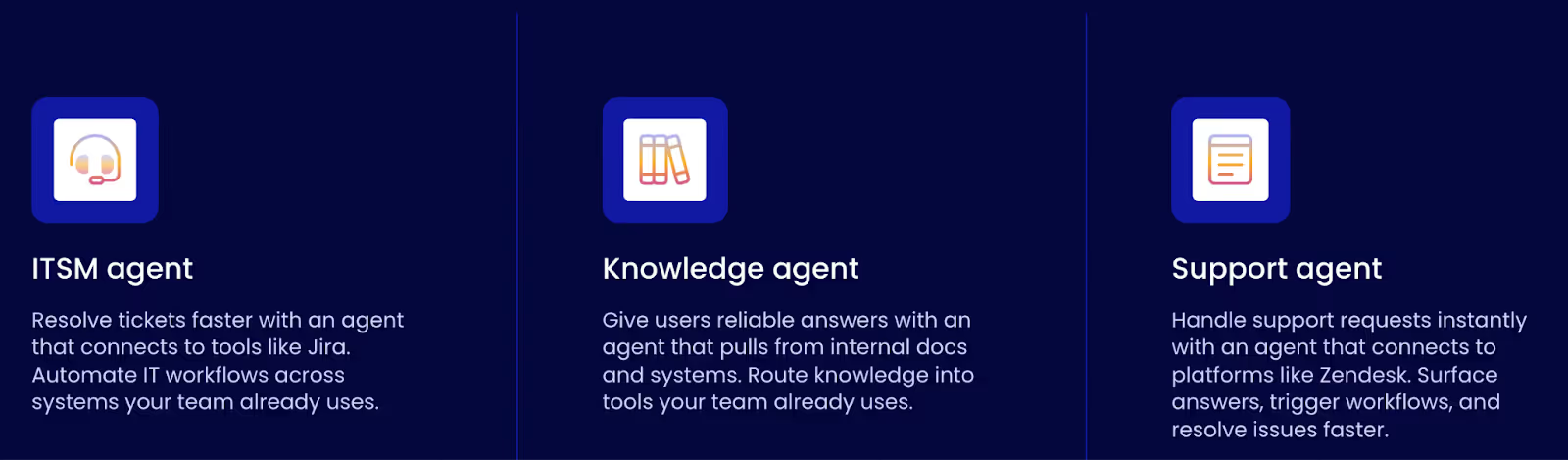
- Merlin Intelligence: Enables you to build integrations and automations in their workflow builder through plain text, leverages AI to to auto-document any automation, and provides suggestions for improving existing automations
- Customizable embedded iPaaS: Tray.ai lets you whitelabel embedded integrations, decide whether to allow customers to build them (or only allow your team to do so), and more
When to choose Tray.ai over Prismatic
- Your team already uses Tray.ai’s internal integrations. If so, onboarding your team to Tray.ai’s embedded solution can be much easier (they’d be using the same workflow builder)
- You want to invest in an enterprise-grade solution. Like Workato, Tray.ai has been around for more than 10 years and works with more enterprise companies than Prismatic, such as Eventbrite, Typeform, and HackerOne
- You need to invest in an API management solution. If your team is looking to build and take API endpoints live, you can use Tray AI’s API management platform (Prismatic doesn’t offer anything similar)
Related: A guide to Tray.ai’s top competitors
Paragon
Paragon offers an embedded iPaaS that’s geared towards developers.
Top features
- Pre-built connectors: Use 100+ API connectors across more than 20 software categories to build customer-facing integrations and automations faster
- ActionKit: Leverage their MCP server (“ActionKit”) to help your AI agent access and interact with customer data via tools
- Integration monitoring: Track each integration and data sync over time, and find out when and why certain syncs fail
When to choose Paragon over Prismatic
- You want to use a more AI-forward embedded iPaaS. Relative to Prismatic, Paragon is moving more aggressively in supporting AI companies' customer-facing integration needs. For example, Paragon was the first embedded iPaaS to support an MCP server
- You need to build integrations with a wide range of software categories. Paragon’s pre-built connectors cover more categories than Prismatic’s connectors. For example, unlike Prismatic, Paragon supports connectors with e-signature platforms, communication tools, point of sale applications, advertising products, content management systems, and social media tools
{{this-blog-only-cta}}
Jon Gitlin


Don't settle for Prismatic
Learn how Merge can help you add more flexible and reliable product integrations at scale by scheduling a demo.


But Merge isn’t just a Unified
API product. Merge is an integration platform to also manage customer integrations. gradient text
But Merge isn’t just a Unified
API product. Merge is an integration platform to also manage customer integrations. gradient text
But Merge isn’t just a Unified
API product. Merge is an integration platform to also manage customer integrations. gradient text
But Merge isn’t just a Unified
API product. Merge is an integration platform to also manage customer integrations. gradient text
