

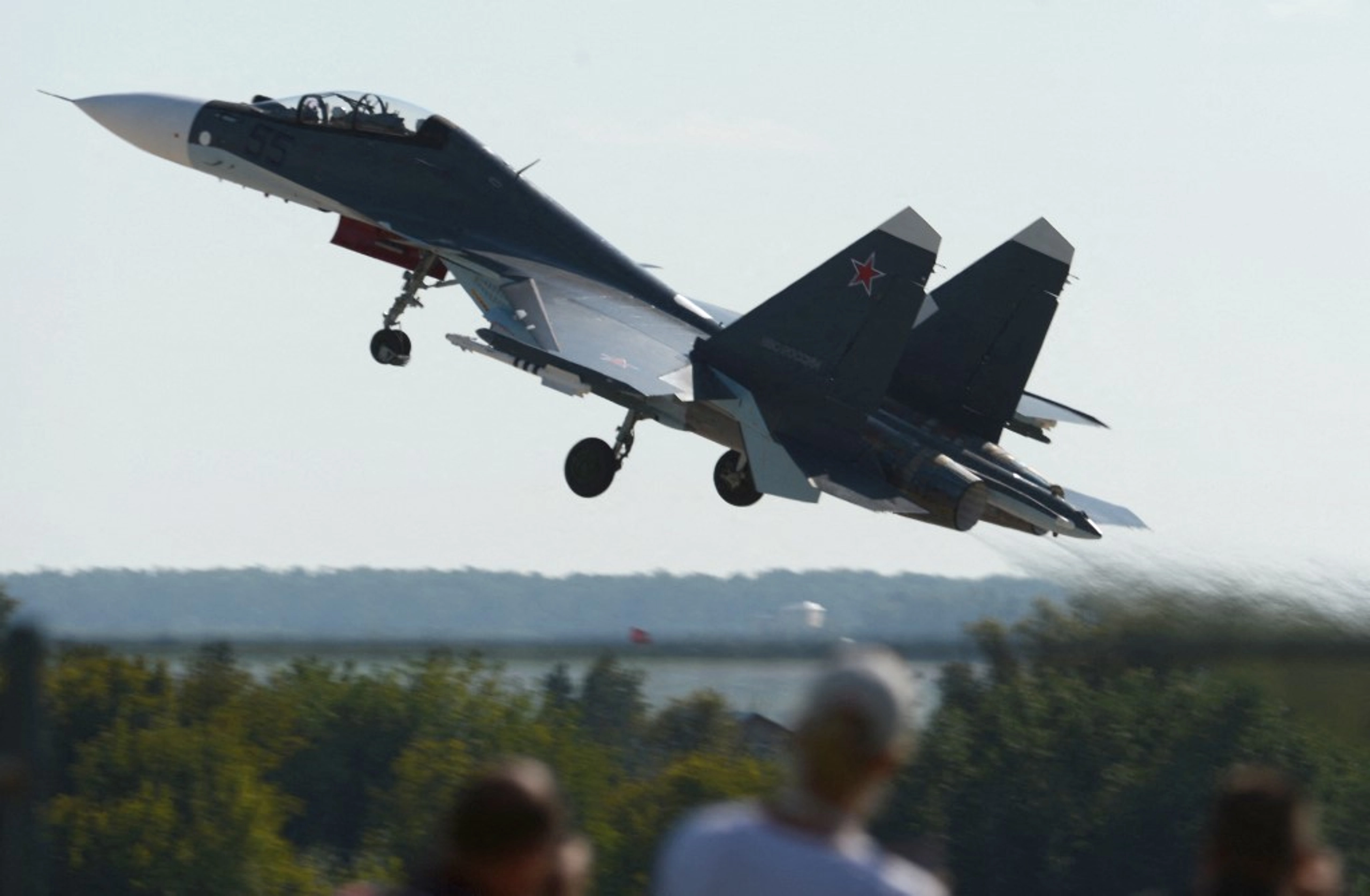
A Russian Su-30 fighter jet crashed in the Kaliningrad region on Wednesday, Oct. 21, with both pilots ejecting before the aircraft came down in Russia’s Baltic exclave between two NATO countries.
Russia’s defense ministry confirmed the crash during a scheduled training flight, according to RIA News. The ministry said a ground search-and-rescue team evacuated the crew and that neither pilots were in danger.
JOIN US ON TELEGRAM
Follow our coverage of the war on the @Kyivpost_official.
“The aircraft crashed in an uninhabited area. The flight was conducted without ammunition,” the ministry said. It did not specify what caused the accident.
Russian broadcaster REN TV, citing an unnamed source, identified the aircraft as a Su-30SM and reported that both pilots suffered injuries of varying severity and were hospitalized.
According to the report, cited by RBC-Ukraine, the aircraft crashed in the Chernyakhovsk district, between the settlements of Timofeyevka and Zelyony Bor.
The ministry’s statement confirmed that the crew survived but did not provide details about injuries or hospital treatment. The reported hospitalization therefore remains attributed to Russian media.
The official account also identified the aircraft only as a Su-30, without specifying the SM variant named in the initial reports. Neither account established the cause of the crash.
Another Russian military aircraft crashes
The incident follows several other reported Russian military aviation accidents this year, involving both fighter jets and a strategic bomber.

Ukraine May Have 300-500 Russian Spies Working for Kyiv
On April 3, a Russian Su-30 crashed during a training flight in occupied Crimea. Russia’s defense ministry said that the aircraft was also flying without weapons and that its crew ejected before being evacuated by a search-and-rescue team.
The Su-30SM is a two-seat multirole fighter derived from the Su-27. Its NATO reporting name is Flanker-H.
On Sept. 7, Russian military bloggers reported that two Su-35S fighters collided over the Kursk region. Pro-war aviation blogger Ilya Tumanov, who runs the Fighterbomber Telegram channel, reported the collision, with other Russian military bloggers subsequently describing the loss.
One pilot was reportedly killed, while the other escaped. Russia’s defense ministry had not commented at the time of those reports, and the circumstances remained unclear.
The Su-35S is another fighter developed from the Su-27 family. Russian forces use it for missions including escorting Su-34 fighter-bombers, intercepting drones and missiles, and engaging Ukrainian air defenses.
Later that month, a Tu-95 strategic bomber crashed in Russia’s Amur region during a training exercise. Russian Telegram channel Baza reported that six crew members were killed and one person was hospitalized after the Sept. 29 crash near Krasnoyanovo.
Initial reports incorrectly identified that aircraft as a Tu-154 transport plane before Russia’s defense ministry confirmed that it was a Tu-95. The cause was not immediately established.
The Tu-95 forms a central part of Russia’s strategic bomber fleet and has been used to launch missiles against Ukrainian cities.
Kaliningrad’s military significance
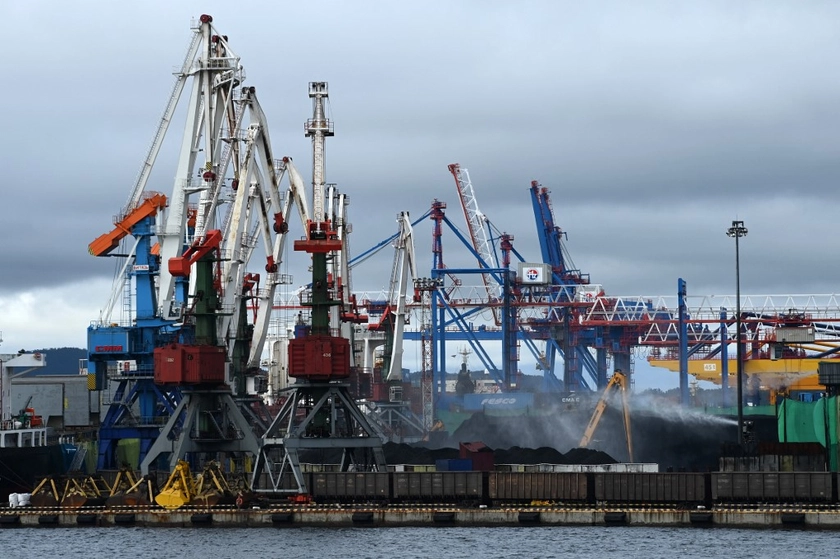
Wednesday’s crash occurred in Russia’s heavily militarized Baltic exclave, which borders Poland and Lithuania, both NATO members, and has no direct land connection to mainland Russia.
Kaliningrad hosts the headquarters of Russia’s Baltic Fleet. Moscow has also deployed Iskander tactical missile systems there, making the territory an important part of Russia’s military posture in the Baltic region.
The exclave was at the center of renewed tensions in September, when Russia’s embassy in Belgium warned that Moscow could use its entire arsenal if NATO countries attempted to isolate the territory.
NATO rejected the warning and described the alliance as defensive, saying its exercises and other activities posed no threat to Russia. The alliance also condemned Moscow’s threats of force and nuclear rhetoric.
You can also highlight the text and press Ctrl + Enter

Rubio: Ukraine Does Not Have Access to Starshield
‘Let’s Sign a Diesel Deal’: Zelensky Challenges Trump