

Recon-ng is a Python-based OSINT framework designed to automate information gathering during the reconnaissance phase of cybersecurity assessments. It combines multiple reconnaissance modules into a single interactive command-line environment, enabling users to collect publicly available intelligence from various online sources.
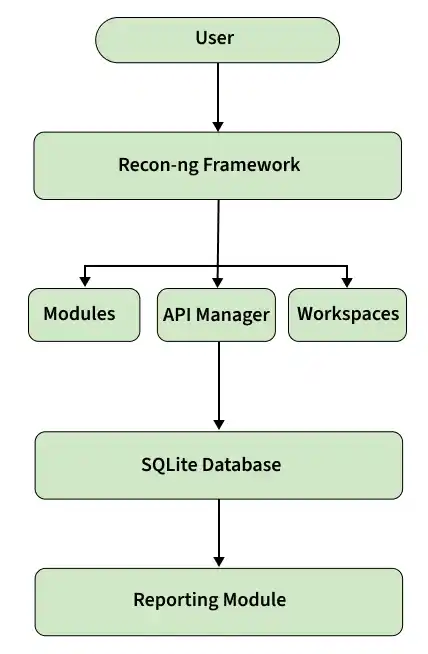
Recon-ng Architecture
Recon-ng follows a modular architecture where each component performs a dedicated function.
- Framework: The framework provides the command-line interface, loads modules, validates configurations and manages reconnaissance workflows.
- Modules: Modules perform individual reconnaissance tasks such as DNS enumeration, WHOIS lookups or contact discovery.
- Workspaces: A workspace stores reconnaissance data for a specific project, keeping different engagements isolated.
- Database: Recon-ng stores discovered domains, hosts, contacts, companies and other intelligence in a SQLite database.
- API Manager: Some modules require API keys to communicate with external intelligence providers. Recon-ng securely stores and manages these credentials.
Installing Recon-ng
Recon-ng is pre-installed in most Kali Linux distributions. Verify the installation:
recon-ng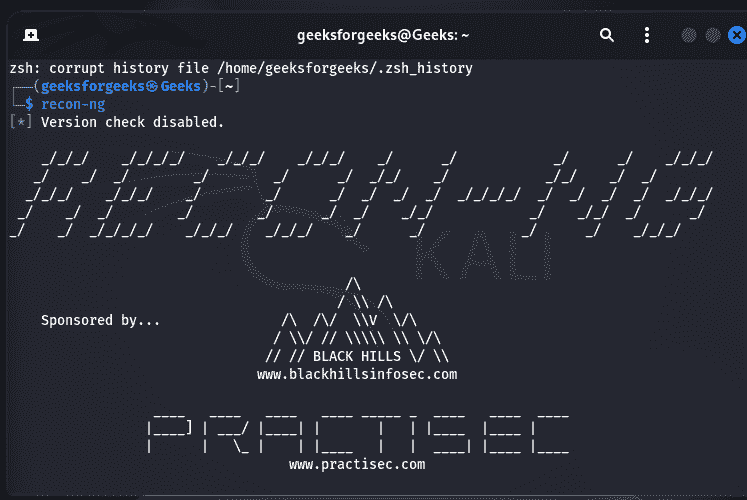
If it is unavailable, install it using:
sudo apt update
sudo apt install recon-ng
Verify the installed version:
recon-ng --version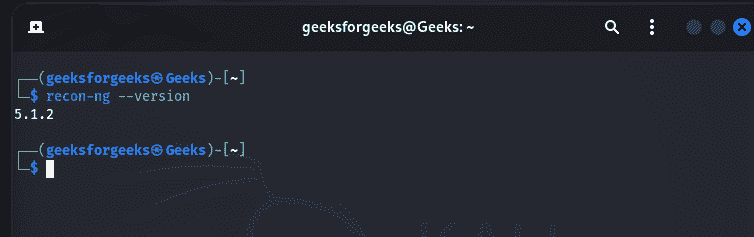
Launch the framework:
recon-ngHere, default represents the active workspace. The interactive shell appears as:
[recon-ng][default] >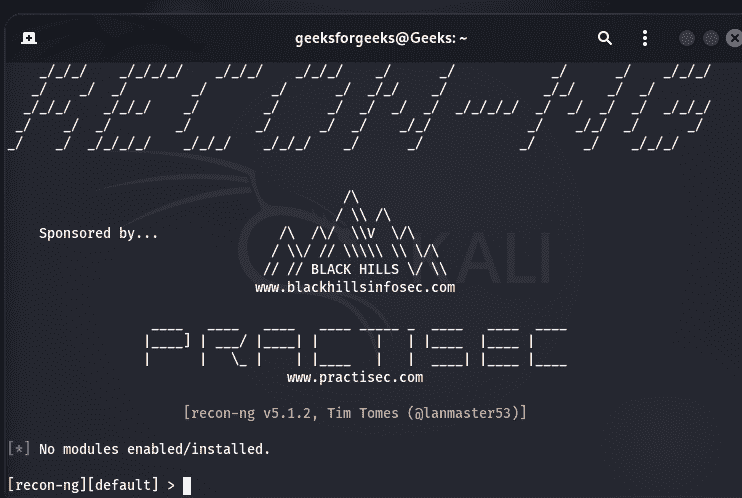
Understanding Workspaces
A workspace acts as a separate project environment where Recon-ng stores reconnaissance data. Each workspace maintains its own SQLite database, preventing data from different engagements from mixing. Create a workspace:
workspaces create company_reconList available workspaces:
workspaces listSwitch to another workspace:
workspaces select company_reconDelete a workspace:
workspaces remove company_recon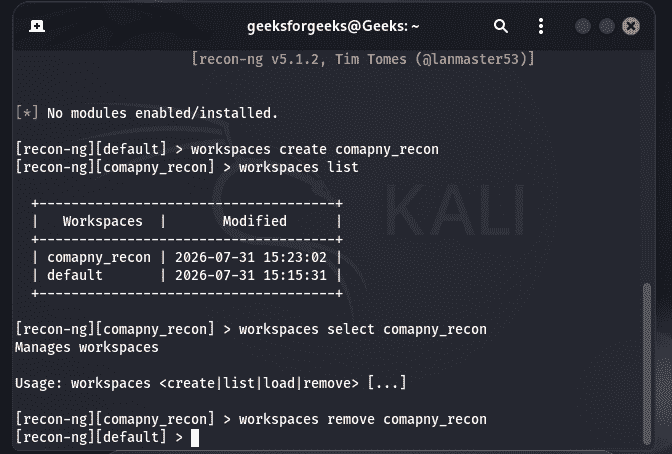
Recon-ng Module System
Recon-ng performs reconnaissance through modules. Each module focuses on a specific information-gathering task and can be loaded independently. Search available modules:
modules searchSearch DNS modules:
modules search dnsLoad a module:
modules load recon/domains-hosts/bing_domain_webDisplay module information:
infoView configurable options:
options listConfigure the target:
options set SOURCE example.comRun the module:
runReturn to the main menu:
backCommon Recon-ng Module Categories
Each category contains multiple modules designed for specific OSINT tasks.
- Domains: Collect domain-related information.
- Hosts: Discover hosts associated with a domain.
- DNS: Retrieve DNS records and related information.
- WHOIS: Obtain domain registration details.
- Contacts: Identify publicly available contacts.
- Companies: Gather organization-related information.
- Locations: Collect geographical intelligence.
- Reporting: Export reconnaissance results.
Basic Recon-ng Commands
- help: Displays available commands.
- modules search: Searches available modules.
- modules load: Loads a module.
- options list: Displays configurable options.
- options set: Sets module parameters.
- run: Executes the loaded module.
API Key Management
Several Recon-ng modules rely on third-party intelligence services that require API authentication. Proper API configuration enables modules to access additional intelligence sources and improves reconnaissance results. Display configured API keys:
keys listAdd a new API key:
keys addRemove an API key:
keys removeReporting
Recon-ng can export collected intelligence using reporting modules. Load the HTML reporting module:
modules load reporting/htmlGenerate the report:
runLimitations of Recon-ng
- Some modules require API keys.
- Results depend on publicly available information.
- Module functionality may change if external services modify their APIs.
- Internet connectivity is required for most reconnaissance modules.
- It focuses on information gathering and does not perform vulnerability exploitation.
