

All living organisms perform certain basic activities to maintain life and stay alive. These activities are known as life processes.
- Life processes provide energy, help in growth and repair, and remove harmful waste materials from the body.
- Although plants and animals differ in structure and function, they share common life processes such as nutrition, respiration, transportation, and excretion.
- These processes are essential for the survival and proper functioning of all living organisms.
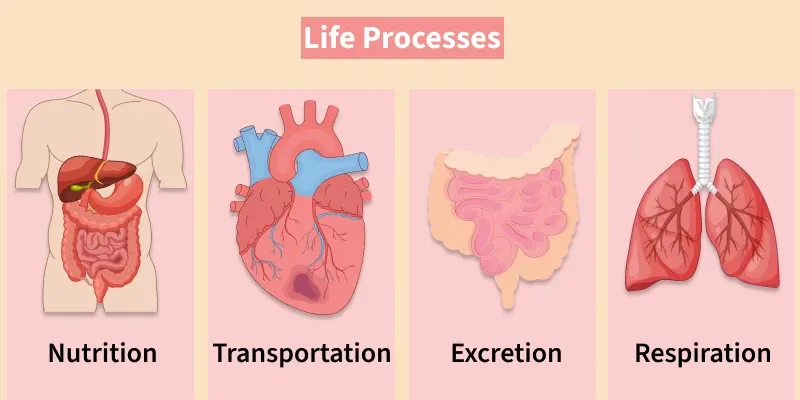
Living things perform a few fundamental tasks that are vital to their survival. Some of the important life processes are discussed below:
Nutrition
Nutrition is the process by which organisms obtain and utilise nutrients from their environment to support their growth, development, and energy needs. It involves the intake of food, digestion, absorption of nutrients, and the elimination of waste. All living things need energy and resources in some form. Some living things use simple food substances like carbon dioxide and water that come from inorganic sources.
Types of Nutrition
There are two main types of nutrition:
1. Autotrophic Nutrition
Autotrophic nutrition is the method through which autotrophs absorb elements from the environment and transform them into stored forms of energy. Some plants use sunlight to produce food and are called 'photoautotrophs'. Whereas some bacteria utilise chemicals as their source of energy and are called 'chemoautotrophs'.
Photosynthesis
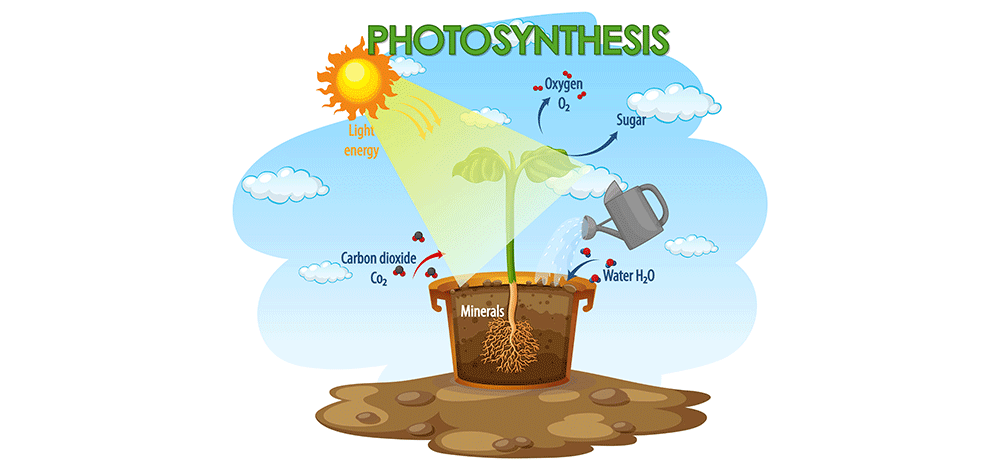
Photosynthesis is the process by which green plants, algae, and some bacteria convert light energy into chemical energy in the form of glucose.
- It occurs in chloroplasts, primarily in the leaves of plants, where chlorophyll absorbs sunlight.
- Carbon dioxide from the air and water from the soil are used to produce glucose, releasing oxygen as a byproduct.
The equation for photosynthesis is:
6CO2 + 6H2O + light energy → C6H12O6 + 6O2.
- Photosynthesis provides oxygen for aerobic respiration and is the foundation of most ecosystems, providing energy for life on Earth.
2. Heterotrophic Nutrition
Heterotrophic nutrition is a mode of nutrition where organisms depend on other organisms for their food supply. In this process, organisms cannot synthesise their own organic molecules and rely on consuming organic compounds produced by other living organisms. This type of nutrition includes various forms such as saprophytic, parasitic, and holozoic nutrition. Examples of organisms exhibiting heterotrophic nutrition include animals, fungi, and many bacteria.
Nutrition in Human Beings
Humans exhibit holozoic nutrition, where they ingest complex organic substances and break them down into simpler forms for absorption. The human digestive system consists of organs such as the mouth, oesophagus, stomach, small intestine, large intestine, and associated glands like the liver and pancreas. Essential nutrients required by humans include carbohydrates, proteins, fats, vitamins, minerals, and water, obtained from various food sources.
The digestive process involves the following steps:
- Ingestion: Intake of food through the mouth.
- Digestion: Mechanical and chemical breakdown of food into simpler molecules.
- Absorption: Passage of digested food molecules through the intestinal wall into the bloodstream.
- Assimilation: Utilisation of absorbed nutrients by cells for energy, growth, and repair.
- Egestion: Elimination of undigested waste as faeces.
Respiration
When an organism uses food to produce energy, the process that takes place is known as respiration. Organisms need a steady supply of oxygen to perform respiration, as well as a way to get rid of the carbon dioxide that is produced during the process.
- The methods used by diverse organisms to absorb oxygen and release carbon dioxide vary.
- Diffusion is a method used for this by unicellular and certain other prehistoric animals.
- In plants, diffusion is also utilised to exchange gases.
- In complex animals, the task of exchanging gases is done by the respiratory system.
- Gills are the fish's breathing apparatus. Fish utilise their gills to inhale oxygen that is dissolved in the water.
- Aquatic species breathe more swiftly since there is less oxygen available there.
- Insects use a system of spiracles and tracheae to take in oxygen.
- Terrestrial animals have lungs, which allow for gas exchange.
- Humans breathe more slowly than fish because there is ample oxygen available on land.

Steps of Respiration
Carbohydrates are oxidised during respiration to provide energy. The mitochondria, where respiration takes place, are where energy is created and stored as ATP (adenosine triphosphate). ATP is stored in mitochondria and released as necessary.
- Breaking down Glucose into Pyruvate: It occurs within the cytoplasm. The glucose molecule must be broken down to produce pyruvic acid. The glucose molecule includes six carbon atoms, whereas pyruvic acid only has three.
- Fate of Pyruvic Acid: Depending on the type of respiration an organism utilises, mitochondria further break down pyruvic acid, producing different compounds.
Types of Respiration
There are two main types of Respiration:
- Aerobic Respiration: This type of respiration occurs when oxygen is present. Pyruvic acid is a source of carbon dioxide. Energy is released at the end of this process, and a water molecule is also produced.
- Anaerobic Respiration: This type of respiration occurs without oxygen. Pyruvic acid is a compound that is converted into either lactic acid or ethanol. Typically, ethanol is produced when microorganisms like yeast or bacteria participate in anaerobic respiration. Lactic acid is produced by a few microbes as well as muscle cells.
Transportation
The body's organs, tissues, and cells that assist in moving nutrients, gases, hormones, and waste products throughout the body are together referred to as the transport system or circulatory system.
Transportation in Humans
Transportation in animals is the process by which substances such as oxygen, nutrients, hormones, and waste materials are carried from one part of the body to another. This process is essential to supply energy to cells and to remove metabolic wastes. In higher animals, transportation is carried out by the circulatory system.
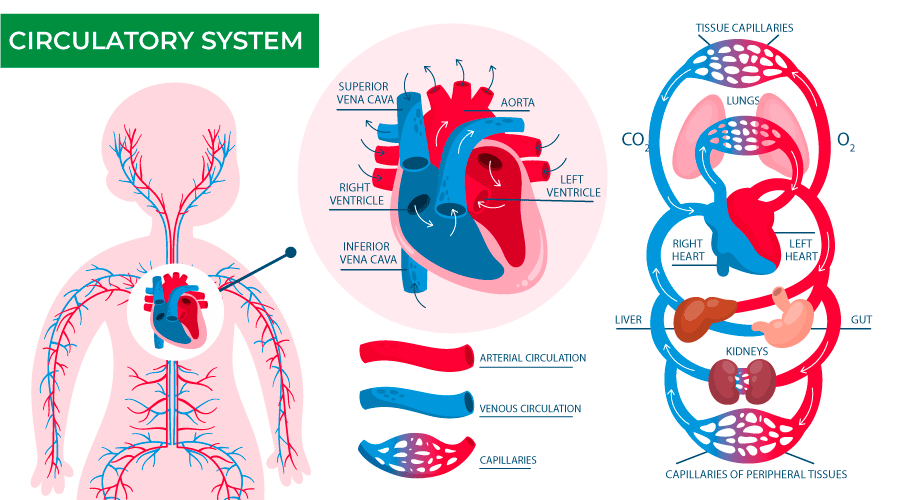
These are the primary parts of this system:
Blood Vessels
All body components receive and deliver blood through hollow tubes known as blood arteries.

The three primary types of blood vessels are as follows:
- Arteries: The major function of arteries is to transport blood away from the heart. Except for the pulmonary artery, which carries deoxygenated blood, they typically transport oxygenated blood (blood with a greater oxygen saturation).
- Veins: These blood channels transport blood to the heart and are a little thinner than arteries. Except for the pulmonary veins, which carry oxygenated blood from the lungs to the heart, they typically transmit deoxygenated blood (blood with low saturation oxygen).
- Capillaries: Capillaries are tiny, thin-walled vessels that join arteries and veins. Their major role is to facilitate the exchange of gases, nutrients, and waste products between the blood and the other surrounding tissues. Capillary walls, as compared to others, are thinner in such a way that substances can easily diffuse across them.
Heart
The main function of the heart, a muscular organ in our body, is to pump blood through blood vessels throughout the body. It is the main pumping organ. There are four chambers in the human heart.

Characteristics of the Human Heart are given below:
- Blood is pumped into each of the two ventricles by two higher chambers known as the atria or auricles. Ventricles are the names of the two lowest chambers.
- Blood that has lost oxygen is pumped from the right ventricle into the pulmonary artery and then into the lungs.
- The aorta receives oxygenated blood from the left ventricle and transports it throughout the body.
- A double membrane known as the pericardium covers the human heart.
- Three layers make up the heart wall: the epicardium, myocardium, and endocardium.
- Fine branching blood vessels called capillaries create a network of arteries and veins.
Double Circulation
Double circulation is an important part of the mammalian circulatory system. The diagram of double circulation shows how this system ensures delivery of oxygen and nutrients to all cells while maintaining separation between oxygen-rich and carbon dioxide-rich blood.

The double circulation system consists of two distinct pathways:
- Pulmonary circulation: This begins when deoxygenated blood from the body is pumped by the right ventricle of the heart to the lungs via the pulmonary arteries. In the lungs, carbon dioxide is removed from the blood, and oxygen is absorbed into the bloodstream through tiny air sacs called alveoli. Oxygenated blood returns to the heart via the pulmonary veins, entering the left atrium.
- Systemic circulation: Systemic circulation involves the left side of the heart pumping oxygen-rich blood to the body's tissues through the aorta, the body's largest artery. Oxygen and nutrients are delivered to cells, while carbon dioxide and waste products are picked up for removal. Deoxygenated blood returns to the heart via the systemic veins, entering the right atrium.
Transportation in Plants
Transportation in plants refers to the movement of water, nutrients, and other substances throughout the plant. The various processes involved are:
- Transpiration: Loss of water vapour from the aerial parts of the plant, primarily through small openings called stomata on leaves.
- Absorption: Uptake of water and minerals from the soil by the roots, facilitated by root hairs and root systems.
- Translocation: Movement of nutrients, hormones, and other substances through the plant's vascular system (xylem and phloem).
Structures involved in the process are:
- Xylem: Conducts water and minerals from the roots to the rest of the plant.
- Phloem: Transports sugars, amino acids, and other organic compounds produced in the leaves to other parts of the plant.

Mechanisms with helps in transportation are:
- Root Pressure: Pressure exerted by roots helps push water upwards in the xylem.
- Capillary Action: Water molecules move upwards in narrow tubes of the xylem due to cohesion and adhesion forces.
- Transpirational Pull: Loss of water through transpiration creates tension, pulling water upward from the roots to replace it.
Excretion
Excretion is the process of removing metabolic waste products from the body to maintain internal balance and prevent harmful buildup of toxins.
Excretion in Humans
The human body is a unique mechanism that can perform multiple life processes at the same time, including digestion, respiration, and blood circulation. As a result, our bodies produce numerous waste products in a variety of forms, including carbon dioxide, water, and nitrogenous wastes like urea.
The organs and mechanisms involved in excretion are:
Kidneys
- Perform vital filtration functions, removing waste products such as urea, excess salts, and water from the bloodstream.
- Produce urine, which is transported to the bladder for storage and eventual elimination from the body.
Skin
- Acts as a major excretory organ through sweat glands located throughout the body's surface.
- Sweat glands release sweat, containing water, salts, and urea, helping regulate body temperature and remove metabolic waste.
Lungs
- Expel carbon dioxide, a waste product of cellular respiration, during exhalation.
- Also release water vapour as a byproduct of respiration, contributing to the removal of excess water from the body.
Intestines
- Remove undigested food waste and other non-absorbable substances through bowel movements.
- Play a crucial role in eliminating waste material from the digestive system, ensuring efficient nutrient absorption and waste removal.

Excretion in Plants
Plants lack waste-removal organs of their own. There are many ways to remove plant excretory products from the plant body. Both respiration and photosynthesis produce waste products that are employed as starting materials in the other process.
- The stomata of leaves and the lenticels of stems are responsible for removing gaseous wastes, including oxygen, carbon dioxide, and water vapour.
- The leaves and bark of plants harbour some waste materials.
- The wastes are eliminated by the bark and leaf shedding.
- The body of the plant stores some waste materials as solid objects after they have been rendered harmless.
- Tannins, rubber, resins, gum, and essential oils are a few examples of these wastes.
- The eucalyptus, jasmine, and orange tree oils, among other forms of accumulated waste products, as well as gums from acacia, rubber trees, and papaya trees. These chemicals are occasionally discharged into the soil.
