How Claude's Usage Limits Actually Work With Fable 5: Windows, Multipliers, and Burn Rates
The Fable 5 Moment
31 parts- 1Claude Mythos 5 Explained: What It Is, Who Can Access It, and Why It's Gated
- 2Migrating to Claude Fable 5: The Practical Guide
- 3Claude Fable 5 Access After the June 22 Deadline: Where Things Stand
- 4Claude Fable 5 vs GPT-5.6 Sol: Benchmarks, Pricing, and When Each Wins
- 5Fable 5 vs Opus 4.8: A Data-Driven Decision Guide for Engineering Teams
- 6How to Model Fable 5 Costs Before They Blow Up Your Budget
- 7Claude Fable 5 API: Production Integration Patterns, Rate Limits, and Migration Gotchas
- 8Handling Fable 5 Refusals: A Working Guide to the Fallback API
- 9Why Fable 5 Refuses Your Cybersecurity Queries (And How the Fallback Works)
- 10Fable 5's Hidden Guardrails: What Developers Need to Know About Silent Degradation
- 11Fable 5 Broke Enterprise ZDR Agreements: What Dev Teams Must Do Now
- 12Claude Managed Agents: Dreaming, Outcomes, and Multi-Agent Orchestration Explained
- 13Claude Managed Agents Public Beta: What's Actually Available vs What's Gated
- 14Dario Amodei Wants FAA-Style AI Regulation: Open Questions for Developers
- 15The Exponential and the Working Developer: Sitting With Amodei's Hardest Questions
- 16The Dario Paradox: Warning About the Exponential While Shipping It
- 17The Pushback on Amodei's Exponential Essay: Too Slow, Too Convenient, or About Right?
- 18Fable 5 Before June 22: The Decision Checklist for Every Plan Tier
- 19Fable 5 on AWS Bedrock: When Your Data Leaves the AWS Boundary
- 20Why Claude Desktop Quietly Installs a 1.8 GB VM on Windows (And What You Can Do About It)
- 21Anthropic Model Names Explained: Fable, Mythos, Opus, Sonnet
- 22Managed Agents vs LangGraph vs Rolling Your Own: Who Should Run Your Agent Loop in 2026
- 23How Claude's Usage Limits Actually Work With Fable 5: Windows, Multipliers, and Burn RatesCurrent
- 24Fable 5 for Government and Regulated Teams: The GovCloud Question
- 25Fable 5 vs DeepSeek V4: The Cost-Quality Gap Measured in Real Tasks
- 26The Fable 5 Orchestrator Playbook: One Smart Model Managing Cheap Workers
- 27Prompt Caching Economics on Fable 5: When the 5-Minute TTL Pays
- 28Fable 5 with 1M Context: What Actually Works in Practice
- 29Fable 5 Effort Levels Explained: low, medium, high, xhigh, max
- 30Fable 5 Effort Levels vs Switching Models: When to Dial and When to Change
- 31Recursive Self-Improvement: What Fable 5, Dario's Essay, and Anthropic's Own Data Actually Tell Us
TL;DR
Fable 5 drains the 5-hour rolling window dramatically faster than Opus or Sonnet.
If you have spent any time on HN or the ClaudeAI subreddit this week, you have seen a version of the same complaint: someone opened a Claude Code session with Fable 5, came back eight minutes later, and found their 5-hour window gone, a usage-credits charge racking up in the background, and nothing to show for it. One developer described burning through "just shy of $100 of tokens" using Fable in a single agentic session on a $100/month Max plan - the same workload they had run with Opus "multiple times with no issue."
That gap between expectations and reality is what this post is about. Anthropic's documentation on usage limits is sparse, and the official support article that used to explain Pro usage (article 8324991) now returns a 404. What follows is a plain-English explanation of the rolling window mechanics, what the 5x and 20x plan multipliers actually buy you in practice, how Fable 5's burn rate differs from earlier models, and what changes after June 22.
Last updated: June 10, 2026
The 5-hour rolling window, explained#
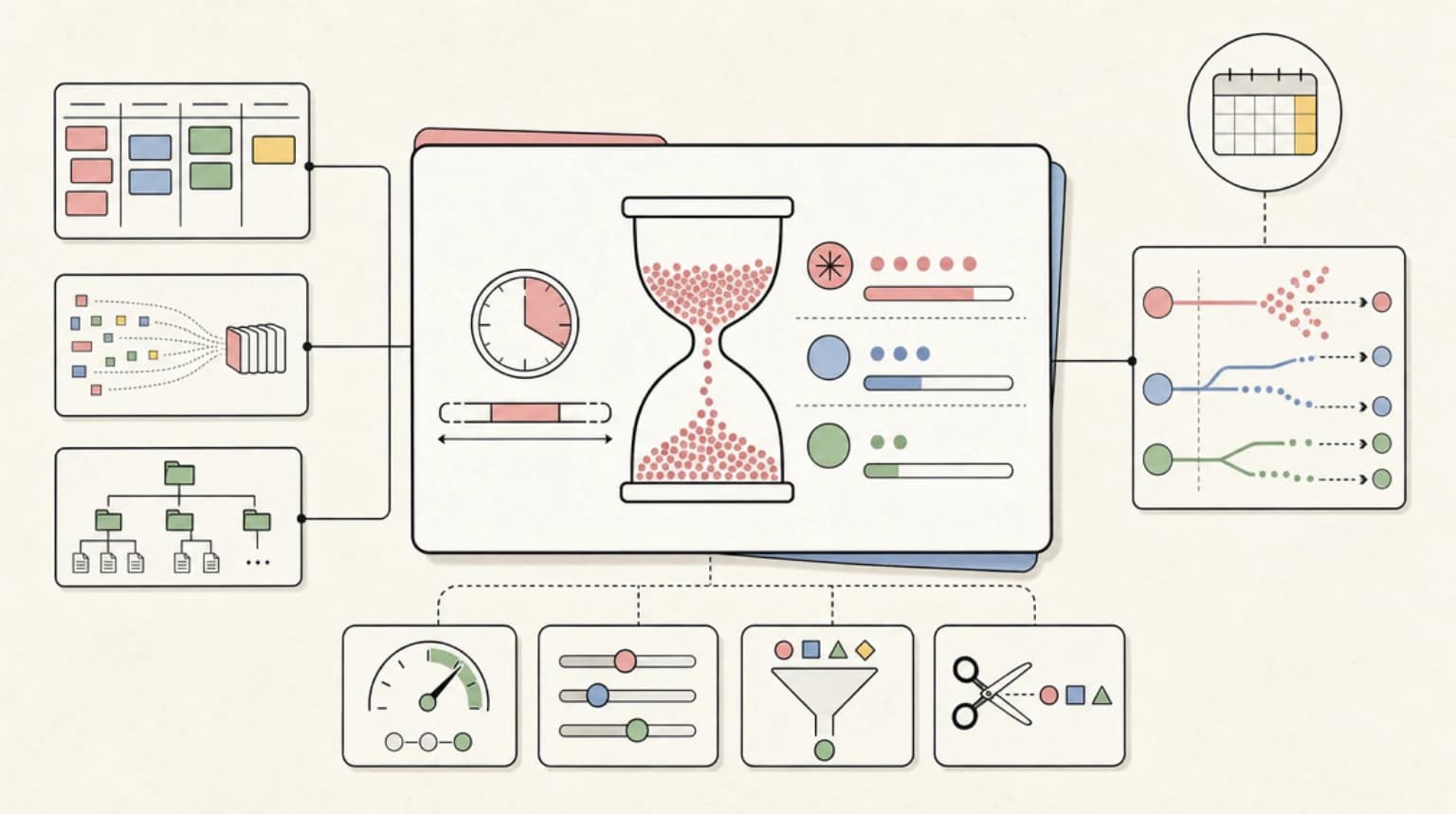
Claude's subscription plans - Pro, Max 5x, and Max 20x - do not give you a fixed daily message count. Instead, usage is metered against a rolling 5-hour window. When you hit the ceiling, Claude tells you how long until your budget resets (you will see something like "usage resets in 4 hr 36 min"). The window rolls from the moment you first sent a message in that burst, not from midnight or any calendar boundary.
There is also a separate weekly cap. The 5-hour limit governs how fast you can sprint; the weekly limit governs total volume across the week. These are independent constraints, and hitting one does not reset the other. When Anthropic doubled Claude Code's 5-hour rate limits in May 2026, they explicitly did not double the weekly limits - a distinction that annoyed users who had hoped for twice the effective throughput. One HN commenter put it clearly: "being only able to get 4 full sessions a week as opposed to 8 doesn't compel me to resubscribe."
Anthropic does not publish the raw token or dollar ceilings for each plan. The limits are intentionally opaque and appear to be somewhat dynamic. What is documented is the relative multiplier: Max 5x gives you five times the usage budget of Pro ($20/month), and Max 20x gives you twenty times the Pro baseline at $200/month. The 20x plan is marketed as "save 50%" over buying two 5x plans, though the actual capacity has been a source of community debate.
A reasonable approximation, based on a well-cited HN comment from May 2026, is that the plan's monthly credit is roughly equal to its dollar cost in notional API spend: Pro ~ $20, Max 5x ~ $100, Max 20x ~ $200. That framing helps explain why the window empties so fast with Fable 5.
Why Fable 5 burns the window so much faster#
Claude itself will tell you, if you ask in Claude Code: "Uses your limits ~2x faster than Opus." That is the official line as of early June 2026, confirmed by in-app UI text cited directly on HN.
In practice, users are reporting something much steeper than 2x for agentic sessions. The reasons compound:
Token density. Fable 5 generates longer, more thorough outputs than Opus at the same prompts. Longer outputs consume more of your budget per exchange, which is also why Fable 5's 1M-token context window changes the cost math for long sessions.
Extended thinking. If you are running Fable 5 with thinking enabled at its highest setting, the model generates a large internal reasoning trace before its visible response. That trace consumes tokens against your limit even though you never read it. One Max plan user reported exhausting their full 5-hour window in 8 minutes this way. See how Fable 5's effort levels trade reasoning depth for token spend for the dial you actually control here.
Subagent spawning. Agentic Claude Code tasks often spawn parallel subagents to divide work. Each subagent runs its own context. A single agentic task with Fable 5 can silently branch into 4-6 concurrent model calls, multiplying consumption accordingly. The $100 burn in 8 minutes case involved subagents or workflows spinning up - the same dynamic covered in Claude Code agent teams, subagents, and MCP.
The credits overflow. Once your 5-hour window is exhausted, Claude does not stop - it continues drawing from "usage credits," which are pay-as-you-go top-ups that charge your card automatically unless you have configured a hard cap. The developer who lost $20 of extra credits before they could kill the process was a casualty of this default. Always check whether your account has a usage credit spending limit set.
What "5x" and "20x" means in real messages per day#
Translating multipliers into something tangible is hard because message cost varies so much by task type. Here is a rough practical guide. All Fable 5 and Sonnet figures are estimates based on community-reported usage patterns; they are not official Anthropic data.
| Plan | Monthly cost | Approx. daily 5-hr window budget | Practical Fable 5 agentic sessions/day | Practical Sonnet sessions/day |
|---|---|---|---|---|
| Pro | $20 | Low (baseline) | 1-2 short sessions (est.) | 3-5 sessions (est.) |
| Max 5x | $100 | 5x Pro baseline | 2-4 medium sessions (est.) | 8-15 sessions (est.) |
| Max 20x | $200 | 20x Pro baseline | 6-10 medium sessions (est.) | 30+ sessions (est.) |
"Session" here means a typical agentic Claude Code task: reading a codebase, making a targeted change, running tests. Not the 8-minute Fable 5 + max thinking + subagents variant. One Max 5x user on HN described getting through "30% of weekly budget on day 1" running a headless parallel analysis job across thousands of files with 20 concurrent sessions. That is an extreme case. For normal interactive use, Max 5x is enough for most solo developers.
Pro plan users should treat Fable 5 as a premium feature to deploy deliberately, not as a default. On the Pro baseline, one heavy Fable 5 agentic session can consume the entire 5-hour window. Sonnet or Haiku for routine tasks; Fable 5 for the hard ones.
Does Claude Code draw from the same pool as claude.ai?#
Yes. Claude Code sessions, claude.ai conversations, and third-party tools built on the Agent SDK (like Conductor or similar orchestrators) all draw from the same 5-hour rolling window and the same weekly cap associated with your subscription.
There is no separate pool for Claude Code. This catches people off guard because they think of Claude Code as a distinct product. It is not. It is the same plan credits, consumed via the API on your behalf. If you spent two hours in claude.ai doing document analysis before opening Claude Code, your Code session starts with a depleted window.
The Claude Code status line can show you live context and limit usage - the tool displays "how much of my 5hr and weekly budget" remains. If you are not watching it and Fable 5 is running agentic tasks, you are flying blind.
What changes after June 22#
Until June 22, 2026, Fable 5 is included in your plan's usage limits as a promotional offering. After that date, Fable 5 is no longer covered by the flat subscription rate. To keep using it, you need usage credits - meaning you will pay per-token rates on top of your subscription whenever you use Fable 5.
Anthropic has not announced a permanent per-seat price for Fable 5 access. The post-June 22 path is: subscribe to a plan, and pay additional usage credits for Fable 5 sessions beyond whatever the plan covers. Given what the community is already observing about Fable 5's burn rate, the effective cost per coding session on Fable 5 after June 22 may be substantially higher than equivalent Opus sessions today.
If your workflow depends on frequent Fable 5 agentic sessions in Claude Code, June 22 is the deadline to audit whether the math works at usage-credit pricing versus switching to Opus for the majority of your workload. See the June 22 decision checklist for a plan-by-plan breakdown, and production cost modeling for Fable 5 if you are estimating usage-credit spend at scale.
Strategies to stretch your allocation#
Based on what is actually working for people in the community:
Use Sonnet or Haiku for routine work. Reading code, answering questions, light refactoring - these do not require Fable 5. Reserve the heavy model for genuinely hard problems. One HN user noted they "rarely run into usage limitations" by splitting work between lighter models for bulk tasks.
Reduce thinking intensity. If you are using Fable 5 with extended thinking, dial the effort level down for tasks that do not require deep reasoning. The difference in output quality for a simple code review is minimal; the difference in token consumption is not.
Control subagent concurrency. Agentic tasks in Claude Code can spawn more parallel workers than you expect. Constrain the task scope, or run tasks sequentially instead of letting the model parallelize freely.
Set a usage credit cap. In your Anthropic account settings, configure a hard monthly limit on usage credits. This prevents the "I walked away and came back to a $20 charge" scenario.
Monitor the status line. Claude Code's built-in status line shows remaining 5-hour and weekly budget in real time. Community members have also built standalone tools (ccusage, claude-hud integrations, the macOS menu bar tool "usagi") for ambient monitoring.
Stagger heavy sessions. If you know you will need multiple intensive runs in a day, space them to avoid multiple windows hitting empty simultaneously.
FAQ#
How long is the Claude usage window?#
The Claude usage window is a rolling 5-hour period from your first message in a burst. It is not tied to midnight or any calendar reset. When you hit the limit, Claude shows you the remaining time until your specific window expires - typically a few hours.
Does Claude Code count against my Pro limit?#
Yes. Claude Code draws from the same usage pool as claude.ai. Any model calls made through Claude Code count against your 5-hour rolling window and your weekly cap, the same as messages sent through the web interface.
How many messages can I send per day on Claude Max?#
There is no official message-per-day figure because each message costs a different amount depending on the model, task length, and whether extended thinking is active. The Max 5x plan gives roughly 5x the notional budget of Pro; Max 20x gives 20x. In practical terms, heavy agentic Fable 5 usage can exhaust a Max 5x window in under an hour, while light Sonnet usage on the same plan can run for a full workday.
What does "5x more usage than Pro" actually mean?#
It means the Max 5x plan has approximately five times the token budget of the $20 Pro plan within the rolling window and weekly cap. Anthropic does not publish the raw numbers. Community analysis suggests the notional credit amount scales with the dollar price: Pro behaves roughly like $20 of API spend per month, Max 5x like $100, Max 20x like $200. These are approximations, not official figures.
Will Fable 5 still work after June 22 on my plan?#
Yes, but it will draw from usage credits (pay-as-you-go) rather than your plan's included allocation. After June 22, using Fable 5 will incur additional charges beyond your subscription unless Anthropic announces a new permanent pricing structure that includes it. The current promotional period - Fable 5 included within plan limits - ends on that date.
Continue Reading#
- Where to Access AI Models in 2026 - what Fable 5 costs next to every other route, including the models still included in plan limits
- Claude Fable 5 June 22 Deadline: What Changes - the full timeline for what happens to plan-included access
- Fable 5 June 22 Decision Checklist - a plan-by-plan worksheet for whether to stay on Fable 5 after usage credits kick in
- Fable 5 Effort Levels Explained - the setting that controls how much of your window a single session burns
- Fable 5 Production Cost Modeling - estimating usage-credit spend once the promotional window ends
- Claude Code Agent Teams, Subagents, and MCP - how parallel subagents multiply token consumption
Sources#
- HN comment thread mining via Algolia API (hn.algolia.com), June 8-10, 2026 - direct user reports on Fable 5 burn rates, window timing, and Max plan behavior
- Claude Code in-app UI text, June 9, 2026 (quoted on HN): "Fable 5 - Uses your limits ~2x faster than Opus"
- Anthropic support article 8324991 (now 404 as of June 10, 2026)
- HN comment (May 13, 2026) citing Anthropic's "About Claude's Max Plan Usage" page on rolling credit amounts by plan tier
- HN comment (May 6, 2026) on the 5-hour limit doubling announcement and its exclusion of weekly limits
- Developer firsthand reports: 8-minute full-window drain on Max 5x with Fable 5 + max thinking + subagents (June 10, 2026)
- Anthropic pricing page: claude.com/pricing (accessed June 10, 2026)
Get the next deep dive like this in your inbox
One email a week on claude and the rest of the AI dev stack. Free.
Read next on Claude Code
Claude Fable 5 Access After the June 22 Deadline: Where Things Stand
Fable 5's two-week free window on Pro, Max, Team, and Enterprise plans closed June 22. Here's what changed, what the credit system actually costs, and how to think about the model now that the deadline is history.
6 min readFable 5 Before June 22: The Decision Checklist for Every Plan Tier
12 days out from the Fable 5 promotional window closing on claude.ai, here is the practical checklist for Pro users, Max subscribers, teams, and API developers - what to decide, what to test, and what not to worry about.
9 min readClaude Fable 5 API: Production Integration Patterns, Rate Limits, and Migration Gotchas
Everything you need to ship Claude Fable 5 in production - from the API surface changes and adaptive thinking defaults to rate limit strategy, streaming latency, and the June 15 deprecation deadline for older models.
9 min readTechnical content at the intersection of AI and development. Building with AI agents, Claude Code, and modern dev tools - then showing you exactly how it works.