Amid the first bear market in over a decade, the world’s largest companies are facing intense pressure to cut back.
Layoffs have made headlines, but cutting workforce is not a silver-bullet solution to surviving in a down market. True, companies tend to spend the most on personnel, but using layoffs as a first line of recession defense has myriad negative consequences for survivors, including reduced job satisfaction, reduced organizational commitment, and declining job performance.
Moreover, firing people doesn’t address the underlying issue, which is that companies who have long viewed top-line growth as a North Star objective are now being judged by profitability. To fulfill profitability goals and prepare for healthier growth, companies have begun scrutinizing their cloud spend.
Regular readers of the CloudZero blog (and with titles like “The Quest For Sunken Treasure” and “How Drift Improved Their COGS By $2.4 Million,” who wouldn’t be) know that we’ve long been proponents of cloud cost efficiency. Reducing costs is a good start, but cost intelligence is the true goal: Cutting costs is a good start, but healthy unit economics is the holy grail.
Particularly in a strained market, the companies most likely to survive are the ones with the soundest business fundamentals. With cloud spend expected to approach $500 billion in 2022 and executives estimating that 30% of cloud spend is wasted, cloud costs are compromising many companies’ business fundamentals.
At last, the world is beginning to think like us.
… To some extent. We’ve read over reports from some of the world’s largest companies — Airbnb, Netflix, and Twitter — and we’ve got some thoughts on their cost-cutting tactics.
Airbnb: A League Of Their Own
We’ve said it before, we’ll say it again: There’s no crying in cloud costs.

The Wall Street Journal threw Airbnb some kudos earlier this month for keeping ahead of the cloud cost curve. The home-sharing company began looking closely at their cloud costs back in 2019, and in 2020, found more than $60 million in savings.
How did they do it? A few key ways:
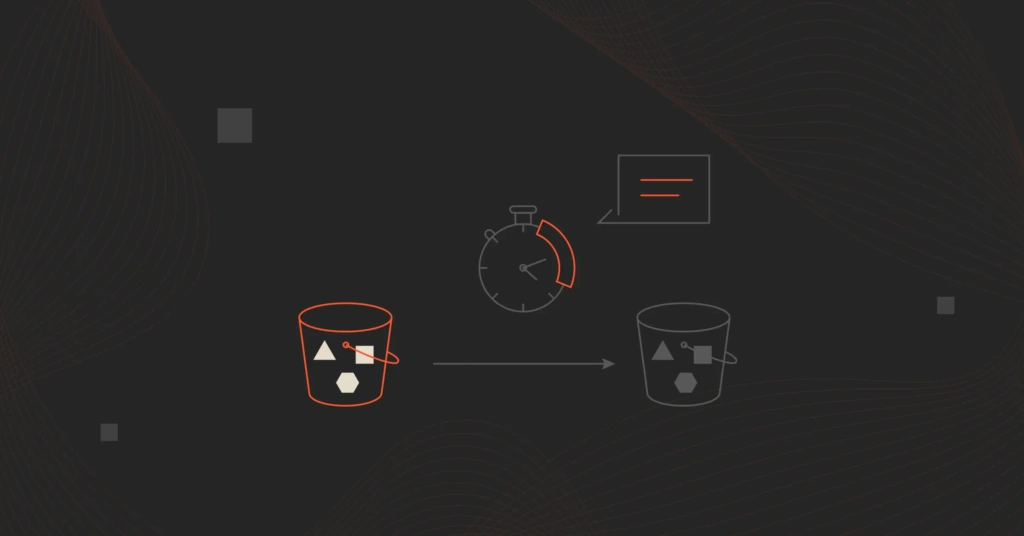
- Ditching a homegrown backup system. Airbnb had been using a homegrown data backup system, and switching to Amazon’s data backup offering made the function “almost free,” per David Nagle, Airbnb’s director of cloud infrastructure.
- Going for Glacier. Amazon S3 comes in many different flavors — that is, pricing tiers. The upper tiers of S3 Standard cost more than two cents per GB per month, whereas the lowest level of S3 Glacier costs less than a tenth of a cent per GB per month.
After what we imagine was a very close evaluation process, Airbnb opted for S3 Glacier, paying much less than they would have for S3 Standard.
- A network of their own. For Airbnb, Amazon did something that they’d never done before: created a “flat network,” connecting all of Airbnb’s servers to a single network, reducing overall cost and maintenance.
We don’t know exactly how much money and labor Amazon sunk into this project, but given the Journal’s comment that it “required Amazon to adjust every machine in its own data centers,” we infer that it was a substantial project, most likely available only to AWS’s blue-chip customers.
Our rating: Pretty, pretty, pretty good!
The most recent articles don’t call it out, but Airbnb has written in the past about how they designed their cost management system to do a lot of the good stuff we see our most successful customers do.
“Our approach to consumption attribution was to give the teams the necessary information to make tradeoffs between cost and other business drivers to maintain their spend within a certain growth threshold,” reads an Airbnb Medium article published April 2021.
“With visibility into cost drivers, we incentivize engineers to identify architectural design changes to reduce costs, and also to identify potential cost headwinds.
Pretty advanced. On the other hand, getting a flat network out of AWS is a coup — one that won’t be possible for smaller spenders. So, not a strategy companies outside the FAANG-osphere will be able to implement.
To beat the unit economics drum, the only way we could see Airbnb improving would be to focus on cloud unit metrics, like cost per reservation.
Report
Finance needs to prove AI’s return: CloudZero report
260 senior finance leaders (more than half CFOs) told us why the speed of seeing AI spend, not the size of it, separates who pulls ahead on AI from who gets burned.
Netflix: [Not] Makin’ Copies

For their early and creative adoption of AWS, Netflix earned the title “AWS Innovator,” bestowed by Amazon itself.
Deservedly so: Netflix was one of the first companies to realize the full potential of the cloud, offering premium entertainment to anyone with an internet connection at a price that put movie theater popcorn to shame.
But here in market-challenged 2022, Netflix has found itself losing subscribers for the first time in more than 10 years — not to mention about half of its share price. Thanks to another report from WSJ, we have some insights into how they’re cutting back.
- Fewer copies of data. The only concrete cloud cost reduction measure outlined in the Journal’s report is “reducing the number of copies of data and content it stores around the world.”
To make content more readily accessible — faster to load, easier to search — Netflix keeps copies of content closer to the geographic zone in which subscribers live. So, they likely keep copies of the Bollywood film Sooryavanshi throughout the Asia Pacific region.
But because a U.S. audience probably doesn’t have the same level of demand for Sooryavanshi, they can afford to keep fewer copies of it in the North America region.
Chances are, before 2022, Netflix had either not looked closely at the data-copy issue or taken a more liberal approach to it. But now, they want to be precise about who has easy access to what based on their viewing habits.
Our rating: Not bad, not great.
Assessing the cost of storing data in specific regions is a fairly sophisticated step (one we recently helped a customer make). But chances are, Netflix can do it just by looking at simple data like how many streams content gets in certain geographic regions.
More impressive would be a solution that applies to the entire content delivery process.
Granted, we don’t know all the particulars, but we can assume that the playback of a given video involves retrieving it from storage, streaming it through a server for transcoding (adapting the file type and size to the playback device), and delivering the resulting file via the internet.
Ideally, Netflix would be able to refine not only the copies they store, but this whole delivery pipeline to ensure that their average customer is profitable.
Twitter: Slash And Burn

So, just to ignore all the utter insanity that has been going on in Muskville of late, Twitter’s new head honcho took precisely one week after finalizing his Twitter acquisition to order a $1 billion reduction in IT spending.
Again, we don’t know very much about how he plans on doing that — but chances are, neither does Twitter. A Reuters article outlined only one semi-concrete recommendation:
- Cutting extra servers. A common principle in IT provisioning is “building for the peaks.” That is, when you calculate how much traffic you need to accommodate, you calculate based on the maximum traffic, not the average traffic. Why? Because if you calculate for the average, your site will crash on max-traffic days (just ask Ticketmaster).
Weighing in, CloudZero engineer Alex Rogers guesses that this means “they’re currently paying for a bunch of reserved capacity or continually running pools of instances.” Either way, cutting them could put a dent in IT spending metrics.
Our rating: Um … good luck with that.
While not being privy to Twitter’s internal discussions, the $1 billion figure seems arbitrary. And, as Rogers said, “Simply cutting [extra server space] is … probably not the smartest or most targeted plan.”
Why?
Because experts suggest that making such a radical change to Twitter’s underlying engines could compromise the site’s function, especially during high-traffic periods. One anonymous source described the cuts to Reuters as “delusional.” And based on the other steps Musk has ordered to improve Twitter’s financials, we’re … skeptical.
More targeted would be an initiative around assessing — and perhaps decreasing — the cost per 1,000 tweets, or quantifying the ROI on the paid checkmark feature.
Overall Assessment: “You Would Never Break The Chain”
If general efficiency principles aren’t enough to make companies take a closer look at their cloud spend habits, a recession seems to be. Notwithstanding Elon Musk’s billion-dollar mandate, it’s impressive to see growth-oriented companies taking big steps in the direction of cloud cost maturity.
But still, most of these solutions center around resource utilization and efficiency. Acolytes of the FinOps Foundation’s FinOps Capabilities will recognize this as merely one of a much longer list of functions, which go beyond periodic cost reduction exercises.
We didn’t just quote Stevie Nicks because Rumours is arguably the best album of 1977. It’s because if recession-spurred cost reduction is as good as cost management gets, companies will fail to break out of the vicious cycle of cloud cost billing.
But the road to efficient innovation passes through many higher-order FinOps objectives. We’re flattered to see our reason for being taking centerstage, and we’re ready to be part of its star turn.
CloudZero organizes cloud spend better than anyone else. Click here to read more about how we do what we do. If you like what you see, schedule a platform demo.