“Every engineering decision is a cost decision,” notes Ben Johnson, co-founder and CTO of Obsidian Security.
That’s the reality of building modern SaaS products in the cloud.
But as Ben points out, the answer isn’t to make engineers think long and hard about every dollar they spend.
“You don’t want your team hesitating to solve risky technical problems because a choice might add $100 to the bill. At the same time, no CTO or CFO wants to discover a whole couple of weeks later that something has spun out of control and burned thousands in unnecessary spend.”
That tension is exactly where cloud cost management tends to break for many teams. What SaaS leaders like Ben want isn’t constant cost vigilance from engineers. Like you, they want a safety net, a backstop that lets your team move fast, experiment freely, and build what the business needs, while still surfacing abnormal cost behavior as soon as it happens.
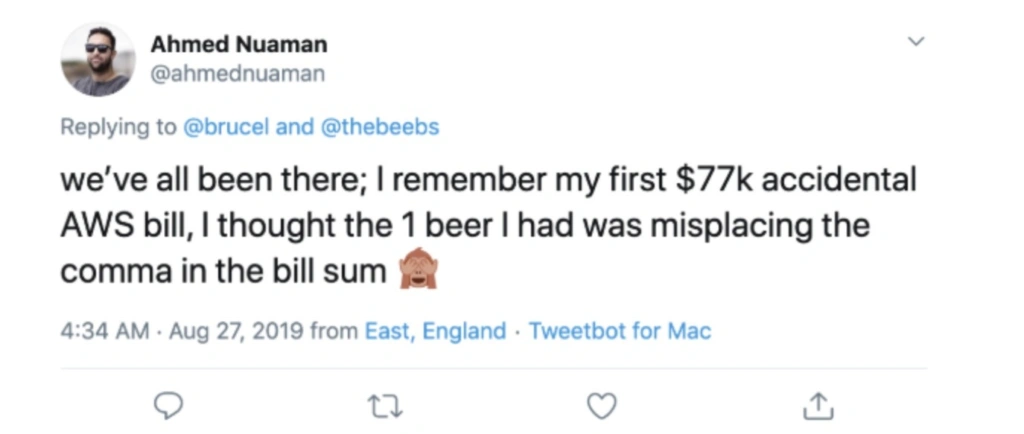
If a bill jumps $1,000 overnight, you want to find out right away, versus five days later. Because that difference can mean a quick fix versus and a $77,000 surprise, like this:
In the next few minutes, we’ll explore how real-time anomaly detection is evolving beyond basic alerts.
We’ll also see why understanding cloud cost behavior matters more than analyzing raw spend spikes. Then we’ll share how you can help your team use real-time cost signals to support innovation without sacrificing profitability.
What Is Real-Time Anomaly Detection In Cloud Cost Monitoring?
Real-time anomaly detection used to mean, “Alert me when spend crosses a predefined threshold.” That definition no longer holds up.
In cloud cost management, real-time anomaly detection means continuously monitoring cloud cost and usage data to identify deviations from expected behavior, based on historical patterns, business context, and how systems normally operate.
It focuses less on absolute dollar amounts and more on unexpected cost behavior as it happens.
When something drifts outside those expectations, an alert arrives while the decision that caused it is still fresh, actionable, and reversible, like this:
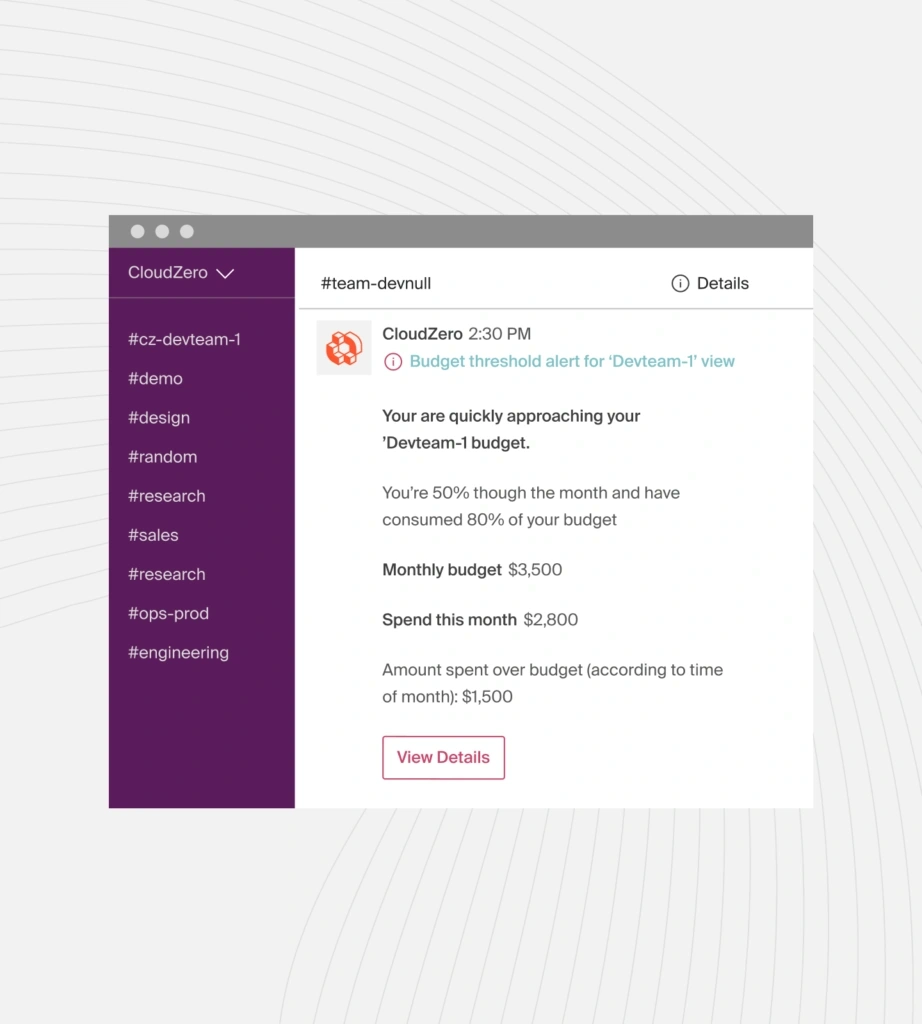
Just as importantly, “real-time” no longer means “near the end of the day.” It means detection within minutes.
Scheduled anomaly detection reports what you already paid for. Real-time detection gives you a chance to stop it and change what happens next.
Scheduled anomaly detection reports what you already paid for. Real-time detection gives you a chance to stop it and change what happens next.
However, not all real-time anomaly detection is made equal.
Report
Finance needs to prove AI’s return: CloudZero report
260 senior finance leaders (more than half CFOs) told us why the speed of seeing AI spend, not the size of it, separates who pulls ahead on AI from who gets burned.
How Real-Time Anomaly Detection Works For Cloud Costs
Conventional cost anomaly detection treats cloud spend as a collection of isolated line items. When something changes, you’re flooded with alerts. Most of them are vague, noisy, and little more than “spend increased” warnings.
That kind leaves your team guessing what actually happened. The best cloud cost anomaly detection works differently.
Instead of monitoring services in isolation, it continuously ingests your cost and usage data as it’s generated. This works across infrastructure, managed services, and usage-based components tied directly to how your product runs.
Over time, this data establishes a living baseline of what “normal” looks like for your environment. And as your product evolves, customer behavior shifts, and workloads change, expectations adjust with them.
And yes, the best anomaly detection approach distinguishes between healthy growth and truly unexpected deviation (so your team doesn’t get fire alarms when it’s really your business succeeding).
When a meaningful deviation does occur, detection happens close to real time.
The alert arrives paired with enough context to help you pinpoint what changed, where it happened, and why it matters.
Instead of a generic “spend increased” message, you can immediately see:
- Which service, feature, or environment changed,
- How current cost behavior differs from normal, and
- Who owns the affected area (not so anyone can point fingers, but for fast, proactive optimization), like this:
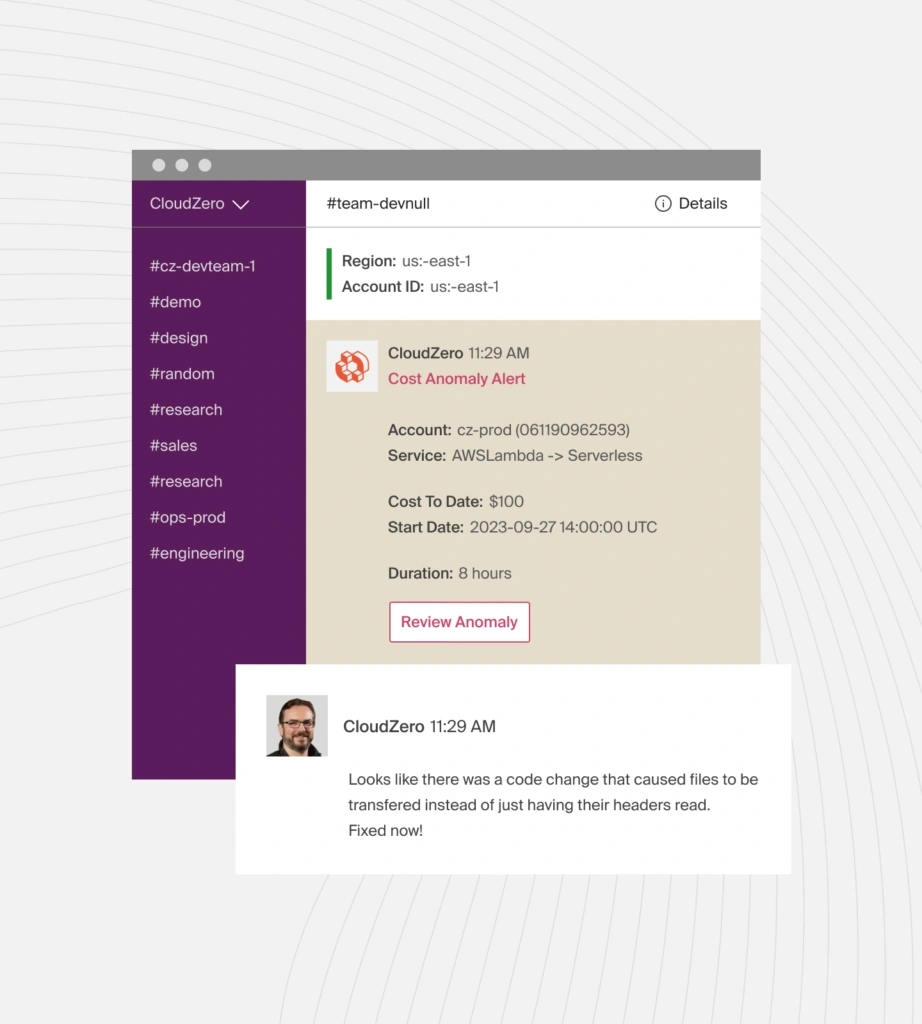
Image: CloudZero’s real-time anomaly detection points you to the specifics so you can tell exactly what to do next to fix the hole. Take your free tour here to see how it works. Better yet, grab this risk-free demo to try it out yourself.
That context is what makes anomalies actionable. For example, your engineers can quickly correlate cost changes with recent deployments, isolate the specific changes driving the spend, and correct issues before they become overspending 101.
This approach works not because it’s faster for the sake of speed, but because it also aligns cost signals with decision-making. It’s how innovative teams at Duolingo, Moody’s, and Upstart are staying in control.
Real-World Cloud Cost Scenarios Where Real-Time Anomaly Detection Pays Off
In the scenarios below, notice how early detection surfaces abnormal cost behavior before overspending registers.
An AI feature with rising cost per request
A product team rolls out an AI-powered feature. Adoption grows as expected, but the cost per request increases faster than planned due to expanding prompts, larger responses, or suboptimal model choices.
How real-time anomaly detection helps:
It surfaces early unit-cost shifts and where they originate, even if your total spend hasn’t spiked yet. That affords you time. Time to optimize prompts, tune responses, or revisit model selection before the impact scales at the speed of the Internet.
A misrouted data flow or region change
A configuration update routes traffic through the wrong region or introduces unexpected data transfer. Nothing breaks, but your AWS egress costs start to soar.
How real-time cost anomaly alerts helps:
You are able to tie the cost change directly to the affected service and environment. And this enables your team to correct routing quickly. The fix is small, and so is the financial impact. Wait a few days, and that same issue becomes far more expensive — and far harder to unwind.
An enterprise customer whose usage profile shifts
One of your bread-and-butter enterprise customers ramps up usage in a way that’s technically valid but financially problematic for you. Their cost to serve increases faster than revenue, pushing the account toward unprofitable territory.
See: How CloudZero Measures Cost per Customer (So You Can, Too)
How behavior-based anomaly detection helps:
It highlights the shift early, including who and why it is happening. This means finance and product get time to adjust pricing, apply usage limits, or engage the customer proactively, well before your renewal discussions lock in an unprofitable contract.
As you’ve noticed by now, real-time anomaly detection delivers the most value when timing and context work together. Now, here’s how to do exactly that without losing your mind.
Always-On, Context-Aware Real-Time Anomaly Detection Is the Future Of Cloud Cost Monitoring
The future of cloud cost monitoring isn’t asking, “Did we spend more than expected yesterday?”
It’s asking, “Why did the cost behavior of this feature or customer change (and should it)?”
A once-a-day cost report just can’t keep up with modern SaaS. Because by the time an issue surfaces, the opportunity to prevent it is already gone.
Instead, shift to true real-time anomaly detection, where cost signals arrive with the context you need to act, while fixes are still small, and optimization still feels like normal operations, not crisis management.
CloudZero is built for this reality
Instead of overwhelming your team with generic alerts, CloudZero delivers high-confidence cost signals tied directly to real engineering actions and business drivers, like this:
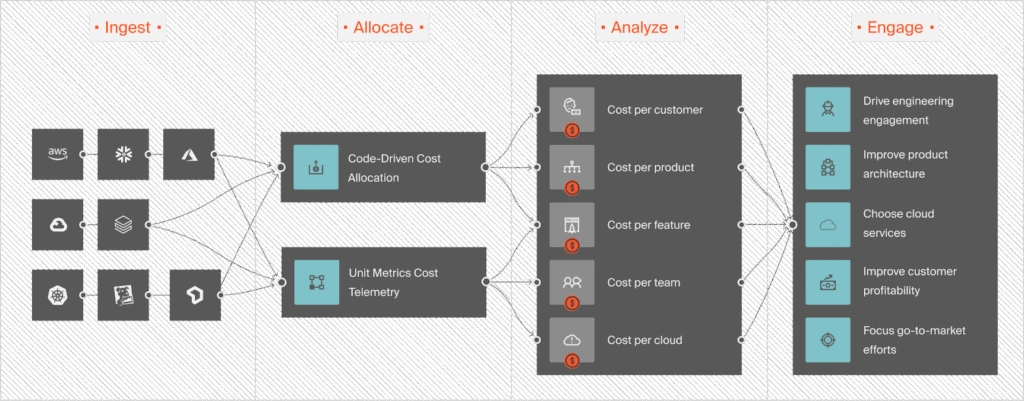
You’ll see exactly what’s changing, why it’s changing, and who owns it. Noise-free.
With fewer surprises, you’ll have the confidence to keep building without worrying that you’ll burn through your Q2 budget in week two.
This is the same approach that teams at Skyscanner, Drift (saved $2.4M), and PicPay (saved $18.6M) trust.
Want to protect your margins while your teams move fast? Book your personalized demo here and see how much more control (and confidence) you’ll have over your cloud costs going forward.
Frequently Asked Questions about Real-Time Anomaly Detection