To love Dune is to be immersed in multiple Dunes at any given time. There are the six original books by Frank Herbert and 19-plus volumes in the prelude series written by Herbert’s son, Brian, and Kevin J. Anderson. There are the two feature-length adaptations of the first novel that actually made it to screen in David Lynch’s Dune (1984) and Denis Villeneuve’s new, pandemic-delayed release starring Timothée Chalamet and Zendaya, and one failed attempt so spectacular that it’s been immortalized in a documentary (2013’s Jodorowsky’s Dune) and the hearts and imaginations of many an Alejandro Jodorowsky devotee. There are also two TV miniseries that dig deeper into Herbert’s hexalogy (2000’s Dune and 2003’s Children of Dune). That’s before you even begin to get into the encyclopedia, poetry collection, coloring and activity books, video and board games and countless other tie-ins.
Advertisement
It’s not just the volume of content contained within the greater Dune universe, though. It’s also the vast array of interpretations contained therein—and the countless more inspired by them. Perspective fuels both the form and content of Herbert’s original books. The narration frequently shifts between a number of characters’ points of view. Each chapter of every Dune book is prefaced by either a quote from someone related to the saga, or a passage from something that a character has written. The ways in which this multitude of influences and responses to events shapes the plot of the original Dune books, and the ways that the characters see environmental issues, politics, religion, mythology and each other on both an individual and societal level, is the connective tissue linking its many themes.
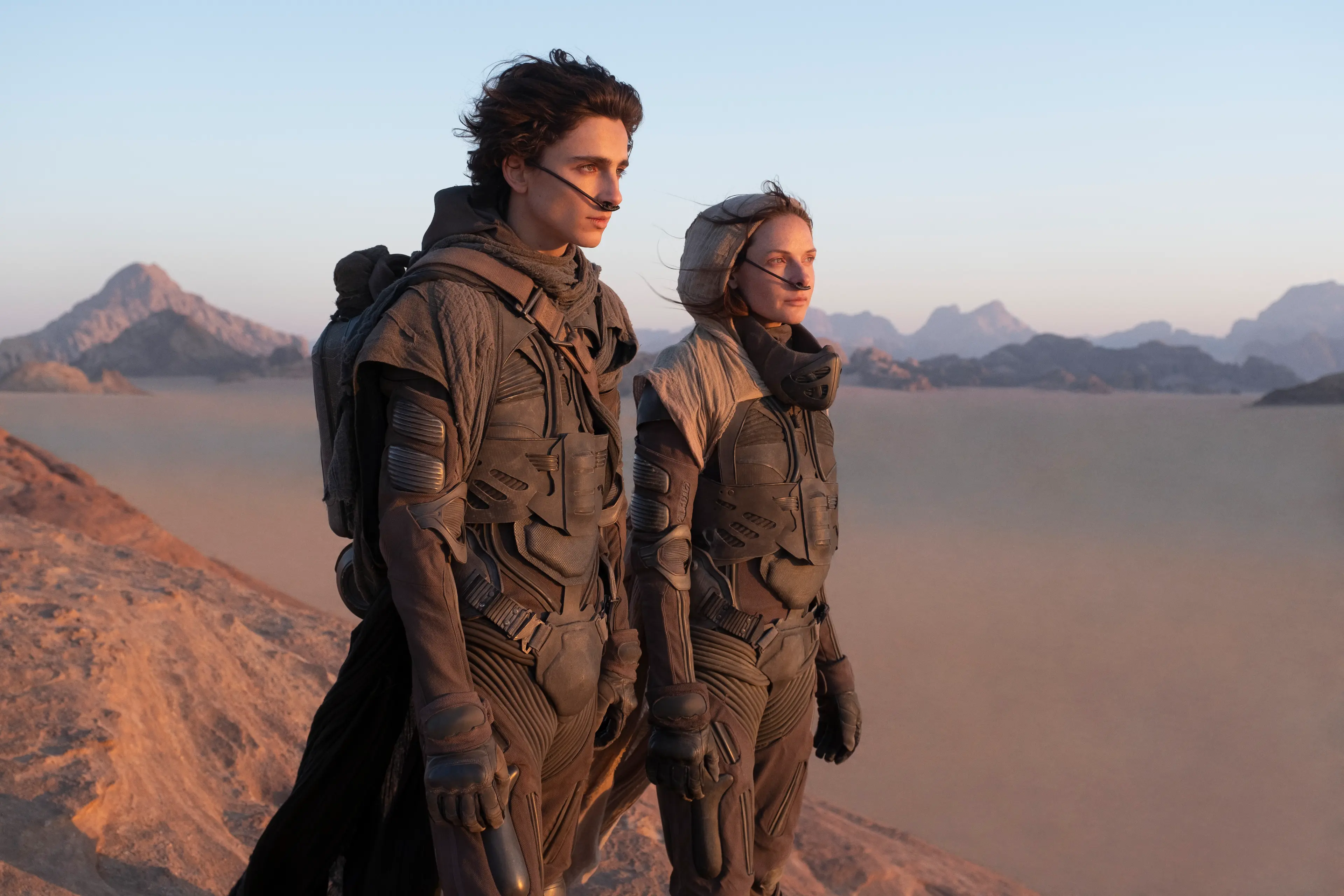
Timothée Chalamet and Rebecca Ferguson in 'Dune,' 2021 Chiabella James © 2020 Warner Bros. Entertainment Inc. All Rights Reserved.
Advertisement
All of the above is filtered through artists’ visions each time Dune makes it to the screen. That work then joins the rest of the canon in creating the various impressions held by its audience. Even among the most dedicated Dune nerds, these viewpoints can be wildly divergent. A few years ago, I happened to know two people who were reading Herbert’s fifth book, Heretics of Dune, at the same time. One was impressed by the world-building, and fascinated by how effectively Herbert kept him invested in the characters despite cultivating little in the way of emotional attachment to any of them. The other cathartically wept over an exchange between two people in the final pages. My own Dune experience is something else entirely.
The seemingly limitless approaches to the source material and all of the possibilities that arise from it are part of what draw artist, reader and viewer alike to Dune. But it’s ultimately what confounds us, too. Even if it were possible to film a definitive interpretation—and that’s a massive, sandworm-sized if—would there ever be enough of an audience consensus to recognize it as such?
A story more uncontainable than unfilmable
Over the 56 years of its existence, Dune has earned a reputation for being “unfilmable.” But that’s not the most accurate way to describe the continuing struggles that filmmakers have faced in bringing the book(s) to the screen. An unfilmable project is something like James Joyce’s Ulysses or Vladimir Nabokov’s Lolita, a book that has been specifically crafted for its medium and cannot be transferred to another one and removed from its prose and structure without losing most if not all of what made it compelling.
There’s a great deal about Dune that is inherently cinematic, though. Its landscapes, its technology, its people and its fantastical creatures, from the sandworms to the guild navigator, are all primed for visual realization. Many of its most iconic scenes—Paul Atreides’ shield practice, his visions of a mysterious woman he feels he knows, the Reverend Mother’s test, Lady Jessica using the voice, the appearance of Baron Harkonnen—have successfully made the leap from the page multiple times now, with each variation offering its own effective mix of faithfulness to the text and artistic license.
Advertisement
Dune isn’t so much unfilmable as it is uncontainable. The major stumbling block for everyone who has tried hasn’t been a matter of how to bring it to the screen, but how much of its almost 500 pages (not including the appendixes) they can and should include. Not to mention how best to balance the characters, perspectives, backstory, plot points, concepts, themes and personal touches that make the cut.
Alejandro Jodorowsky’s Dune
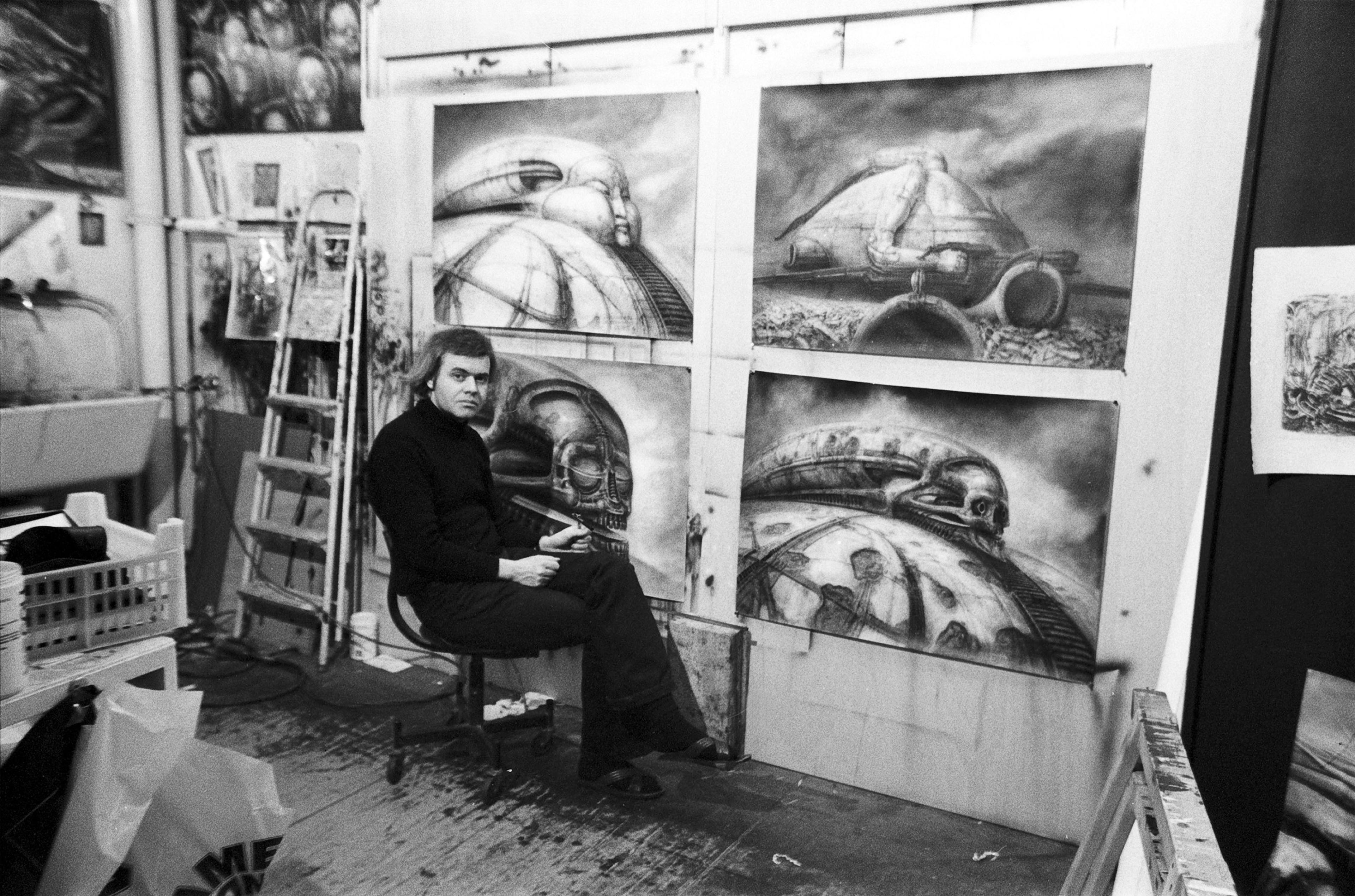
Behind the scenes of Jodorowsky's Dune, H.R. Giger, early 1970s Sony Pictures/Everett
Officially, production stalled on Chilean-French cult director Alejandro Jodorowsky’s mid-1970s attempt due to budgetary constraints and an unresolvable disagreement over run time. (Jodorowsky’s producers wanted something under two hours. He preferred something in the 10-14 hour range.) The documentary Jodorowsky’s Dune, though, gives the impression that if the project hadn’t collapsed under his ambition, the final product would have buckled under his ego. The talent he had either assembled or was in the process of recruiting (including Pink Floyd for music, H.R. Giger, Chris Foss, and Jean Giraud for design, and Orson Welles, Gloria Swanson, Mick Jagger, Salvador Dali and a robot recreation of Salvador Dali for the cast) was an embarrassment of riches.
Advertisement
His story, ridden with creative liberty, was intriguing enough. At the very least, it’s wildly entertaining to listen to him explain it years later in the doc. But it’s also clear that Jodorowsky had almost entirely recreated his source material in his own image. Had he succeeded in making it, there’s a good chance it would have made a fine addition to his body of work, but there’s little evidence that it would have added much to the Duniverse.
David Lynch’s Dune
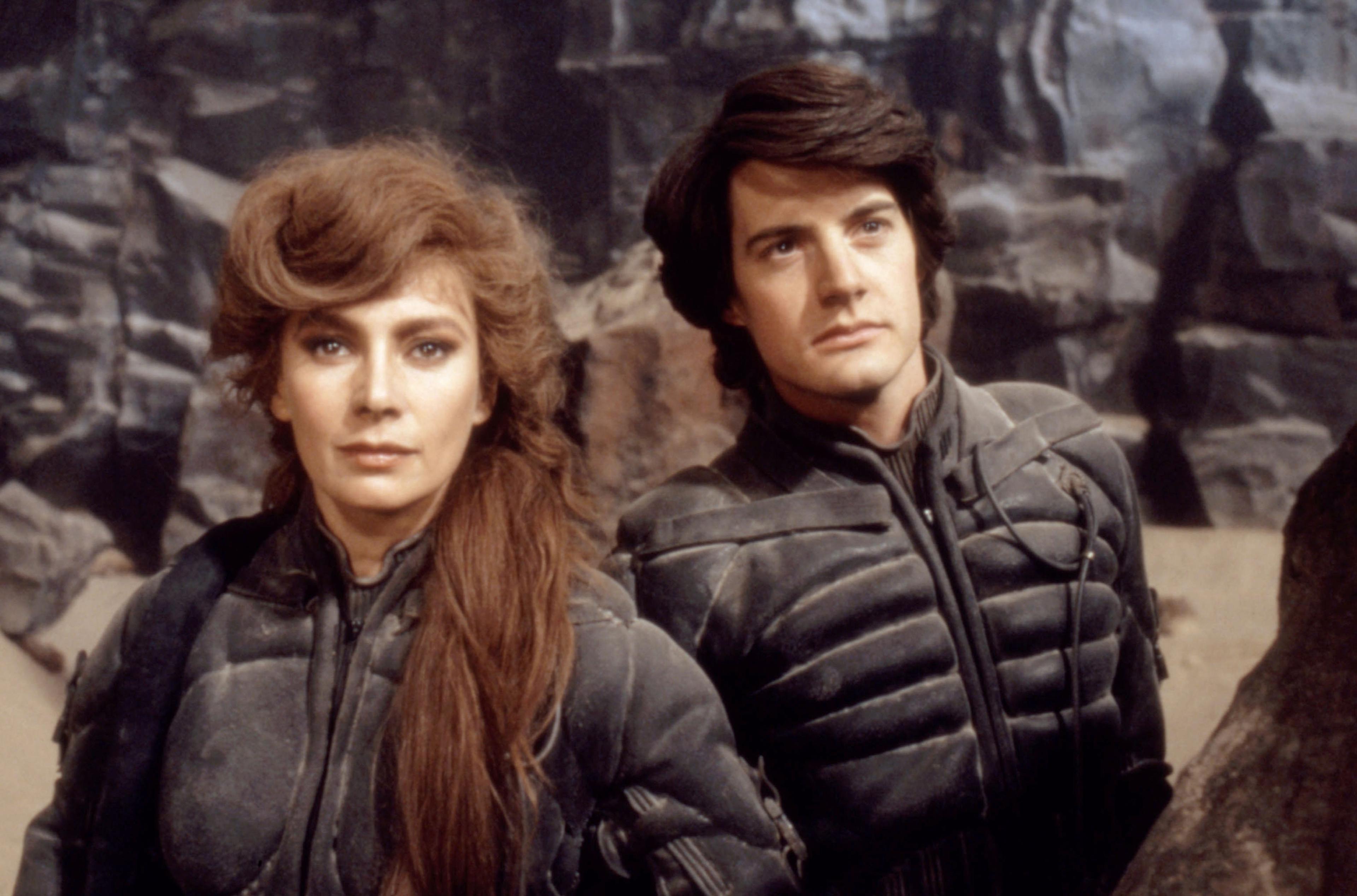
Francesca Annis and Kyle MacLachlan in David Lynch's 'Dune,' 1984. Universal/Everett
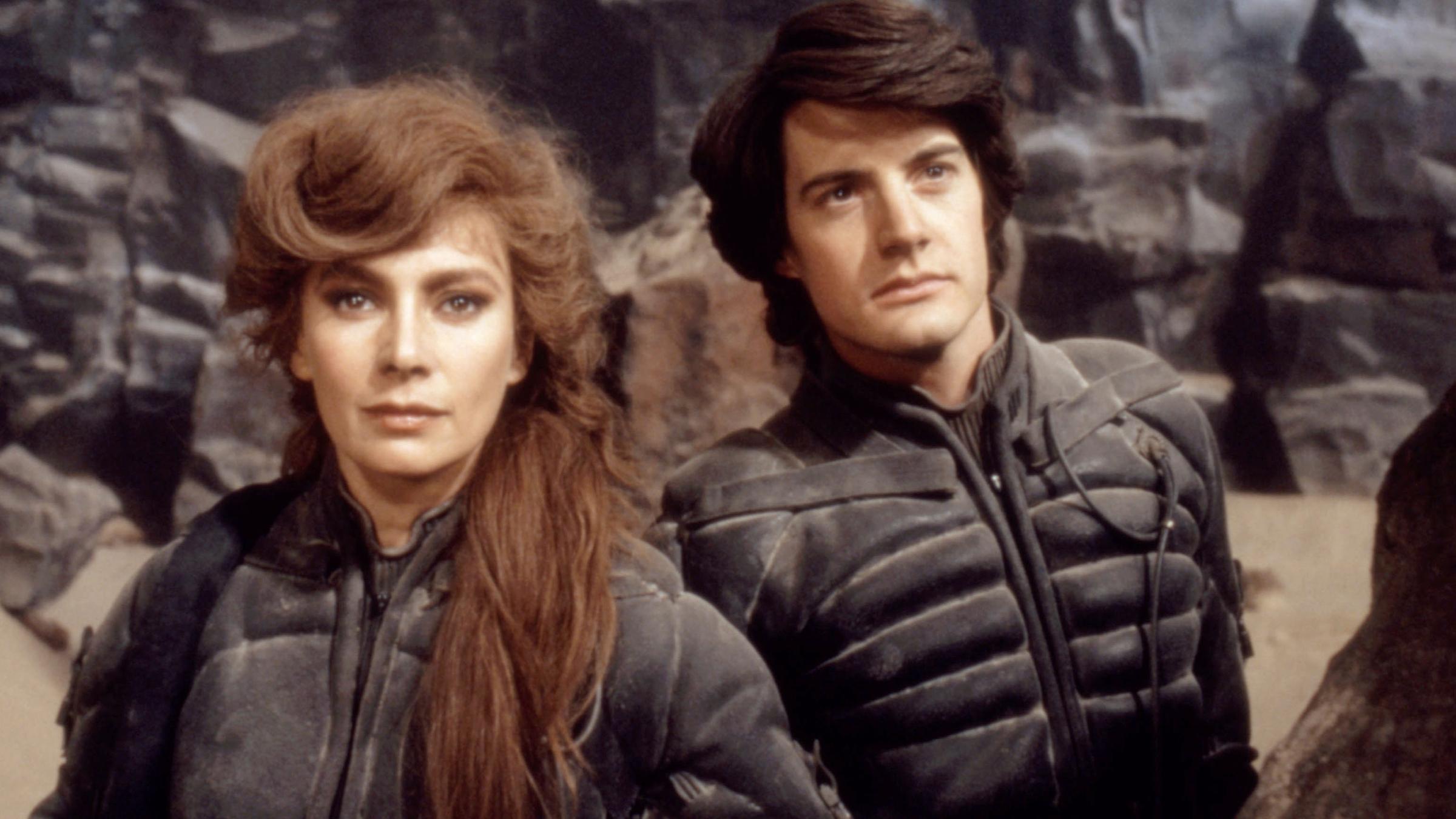
David Lynch’s 1984 film, by contrast, achieves a striking harmony of Lynch and Herbert. There remain long standing rumors of tension between Universal’s commercial goals and producers Dino and Raffaella De Laurentiis and Lynch’s more artistic vision (Lynch famously refuses to discuss the film to this day). But the version of Dune that was ultimately released maintains a number of recognizably Lynchian qualities. Or, more accurately, what we would come to recognize as Lynchian hallmarks as his career progressed.
Advertisement
The exceptionally promising but still young filmmaker only had two feature films (Eraseherhead and The Elephant Man) under his belt when he tackled Dune. The movie firmly establishes its own world that doesn’t look or sound like anything that came before it. It’s peppered with surreal touches and underscored by a sense of the uncanny. Its characters—led by future Blue Velvet and Twin Peaks star Kyle MacLachlan in his first ever role—even speak in a recognizably Lynchian rhythm. But what they say and the story they inhabit is better grounded in the original book. For all of its faults (more on those below), Lynch’s Dune does represent an open and thoughtful engagement between an artist with a strong singular vision and a famous text. Anyone invested in either should be able to find something in their combined power, even if they find the execution a touch messy.
Lynch’s Dune was widely panned in its time. Roger Ebert declared it “a real mess, an incomprehensible, ugly, unstructured, pointless excursion into the murkier realms of one of the most confusing screenplays of all time.” One of the least negative reviews called it “hollow.” Mainstream audiences at the time seemed to agree, if they cared to try it at all, but the film has developed a fond cult following who either accept or celebrate its disastrous nature. Recent critical reevaluations in Vulture and Ars Technica wholeheartedly embrace the mess as a selling point.
Advertisement
Where this Dune falters is in its abridgement. It makes the wrong sacrifices in its efforts to cram the entire novel into a single feature. The major plot points are all present, as is a staggering amount of information about the inner and outer workings of Arrakis and all of the beings who have a stake in it, but almost everyone’s internal lives and motivations are absent. Characters often move from moment to moment without giving an uninitiated audience any indication as to why any of it is happening. I’m not sure there’s any film with a wider gap between the amount of exposition provided and the amount of sense that can be made from it.
The Sci FiChannel (now SYFY) tackled plot and theme more clearly and more thoroughly in their three-part miniseries, Frank Herbert’s Dune (2000). It was also able to dig far deeper into the lore with the three-part sequel largely influenced by the third book, Frank Herbert’s Children of Dune (2003). This faithful and straightforward take on the saga was obviously enabled by its longer runtime. But it was also facilitated by the somber reverence which John Harrison, the screenwriter for both series and director for 2000’s Dune, held for Herbert’s work. “A lot of people refer to Dune as science fiction,” Harrison told the New York Times in 2000. “I never do. I consider it an epic adventure in the classic storytelling tradition, a story of myth and legend not unlike the Morte d’Arthur or any messiah story. It just happens to be set in the future.”
Advertisement
This approach really worked for a segment of the Dune fan population. Many consider these series an excellent representation of the books. Others, myself included, were less enraptured. While I appreciate the deep care involved in this interpretation, I miss the eccentricities of its predecessors. I remain unconvinced that the most literal interpretation of Dune is necessarily the most true to its overall essence. I also believe this approach does a disservice to science fiction in general and the sci-fi aspect of Dune, in particular. Herbert’s universe is undeniably human drama in many ways, but sci-fi frequently illuminates the human experience. (And no one spends decades finely tuning the life cycle of a pivotal fictional creature, from the vital fungal excretions of its larval form to the possibilities of human-to-worm metamorphosis, because they want it to be treated like a secondary detail.)
Advertisement
Denis Villeneuve’s Dune
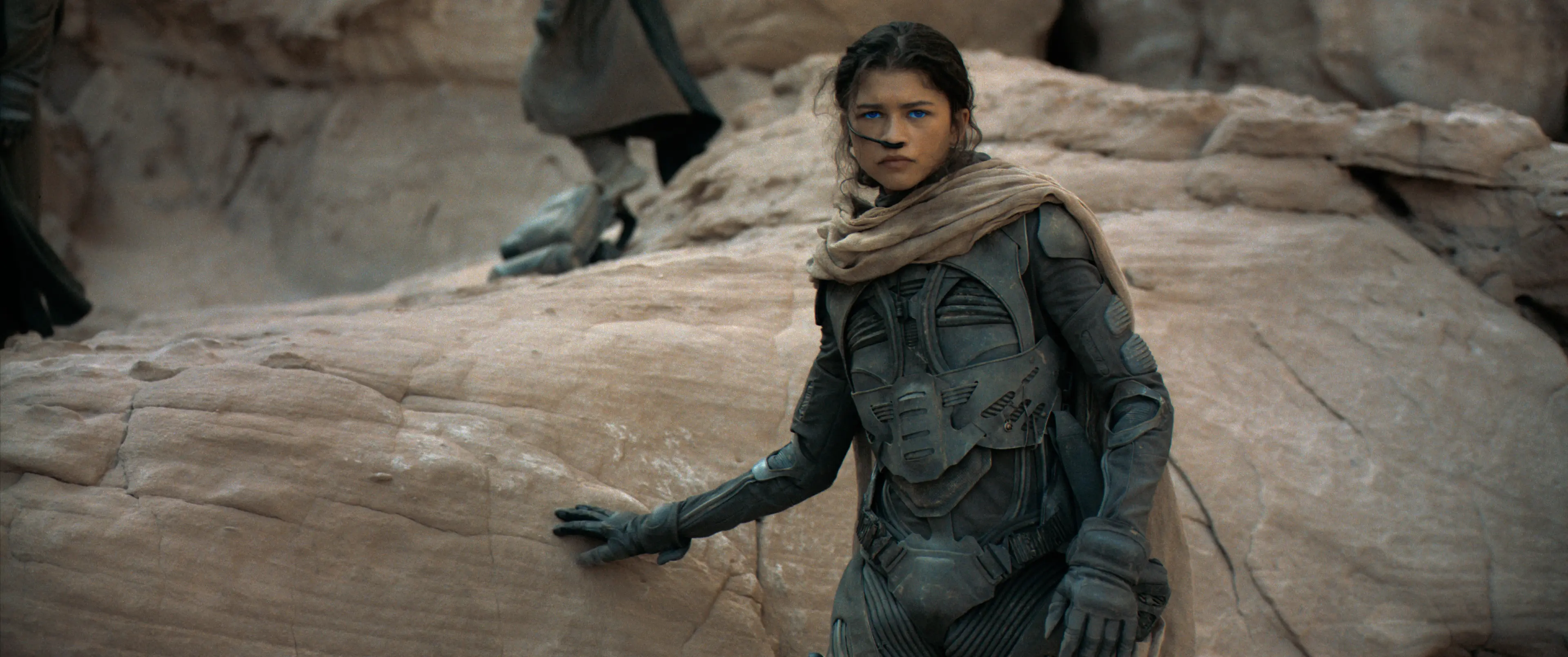
Zendaya as Chani in Denis Villeneuve's 'Dune' Courtesy of Warner Bros. Pictures and Legendary Pictures
Denis Villeneuve seems to have a devotion to Herbert almost on par with Harrison’s, but he has his own unique style as a director and writer that also asserts itself in his new adaptation. His Dune (or Dune: Part One as the title appears on screen), out in theaters and (much to Villeneuve’s frustration) on HBO Max on Oct. 22, isn’t as weird as Jodorowsky’s or Lynch’s, but it is otherworldly. Villeneuve and crew have put their reported $165 million budget to excellent use in rendering the vast expanses of the desert planet, the gilded interiors of the Atreides family’s homeworld, and spacecraft with a style that, between this and Arrival, is on the verge of becoming a bona fide Villenuvian characteristic. Its sparse application of both backstory and unfolding plot lends an intriguing dreamlike quality to the proceedings. There’s a lot of promise contained in this opening salvo.
Advertisement
It never amounts to more than potential, though, as this Dune also stumbles with pacing and narrative. Despite being almost 20 minutes longer than Lynch’s and tackling only a fraction of its exposition, it covers slightly less than half of the book’s material, ending just where its feature-length predecessor started to pick up. It’s a choice that could easily pay off if and when Villeneuve makes a Part 2 and this film settles into its role as the prelude portion of a greater story. As a singular work, though, it has no recognizable arc, and nothing for most viewers who are not already immersed in this universe to latch onto. (Though TIME’s film critic Stephanie Zacharek, who professes in her review to little interest in the books, did applaud Villeneuve’s “go-for-broke earnestness” and the sandworm’s “shivery elegance.”)
Imperfect fragments of a greater whole
While no one has managed to produce the perfect and most complete Dune for all audiences, though, none of the efforts that have made it to the screen have been abject failures, either. They’ve each illuminated aspects of a greater whole and contributed something new to that universe. Under Lynch’s guidance, the underlying strangeness of Dune was able to thrive in all of its beauty and perversion. And its sheer volume of weird details and minutiae gave a certain brand of Dune nerd plenty to chew on. The miniseries offered a strong representation of the plot, and gave viewers who haven’t read the series their best glimpse into the fuller saga, and the much more complicated—and less archetypically heroic—developments of Paul Atreides’ character. Villeneuve’s Dune rejects translation in favor of giving us an abstract impression with its own hypnotic qualities. By opening with the perspective of Arrakis’ indigenous people, the Fremen, it also brings the themes of colonialism that run through the series to the forefront, making it particularly relevant to our current times.
Advertisement
Each iteration allows for different aspects of the characters and their stories to be highlighted, too. The contrast between Kyle MacLachlan’s Paul in 1984 and Timothée Chalamet’s, for example, is fascinating. MacLachlan’s earnest enthusiasm and leading-man charm are perfectly suited to Lynch’s universe and the version of the story he was telling, but Chalamet’s is infused with an adolescent petulance that swings much closer to the way he comes off in the original book, and better paves the way for everything that comes later.
Perhaps multiple imperfect attempts are better than one clear success, though. Multiple interpretations, each with its own tones, visual and sonic style, and its own insights into history, plotlines and character are certainly more interesting and more in the spirit of Dune. Every time an artist tries to tell their Dune, it brings something new and fascinating to the greater universe.
Advertisement
Or as a Bene Gesserit, quoted by Princess Irulan in the first book, put it: “Any road followed precisely to its end leads precisely nowhere. Climb the mountain just a little bit to test that it’s a mountain. From the top of the mountain, you cannot see the mountain.”
