Will 2026 Be a Turning Point for Shikoku? - A Day of Reading About the Economy and the Shikoku Shinkansen ー Sunday, August 9, 2026, Reiwa8

Today, my arm was hurting, and I did not feel like reading the newspaper. Before I knew it, it was already 5:30 in the evening. When I finally opened the newspaper, two articles caught my attention: one about the economy and another about the Shikoku Shinkansen.
The first article was about growing caution among Japanese companies regarding the economic outlook.
According to a survey of 111 major companies conducted by Kyodo News, 51 percent expect the Japanese economy to remain on an expansionary trend. This was down 19 percentage points from 70 percent in January. Meanwhile, the percentage expecting the economy to remain flat increased from 25 percent to 38 percent.
No companies expected a serious economic downturn, although 5 percent expected a mild recession. Still, companies have become more cautious than they were six months ago, mainly because of rising prices, weak consumer spending, and higher energy costs.
There are also some positive signs. Many companies expect a recovery in capital investment and consumer spending, as well as positive effects from rising wages. Corporate activity itself remains relatively strong. However, many companies are planning to raise prices within the next year in order to pass higher costs on to consumers.
Even if corporate activity remains strong, continued inflation can make everyday life difficult for ordinary people. Looking at the economy, I felt that we should not focus only on corporate figures, but also on how people actually feel about their daily lives.
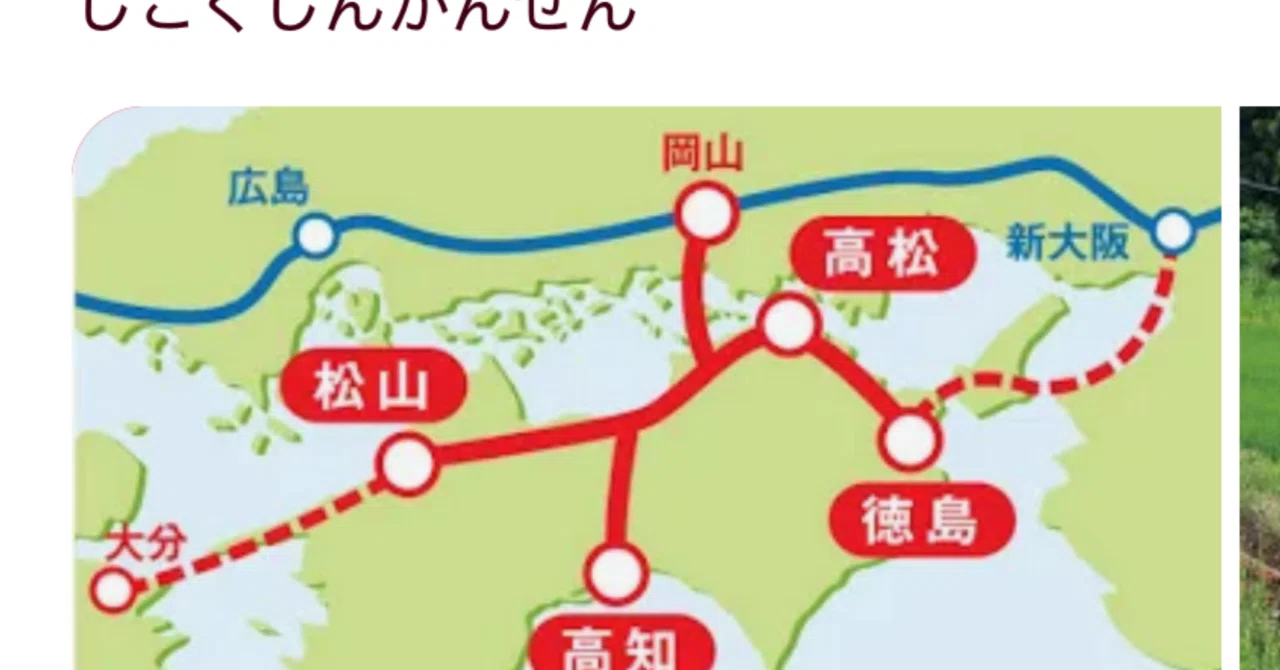
The other article that stayed in my mind was about the Shikoku Shinkansen.
The Ministry of Land, Infrastructure, Transport and Tourism has begun inviting companies to conduct a study on the Shikoku Shinkansen, including passenger demand and possible routes. This does not mean that construction has been decided, and there is still a long way to go. But the Shikoku Shinkansen was already included in the national basic plan in 1973.
I was born in 1958. That means that when I was only 15 years old, the four prefectures of Shikoku and the business community were already calling for a Shinkansen.
More than half a century has passed since then.
I lived for many years in Osaka and Shizuoka, where the Shinkansen is a familiar part of everyday transportation. When I decided to move to Shikoku, the fact that there was no Shinkansen here was actually one of the major things I thought about.
I wondered what it would be like to spend the rest of my life in a place without a Shinkansen.
After moving to Matsuyama, however, I began to see things differently.
What first surprised me at Matsuyama Station was the overwhelming presence of Iyotetsu.
The trains, buses, and streetcars are all part of Iyotetsu. It almost feels as if the whole city is connected by the same orange color. JR Matsuyama Station, on the other hand, is set farther back and feels much quieter and less prominent compared with Iyotetsu.
I was also surprised that the transportation IC cards I had taken for granted in other parts of Japan could not simply be used there. I remember thinking, "I did not know there was a JR like this."
Living here has made me realize how strong Iyotetsu is in Matsuyama.
When I think about that, I also realize how difficult it would be to build a Shinkansen in Shikoku.
There are many issues to consider: population, industry, logistics, passenger demand, construction costs, and profitability. It would certainly be a huge project.
And yet, the world can change.
If Shikoku were connected to the Shinkansen network on Honshu through places such as Okayama, traveling between Shikoku and cities such as Kobe and Osaka could become much easier and faster.
Shikoku is the only one of Japan's four main islands without a Shinkansen. It makes me wonder whether connecting Shikoku to the national Shinkansen network could bring new movement of people, new business opportunities, more tourism, and greater regional vitality.
Of course, in a region where the population is declining, it is necessary to carefully consider whether such a huge investment is truly appropriate. Building a Shinkansen would not automatically revitalize Shikoku.
Still, today's newspaper made me think.
Could 2026 become a year when something finally begins to change for Shikoku?
I came to Matsuyama this year.
And in the very year I moved here, a plan that had barely moved for more than half a century has finally entered a new stage, with the government beginning a concrete study of the Shikoku Shinkansen.
It is still too early to call this a "turning point."
But perhaps we never know that something is a turning point when it happens. Only years or decades later, when we look back, can we say, "That was where it all began."
Will the day ever come when a Shinkansen runs through Shikoku, making it possible to reach Okayama, Kobe, or Osaka much more quickly than today?
I do not know.
But today, as I live here in Matsuyama and read about the Shikoku Shinkansen, I found myself hoping that 2026 will become an important year for Shikoku.
I hope such a day will come.
That was what I was thinking about on Sunday, August 9, 2026.
#ShikokuShinkansen
#Matsuyama
#Ehime
#Iyotetsu
#FutureOfShikoku
#RegionalRevitalization
#JapanIn2026
#NewspaperReading
#LifeInMatsuyama
#TurningPoint
