Stadium Seats and Cushions Market Size and Growth Forecast 2031| Report Prime

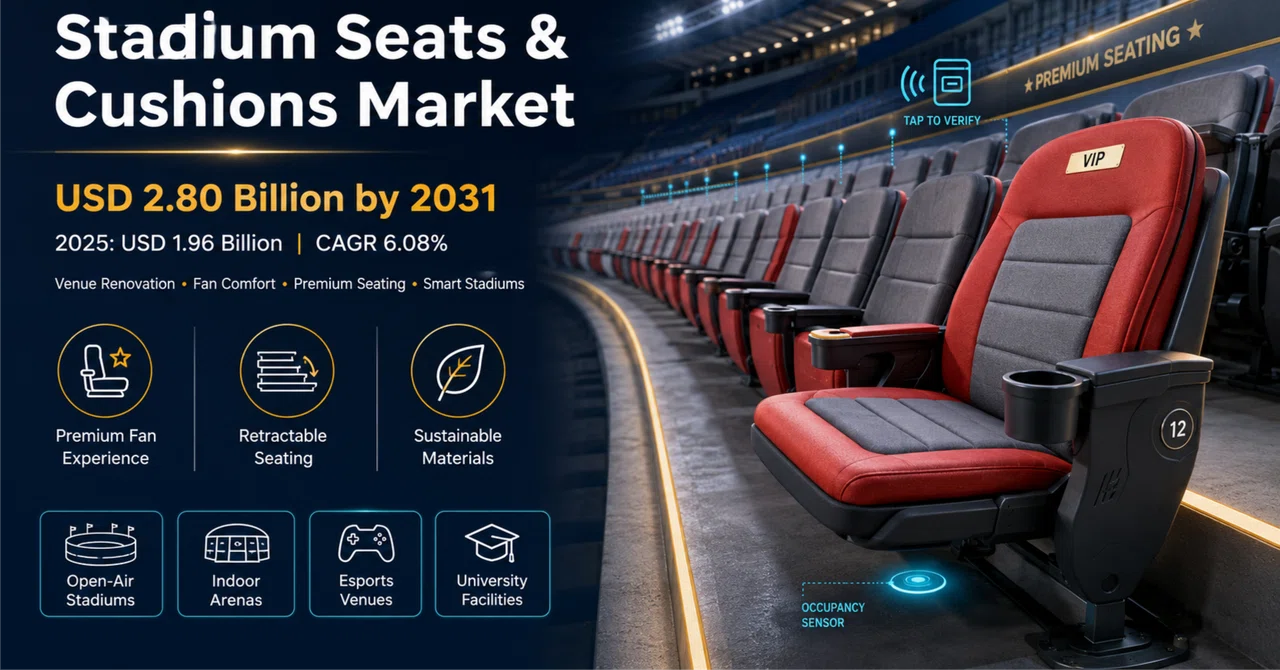
The stadium seats and cushions market is valued at USD 1.96 billion in 2025 and is projected to reach USD 2.80 billion by 2031, growing at a CAGR of 6.08% during 2024-2031. Demand is being supported by stadium renovation, premium fan experiences, VIP seating, retractable bleachers, indoor arenas, school and university sports facilities, esports venues, sustainable seating materials, and smart stadium upgrades.
This market outlook, including product types, venue applications, regional demand, supplier competition, and long-term procurement factors, is covered in the Stadium Seats and Cushions Market Size and Growth Forecast.
Key Market Indicators
2024 market size: USD 1.85 billion
2025 market size: USD 1.96 billion
2031 projected market size: USD 2.80 billion
Forecast CAGR: 6.08%
Main product types: stadium seats, cushions, retractable bleachers, telescopic seating, VIP seats, portable cushioning
Main applications: open-air stadiums, indoor gymnasiums, arenas, multipurpose venues, esports venues, school and university facilities
Key companies: DreamSeat, Hussey Seating, Irwin Seating, Camatic Seating, Ferco Seating Systems, Daplast, Series Seating, Preferred Seating, Kotobuki Seating, Avant Seating Technologies
Growth drivers: venue refurbishment, fan comfort, premium seating revenue, smart stadium projects, sustainability, sports tourism
Market Snapshot: Seats Are Becoming Revenue Assets
Stadium seats and cushions were once treated mainly as fixed venue infrastructure. Today, they are part of fan experience, hospitality strategy, safety planning, accessibility, and revenue design. A seat affects how long spectators stay, how comfortable they feel, how much they spend, and whether they return for another event.
Sports venues now compete not only with other venues, but also with home viewing, streaming, and digital entertainment. To justify higher ticket prices, stadium operators are investing in better seating, cleaner layouts, VIP zones, cup holders, wider chairs, cushioned sections, and flexible seating systems.
What Venue Owners Want From Seating
Higher comfort during long events
Better sightlines and safer movement
Faster cleaning and maintenance
Durable materials for heavy use
Premium seating that increases revenue per seat
Modular layouts for concerts, sports, esports, and community events
Sustainable materials and lifecycle documentation
Smart features that support data and fan services
Product Map: Not All Stadium Seating Serves the Same Purpose
Fixed stadium seats are used in football stadiums, cricket grounds, soccer venues, baseball parks, rugby venues, arenas, and performing arts spaces. Buyers evaluate UV resistance, weather durability, vandal resistance, cleaning requirements, color stability, and installation speed.
Cushions and padded seats improve comfort without requiring full seat replacement. They are common in VIP sections, club seating, courtside areas, temporary seating, and bleacher upgrades. Cushions also create opportunities for branding, sponsor visibility, and premium pricing.
Retractable and telescopic seating is important for indoor gymnasiums, school halls, university arenas, multipurpose venues, and event centers. These systems allow operators to open floor space, change capacity, and host multiple event formats.
VIP and premium seats include wider chairs, padded backs, armrests, cup holders, recliner-style seating, heated cushions, and suite-level products. These are important because premium seating can generate revenue far beyond standard general-admission areas.
Retrofit kits and portable solutions help older venues upgrade comfort without rebuilding entire stands. Replacement shells, cushions, cup holders, and modular seating components are attractive for schools, municipalities, and mid-tier sports facilities.
Demand by Venue Type
Open-air stadiums
Large outdoor venues need seating that can survive rain, sunlight, crowd traffic, cleaning chemicals, and repeated seasonal use. Stadium operators also look for seat colors, sponsor integration, accessibility sections, and long-term replacement planning.
Indoor arenas and gymnasiums
Indoor facilities need flexible seating layouts. Basketball, volleyball, concerts, graduations, esports, and community events may all use the same space. Retractable systems and modular seating are especially useful in these venues.
School and university sports facilities
Education-sector buyers focus on durability, safety, budget control, maintenance, and installation timing. Gym bleachers, field seating, portable cushions, and replacement seating components are common purchasing areas.
Esports and entertainment venues
Esports venues need seating designed for longer viewing sessions, screen visibility, lighting conditions, and sponsor integration. Comfort and digital experience matter more here than in traditional short-duration seating formats.
Stadium refurbishment projects
Renovation is a major market driver. Many stadium owners prefer improving seating, premium sections, accessibility, and fan comfort instead of building entirely new venues.
For deeper segmentation, regional demand, company analysis, and forecast data, readers can review the download free sample report for this market.
Buyer Notes: What Procurement Teams Should Check
Stadium seating is a long-life investment. A cheap product can become expensive if it cracks, fades, loosens, creates safety issues, or requires frequent replacement.
Important evaluation points include:
Durability
Seats must handle high traffic, weather exposure, cleaning chemicals, vibration, and public use.Fan comfort
Seat width, back support, legroom, cushioning, armrests, and cup holders influence the spectator experience.Sightline planning
Seating must support clear views, safe row spacing, and smooth crowd movement.Installation timing
Many projects must be completed between seasons, so modular design and fast installation matter.Maintenance and spare parts
Replaceable parts, local service, and simple cleaning reduce lifecycle cost.Safety and compliance
Fire standards, accessibility, crowd safety, structural codes, and slip resistance must be considered.Revenue potential
VIP seats, club seating, branded cushions, and smart-seat features can create additional revenue streams.Sustainability documentation
Recycled polymers, recyclable materials, low-carbon production, and product lifecycle information are becoming more important in tenders.
Competitive Landscape: Comfort, Customization and Project Execution Matter
The stadium seats and cushions market includes global seating manufacturers, bleacher specialists, premium seating companies, cushion suppliers, and regional installation contractors.
DreamSeat is visible in VIP and customizable stadium seating. Hussey Seating is known for retractable bleachers and telescopic platforms. Irwin Seating has a strong history in fixed seating and performance venues. Camatic Seating competes through ergonomic molded seating and international stadium references. Ferco Seating Systems is relevant in premium seating and luxury boxes. Daplast provides polypropylene stadium seats and refurbishment components.
Series Seating and Preferred Seating serve cushion, portable seating, and retrofit needs. Kotobuki Seating brings Japanese engineering experience across public, transport, and sports seating. Avant Seating Technologies is positioned around lightweight bench systems and modular venue solutions.
Competition is shaped by:
project references
customization ability
premium seating range
retractable system engineering
material durability
regional installation partners
after-sales support
sustainability credentials
smart-seat features
Regional Callouts
North America remains a major market because of professional sports, college athletics, large arenas, and high-budget refurbishment projects. Premium seating and VIP suite upgrades are especially important.
Europe is supported by football stadium modernization, historic venue upgrades, hospitality sections, and sustainability-driven procurement. The UK, Germany, Spain, Italy, and France remain important markets.
Asia-Pacific is expanding through new sports infrastructure, multipurpose arenas, esports venues, school facilities, and regional event investments. China, India, Japan, South Korea, Australia, and Southeast Asia offer growth opportunities.
Latin America has demand linked to football culture, municipal stadiums, and event venues, though budget-sensitive projects may favor modular and retrofit-friendly systems.
Middle East and Africa offer project-driven opportunities through premium stadiums, global sports events, smart city investments, and sports tourism.
Risk Snapshot
Stadium projects can face funding, permitting, and construction delays.
Plastic, foam, steel, aluminum, fabric, and freight costs can affect margins.
Municipal and school budgets may slow purchases.
Low-cost imports can create pricing pressure.
Poor-quality seats can fade, crack, loosen, or increase maintenance costs.
Smart seating features must prove real ROI.
Sustainability claims require credible evidence.
Outlook to 2031: Seating Becomes Part of Stadium 4.0
By 2031, seating will increasingly be tied to fan data, hospitality revenue, accessibility, venue operations, and sustainability. The strongest opportunities are likely in premium seating, retractable systems, esports venues, university facilities, modular retrofit kits, recycled materials, branded cushions, and smart-seat features.
Venue owners will continue balancing capacity, comfort, cost, safety, and revenue per seat. Suppliers that offer design support, reliable materials, fast installation, customization, and long-term service will be better positioned than those selling only commodity seating.
Conclusion
The stadium seats and cushions market is projected to grow from USD 1.96 billion in 2025 to USD 2.80 billion by 2031, supported by a 6.08% CAGR. Growth is being driven by stadium renovation, fan comfort, premium seating, retractable systems, indoor gymnasium upgrades, esports venues, smart stadium infrastructure, and sustainable materials.
Future market share will depend on ergonomic design, durability, customization, installation speed, retrofit capability, premium product range, smart-seat technology, sustainability credentials, and after-sales support. Related market research categories can also be explored through Report Prime.
Frequently Asked Questions
1. What is the size of the stadium seats and cushions market?
The stadium seats and cushions market is valued at USD 1.96 billion in 2025 and is projected to reach USD 2.80 billion by 2031. It is expected to grow at a CAGR of 6.08% during 2024-2031.
2. Where are stadium seats and cushions used?
They are used in open-air stadiums, indoor gymnasiums, arenas, school and university sports facilities, esports venues, multipurpose event centers, VIP suites, club seating zones, and bleacher refurbishment projects.
3. What is driving demand in this market?
Demand is driven by stadium renovation, premium fan experiences, sports tourism, retractable seating, esports venues, smart stadium projects, school facility upgrades, and sustainable seating materials.
4. Which companies are important in the market?
Important companies include DreamSeat, Hussey Seating, Irwin Seating, Camatic Seating, Ferco Seating Systems, Daplast, Series Seating, Preferred Seating, Kotobuki Seating, and Avant Seating Technologies.
5. What factors shape purchasing decisions?
Key factors include durability, comfort, installation speed, safety compliance, sightline design, maintenance support, premium seating potential, customization, sustainability documentation, and lifecycle cost.
いいなと思ったら応援しよう!
この記事は noteマネー にピックアップされました

