🌐わざわざから見る愛情が教える、関係を育てる視点|【エッセイ】シリーズこころの因数分解"Japanese Version" and "English Version"

職員の手間と工夫
学校でこんなことがありました。
勉強で分からないことがあったので、女性職員さんに聞いたのですが、その質問の回答は時間切れになって後日ということになりました。その次の日からゴールデンウイーク。学校はそのまま営業していましたが、私は予定通りお休みをしました。
自分が出席する日に行ってみると私が休んでいる間に、質問を受けてくれた職員さんがインターネットで分かりやすいサイトを見つけてくれていました。そして、それをプリントにまとめて、練習問題までつけて印刷して渡してくれたのでした。
私が感激して感謝を伝えたのは言うまでもありません。
目に見えないもの「愛情」
「愛情」と言うのは、見えないものだから、ないという人がいます。それでは、見えないものは「ない」のでしょうか?
いかがでしょう。
空気はどうでしょう。見えません。でも、「ない」のでしょうか。そんなことはありません。ちゃんと存在して、毎日一呼吸ずつ、私たちの肺の中に入っては出ていって、又、呼吸をする時に入っては出ていく。それは、繰り返されています。
そうして、人は、「酸素」という、人間にはなくてはならないものを、取り入れています。酸素がなくては生きてはいけません。
空気は物質じゃないかと言うのであれば、こんな話はどうでしょう。
「口」とは何ですかと言う面白い話を聞いたことがあります。
「口」とは、どこでしょう。指をさせるでしょうか。どこだと思ったでしょうか。
「下唇」や「上唇」を指したのではないでしょうか。
「口」とは、「上唇」と「下唇」に囲まれた、ぽっかりと空いた空間のことを指します。
「口」の色は何ですかと言われたり、口の手触りはと言われてもこたえられません。空間の事なのですから。でも、「口」はあります。目には見えなくても「口」は存在するのです。
愛情の一要素「わざわざ」
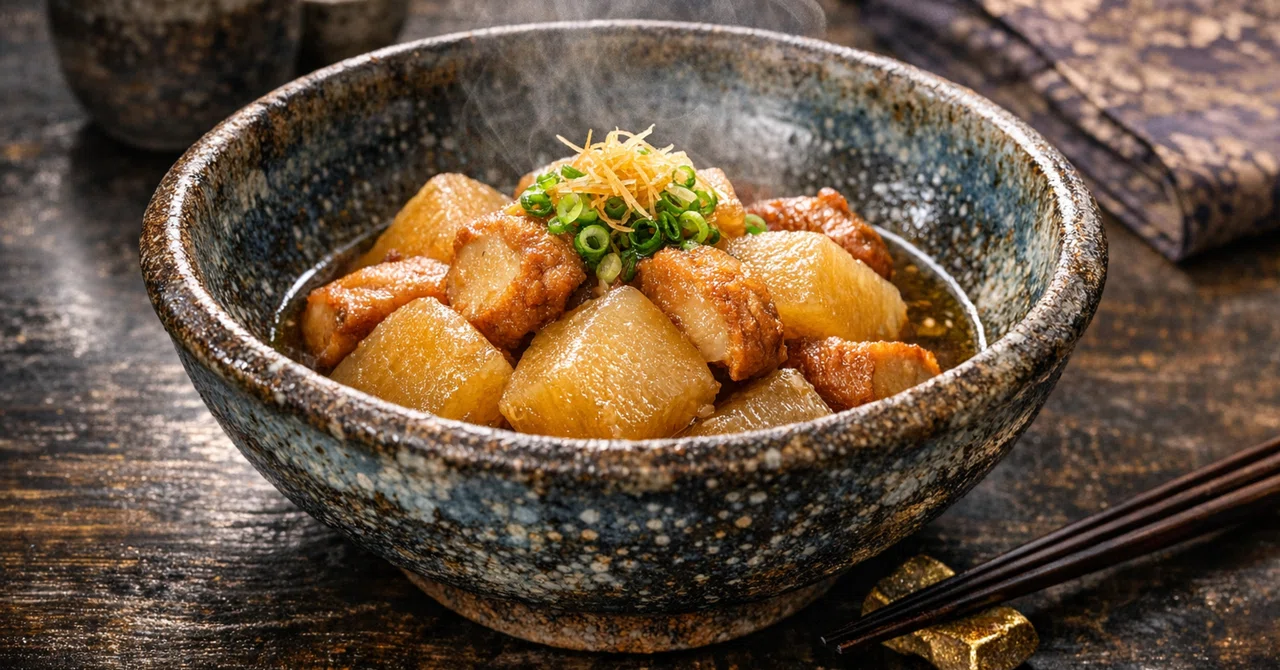
ここに一皿の「大根とさつま揚げの煮物」の料理があります。
食べる人からすると、見ただけではそこに愛情なんてものは存在しない様に、感じるのではないでしょうか。
私は思うんです。
「わざわざ」とは愛情の一要素
なのではないかと。
そこには、わざわざという名の愛情が入っています。
料理を食べる人には、そこにどんな「わざわざ」が隠されているのかを、ぜひ、見つけてほしいのです。
料理に「わざわざ」とは書いてないし、どこを探しても、料理だけ出てきたら、その日、その料理を作った人が、いくつの「わざわざ」をしたのかは、わかりません。
でも、ちょっと想像してみてください。その料理は、確かに作った人がいくつもの「わざわざ」を積み重ねて、作ったものだという事を。
一皿の大根とさつま揚げの煮物
ここに一人の料理を作る人がいます。仮に名前を「えいこ」さん(A子さん)としましょう。
大根の煮物をするには、大根が必要です。いつもの通り、えいこさんは恋人の家へ会社帰りにいくことにしました。そして、通り道にあるスーパーに寄りました。今日は、残業があったので、時間は、少しいつもの時間を超えていました。それでも、恋人が待っているので、スーパーに入ります。
最近では、大根は用途に合わせて1/2にカットされて売っています。煮物にする時使うのは大根の頭の部分です。何故なら、甘いからです。しっぽの方は、辛みがあって、煮物には向きません。
そういう辛くない大根は人気があります。そこのスーパーは駅からの通り道にあるので、早い時間に、大根の頭の方が売り切れてしまっています。えい子さんが行った時には、大根の頭はもうありません。
しかし、えいこさんは、恋人が、「大根とさつま揚げの煮物」が好物なのを知っています。恋人の自宅を通り越して、「わざわざ」別のスーパーまで行って、大根の頭を買います。
又、さつま揚げにしても、その食べる人の好みのさつま揚げというものがあります。それを「わざわざ」選んで買うのです。
恋人の家にはガスレンジがありません。電子レンジしかありません。最近のアパートはそういうのが多くあります。オール電化です。そして、家に着いたら、「わざわざ」電子レンジで、40分かけて、大根を煮ます。何故なら、恋人が大根に箸を通した時ほろりと崩れるくらいの固さが好みだとえいこさんは知っているからです。
そのレシピを生み出すのに、えいこさんは、自宅で、ガスレンジでなら大根の煮物を作ったことはあっても、電子レンジとなると勝手が違うので美味しく食べてもらうために、何回も「わざわざ」試作を繰り返します。やっと、その人の口に合う、ほろほろ大根の「大根とさつま揚げの煮物」のレシピを作り出すのです。
そして、その「大根とさつま揚げの煮物」が今まさにえいこさんの手で、恋人のその目の前に皿に盛った状態で、出て来るのです。
「#わざわざ」
料理には「わざわざ」家を通り越したスーパーに行ったなんて書いてないし、「わざわざ」料理を食べる人の好きなさつま揚げを選んだなんて書いていないし、「わざわざ」自宅で、何回も試作した何て書いてはいません。でも、そこには、数限りない、「わざわざ」がつまっているのです。
料理には、「#(ハッシュタグ)わざわざ」が、目には見えないけれど、ついているのです。今日の目の前の文脈(料理)を紐解いてみてください。この料理にはどういう要素が潜んでいるのか。
そして、思い出して想像してみてください。今日のテーブルにあった料理を。
その日の天気はどうだったか。
それは、あなたの好物ではなかったか。
そんな事が難しいのなら、会話をすればいいのです。
「いつものさつま揚げかい?」
みたいに。
選択するパワー
選択をするにはパワーがいります。
今日家に帰るのであるならば「どれが最善の道か」。
例えばその日は、雨降りだったとします。
右の道を行けば確かに早い。短時間で行ける。でも、左の道は、車の往来が少ない。安全に歩ける。
今日、進むべき道は右なのか左なのか。瞬時に決めます。歩いているわけですから。
そんな、選択を3つも4つもしながら歩いたら、あなたは家につくころには、へとへとなのではないでしょうか。
料理をするのにもそれと同じことが起きています。
料理には「わざわざ」とは別の要素に「選択をする」というものが入っています。
えいこさんは恋人の所へ、「料理をしに行く」という「選択」をしました。
大根の頭がいつものスーパーになかったので、「遠くのスーパーまで行く」という「選択」をしました。
大根の煮物が映えるようなお皿に「盛る」という「選択」をしたかもしれません。
それらの選択をしながら、どうにかこうにか料理が恋人の目の前に出てきたのです。
最後に残るもの
その人の為に「時間をかけること」。
その人の為に「お金をかけること」。
その人の為に「わざわざをすること」。
その人の為に「自分だけに向けられる気持ちにこたえること」。
「時間をかけること」「お金をかけること」「わざわざをすること」「自分だけに向けられる気持ちにこたえること」これは、パートナーが愛情をかける人に対して愛情があるから、できることです。
この4つの内、パートナーに「時間をかけること」「わざわざをすること」これに値しないと判断された時、別れへの決断が静かに定着していきます。
そして、残りの2つの内、「お金をかけること」と「自分だけに向けられる気持ちに応えること」これに値しないと判断された時、その関係は終わります。
気持ちを搾取されて迄、関係を続けていられる程、人は強くはありません。
なあなあでいられると思っても、早いか遅いかの違いだけです。
逆にこの4つはパートナーに愛情があるから、かけることが出来るのです。
そして、この4つは、選択する時のパワーの源です。
パートナーにこの気持ちが心にある内は、大丈夫と言えるでしょう。
えい子さんに話を戻します。
えい子さんは、その日、もしも恋人の所へ行かなければ、自分の部屋を掃除できたかもしれません。食べ物にしてもそうです。恋人がきのこが嫌いだったとしたら、自分が好きなキノコ料理を大いに満喫する選択もできたかもしれません。その時間は、自分の為に使えたはずです。だけど、時間をかけて恋人に会いに行った。
その行為を当たり前と思うか有り難いと思うか、そこが分かれ道です。
「わざわざ」を見つけるのは、ほんの少しの観察と想像力と会話です。どうか、その「わざわざ」を見過ごさずにいてください。
🌐To Articles Available in English
The Perspective of Nurturing Relationships Taught by the Love Seen in 'Going Out of One's Way' | Series: Factorization of the Heart
In English
2026年5月9日 08:13
Staff Effort and Ingenuity
Something like this happened at school.
I had something I didn't understand in my studies, so I asked a female staff member, but we ran out of time and decided to continue the answer another day. The next day was the start of Golden Week. The school remained open, but I took my scheduled time off.
When I went in on the day I was scheduled to attend, I found that while I was away, the staff member who had taken my question had found an easy-to-understand website on the internet. She had compiled it into a handout, added practice problems, and printed it out to give to me.
Needless to say, I was deeply moved and expressed my gratitude.
The Invisible Thing: 'Love'
Some people say that because 'love' is invisible, it doesn't exist. But does that mean that if something is invisible, it 'doesn't exist'?
What do you think?
How about air? It is invisible. But does it 'not exist'? That is not the case. It exists perfectly well, entering and leaving our lungs with every breath we take each day, and then entering and leaving again when we take the next breath. It is a repeating cycle.
In this way, humans take in 'oxygen,' which is essential for us. We cannot live without oxygen.
If you say that air is a substance, how about this story?
I once heard an interesting story about what a 'mouth' is.
Where is the 'mouth'? Can you point to it? Where did you think it was?
Didn't you point to your 'lower lip' or 'upper lip'?
The 'mouth' refers to the empty space surrounded by the 'upper lip' and 'lower lip'.
If someone asked what color the 'mouth' is or what it feels like to the touch, you wouldn't be able to answer. Because it is a space. Yet, the 'mouth' exists. Even if it is invisible to the eye, the 'mouth' exists.
An Element of Love: 'Going Out of One's Way'
Here is a dish of 'simmered daikon radish and satsuma-age'.
From the perspective of the person eating it, wouldn't you feel that just by looking at it, there is no love there?
I think that...
'Going out of one's way' is an element of love
I suspect that might be the case.
There, contained within, is a form of love called 'going out of one's way'.
I truly want the person eating the meal to find the 'going out of one's way' hidden within it.
The dish doesn't have 'going out of one's way' written on it, and no matter where you look, if only the dish is presented, you cannot tell how many times the person who made it that day had to 'go out of their way'.
But please, try to imagine it for a moment. The fact that the dish was indeed created by the person who made it, piling up one 'going out of one's way' after another.
A plate of simmered daikon radish and satsuma-age
Here is a person who cooks. Let's call her 'Eiko' (Ms. A).
To make simmered daikon, you need daikon radish. As usual, Eiko decided to go to her lover's house after work. She stopped by a supermarket on the way. Today, she had overtime, so it was a little later than usual. Even so, because her lover was waiting, she went into the supermarket.
Recently, daikon is sold cut in half to suit different uses. The part used for simmering is the top of the daikon. This is because it is sweet. The tail end has a spicy kick and is not suitable for simmering.
Such non-spicy daikon is popular. Since that supermarket is on the way from the station, the top parts of the daikon are sold out early in the day. When Eiko arrived, there were no more tops left.
However, Eiko knows that her lover's favorite dish is 'simmered daikon and satsuma-age'. She goes past her lover's house and 'goes out of her way' to go to another supermarket to buy the top of a daikon.
Also, regarding the satsuma-age, there is a specific type that the person eating it prefers. She 'goes out of her way' to choose and buy that one.
Her lover's house does not have a gas stove. There is only a microwave. Many apartments these days are like that. It is all-electric. And when she gets home, she 'goes out of her way' to simmer the daikon in the microwave for 40 minutes. This is because Eiko knows that her lover prefers the daikon to be soft enough to crumble when pierced with chopsticks.
To create that recipe, even though Eiko may have made simmered daikon on a gas stove at her own home, the situation is different with a microwave, so to ensure it is delicious for them, she 'goes out of her way' to repeat trial runs many times. Finally, she creates a recipe for 'simmered daikon and satsuma-age' with melt-in-your-mouth daikon that suits that person's palate.
And now, that 'simmered daikon and satsuma-age' is being presented by Eiko's own hands, served on a plate right in front of her lover.
'#GoingOutOfMyWay'
The dish doesn't say that she went to a supermarket past her house, it doesn't say she 'went out of her way' to choose the satsuma-age the person eating it likes, and it doesn't say she 'went out of her way' to test the recipe many times at home. But, it is packed with countless instances of 'going out of one's way'.
The dish has a '# (hashtag) going out of my way' attached to it, even though it is invisible. Please try to unravel the context (the dish) in front of you today. What kind of elements are lurking in this dish?
And please, try to remember and imagine. The food that was on the table today.
What was the weather like that day?
Wasn't it your favorite dish?
If such things are difficult, you can just have a conversation.
'Is that the usual fried fish cake?'
something like that.
The Power of Choice
It takes power to make choices.
If you are going home today, 'which is the best route?'
For example, let's say it was raining that day.
If you take the road on the right, it is certainly faster. You can get there in a short time. But the road on the left has less traffic. You can walk safely.
Is the path you should take today the right one or the left one? You decide in an instant. Because you are walking.
If you walk while making three or four such choices, wouldn't you be exhausted by the time you reach home?
The same thing happens when cooking.
Cooking includes 'making choices' as an element separate from 'going out of one's way'.
Eiko made the 'choice' to 'go cook' at her lover's place.
Since the daikon radish tops weren't at the usual supermarket, she made the 'choice' to 'go to a supermarket further away'.
She might have made the 'choice' to 'serve' it on a plate that makes the simmered daikon look appealing.
While making those choices, the food somehow ended up in front of her lover.
What Remains at the End
'Spending time' for that person.
'Spending money' for that person.
'Going out of one's way' for that person.
'Responding to feelings directed only at you' for that person.
'Spending time,' 'spending money,' 'going out of one's way,' and 'responding to feelings directed only at you'—these are things that can be done because a partner has love for the person they are showing affection to.
When it is judged that one is not worth 'spending time' or 'going out of one's way' for, the decision to break up quietly takes root.
And, of the remaining two, when it is judged that 'spending money' and 'responding to feelings directed only at oneself' are not worth it, that relationship ends.
People are not strong enough to continue a relationship to the point of having their feelings exploited.
Even if you think you can just let things slide, it is only a matter of time, sooner or later.
Conversely, these four things can be invested because there is love for one's partner.
And these four things are the source of power when making choices.
As long as these feelings are in your heart for your partner, you can say things are okay.
Returning to the story of Eiko-san.
If Eiko-san had not gone to her lover's place that day, she might have been able to clean her room. The same goes for food. If her lover hated mushrooms, she might have been able to choose to fully enjoy a mushroom dish she liked. That time could have been used for herself. However, she took the time to go see her lover.
Whether you take that act for granted or feel grateful for it, that is the fork in the road.
Finding those 'going out of one's way' moments requires just a little bit of observation, imagination, and conversation. Please, do not overlook those 'going out of one's way' moments.
To Yumilemonty's World Guide (Table of Contents)
🌐To Articles Available in English
いいなと思ったら応援しよう!
 皆様の胸の中に少しでも何かが届きましたでしょうか。届きましたらそのままお持ち帰りください。もしよろしければ応援していただけたら励みになります。いただいたチップは「詩の森」の詩に曲を付けて公開するために大切に使わせていただきます。