並河成資に聞く🎤農林1号が北国を救ったのか🌙千夜一夜物語 第155夜【千夜一夜物語の行先】英語多読

プロローグ
英語を身につけるには洋書の多読が効果的ですが、難易度差が大きく、途中で挫折しやすいものです。この「千夜一夜物語」はCEFR A2レベルから始め、歴史人物へのインタビュー形式で、物語を楽しみながら英語を自然に定着させることを目的としています。
並河成資は、新潟県の農事試験場で稲の品種改良に取り組み、早く実り、収量と品質に優れた農林1号の育成に貢献しました。その性質は後のコシヒカリなどにも受け継がれました。以下は、史実をもとに構成した創作インタビューです。
【英文ストーリー】
千夜一夜物語 第155夜 CEFR A2〜B1 英文ストーリー約650語
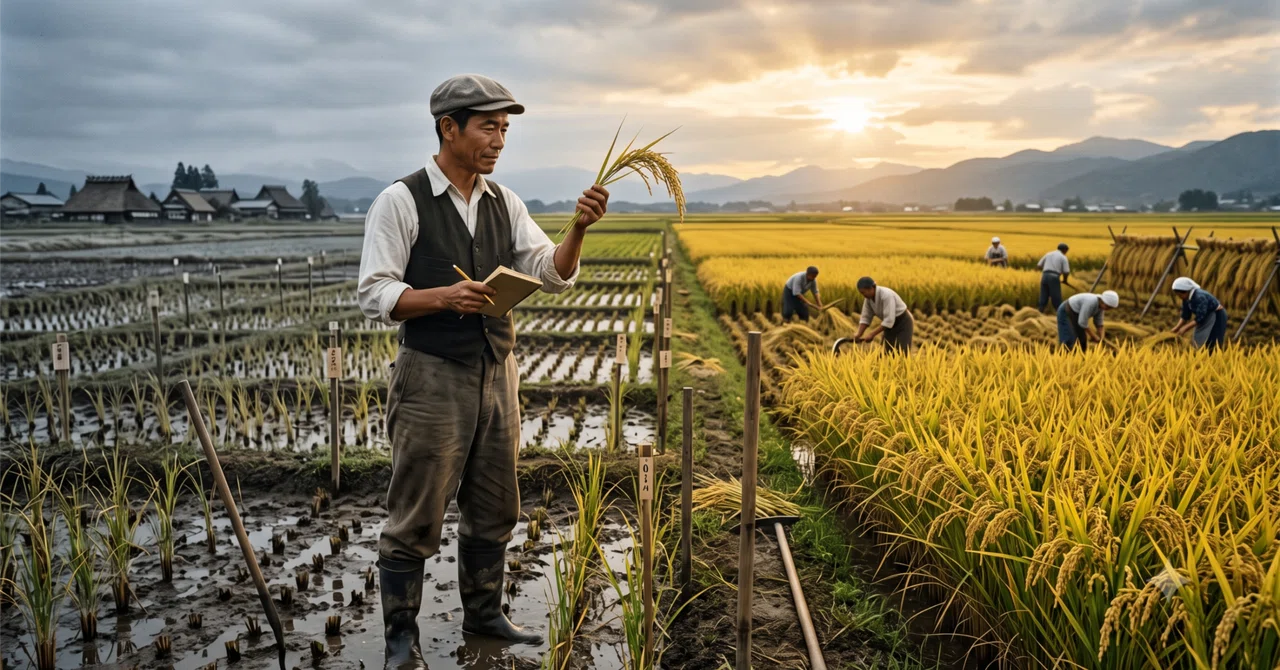
◆ Niigata, in the early 1930s. A cold wind moves across the rice fields. Farmers look at the sky and worry about the harvest. At an agricultural experiment station, a researcher carefully examines rows of young rice plants.
◇ My name is Namikawa Shigesuke. I worked on rice breeding and helped develop a new variety called Norin No. 1.
◆ Why did northern Japan need a new rice variety?
◇ Growing rice in a cold region was difficult. If the plants matured too late, cold autumn weather could damage the grain. Disease, storms, and long periods of rain also reduced the harvest.
For a farmer, a poor harvest did not simply mean a bad business year. It could mean hunger, debt, and the loss of a family’s future. A weak rice plant could become a weak village.
◆ What qualities did you want the new rice to have?
◇ We wanted it to mature early, produce a large harvest, and give good-quality grain. However, it was difficult to find all these qualities in one plant.
Some plants matured early but produced little rice. Others produced much rice, but their grain was not good. We had to compare many plants and select the most promising ones.
◆ How did you carry out the research?
◇ We planted many seeds, watched the plants grow, measured them, and kept careful records. Then we selected the best plants and planted their seeds the following year.
We repeated this process again and again. A new variety is not created by one brilliant idea. It grows from thousands of quiet decisions.
◆ Did you work alone?
◇ No. Agricultural research is never the work of one person. Researchers, technicians, farmers, and earlier breeders all played important roles.
Some people made the first crosses. Others tested the plants in different regions. Farmers grew the rice under real conditions and told us what happened.
One name may appear in history, but the harvest belongs to many hands.
◆ Why was the rice called Norin No. 1?
◇ Japan had begun a national system for testing and registering improved crop varieties. Our rice became the first water-rice variety registered under that system.
The number one did not mean that it was the first improved rice ever created. It meant that it stood at the beginning of a new system.
◆ Why did farmers accept it?
◇ Norin No. 1 matured early and produced a high yield. Its grain was also of good quality. Farmers could harvest it before severe autumn weather arrived.
But farmers did not trust it only because researchers praised it. They trusted it after seeing heavy heads of rice growing in their own fields.
◆ Did Norin No. 1 save northern Japan?
◇ We should use the word “save” carefully. One rice variety cannot prevent every famine, storm, war, or social problem.
Northern agriculture improved because of irrigation, fertilizers, better farming methods, machinery, research, and the hard work of farmers.
However, Norin No. 1 gave farmers a safer choice. It reduced the danger of cold weather and increased food production.
It did not remove hardship, but it gave people more strength to face it.
◆ Its importance became even greater after your death.
◇ Yes. I did not live to see the food shortages after the war. Rice that matured early could reach hungry people sooner.
A variety developed in a quiet field became part of the effort to feed a country. A researcher may never meet the people who receive the final result of his work.
We plant knowledge for people we may never see.
◆ Norin No. 1 also became an ancestor of later varieties, including Koshihikari.
◇ That is one of the wonders of plant breeding. A variety may disappear from ordinary fields, but its useful qualities can continue in its children and grandchildren.
A plant may leave the field and still live inside the future.
◆ Were you fully recognized during your lifetime?
◇ I received some recognition, but I died before seeing the greatest influence of the variety. Sometimes the value of research becomes clear only many years later.
Recognition may arrive after the work is finished. Sometimes it arrives after the worker is gone.
◆ What would you like people to remember?
◇ Do not remember only my name. Remember the technicians who observed the plants in the rain, the farmers who tried an unfamiliar variety, and the families whose lives depended on the harvest.
Agriculture protects tomorrow through work that is almost invisible today.
◆ Does your lesson apply to English learning?
◇ Yes. Each English sentence is like one plant in a wide field. One sentence may not change you immediately. But reading, listening, and repeating help useful words and patterns grow inside you.
Do not search endlessly for one perfect textbook. Strong English grows through many small encounters repeated over time.
◆ Evening comes to the experiment field. Namikawa closes his notebook and walks between the rows. He cannot see the future bowls of rice or the famous varieties that will come after him.
He sees only young green plants moving in the cold wind. Yet inside those ordinary leaves, the future of Japanese rice has already begun.
【日本語訳】
◆ 1930年代初めの新潟。冷たい風が水田の上を吹き抜けています。農民たちは空を見上げ、収穫を心配しています。農事試験場では、一人の研究者が若い稲の列を注意深く観察しています。
◇ 私は並河成資です。稲の品種改良に取り組み、農林1号と呼ばれる新しい品種の育成に関わりました。
◆ なぜ北日本には、新しい稲の品種が必要だったのでしょうか。
◇ 寒い地域で稲を育てることは困難でした。成熟するのが遅すぎると、秋の寒さによって米が傷むことがあります。病気、嵐、長雨によって収穫が減ることもありました。
農民にとって、不作は単に商売の悪い年を意味するのではありません。飢え、借金、そして家族の未来を失うことにつながる場合がありました。弱い稲は、弱い村につながることがあったのです。
◆ 新しい稲に、どのような性質を求めたのですか。
◇ 早く成熟し、多く収穫でき、品質のよい米を実らせる稲を求めました。しかし、そのすべてを一つの稲に持たせることは困難でした。
早く成熟しても収穫量の少ない稲がありました。多く実っても、米の品質がよくない稲もありました。私たちは多くの稲を比較し、最も有望なものを選ばなければなりませんでした。
◆ 研究はどのように進めたのですか。
◇ 多くの種をまき、稲が育つ様子を観察し、測定し、丁寧に記録しました。そして優れた稲を選び、その種を翌年に植えました。
この作業を何度も繰り返しました。新しい品種は、一度の天才的な発想によって作られるのではありません。何千もの静かな判断から育つのです。
◆ あなた一人で研究したのですか。
◇ いいえ。農業研究は、決して一人だけの仕事ではありません。研究者、技術者、農民、そして以前の育種家たちが、それぞれ重要な役割を果たしました。
最初の交配を行った人がいました。異なる地域で稲を試験した人もいました。農民たちは実際の環境で稲を育て、その結果を私たちに伝えました。
歴史には一人の名前が残っても、収穫は多くの人の手によって生まれます。
◆ なぜ農林1号と呼ばれたのでしょうか。
◇ 日本では、改良された農作物を全国的に試験し、登録する制度が始まっていました。私たちの稲は、その制度で最初に登録された水稲品種となりました。
1号という番号は、歴史上初めて改良された稲という意味ではありません。新しい制度の最初に位置したという意味です。
◆ なぜ農民たちは受け入れたのですか。
◇ 農林1号は早く成熟し、多く収穫できました。米の品質にも優れていました。農民たちは、厳しい秋の天候が来る前に収穫できました。
しかし農民は、研究者が褒めただけでは信じません。自分の田んぼで、重い稲穂が実る姿を見て初めて信じたのです。
◆ 農林1号は北日本を救ったのでしょうか。
◇ 「救った」という言葉は慎重に使う必要があります。一つの品種だけで、すべての飢饉、嵐、戦争、社会問題を防ぐことはできません。
北日本の農業が発展した背景には、用水、肥料、栽培技術、機械、研究、そして農民たちの努力がありました。
しかし農林1号は、農民により安全な選択肢を与えました。冷害の危険を減らし、食料生産を増やしました。
苦難をなくしたのではありません。しかし、人々が苦難に立ち向かう力を増やしたのです。
◆ 農林1号の重要性は、あなたが亡くなった後にさらに大きくなりました。
◇ はい。私は戦後の食糧不足を見ることができませんでした。早く実る米は、飢えた人々へより早く届けることができました。
静かな試験田で生まれた品種が、国民へ食料を届ける努力の一部となりました。研究者は、自分の仕事の成果を受け取る人々に会えないこともあります。
私たちは、会うことのない人々のために知識を植えるのです。
◆ 農林1号は、コシヒカリなど後の品種の祖先にもなりました。
◇ それが品種改良の素晴らしさです。ある品種が普通の田んぼから消えても、優れた性質は、その子や孫に受け継がれます。
植物は田んぼを去っても、未来の中で生き続けることができます。
◆ 生きている間に、十分な評価を受けましたか。
◇ ある程度の評価は受けました。しかし、その品種が後に与える大きな影響を見る前に亡くなりました。研究の価値が何年も後になって明らかになることがあります。
評価は、仕事が終わった後に訪れることがあります。時には、働いた本人が亡くなった後に訪れます。
◆ 人々に何を覚えていてほしいですか。
◇ 私の名前だけを覚えないでください。雨の中で稲を観察した技術者、見慣れない品種を試した農民、収穫に生活を託した家族たちを覚えていてください。
農業とは、今日ほとんど見えない仕事によって、明日を守るものです。
◆ この教えは英語学習にも当てはまりますか。
◇ はい。一つ一つの英文は、広い田んぼに植えられた一本の稲のようなものです。一つの文が、すぐにあなたを変えるとは限りません。しかし、読み、聞き、繰り返すことで、役に立つ単語や表現が自分の中で育ちます。
完璧な教材を一つだけ探し続けてはいけません。強い英語力は、長い時間をかけて繰り返される、小さな出会いから育ちます。
◆ 試験田に夕暮れが訪れます。並河はノートを閉じ、稲の列の間を歩いていきます。未来の米の食卓も、自分の後に生まれる有名な品種も、彼には見えません。
見えているのは、冷たい風の中で揺れる若い稲だけです。しかし、その何でもない緑の葉の内側では、日本の米の未来がすでに始まっていました。
【音読・多読のポイント】
今回は、品種改良、目に見えない努力、多くの人の協力、未来へ受け継がれる知識がテーマです。並河成資の返答は、大げさに語る発明家ではなく、稲を毎日静かに観察する研究者として読んでください。
A weak rice plant / could become a weak village.
弱い稲が/弱い村につながることがあった。
A new variety is not created / by one brilliant idea.
新しい品種は作られない/一度の天才的な発想だけでは。
One name may appear in history, / but the harvest belongs to many hands.
歴史には一人の名前が残っても/収穫は多くの人の手によって生まれる。
A plant may leave the field / and still live inside the future.
植物は田んぼを去っても/未来の中で生き続けることができる。
Strong English grows / through many small encounters / repeated over time.
強い英語力は育つ/数多くの小さな出会いを通して/長い時間をかけて繰り返される。
rice breeding、mature early、produce a high yield、under real conditions、year after yearは、一語ずつ切らず、意味のまとまりとして読んでください。
【語句の解説】
rice breeding:稲の品種改良。よりよい性質を持つ稲を作る研究。
用例:He studied rice breeding for many years.(彼は長年、稲の品種改良を研究しました。)
agricultural experiment station:農事試験場、農業試験場。作物や栽培技術を研究する施設。
用例:The rice was tested at an agricultural experiment station.(その稲は農事試験場で試験されました。)
a poor harvest:不作、収穫が少ないこと。poorはここでは「十分でない」という意味。
用例:The village suffered after a poor harvest.(その村は不作の後に苦しみました。)
mature early:早く成熟する、早く実る。寒くなる前に収穫できる性質を表す。
用例:This rice can mature early.(この稲は早く実ります。)
promising:有望な、将来性のある。よい結果が期待できるものを表す。
用例:The researchers selected a promising plant.(研究者たちは有望な稲を選びました。)
year after year:毎年、何年も続けて。同じ作業を長期間繰り返すこと。
用例:They tested the rice year after year.(彼らは何年も続けて、その稲を試験しました。)
under real conditions:実際の環境で。研究室ではなく、実際の農地などで試すこと。
用例:Farmers grew the rice under real conditions.(農民たちは実際の環境で、その稲を育てました。)
produce a high yield:多くの収穫を生み出す。yieldは作物の収穫量を意味する。
用例:The new variety produced a high yield.(その新しい品種は多くの収穫をもたらしました。)
remove hardship:苦難を取り除く。removeは問題などをなくすという意味でも使われる。
用例:One invention cannot remove every hardship.(一つの発明ですべての苦難をなくすことはできません。)
live inside the future:未来の中で生き続ける。優れた性質や知識が後の時代へ受け継がれることを表す比喩。
用例:Old knowledge can live inside the future.(古い知識は未来の中で生き続けることができます。)
almost invisible:ほとんど見えない、気づかれにくい。重要でも目立たない仕事を表す。
用例:Much of the work was almost invisible.(仕事の多くは、ほとんど人の目に見えませんでした。)
many small encounters:数多くの小さな出会い。本文では、多くの英文や音声との接触を表す。
用例:Language grows through many small encounters.(言語力は数多くの小さな出会いを通して育ちます。)
