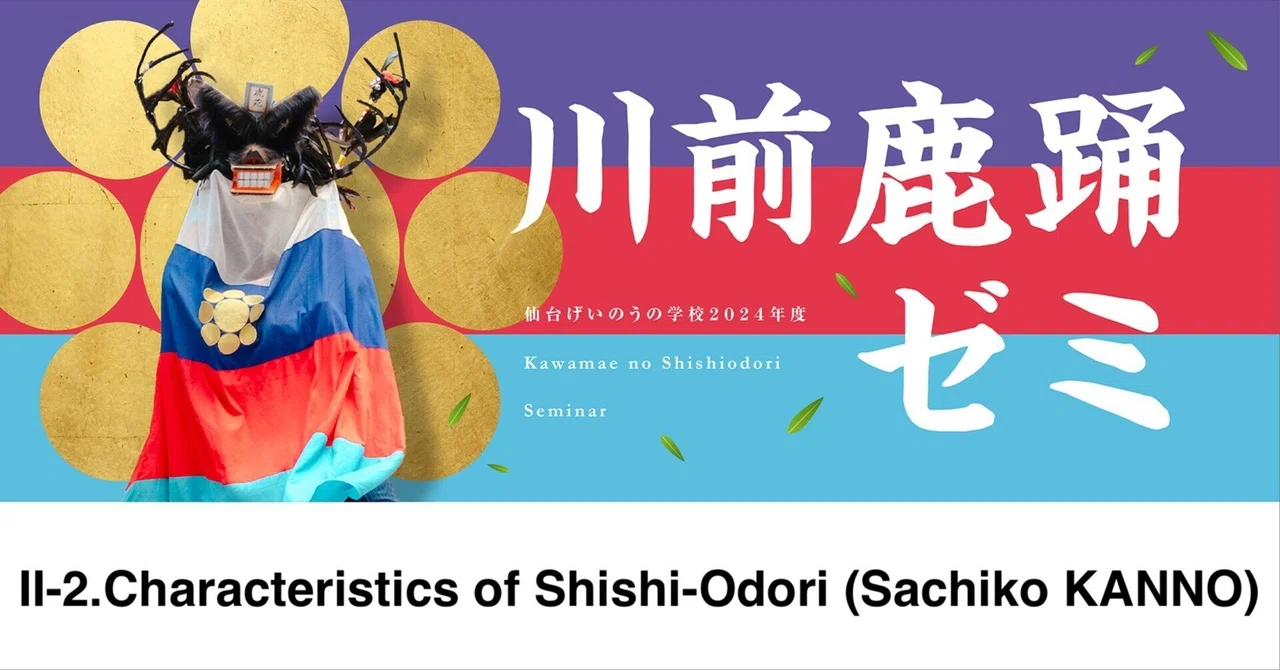
Ⅱ-2.Characteristics of Shishi-Odori (Sachiko KANNO)

In Sendai City and its surrounding areas, the Shishi-Odori (Deer Dance) is referred to as "Sendai Shishi-Odori" and is categorized into three distinct styles: Hachimando style, Motoisago style (also known as Monono style), and Kumanodo style (also called Yashirogou style).
Among these, the Hachimando style is historically associated with Toko-in, a now-vanished temple once owned by Ryuho-ji, which was located near the current Osaki Hachiman Shrine. Today, the Kawamae Shishi-Odori (Imozawa, Aoba Ward), Fukuoka Shishi-Odori (Fukuoka, Izumi Ward), and Kamiyagari Shishi-Odori (Kamiyagari, Izumi Ward) all continue the traditions of this style.
A unique feature of "Sendai Shishi-Odori" is its pairing with Kenbai—a sword dance performed as an offering during the Bon Festival, where dancers hold swords and wear masks. This combination of Shishi-Odori and Kenbai is exclusive to Sendai City and cannot be seen in other regions.
The Hachimando style Shishi-Odori, especially when paired with Kenbai, serves a dual purpose: to ward off demons and impurities, and to pray for peace and an abundant harvest. Notably, the Shishi-Odori is believed to have specific significance in pest control, symbolizing blessings for plentiful crops.
In Kawamae, younger performers—elementary to junior high school students—carry out the Shishi-Odori, while high school students and older individuals perform the Kenbai. This inclusion of child performers seems to be a distinguishing feature unique to Kawamae.
Another hallmark of the Kawamae Shishi-Odori is the use of costumes adorned with the Kuyomon crest, the emblem of the Date family, who ruled Sendai. This tradition dates back to the fifth feudal lord, Date Yoshimura, who gathered the various folk performing arts within his domain. Impressed by the elegance of both the Shishi-Odori and Kenbai, he granted permission for the performers to wear the Kuyomon pattern and silk robes.
The connection with Uwajima Shishi-Odori
While "solo" Shishi-Odori performances, where each dancer represents a single deer, are common in eastern Japan, there is one notable exception in Shikoku, specifically around Uwajima City in Ehime Prefecture. This style of Shishi-Odori is said to have been introduced from Sendai in 1615, following the appointment of Date Masamune's eldest son, Hidemune, as the lord of the Uwajima Domain.
Today, the Uwajima Shishi-Odori is performed throughout the Nanyo region, the former territories of the Uwajima Domain and its branch domain, the Yoshida Domain. Recent research suggests that the style of Shishi-Odori introduced to Uwajima may trace its roots back to the Kawamae Shishi-Odori.
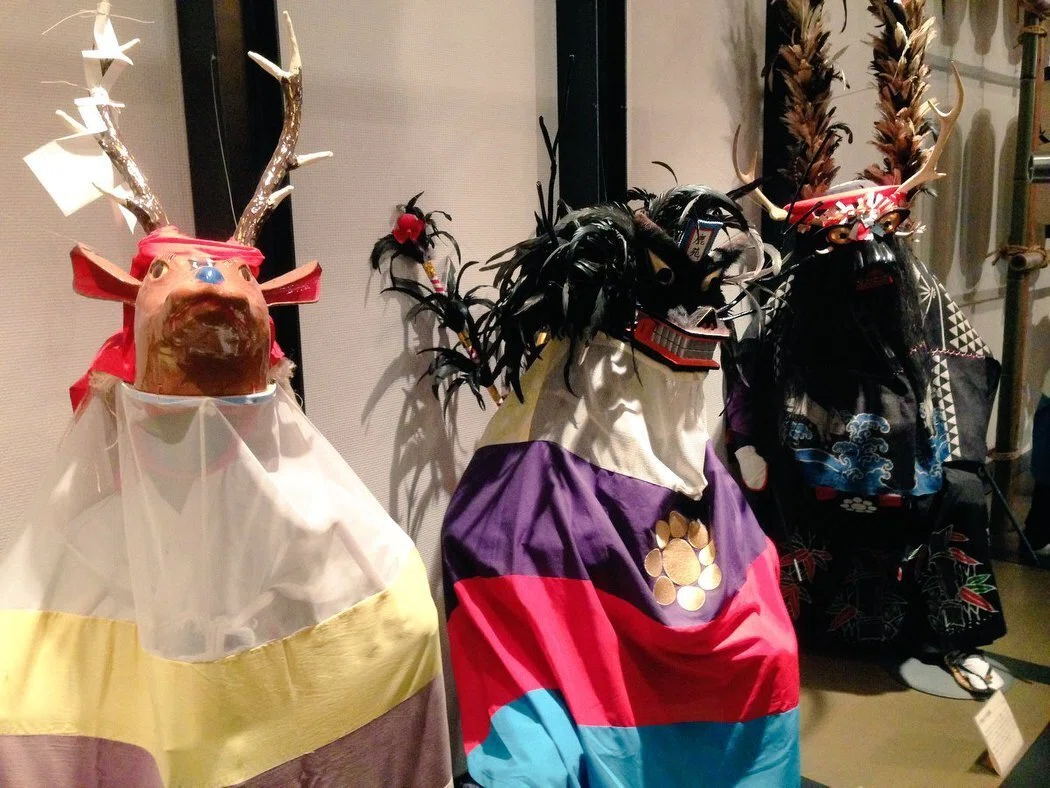
In 2015, during an event in Uwajima City commemorating the 400th anniversary of Hidemune's appointment, the Kawamae Shishi-Odori and Kenbai Preservation Society were invited to perform on site. According to Shoji Yoshiaki, chairman of the preservation society, the lyrics of the songs in Uwajima are nearly identical to those in Sendai, though differences in intonation are noticeable. The songs in Uwajima's version carry a sense of melancholy and gentleness, perhaps reflecting a longing for Sendai.
Despite the differences and adaptations over the past four centuries, a profound connection between the two dances remains evident. If you ever find yourself in Uwajima, be sure to experience the Uwajima Shishi-Odori for yourself!
