Yes, you did read it right. I am talking about ‘national operating system’.
Now, you may ask if there is such a thing called “national OS” in this era of globalization. Apparently, there is.
Let it be the purpose of providing more support to local languages, safeguarding against cyber attacks, or simply to have more ‘control’ over the general public. Few countries are also trying to move away from Microsoft and adopting custom Linux distributions as their choice of operating system is the logical step.
Good thing or bad thing, I cannot say. But it is interesting to see these national operating systems, especially when these are based on Linux.
Venezuela
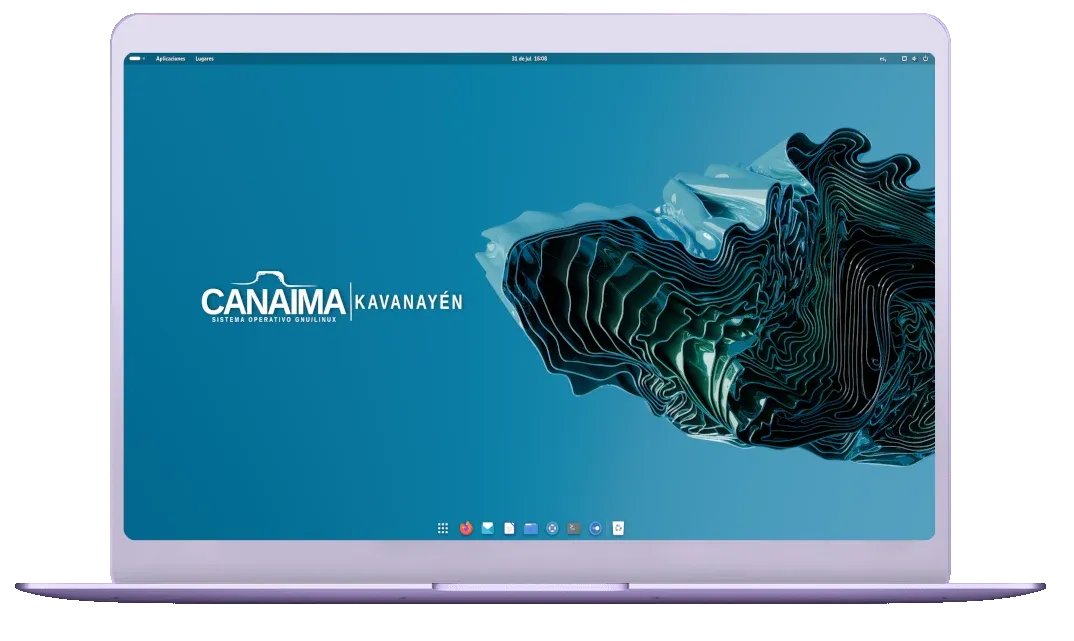
Venezuela doesn't just have oil. It also has a Debian-based Canaima GNU/Linux serving as the "national OS".
I am calling it national OS because it is developed through Venezuela’s National Centre for Information Technologies and is used in public administration, education, and government-provided computers for students.
Unlike several national Linux experiments that disappeared, Canaima remains under development. The project released Canaima 8.4 in May 2026.
China
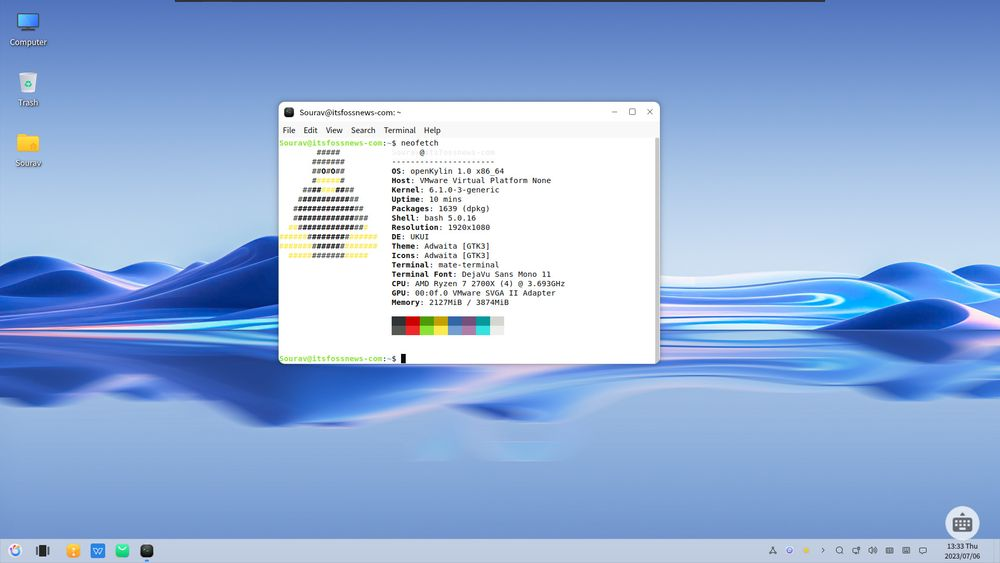
China doesn't have one formally designated national operating system. It has several state-backed domestic projects, and Kylin OS is perhaps the most widely used.
The original Kylin was developed at the National University of Defense Technology for military and government use. Early releases were based on FreeBSD, but Kylin moved to the Linux kernel with version 3.0.
The modern commercial Kylin line is developed by Kylin Software, part of the state-owned China Electronics group. Kylin OS V11 was released in 2025 for government, enterprise, and other domestic computing environments.
Ubuntu Kylin is a separate project. It came from a 2013 collaboration involving Canonical, the National University of Defense Technology, and a center under China's Ministry of Industry and Information Technology.
That collaboration aimed to make Ubuntu Kylin as the reference architecture for Chinese operating systems. Today, it is an official Ubuntu flavor designed for Chinese users, not China's sole or formally designated national OS.
Cuba

C for China, C for Cuba and C for Communism. Coming up next in this list is another communist country, Cuba.
Cuba's state-sponsored Linux distribution is called Nova. It was developed at the University of Information Sciences in Havana for Cuban institutions and regular computer users.
The project initially used Gentoo before switching to an Ubuntu base. A lightweight edition was also created for the older hardware commonly found in the country.
From what I see, Nova 9.0 was released in October 2023. DistroWatch now marks the project as dormant, so its present development status is unclear.
North Korea
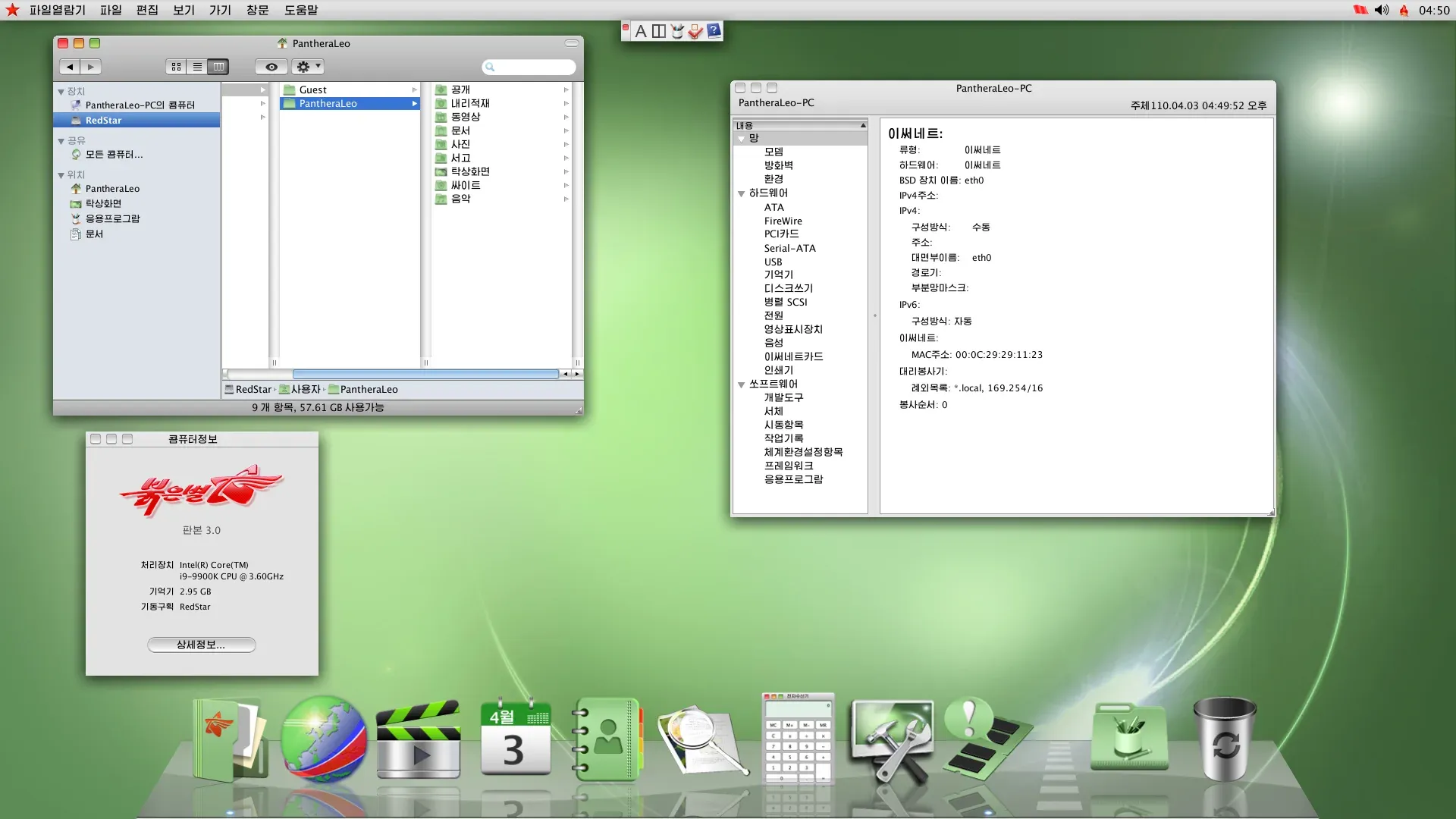
Alright! Another one of the C countries. North Korea has its own national OS based on Linux and it goes by the name of Red Star OS.
It is being developed since year 2002. There are hardly any details about this operating system because there is no website for Red Star OS. And since North Korea is almost cut off from the rest of the world, no other information is available about it except that it uses KDE. In fact, first details of Red Star OS were leaked by a Russian student who was in N. Korea.
Red Star OS 3.0 used a heavily modified KDE interface designed to resemble macOS. A version 4.0 was reportedly completed by 2019, and copies reached researchers in South Korea in 2020. Very little current information is available beyond that.
India

World’s biggest democracy joins the list of countries to have their own Linux-based national operating system. BOSS (Bharat Operating System Solutions) is a Debian based Linux OS being developed by C-DAC (a government-owned organization for advanced computing development).
BOSS focuses on Indian-language support and use in government, education, and public institutions. The project also provides desktop, server, educational, and security-focused variants.
BOSS Linux has been in existence for more than a decade. The government adopted an Open Source policy to minimize its reliance on Microsoft. In fact, some state government have switched to open document format and BOSS Linux already.
The current BOSS website lists BOSS GNU/Linux 10.0 as its latest desktop release.
There is also a Maya OS developed by Department of Defense Research and Development Organization (DRDO) and it is intended to be used in the defense ministry.
Indonesia

Indonesia's Research Center for Informatics developed IGOS Nusantara to promote the use of open source software in the country.
The project was built with community participation and produced desktop, server, and other specialized editions. Its last completed release was IGOS Nusantara 12.12 in December 2016. The official site says attempted versions 13 and 14 never produced a finished ISO.
IGOS Nusantara is best viewed as an important government-backed initiative rather than a clearly active national distribution today.
Thanks to AnTo “Samalona” for originally suggesting the Indonesian Linux in the comments.
Note: The original government-backed distribution stopped producing regular stable releases, but a community revival appears to be underway in 2026. Can we still describe it as Indonesia’s actively maintained national operating system? You tell me.
Turkey
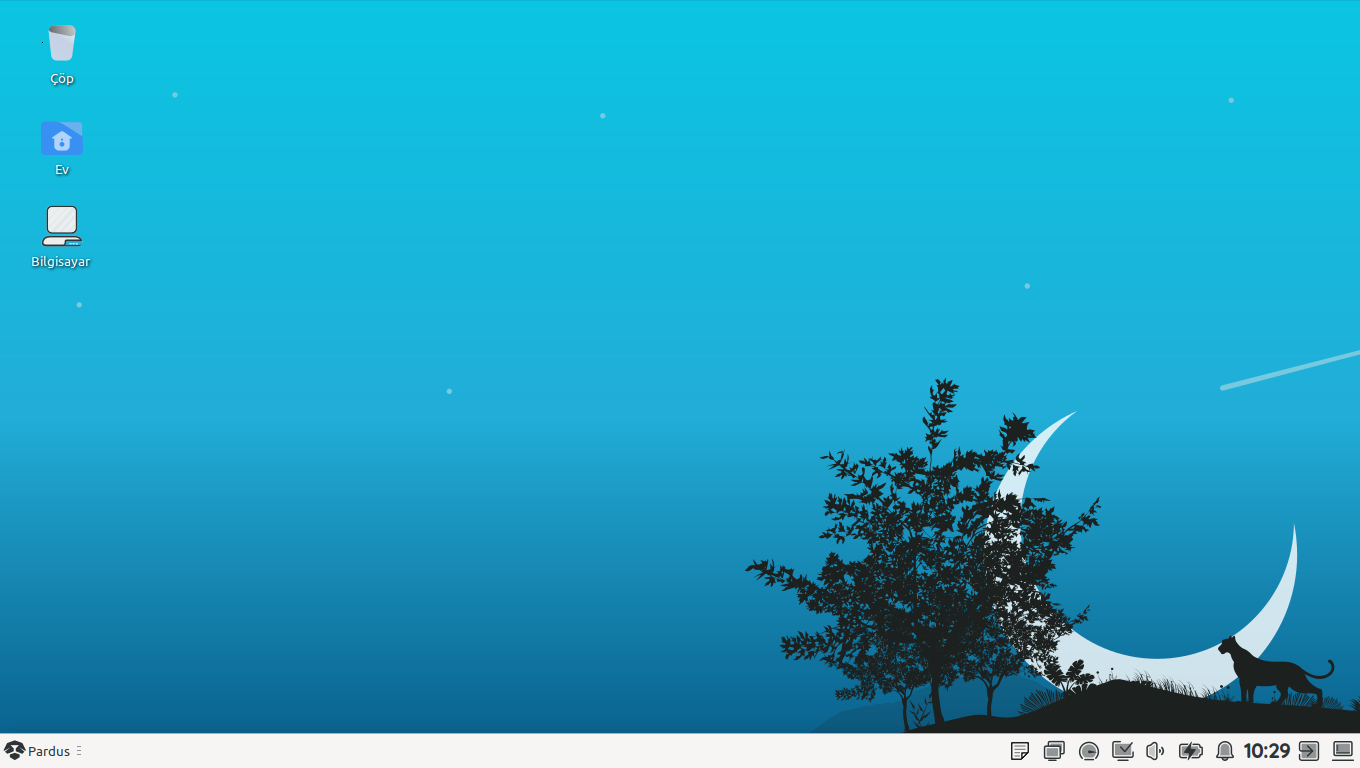
Turkey launched Pardus Linux in 2005. It was developed with support from TÜBİTAK, the Scientific and Technological Research Council of Turkey.
Early Pardus releases became known for the PiSi package manager. The modern version is based on Debian and continues to target government offices, public institutions, and regular desktop users.
The official release schedule lists Pardus 25 as the current major series, with support planned through 2029. Pardus 25.1 is the latest point release at the time of this update.
Argentina
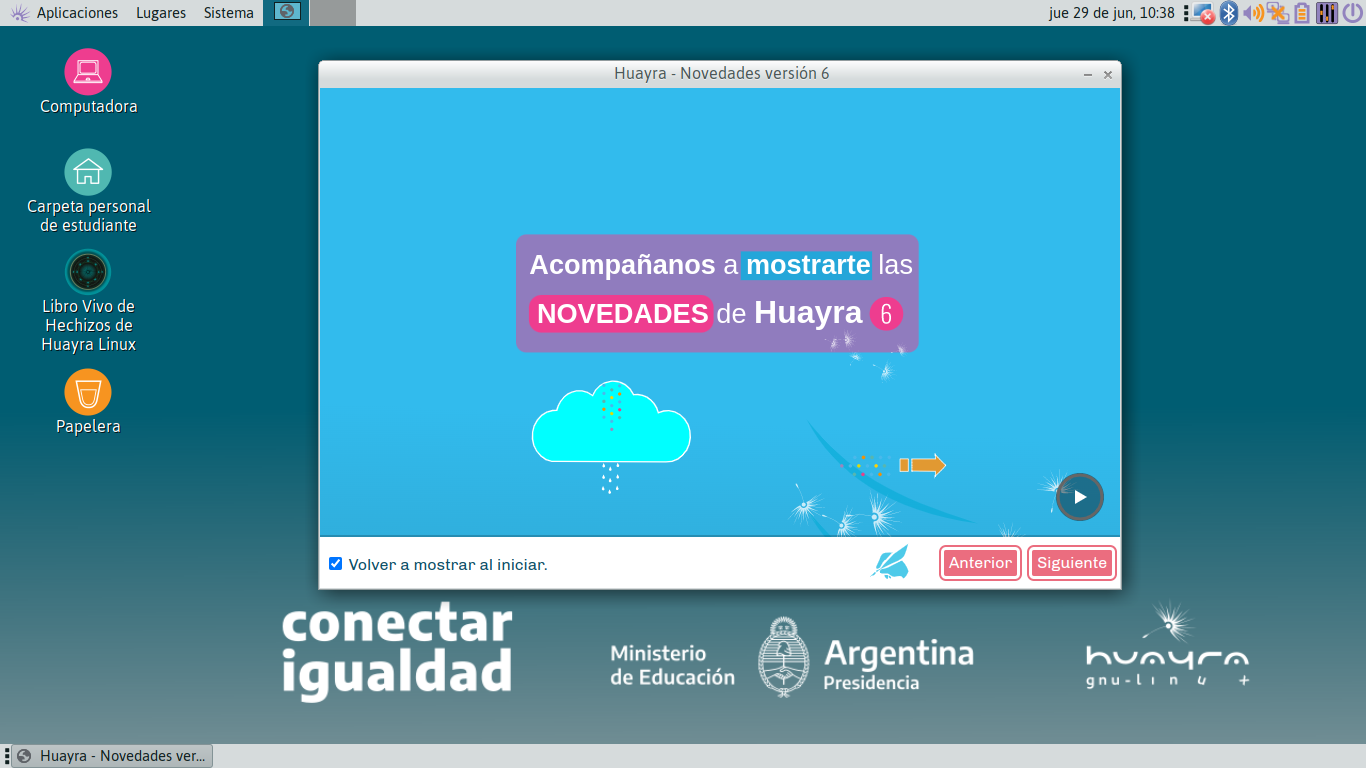
Argentina has Huayra GNU/Linux, a Debian-based distribution developed by EDUCAR Sociedad del Estado.
The official project calls Huayra the first free operating system developed by the Argentine national state. It was created for students and teachers, particularly for computers distributed through the Conectar Igualdad education program.
Huayra includes educational tools and uses the lightweight MATE desktop. The project's download page currently offers Huayra 6.5, released in February 2024 and based on Debian 12.
This is one of the clearest examples of what you could reasonably call a national Linux operating system.
Russia
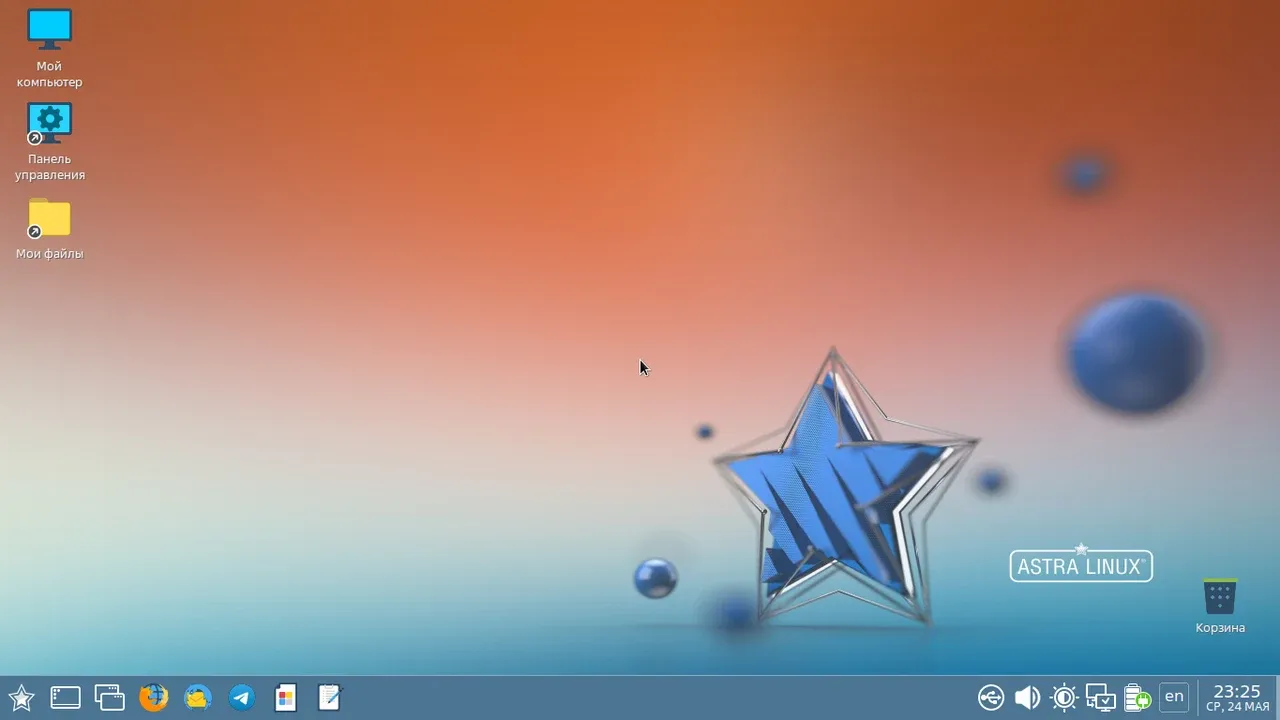
Astra Linux is a Debian-derived Russian operating system developed by a private company. It wasn't created directly by the Russian government, but it has been widely adopted across government bodies, the military, and other security-sensitive organizations.
Its Special Edition is intended for systems handling classified information. The distribution has also been used as part of Russia's effort to replace foreign software in public infrastructure.
That government adoption is why I added Astra Linux in this list. Russia has also used specialized systems such as GosLinux in particular government agencies.
Iran
Iran announced several attempts to create a national operating system, but the available information remains patchy.
Reports from 2012 and 2014 discussed a Linux-based project called Zamin. It was presented as part of Iran's effort to build a domestic software ecosystem.
I couldn't verify a maintained official website, a recent release, or meaningful current deployment. For that reason, I would treat Zamin as a historical national-OS attempt rather than an active distribution.
Other Iranian distributions, such as Parsix and Sharif Linux, were developed in Iran. That alone doesn't make them government-backed national operating systems.
Other distros backed by regional governments
Spain produced several government-backed Linux distributions, but they came from regional rather than national administrations.
LliureX is developed for schools in Valencia and remains the clearest active example. Its official download page lists LliureX 25 as the current stable desktop release.
Guadalinex served Andalusia until the regional government discontinued it in 2018. MoLinux was developed for Castilla-La Mancha and has also been discontinued.
These distributions deserve a mention, but calling any of them Spain's national OS would be misleading in my opinion.
Similarly, France has GendBuntu, an Ubuntu-based distro that is used on more than 100,000 Gendarmerie workstations.
There could be many more such examples. You are more than welcome to suggest your additions to this list.
Ever tried these ‘national operating systems’?
If you think countries having national OS is weird, check out these weird Linux based on Ubuntu that contains ‘religious flavor’ as well.
As far as I am concerned, I have never tried any of these Linux OS. I am content with the mainstream Linux distros.
But what about you? Have you tried any of these Linux OS? And how about your country having its own Linux OS? Did I miss it out? Do share your thoughts.
If this helped you, consider supporting It's FOSS
It's FOSS has been helping people use Linux for the past 14 years. Help us stay independent from big tech. Become a Plus member, enjoy ad-free reading and get 5 eBooks.