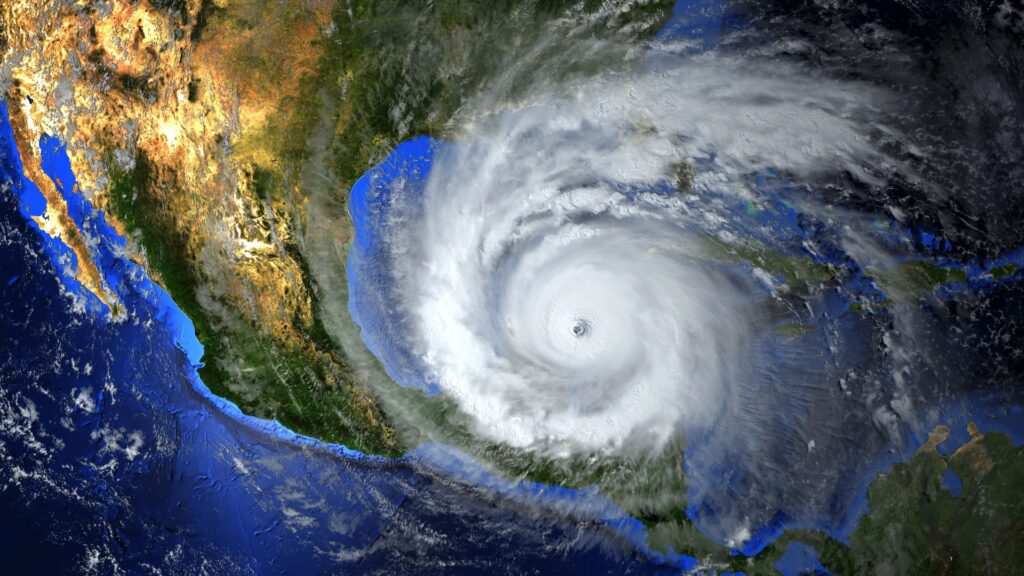
Dale Durran, a professor in the Atmospheric Sciences Department at the University of Washington, introduces a breakthrough deep learning model that combines atmospheric and oceanic data to set new climate and weather prediction accuracy standards.
In this NVIDIA GTC 2024 session, Durran presents techniques that reduce reliance on traditional parameterizations, enabling the model to bypass many approximations common in weather prediction. A HEALPix grid—a mesh borrowed from astronomy—enhances spatial precision by accurately representing Earth’s spherical shape, eliminating distortions for more precise global forecasts.
Capable of generating reliable, long-term forecasts with minimal drift, this model uses NVIDIA A100 Tensor Core GPUs for fast training, NVIDIA PhysicsNeMo for integrating machine learning in simulations, and NVIDIA Omniverse for high-fidelity visualizations, boosting accuracy and interpretability in climate forecasting.
You will learn advanced methods for building accurate, long-term Earth system models, including:
- Atmosphere-ocean coupling: Combining atmospheric and oceanic processes to stabilize long-term forecasts and improve reliability.
- Parameterization-free modeling: Bypassing traditional assumptions to enable data-driven, more accurate predictions.
- HEALPix grid: Using HEALPix for equal-area representation to improve spatial accuracy in global modeling.
- Efficient GPU training: Optimizing the model’s CNN architecture for NVIDIA GPUs to achieve high-fidelity training with minimal computational resources.
- Real-time satellite integration: Incorporating satellite data, such as outgoing longwave radiation, to boost prediction accuracy for dynamic events.
Watch the session Sub-Seasonal and Seasonal Forecasting with a Deep Learning Earth-System Model, explore more videos on NVIDIA On-Demand, and gain valuable skills and insights from industry experts by joining the NVIDIA Developer Program.
This content was partially crafted with the assistance of generative AI and LLMs. It underwent careful review and was edited by the NVIDIA Technical Blog team to ensure precision, accuracy, and quality.