Every earlier DRAM shortage ended the same way: makers added wafers, inventory piled up, and contract prices fell for a year or more. The 2026 shortage is not following that script, and on the evidence available in October 2026, RAM prices in 2027 are unlikely to drop. Micron expects 2027 to be tighter than 2026, the forecast price rises are slowing rather than reversing, and the next large DRAM fabs only start producing in the middle of next year.
This explainer walks through why the DRAM shortage happened, why the usual cure is slow this time, and what the forecasts say about 2027 RAM prices quarter by quarter. It also covers what we measured on Amazon over the last six weeks, and which kind of memory still gives you the most gigabytes per dollar if you have to build now. The forecasts were checked against TrendForce’s releases and Micron’s September earnings, and the kit prices against live Amazon listings, on October 19, 2026. For the part-by-part damage to real build budgets, our audit of RAM and storage prices covers what already happened.
Will RAM prices drop in 2027?
Not on any forecast published so far. TrendForce expects conventional DRAM contract prices to rise another 10 to 15% in the fourth quarter of 2026, after an estimated 13 to 18% in the third. Its July outlook put the DRAM sufficiency ratio at about -1% to -2% for 2026 and said the supply gap is “expected to widen further in 2027”. Micron told investors on September 30 that it expects conditions “much tighter in calendar 2027 and 2028 than they were in 2026”, and that it has no line of sight to when supply and demand return to balance.
What is changing is the speed. The increases were forecast at 90 to 95% a quarter at the start of 2026 (the final first-quarter figure came in at 93 to 98%), then 58 to 63%, then 13 to 18%, and now 10 to 15%. That is a curve flattening at a very high level, not a curve turning down. A builder waiting for 2025 prices to return is waiting for something none of these forecasts gives a date for:
| Quarter | Conventional DRAM contract price, QoQ | Status |
|---|---|---|
| 1Q26 | +93 to 98% | TrendForce actual (June 1); the forecast was raised from 55 to 60% to 90 to 95% in February |
| 2Q26 | +58 to 63% | TrendForce |
| 3Q26 | +13 to 18% | TrendForce estimate (no final figure yet) |
| 4Q26 | +10 to 15% | TrendForce forecast, September 30 |
| 2027 | “remain broadly elevated” | TrendForce; Micron expects a tighter market than 2026 |
Contract prices are what PC makers and cloud providers pay under supply agreements, and retail follows them with a lag of weeks to months. In Germany, where 3DCenter tracks a monthly index of the cheapest listings, a 2x16GB DDR5-6000 kit went from 75 euros in July 2025 to 447 euros in October 2026, and the DDR5 index stands at 5.6 times its pre-shortage level. US prices tell the same story, which is why the retail numbers further down look the way they do.
Why the shortage happened: HBM takes the wafers first
The shortage is a wafer allocation problem. The same fabs that make the DDR5 in your desktop also make HBM, the stacked memory that sits next to AI accelerators, and HBM is far more profitable per wafer. When a maker moves wafer starts to HBM, the bits it gives up are much larger than the bits it gains, because HBM consumes roughly three times as much wafer area as conventional DRAM, an estimate from the Chinese outlet ijiwei that TrendForce cites. A Samsung executive vice president said in September that HBM will take “nearly 30%” of the industry’s DRAM wafer capacity in 2027, up from about 20% now.
Three more forces stack on top of that, and each one removes supply from the market a builder buys in:
- Server memory gets served first: TrendForce estimates HBM and server RDIMM together take 51% of DRAM bit supply in 2026, and the makers sell much of their output under long-term agreements with cloud providers. Micron President and COO Manish Bhatia told analysts in September that more than 75% of the company’s shipments for fiscal 2027 are already committed.
- DDR4 is being retired: the major makers are winding DDR4 down. TrendForce expects DDR4 to shrink to about 7% of Micron’s DRAM output in 2026, and reports that Micron has no plans to increase its total DDR4 and LPDDR4 capacity.
- Consumer brands are leaving: Micron announced in December 2025 that it would exit the Crucial consumer business, with shipments through the consumer channel planned to end in February 2026, to send that supply to larger strategic customers. Crucial kits are still listed, but that stock is not being replenished.
Inventory is the other half of the explanation. In 2022 the price collapse started when buyers froze orders and warehouses filled up. In 2026 TrendForce describes supplier inventories as “at historic lows”, and Micron says its supply remains “extremely tight”. With no stockpile to sell down, there is nothing to push prices back the way excess inventory did last cycle.
When new fabs add supply
New DRAM capacity is real, but it arrives late and it arrives slowly. A fab’s first wafer is not a flood of DIMMs: Micron’s own wording is that output “becomes more meaningful starting a few quarters after initial output”. TrendForce expects meaningful ramp-ups of new capacity only in the second half of 2027, with substantial output contributions not until 2028. The schedule the companies have published looks like this:
| Fab | Company | Milestone (company statement) |
|---|---|---|
| Tongluo, Taiwan | Micron | Meaningful shipments mid-2027 |
| ID1, Idaho | Micron | Wafer output mid-2027 |
| Yongin Y1, Korea | SK hynix | Cleanroom opens February 2027 |
| M15X, Korea | SK hynix | Wafer input began 1Q26, ramping gradually |
| ID2, Idaho, and the Japan expansion | Micron | Late 2028 |
| New York | Micron | 2030 |
Much of that new space is earmarked for HBM, and some of it for node transitions rather than extra wafers. TrendForce expects the big three to grow bit supply in 2026 and 2027 mainly by moving to newer processes, with “only modest increases” in wafer starts. Micron puts industry DRAM bit growth at roughly the low 20s percent in both 2027 and 2028, below the mid-20s of 2026. Samsung has not given dates for its next Pyeongtaek lines; Korean press reports say large new supply from them is unlikely before 2028. China’s CXMT is adding capacity too, but TrendForce, citing Commercial Times, reports that it may not move global supply meaningfully until 2027 or later.
What we measured on Amazon in six weeks
We track the memory kits in our buyer guides through Amazon’s Creators API, which returns the live buy-box price for each listing. Six kits were checked in one pass on September 6 and again on October 19, 2026. Four of them rose by 17 to 23% in six weeks while two held steady, which matches the picture of a market that has stopped jumping but has not started falling:
| Kit | September 6 | October 19 | Change |
|---|---|---|---|
| Kingston Fury Beast 32GB (2x16GB) DDR5-6000 | $628.79 | $773.22 | +23% |
| TEAMGROUP T-Create Expert 96GB (2x48GB) DDR5-6400 | $1,649.99 | $1,949.99 | +18% |
| Kingston Server Premier 32GB DDR5-5600 ECC UDIMM | $1,099.99 | $1,299.99 | +18% |
| Crucial 32GB (2x16GB) DDR5-5600 SO-DIMM | $499.95 | $584.98 | +17% |
| Patriot Viper Venom 32GB (2x16GB) DDR5-6000 | $479.99 | $484.99 | +1% |
| G.Skill Trident Z5 Neo 64GB (2x32GB) DDR5-6000 | $1,199.99 | $1,199.99 | 0% |
The spread inside one category is the useful part. Two 32GB DDR5-6000 CL30 kits sit almost $290 apart today, because each listing reprices on its own as stock comes and goes. Some kits also simply vanish: the 96GB Corsair Vengeance and Crucial 64GB SO-DIMM kits in our guides showed no buyable offer on October 19. In a shortage, the cheapest equivalent kit on the day you buy matters more than the brand you planned on.
Why DDR4 still costs less per gigabyte
Dividing each live price by its capacity shows a split builders can use. On October 19 the DDR4 ECC modules in our guides cost $9 to $14 per gigabyte, while DDR5 desktop kits ran $15 to $24 and DDR5 ECC modules $31 to $42. PCPartPicker’s US averages show a similar or wider gap for desktop kits: about $285 for a 2x16GB DDR4-3200 kit against about $625 for DDR5-6000. DDR4 has climbed too, but it started from a lower base:
| Memory | Example listing | Price, October 19 | Per GB |
|---|---|---|---|
| DDR4-3200 ECC UDIMM, 32GB | OWC 32GB | about $280 | $8.75 |
| DDR4-3200 ECC UDIMM, 2x16GB | NEMIX 32GB kit | about $340 | $10.61 |
| DDR4-3200 ECC RDIMM, 32GB | NEMIX 32GB RDIMM | about $430 | $13.50 |
| DDR5-6000 desktop, 2x16GB | Patriot Viper Venom | about $485 | $15.16 |
| DDR5-5600 SO-DIMM, 2x16GB | Crucial | about $585 | $18.28 |
| DDR5-6000 desktop, 2x32GB | G.Skill Trident Z5 Neo | about $1,200 | $18.75 |
| DDR5-5600 ECC UDIMM, 48GB | A-Tech 48GB | about $1,495 | $31.15 |
| DDR5-5600 ECC UDIMM, 32GB | Kingston Server Premier 32GB | about $1,300 (limited stock, third-party seller) | $40.62 |
Chip-level spot prices complicate the picture, which is why this advice has a shelf life. TrendForce’s spot data for early October shows a 16Gb DDR4 chip trading at about $84 against about $58 for a 16Gb DDR5 chip, and the German DDR4 retail index rose 19% in a single month. TrendForce reports that some module makers increased their inventories of DDR4 chips in 2025, spurred by tariffs and by the suppliers’ DDR4 end-of-life plans. Our reading is that finished modules still price off that cheaper stock, and that once it runs out, new modules will reflect today’s chip prices. If a used DDR4 server board or workstation fits your plans, buy its memory while modules at these prices last.
ECC DDR5 is the worst place to be. Server memory is exactly what the makers are prioritising for cloud customers, and the unbuffered ECC modules a homelab board takes are a small, thin market. Our ECC RAM explainer covers when ECC is worth paying for at all, and at roughly double the per-gigabyte cost of desktop DDR5, many homelabs will decide it is not, for now.
What this means if you need memory now
Waiting has a cost too, because none of the forecasts cited here points down. The practical moves, in the order they save money:
- Buy less, not later: size to the workload. Our guide to how much RAM a Proxmox homelab needs shows where 32GB is enough and where 64GB pays off.
- Reuse DDR4 platforms: a used DDR4 board takes memory that costs roughly 40% less per gigabyte than desktop DDR5.
- Compare equivalent kits on the day: two kits with matching capacity, speed and CAS latency can differ by more than $250 at the same moment.
- Skip ECC DDR5 unless the platform needs it: it costs about twice as much per gigabyte as desktop DDR5.
These three kits were the cheapest per gigabyte in their class on October 19. Prices move weekly in this market, so check the live price before you buy.
Patriot Viper Venom 32GB DDR5-6000
The cheapest 32GB DDR5-6000 CL30 kit in our tracking, at about $15 per gigabyte, and almost flat since September. It supports both XMP and EXPO profiles, so it suits Intel and AMD desktops alike.

Best for: a new DDR5 desktop or workstation that needs 32GB. Not for mini PCs and laptops, which take SO-DIMMs. About $485 at the moment.
OWC 32GB DDR4-3200 ECC UDIMM
The cheapest memory per gigabyte we track, at under $9, and the way to fill an existing DDR4 ECC board without paying DDR5 ECC prices. It is a single 32GB unbuffered module, so it fits boards that take UDIMMs, not the registered RDIMMs most rack servers use.

Best for: DDR4 ECC workstations and small servers that take unbuffered DIMMs. Not for any DDR5 platform or an RDIMM-only server. Around $280, so check the current price.
Crucial 32GB DDR5-5600 SO-DIMM
The 32GB laptop-size kit for mini PCs, at about $18 per gigabyte. It rose 17% between September and October, and Crucial stock is finite now that Micron has left the consumer market, so this is a buy-when-needed part rather than one to wait on.
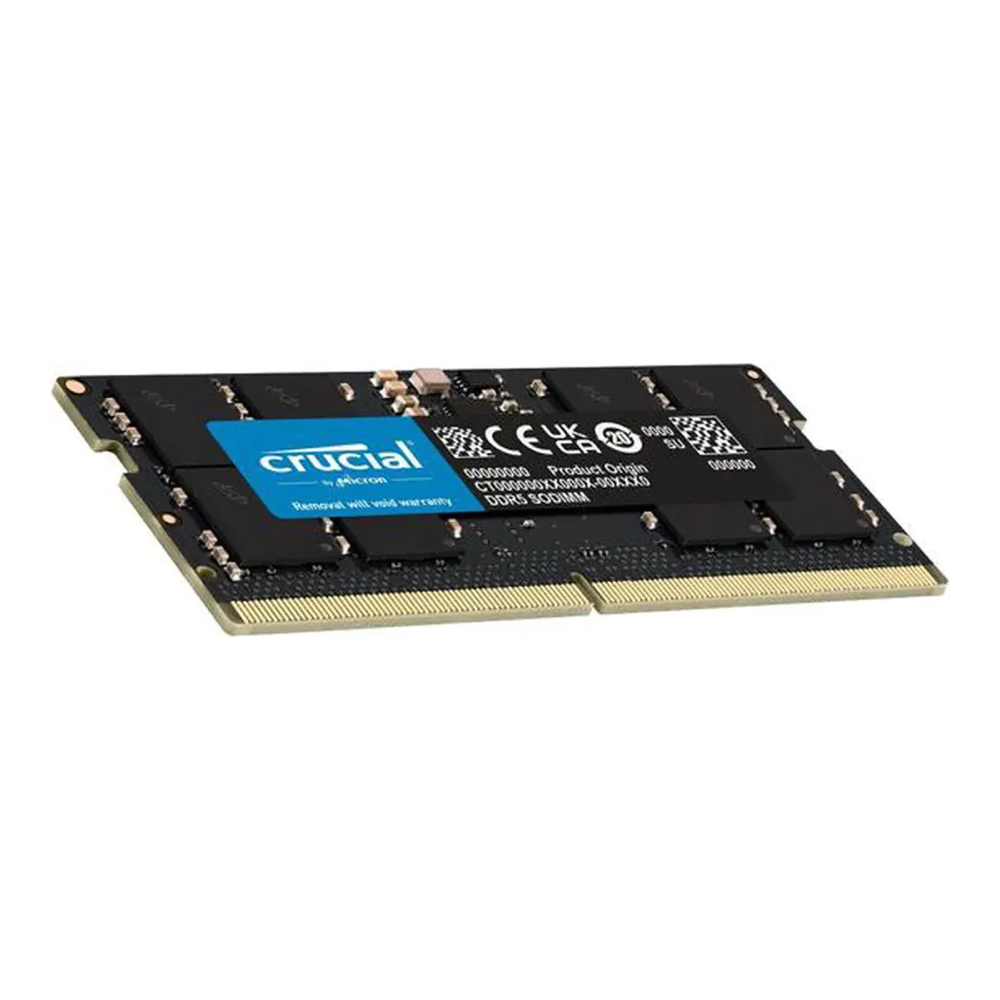
Best for: mini PCs and laptops with two DDR5 SO-DIMM slots. Not for desktops, and not for machines with soldered memory. About $585 today, so check the live price.
For the full list of DDR5 kits we recommend, see the DDR5 RAM guide for homelabs.
Common misconceptions about the RAM shortage
Three ideas come up whenever this shortage is discussed, and the evidence does not support any of them.
“Prices always crash after a shortage.” They did last time: DRAM contract prices fell for eight straight quarters from late 2021 to late 2023, and DRAM revenue dropped 32.5% in the fourth quarter of 2022 alone. That crash deepened when buyers froze orders in 2022 and inventory piled up. Today inventory is at historic lows and much of the supply is sold under long-term agreements, which TrendForce says included price ceilings that could limit further increases. Micron describes its own strategic agreements as multi-year take-or-pay contracts with committed volumes and minimum pricing, which work against a sudden collapse as well.
“Slowing increases mean prices are about to fall.” A 10 to 15% rise in a quarter is still a rise, on top of retail DDR5 prices that already sit at about five times their mid-2025 level in both the German index and PCPartPicker’s US averages. Micron’s guidance is “a more moderate rate of price increases” for the rest of fiscal 2027, which describes a plateau, not a decline. The first signal of a real turn would be a TrendForce quarter forecast below zero, and none has been published.
“New fabs will fix it next year.” SK hynix’s M15X has been ramping since early 2026, mostly for HBM, and the next large DRAM fabs from Micron start in mid-2027. Each takes several quarters to reach volume and serves HBM and server customers first, so retail DDR5 is at the end of that queue. TrendForce expects substantial output from new capacity only in 2028, and Micron expects 2028 to be tight as well, so none of the cited forecasts gives a date for prices to fall. TrendForce published its quarterly contract forecasts this year in early January (revised February 2), March 31, July 3 and September 30, so the next one, expected around the turn of the year, is the release to watch for a change in direction.