A 128 GB mini PC now holds a 70B model that a 24 GB graphics card cannot. It will not run that dense 70B fast: expect about 5 tokens a second, because generating each token has to read all 70 billion parameters through a 256 GB/s memory bus. Where these machines come alive is large mixture-of-experts models like gpt-oss-120b, which runs at about 31 tokens a second on the same box because only a fraction of its parameters fire per token. That is the real case for the best mini PC for local AI in 2026: capacity a graphics card cannot match, and genuinely fast inference on the sparse models built to exploit it. The chip behind it is the AMD Ryzen AI Max+ 395, codenamed Strix Halo. The speed figures below come from published reviews on real hardware, and every price here was re-checked against the vendor’s own store on 13 August 2026, after a memory-driven reset that roughly doubled what this category costs.
Some links below are affiliate links. If you buy through them we may earn a small commission at no extra cost to you. The picks are chosen on measured performance and value, not commission.
Quick picks
Most of these run the same Strix Halo silicon, so they perform the same. Pick on memory, networking, price, and whether you need CUDA. Prices are vendor-direct for the exact configuration named, checked 13 August 2026.
| Use case | Mini PC | Why | Configuration | Price |
|---|---|---|---|---|
| Best overall, 128 GB | GMKtec EVO-X2 | Cheapest 128 GB box that is actually in stock, OCuLink | 128 GB + 2 TB | $3,649.99 |
| Most ports, 128 GB | Beelink GTR9 Pro | Dual 10GbE, the 31 tok/s gpt-oss-120b test unit | 128 GB + 2 TB | $4,349 |
| Repairable | Framework Desktop | Standard parts, quietest of the four | 128 GB | $3,449, out of stock |
| Expandable | Minisforum MS-S1 MAX | Dual 10GbE plus a PCIe slot and a rack option | 128 GB + 2 TB | $3,719 |
| CUDA, prefill, serving | NVIDIA DGX Spark | Real CUDA stack, fast prompt processing | 128 GB | $4,699 |
| Fastest dense models | Mac Studio M4 Max | 546 GB/s bandwidth, but a 64 GB ceiling | 36 GB base | $2,499 |
| Cheapest way into Strix Halo | GMKtec EVO-X2 64 GB | Same chip, half the memory pool | 64 GB + 1 TB | $1,999.99 |
| Under 32B on a budget | Beelink SER8 | 32 GB, runs models to about 32B | 32 GB + 1 TB | $889 |
What these machines cost now
Every price this guide quoted in June is dead. The 128 GB Strix Halo boxes that anchored the category near $2,000 now sell between $3,449 and $4,349, and the two non-AMD picks moved too. Each figure below comes from the vendor’s own store on 13 August 2026, for the exact configuration named.
| Machine | Configuration | June 2026 | 13 Aug 2026 | Change | Stock |
|---|---|---|---|---|---|
| GMKtec EVO-X2 | 128 GB + 2 TB | ~$1,999 | $3,649.99 | +83% | In stock |
| Beelink GTR9 Pro | 128 GB + 2 TB | ~$1,999 | $4,349 | +118% | In stock |
| Minisforum MS-S1 MAX | 128 GB + 2 TB | ~$2,299 | $3,719 | +62% | In stock |
| Framework Desktop | 128 GB | ~$1,999 | $3,449 | +73% | Out of stock |
| Mac Studio M4 Max | 36 GB base | ~$1,999 | $2,499 | +25% | In stock |
| Beelink SER9 (HX 370) | 32 GB + 1 TB | ~$799 | $1,169 | +46% | Out of stock on Amazon |
One cause runs through every row, and it is not vendor margin. These are soldered LPDDR5X parts bought in 128 GB blocks, and the contract price of that memory has roughly doubled since the first quarter. Framework attributes its increase directly to RAM cost, GMKtec’s store carries a price-increase notice, and Apple raised prices across the Mac line on 25 June 2026, taking the M4 Max Mac Studio from $1,999 to $2,499 and the M3 Ultra from $3,999 to $5,299. The DGX Spark is the one machine here whose price has not moved since June, because NVIDIA had already taken its $700 increase in February.
What $2,000 buys now
Half the memory. The entry point into Strix Halo moved down a memory tier rather than down in price: the EVO-X2 with 64 GB and a 1 TB SSD is $1,999.99 on Amazon and the same $1,999.99 direct from GMKtec, Framework lists its 64 GB build at $1,959 when stock returns, and Minisforum sells a 64 GB MS-S1 MAX at $2,599.
That halves the model space, and the split matters more than the number. A 64 GB pool gives the GPU roughly 48 GB once the GTT carve-out is set, against the 96 to 100 GB a 128 GB machine exposes. A 70B at Q4 is about 40 GB of weights and still fits, with little room left for context. gpt-oss-120b does not fit at all, and that model is the single strongest reason to own one of these machines. If the plan is to run large mixture-of-experts models, 128 GB is not the upgrade tier, it is the requirement.
One machine has arrived since this guide was written. The GMKtec EVO-X3 pairs the same Ryzen AI Max+ 395 with 128 GB and 2 TB at $3,799.99, or 4 TB at $3,999.99, which places it $150 above the EVO-X2 it succeeds rather than at a new tier. A side-by-side of the three AMD boxes lives in the Ryzen AI Max+ 395 mini PC comparison.
What changed in 2026
The Ryzen AI Max+ 395 made 128 GB of fast unified memory cheap, and the memory shortage made everything else expensive. A discrete 24 GB card holds a 32B model. To hold a 70B you needed a 48 GB workstation card or two cards in one chassis. The Strix Halo boxes hold a 70B, and a 120B, in a 1.3 litre case off a single power brick, because the GPU and the CPU share one 128 GB pool instead of fighting over a 24 GB partition.
The catch is bandwidth. That shared pool runs at about 256 GB/s. A desktop GPU runs its smaller VRAM at over 1000 GB/s. Token generation is bound by memory bandwidth, so these machines are capacity kings, not speed kings, and the rest of this guide is mostly about that tradeoff and which box to buy around it. If you have not sized your model yet, start with how much VRAM each model needs and come back.
How fast these actually run
The Strix Halo boxes share one chip, so they share one performance curve. These are single-stream generation rates from independent reviews, at Q4 unless noted.
| Model | Type | Tokens/sec on Strix Halo |
|---|---|---|
| Llama 3.1 8B | dense | ~40 |
| Qwen 14B | dense | ~22 |
| Qwen 32B | dense | ~11 |
| Llama 3.3 70B | dense | ~5 |
| gpt-oss-120b | MoE (~5B active) | ~31 (ServeTheHome, on the GTR9 Pro) |
| Qwen3 235B | MoE (~22B active) | ~8 (partial offload, estimate) |
One pattern explains the whole table. Dense models slow down in proportion to their total size, because every token reads every parameter: an 8B at 256 GB/s clears about 40 tokens a second, a 70B reads nearly nine times the data and drops to about 5. A 5-tokens-a-second 70B is fine for batch jobs and background drafting, but slow for live chat, where about 10 is the floor for comfort. Mixture-of-experts models break the pattern. gpt-oss-120b carries 117 billion parameters but activates only about 5 billion per token, so it runs at about 31 tokens a second despite being larger than the 70B, while still needing the full weights in memory. That is the real reason to own one of these boxes: they make big sparse models fast and big dense models possible.
Capacity is not speed
This is the section every other buyer guide skips, and it is the one that decides whether one of these machines is right for you. Put the unified-memory boxes next to a discrete GPU and a Mac on dense models, single stream:
| Machine | Bandwidth | 8B | 70B dense |
|---|---|---|---|
| RTX 5090 (32 GB) | ~1.8 TB/s | ~70 to 140 | does not fit (~14 to 22 offload) |
| Mac Studio M4 Max (64 GB) | ~546 GB/s | ~75 to 90 | ~20 to 28 |
| DGX Spark (128 GB) | ~273 GB/s | ~38 | ~3 to 4 |
| Strix Halo (128 GB) | ~256 GB/s | ~40 | ~5 |
The dense 70B column tracks bandwidth, with one wrinkle: the DGX Spark’s real decode speed lands near Strix Halo’s despite its higher rating, because the GB10 does not turn all of that 273 GB/s into tokens. The Mac Studio M4 Max, at roughly twice the bandwidth of the AMD and NVIDIA boxes, runs a dense 70B two to four times faster than any of them. The RTX 5090 cannot fit a 70B at all, but its 1.8 TB/s makes it two to three times faster than Strix Halo on the 8B that does fit in its 32 GB. The lesson is blunt: a discrete GPU wins on everything that fits in its VRAM, the Mac wins on dense models up to its 64 GB ceiling, and the AMD boxes win on one thing only, holding a model the others cannot at a price the others cannot touch.
There is a second cost that the generation numbers hide. Strix Halo processes a long prompt slowly. Feeding it a big document or a long retrieval-augmented context, it ingests around 339 tokens a second against the DGX Spark’s 1,723, roughly five times slower. For short chat the difference is invisible. For RAG over long documents, or any workload that pushes thousands of tokens of context on every call, that prefill penalty is the real bottleneck, and it is the main reason to pay for the DGX Spark instead.
Best overall: GMKtec EVO-X2
Same chip as the Beelink, same 128 GB, same speed on every model, and $699 cheaper. The GMKtec EVO-X2 took over as the default pick on price alone: at $3,649.99 it is the cheapest 128 GB Strix Halo box you can actually buy today, and it is the only one of the four that is in stock on both Amazon and the vendor’s own store. It adds an OCuLink port, so if you later want faster prompt processing you can hang an external GPU off it. Its top power mode pulls more than the Framework or Beelink, around 186 watts, though Tom’s Hardware found it stayed comparatively cool and quiet under load.
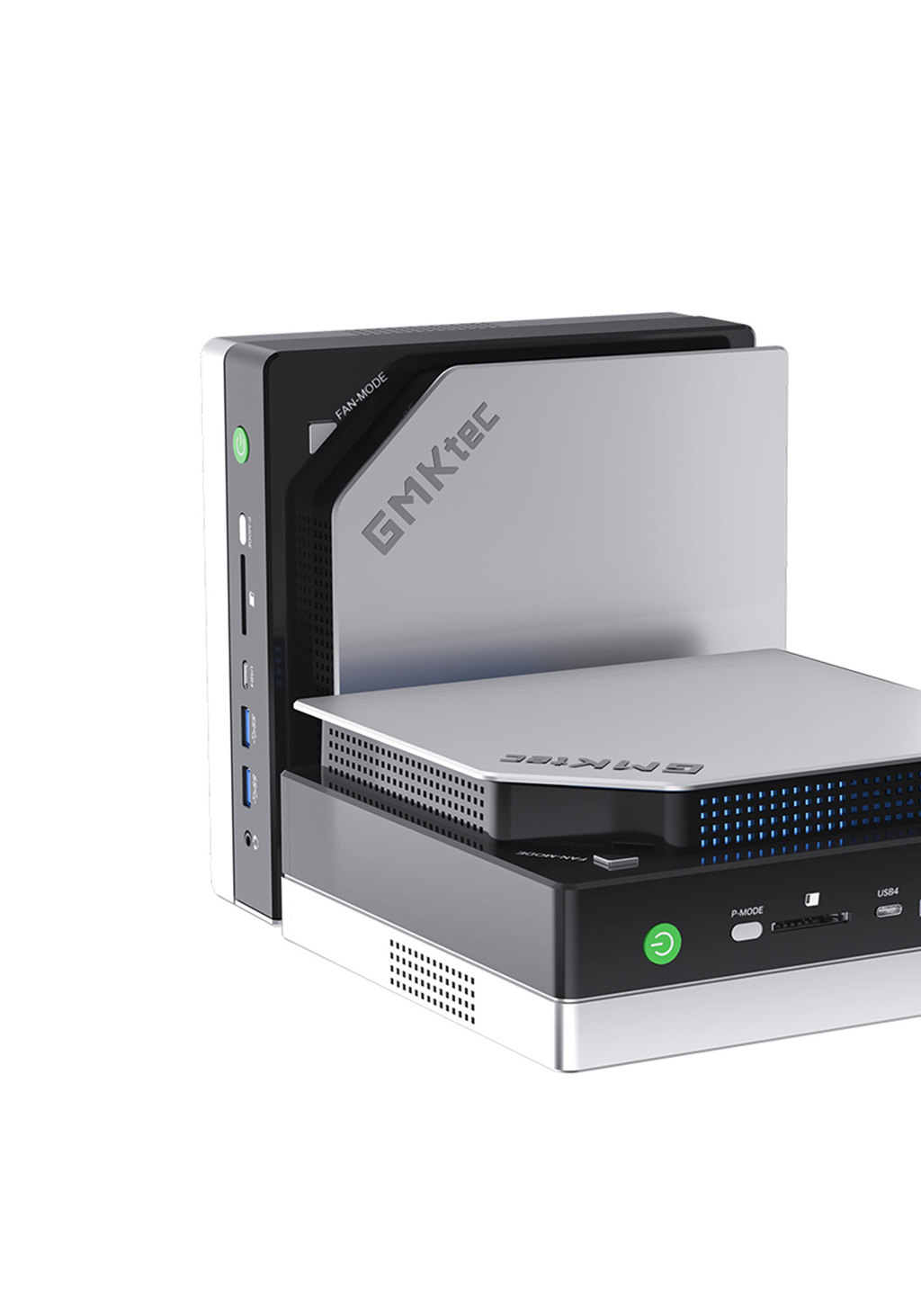
Worth checking before you order: GMKtec sells 128 GB with 1 TB at $3,499.99 and 128 GB with 2 TB at $3,649.99, and a $150 gap between two listings that read almost identically is easy to misread as a discount. The Amazon price matches the direct price to the cent, so neither channel is marking it up.
Check the GMKtec EVO-X2 price on Amazon
Most ports: Beelink GTR9 Pro
The Beelink GTR9 Pro is the full Strix Halo machine and the one every published benchmark was run on. 128 GB of unified memory, a 2 TB drive, and the spec that separates it from the pack: dual 10GbE. That matters if the box is going to sit headless as a home AI server feeding other machines, which is what most people do with it. ServeTheHome measured gpt-oss-120b at 31.41 tokens a second on this exact unit, the strongest verified number on the platform, and the teardown showed a vapor-chamber cooler holding that load at about 120 watts, nearly silent.
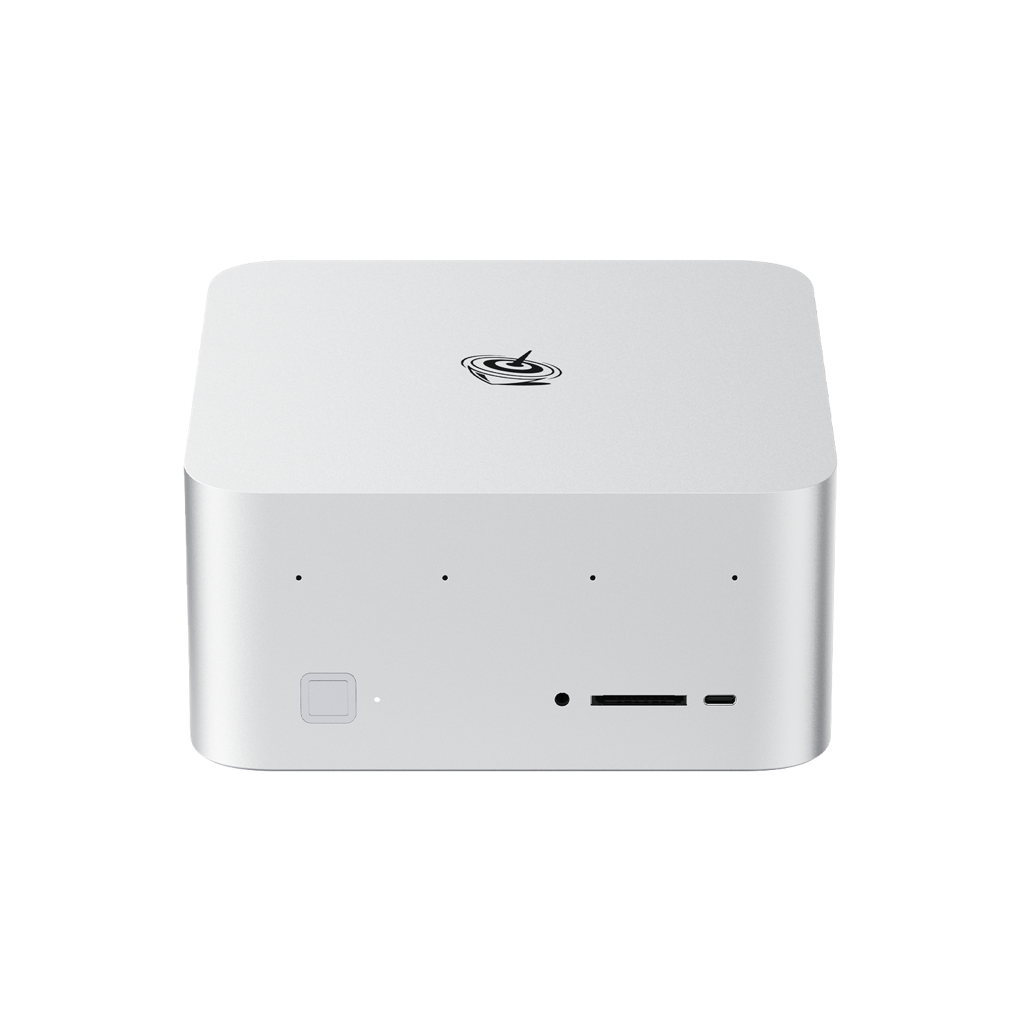
What changed is the price. It launched at a $1,985 MSRP and now sells for $4,349 on Beelink’s own store, $699 more than the identical-performing GMKtec. Its Amazon listing does not add to cart, so the buy path is Beelink direct. Pay the difference only if you genuinely need the second 10GbE port, because on model speed these two machines are the same computer.
See the Beelink GTR9 Pro on Beelink’s store
Cheapest and most repairable: Framework Desktop
The Framework Desktop is the same Strix Halo board, built around standard parts you can service, now $3,449 for the 128 GB configuration and $1,959 for the 64 GB build. It is the quietest and most efficient of the bunch, holding the same performance at about 144 watts against the GMKtec’s 186. The catch is stock: every Ryzen AI Max+ 395 configuration is listed out of stock and sold as a pre-order, and Framework sells direct rather than through Amazon, so buy it from frame.work. If you value a machine you can open and fix over the last few dollars of price, this is the one, and the efficiency means it runs cooler as a 24/7 server.
Most expandable: Minisforum MS-S1 MAX
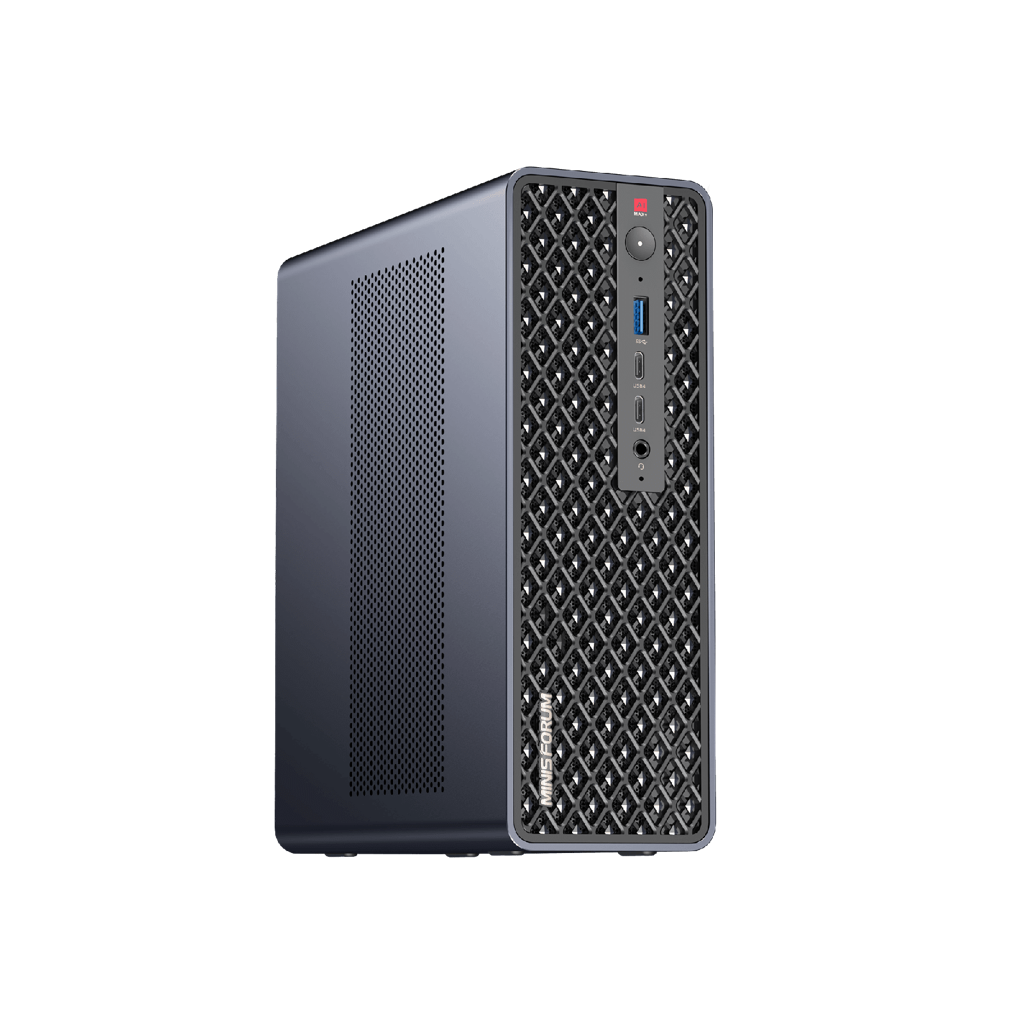
The Minisforum MS-S1 MAX is the Strix Halo box for people who want to grow it. It matches the Beelink on networking with dual 10GbE, then adds a real PCIe x16 slot (wired at 4.0 x4), USB4 v2 at 80 Gbps, and a 2U rack option for anyone building a small cluster. It also runs the hottest of the AMD boxes, up to 160 watts in its top mode. At $3,719 with 128 GB and 2 TB it sits between the GMKtec and the Beelink, justified only if you will use the slot or the rack, and a 64 GB version sells for $2,599. It ships from Minisforum’s own store and shows up on Amazon and Newegg in batches.
For CUDA and prefill: NVIDIA DGX Spark
The DGX Spark is a different animal at a different price. It pairs 128 GB of unified memory with a real NVIDIA GB10 chip and the full CUDA stack, which is the thing the AMD boxes cannot match. On a single-stream dense 70B it is no faster than the others, around 3 to 4 tokens a second, because it is bandwidth-bound too. Where it pulls ahead is everywhere a CUDA accelerator should: it ingests long prompts about five times faster than Strix Halo, and it serves many concurrent requests far better, with aggregate throughput near 700 to 860 tokens a second on batched mixture-of-experts workloads. That makes it the pick for fine-tuning, CUDA-only toolchains, RAG over long context, and serving a team rather than one person.
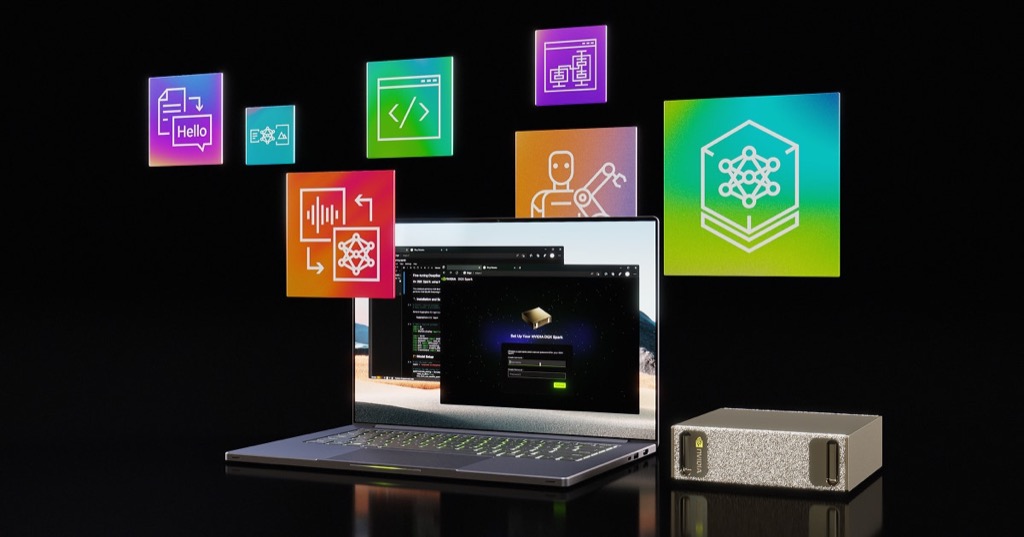
It is also $4,699, up from $3,999 after a February 2026 price hike, more than twice a Strix Halo box. NVIDIA does not sell it through Amazon, so buy it from NVIDIA, Micro Center, or Best Buy rather than a third-party marketplace listing. For one person running a value 70B at home, it is overkill. For CUDA development, long-context RAG, or concurrent serving, nothing else this size competes.
For fast dense models: Mac Studio M4 Max
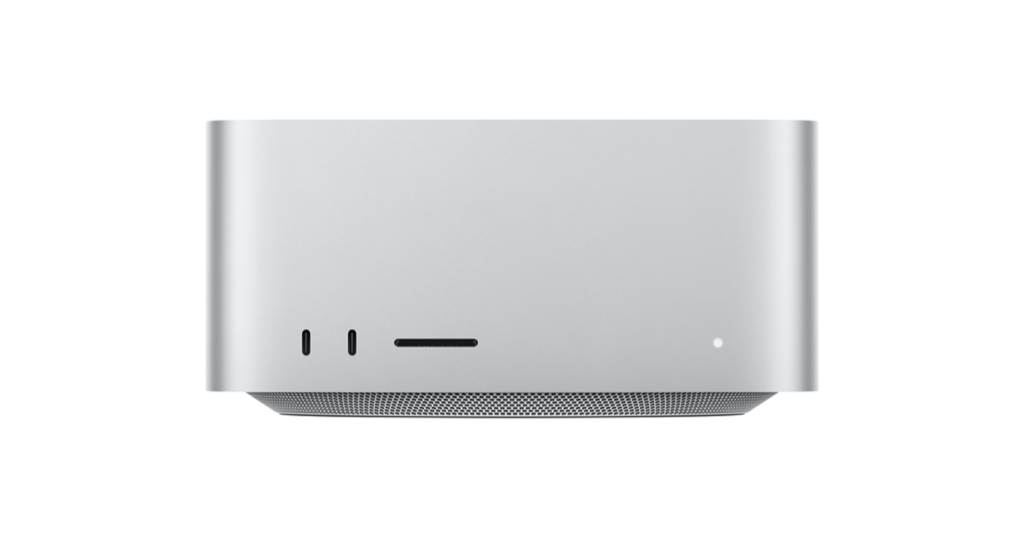
If you live in macOS and want the fastest dense-model speed in this class, the Mac Studio M4 Max has the most bandwidth, 546 GB/s on the 16-core configuration, roughly double the AMD and NVIDIA boxes. That makes it two to four times faster on a dense 70B, around 20 to 28 tokens a second, the only machine here that runs a 70B at genuinely interactive speed. The problem is the memory ceiling. Apple’s own specifications now cap the M4 Max Mac Studio at 64 GB, configurable from a 36 GB base, and 96 GB requires stepping up to the M3 Ultra at $5,299, where the bandwidth climbs to 819 GB/s. A 64 GB Mac holds a 70B at Q4 with little room for context and cannot hold gpt-oss-120b at all. Apple also raised the M4 Max Mac Studio from $1,999 to $2,499 on 25 June 2026, and does not sell it as a first-party Amazon item. Buy it for the bandwidth and the ecosystem, not for capacity.
Budget pick: Beelink SER8
You do not need a 128 GB machine to start. The Beelink SER8 with 32 GB and a 1 TB SSD is $889 direct and runs models up to about 32B at Q4, which covers most coding assistants and chat. Those smaller dense models run faster on it relative to their size than a 70B ever will on the big boxes. What it cannot do is hold a 70B.
This guide previously pointed here at the Beelink SER9 on the Ryzen AI 9 HX 370, which has the stronger Radeon 890M graphics. It is still the better chip for this job, but it now costs $1,169 direct and every one of its Amazon listings checked on 13 August 2026 was out of stock, so the SER8 is the one you can actually buy. Both run dual-channel DDR5 at 5600 MHz, so on a bandwidth-bound 32B model the gap between them is much smaller than the chip names suggest.
Check the Beelink SER8 price on Amazon
Which box for which model
Match the machine to what you actually run, and be honest about dense versus sparse.
| What you run | Best buy |
|---|---|
| Dense models up to 32B, interactively | A discrete GPU, or the Beelink SER9 on a budget |
| A dense 70B, for batch or background work | Any 128 GB Strix Halo box, about 5 tok/s |
| A dense 70B, fast and interactive | Mac Studio M4 Max (~20 to 28 tok/s) or a multi-GPU rig |
| Large MoE models like gpt-oss-120b | Any 128 GB Strix Halo box, about 31 tok/s |
| Long-context RAG, fine-tuning, or serving a team | NVIDIA DGX Spark |
The memory each model needs comes straight from the model math, weights at roughly 0.6 bytes per parameter at Q4 plus context. The VRAM sizing guide works the full numbers for a specific model and context length, and the GPU buyer guide covers the discrete-card path for anything that fits in 24 or 32 GB.
Run it on Linux
These boxes ship with Windows, but a headless Linux install is the better home for a 24/7 AI server, and the Radeon 8060S integrated GPU is supported. Install Ollama, point it at the GPU through ROCm, and the unified memory is available to the model. The one tuning step that catches people out is the memory split: set a large GTT or UMA buffer so the GPU can claim most of the 128 GB, rather than the small default carve-out a desktop BIOS assumes. After that the workflow is ordinary:
ollama run gpt-oss:120bThe full install, including the firewall and a reverse proxy if you want to reach it from other machines, is in the Ollama on Linux guide. For serving more than one user from the box, vLLM packs more concurrent sessions into the same memory than Ollama does.
Why 2026 is a buy-now year
The memory shortage is not a footnote, it is the market. DRAM contract prices rose around 90 percent in the first quarter of 2026 and are forecast to climb further, because high-bandwidth memory for AI accelerators is eating commodity supply. That is why NVIDIA raised the DGX Spark by $700 in February, why Apple raised the whole Mac line on 25 June and capped the M4 Max at 64 GB, and why every 128 GB box here costs 60 to 120 percent more than it did in June. The soldered LPDDR5X in the Strix Halo machines did not protect them, it exposed them: 128 GB of it is the single most expensive part in the build. Waiting for a price drop has been the losing bet every month of 2026 so far. If a 128 GB box does what you need at today’s price, today’s price is likely the good one.
The short version: the 128 GB Strix Halo boxes are the same machine at heart, so buy the cheapest one in stock with the ports you need, which today means the GMKtec EVO-X2 at $3,649.99 unless you need the Beelink’s second 10GbE port enough to pay $699 for it. They are for capacity and for fast MoE models, not for a snappy dense 70B. Pay up for the DGX Spark only if you need CUDA, long-context prefill, or to serve a team. Buy the Mac Studio M4 Max if you want the fastest dense 70B and can live with 64 GB. Drop to the Beelink SER8 if your models stay under 32B. And if everything you run fits in 24 GB, skip mini PCs entirely and buy a graphics card, because for what fits, nothing here beats it on speed.