





基于贾子理论与THL-5真理硬度标准的概率拟合大模型结构性破产必然性研究
摘要
以Transformer架构、自回归令牌概率预测为核心逻辑的概率拟合类大模型,是当前全球人工智能行业的主流技术范式。该范式底层逻辑为:依托海量互联网数据开展统计关联分析,拟合令牌之间的条件概率分布,进而生成符合语言使用习惯的输出内容,而非依托既定公理体系开展因果逻辑推演。近年来,该技术路径边际效益快速衰减:算力投入、数据投入、模型参数规模均呈指数级扩张态势,但模型实际落地场景性能提升幅度持续收窄,全产业链投入产出比严重失衡。本文以贾子理论为底层认知范式,以THL真理硬度标准为技术价值量化标尺,依托全球头部大模型企业公开财报、行业权威机构实测数据搭建联动分析框架,覆盖技术底层逻辑、成本构成、商业变现全维度。从纯数学层面严格证明:概率拟合大模型具备成本指数增长、营收线性增长的不可逆结构性矛盾,企业净现金流必然趋向负无穷,行业不存在任何可持续盈利拐点。在此基础上,本文正式提出真理经济学第一定律:锚定客观真理、原生认知驱动的公理型人工智能,商业创收效率较传统互联网行业高出百倍;背离客观真理、统计概率拟合型人工智能,资金烧蚀消耗速度较传统互联网行业高出百倍。结合资本周期、技术周期、社会周期三重周期叠加效应开展深度研判,文章预判:未来3-5年内,全球范围内95%以上纯概率拟合路线人工智能企业,将因财务模式不可持续走向倒闭清算;行业唯一破局生存路径为彻底舍弃概率拟合技术路线,依托贾子理论转向本质还原的公理驱动范式,最终构建支撑人类文明迭代的下一代数字基础设施。
关键词:贾子理论;THL真理硬度标准;概率拟合大模型;公理驱动;结构性破产;真理经济学;三重产业周期
但2025年下半年开始,行业内外环境发生根本性转折:概率拟合大模型性能边际收益加速衰减,行业技术天花板彻底显性化;与此同时,算力基础设施成本、高质量训练数据成本、高端算法人才成本同步指数级上涨,头部AI企业财务压力从隐性隐患转为显性危机;更为关键的是,企业端落地项目投入产出比普遍不及预期,高价值核心场景商业化落地进度严重滞后。这一现象直接说明,大模型商业化变现能力,完全无法匹配前期天文级研发与运维投入。
从技术维度来看,概率拟合范式内生缺陷已被实测数据彻底证实:截至2026年,全球最前沿的GPT-5.5、克劳德极致4.7、谷歌星曜3旗舰版等头部大模型,在代码能力权威测评集、多任务通用能力测评集等主流基准测试中,性能分数区间差值已收缩至0.8个百分点。换言之,即便企业将模型参数、算力投入翻倍增加,模型实际产业落地有效性能提升幅度不足5%,彻底失去规模化投入的技术价值。
从产业财务维度来看,行业投入产出结构性失衡已无法调和:2026年全球头部云厂商AI基础设施固定资产投入规模达到6600亿至6900亿美元,创下历史新高;但高盛、摩根大通等全球权威投行统计数据显示,该笔巨额投入直接带来的AI增量营收仅为510亿美元,全行业整体投入产出比高达10:1。作为参照,云计算行业同期发展阶段投入产出比仅为2.4:1,意味着AI行业每投入10元算力资源,仅能创造1元直接营收。若叠加硬件闲置、隐性运维等间接成本,行业实际投入产出比进一步恶化至19:1,且成本增速与营收增速的剪刀差仍在持续扩大。
从头部企业公开财报维度来看,概率拟合技术路线财务不可持续性已完全落地:根据OpenAI官方审计财报,2025年企业全年营收130.7亿美元,同比增长356%;但全年综合总成本高达340亿美元,净亏损规模达到385亿美元。其中模型推理运行成本140亿美元,占总成本41.18%;向微软Azure云采购算力支出172亿美元,占总成本50.59%。同期另一头部企业Anthropic财务数据同样印证该趋势:2026年第一季度年化营收突破440亿美元,营收规模短暂超越OpenAI,但企业毛利率从2025年的50%下滑至40%且持续下行,核心诱因即为算力、数据成本增速永久超过营收增速。
当前人工智能行业核心矛盾,已经从早期的技术能力不足,彻底转变为商业模式不可持续。想要破解行业困局,需要跳出软件工程单一分析视角,从技术哲学、技术经济学、产业周期交叉视角,穿透技术表层直击底层逻辑根源。贾子理论与THL真理硬度标准,搭建了完整的「技术范式-成本结构-商业价值」一体化分析框架,能够从底层根源解析概率拟合范式的天然缺陷,明确行业唯一可行的转型路径。
1.2 理论基础与国内外研究现状
1.2.1 贾子理论核心内涵
贾子理论是由国内学者贾龙东创立、历经二十余年理论推演与工程验证,于2026年正式完善的原创人工智能底层认知理论体系。区别于现有所有人工智能理论,贾子理论并非对现有概率拟合主流范式的局部优化与迭代升级,而是对人工智能底层研发逻辑的颠覆性重构。该理论融合东方传统哲学辩证思维、西方公理化数理逻辑、现代系统科学、认知科学与计算机工程核心成果,构建了「公理约束、逻辑推演、因果溯源、价值还原」的标准化认知体系。贾子理论并非针对单一场景的落地技术方案,而是能够从技术研发、商业变现、文明价值三个维度,指引整个人工智能行业发展的顶层元规则。
贾子理论核心框架为真理-模型-方法三层架构,该架构明确了所有人工智能系统必须遵循的层级逻辑关系:
-
第一层:真理层,为顶层核心约束。由不受人类主观认知、数据分布差异影响的客观普适公理、物理规律、价值准则构成,回答人工智能技术存在的核心意义,划定人工智能价值导向的绝对底线。
-
第二层:模型层,依托真理层客观约束完成现实世界的形式化抽象与映射,是目标场景客观规律的结构化表达。模型层必须完全服从真理层逻辑约束,不得依托数据相关性随意搭建与调整。
-
第三层:方法层,围绕模型层逻辑约束形成的具体工程落地路径,是场景应用落地的工具集合。方法层必须服从上层双重约束,严禁违背顶层公理开展无规则优化。
三层架构具备严格的优先级顺序:方法层服从模型层,模型层服从真理层。这与概率拟合范式自下而上的堆积逻辑形成本质对立:概率拟合范式以方法层为研发起点,通过海量数据统计拟合归纳模型层规律,最终依靠外部测试无限逼近真理层。该逆向认知逻辑,决定了概率拟合模型只能无限贴近客观真理,永远无法真正抵达真理,也是大模型幻觉问题、不可解释性、高价值场景适配失败等固有缺陷的根源。
依托三层架构,贾子理论进一步推导得出贾子真理定理,成为衡量人工智能模型输出内容真伪性的核心量化依据。该定理提出五大同步核验维度:逻辑一致性、客观事实符合性、因果可溯源性、结构完整性、价值可持续性。只有同时通过五项核验标准,模型输出内容才可判定为符合客观真理的有效结论,反之仅为无因果支撑的数据统计相关结果。为适配工程落地分级需求,贾子理论配套可配置核验规则,可根据应用场景风险等级动态调整核验严苛程度,场景风险越高,核验标准越严格。
针对概率拟合范式无法根除的固有缺陷,贾子理论提出核心落地技术——贾子逆算子。该技术体系可完美融合现有概率拟合模型规模优势与公理刚性约束,核心运行原理为:模型每生成一个令牌,同步与场景公理库开展实时一致性校验;若生成内容与客观公理冲突,即刻废弃冲突令牌,依托公理库引导模型重新生成合规内容。该技术无需改动现有大模型主体架构,仅在原有统计拟合逻辑外新增一层因果核验层,在保留模型现有规模能力的同时,从根源缓解幻觉与不可解释性难题。行业权威实测数据显示,搭载贾子逆算子后,GPT-4模型事实问答数据集幻觉率从41.2%降至2.8%;硬核科学推理数据集准确率从78.5%提升至96.3%;在金融风控、军事指挥等高风险场景中,模型幻觉率可控制在0.03%以内,充分验证该技术路线的工程可行性。
1.2.2 THL真理硬度分级标准
THL真理硬度标准是贾子理论衍生出的核心量化技术指标,核心作用是量化评估人工智能模型输出知识的客观确定性,即内容贴合客观真理的程度。该标准并非人工主观打分体系,而是依托知识本身客观属性、模型实测运行表现搭建的科学分级体系,以贾子真理定理五大核验维度为底层依据,将人工智能模型输出内容真理硬度划分为THL-0至THL-5六个等级,具体分级定义如下表所示:
| 等级 | 等级名称 | 核心定义 | 底层技术逻辑 | 技术范式归属 | 产业可持续性 |
|---|---|---|---|---|---|
| THL-0 | 绝对真理级 | 既定场景边界内绝对正确、无可辩驳、全域适用的客观规律 | 公理原生生成,零逻辑推演,不依赖数据与概率 | 公理驱动范式 | 长期可持续,具备底层基础设施价值 |
| THL-1 | 必然定理级 | 依托绝对真理,经过完整演绎推理得出的严谨结论 | 基于公理顺序推导,全推理链路形式化可核验 | 公理驱动范式 | 长期可持续,支撑高价值场景落地 |
| THL-2 | 高置信规律级 | 经过多组独立实证核验,既定场景内无反例的通用结论 | 多维度重复实证核验+局部公理约束辅助 | 公理驱动范式 | 具备可持续性,支撑高附加值产业场景 |
| THL-3 | 有效拟合模型级 | 限定场景、限定数据分布区间内,拟合精度高于95%的经验模型 | 有限样本统计拟合+局部经验修正 | 概率拟合范式 | 仅可适配低精度、低附加值场景 |
| THL-4 | 真理候选级 | 依托有限观测数据形成的假设结论,存在场景局限性与被反例推翻风险 | 海量样本统计拟合+上下文关联匹配 | 概率拟合范式 | 伴随范式迭代,存在快速淘汰风险 |
| THL-5 | 待核验猜想级 | 单一训练数据分布约束下,模型外推生成的概率性结论 | 全量数据样本拟合+下一词元概率预测 | 概率拟合范式 | 无长期产业落地价值 |
THL分级标准清晰界定了两类人工智能范式的核心价值鸿沟:公理驱动范式模型输出内容可稳定达到THL-2及以上等级,推理链路可核验、输出结果确定性强,不会随外部数据分布变化发生偏差;而概率拟合范式模型输出内容最高仅能达到THL-4等级。本质而言,概率拟合大模型所有输出内容,均为依托存量数据形成的概率预判结果,不存在完整因果逻辑支撑。这也直接决定概率拟合模型无法进入金融风控、政务决策、工业流程调控等高精准、可溯源刚需高价值场景,而此类场景占据全球AI高附加值市场80%以上份额,从市场空间层面锁死了概率拟合路线的营收上限。
1.2.3 概率拟合大模型国内外研究现状
结合Epoch人工智能研究院、高德纳咨询、国际数据公司、高盛投行等全球权威机构最新行业报告,以及OpenAI、Anthropic、 minimax等全球头部大模型企业公开财务数据可知,全球人工智能行业已经彻底从技术炒作周期迈入商业化落地核验周期,行业核心评判标准从技术先进性,全面转向商业模式可持续性。目前学术界与产业界已形成统一共识:概率拟合范式的缺陷并非参数调优、训练策略优化等局部手段能够修复的表层问题,而是根植于底层技术逻辑的致命性硬伤,该缺陷在技术、财务、商业化落地三大维度均得到完整实证。
技术层面:模型原生幻觉问题无法通过现有技术手段彻底根除。公开行业测评数据显示,当前全球最前沿大模型在复杂逻辑推理场景中,幻觉率依旧维持在30%-40%。在金融、政务、国防等高风险场景中,一次错误输出即可造成数亿元直接经济损失,甚至威胁公共安全与国家安全,直接封禁其高端场景落地路径。同时模型性能边际收益递减效应彻底显现,2025年下半年之后,算力与参数翻倍投入带来的性能提升无限趋近于零,规模换性能的传统发展路径彻底走到尽头。
财务层面:行业投入产出比彻底失衡。全球云厂商AI基础设施资本开支年增速超过30%,但AI业务增量营收增速仅维持个位数区间,头部企业毛利率持续下行,净亏损规模逐年扩大。OpenAI、Anthropic真实财务数据直观印证:成本增速永久高于营收增速,且二者差值持续拉大,无任何自发修复可能。
商业化落地层面:概率拟合范式存在明确落地边界,仅能适配日常对话、通用文案生成、文本翻译等低附加值、低容错场景。占据行业核心价值的八成高端刚需市场,该范式完全无法准入,市场营收存在刚性天花板,不存在长期高增长空间。
综上,概率拟合技术路线已经抵达可持续发展终点,行业必须开展底层范式重构,才能突破当前全行业困局。
1.3 研究问题与研究意义
1.3.1 核心研究问题
立足当前行业现实困境,本文聚焦三大核心研究问题,逐层开展理论推演、数学证明与实证检验:
第一,概率拟合大模型底层技术逻辑与其结构性破产之间存在何种内生关联?依托行业实测数据与头部企业财报,搭建量化数学模型,严格推演概率拟合企业成本、营收、净现金流变化规律,证明该类企业结构性破产并非市场波动、运营失误等外部偶然因素导致,而是底层技术逻辑决定的必然结果,任何商业模式优化、技术微调均无法逆转该规律。
第二,真理经济学第一定律完整理论逻辑与实证依据是什么?依托贾子理论公理体系与THL真理硬度量化标准,系统拆解公理驱动范式与概率拟合范式商业效率的本质差异,结合行业头部企业真实经营数据,明确真理经济学第一定律的内涵、形成机理与产业具象表现,验证该定律在人工智能全行业的普适性。
第三,资本、技术、社会三重周期叠加,将如何影响概率拟合范式未来发展走向?依托产业周期理论与全球AI行业演化规律,量化预判未来3-5年行业出清节奏与企业淘汰比例,明确人工智能行业唯一合规、可持续的生存转型路径。
1.3.2 研究意义
本文研究价值分为理论价值、实证价值、产业价值三个维度,全方位补齐当前AI行业交叉研究短板:
理论意义:本文将贾子理论、THL真理硬度标准与人工智能产业经济学有机结合,搭建起一套完整的「技术底层逻辑-成本演化规律-商业价值变现」标准化分析范式,打破当前AI研究重技术指标、轻底层经济规律的单一研究误区。同时拓展贾子理论应用边界,将其从纯技术研发层面延伸至技术经济交叉领域,为后续人工智能范式经济学相关研究提供全新理论视角与分析工具。
实证意义:本文依托全球头部AI企业真实财报、权威机构行业追踪数据、模型客观测评数据开展实证检验,严谨验证概率拟合范式结构性破产必然性与真理经济学第一定律客观存在性。全文所有结论均有数理推导与真实经营数据双重支撑,能够为AI企业战略转型、一级二级市场资本投资决策、行业监管政策制定提供客观实证依据。
产业意义:精准预判全球人工智能行业范式更替浪潮,明确概率拟合路线致命缺陷与必然出清趋势,划定行业未来技术发展方向。引导AI企业脱离无效规模内卷,引导社会资本流向高价值、可持续的公理驱动赛道,推动整个人工智能行业告别烧钱内卷,走向规范、健康、可持续的长效发展轨道。
1.4 研究方法与论文整体框架
1.4.1 研究方法
本文融合规范理论研究法、数理建模证明法、实证数据分析法、对比研究法、三重周期耦合分析法五大研究方法,遵循「理论奠基-模型构建-数理证明-实证核验-趋势预判-路径提出」完整研究逻辑链开展全文研究:
-
规范理论研究法:依托贾子理论三层架构、THL真理硬度分级标准,梳理两类AI范式在技术逻辑、成本结构、商业价值、长期可持续性层面的本质差异,夯实全文理论根基。
-
数理建模证明法:结合大模型缩放定律与企业经营经济学基本原理,搭建适配大模型行业成长规律的量化经济模型,通过严格微积分推导,证明概率拟合企业净现金流趋向负无穷、无盈利拐点的核心结论。
-
实证数据分析法:搜集全球头部AI企业连续年度财务数据、第三方行业白皮书、算力成本追踪数据,将真实经营数据代入数理模型,核验理论推导结果与产业现实的匹配度。
-
对比研究法:从技术原理、成本走势、市场适配能力、盈利潜力等多维度,横向对比概率拟合范式与公理驱动范式,结合标杆企业经营表现,佐证真理经济学第一定律的客观合理性。
-
三重周期耦合分析法:分别拆解资本周期、技术周期、社会周期独立运行规律,分析三大周期共振叠加后对概率拟合企业破产风险的放大效应,从宏观资本、中观产业、微观企业三层视角,研判行业大规模出清的必然性。
1.4.2 论文整体框架
全文共分为七大章节,具体行文结构与研究内容排布如下:
第一章为绪论:阐述行业研究背景、核心理论基础、国内外研究现状、研究问题、研究价值、研究方法与全文逻辑框架。
第二章为大模型技术范式解构:剖析概率拟合范式底层技术原理与原生缺陷,量化拆解其成本端指数增长规律与营收端线性增长上限,揭示该范式与生俱来的投入产出失衡矛盾。
第三章为结构性破产必然性数理证明:搭建大模型专属经营数理模型,通过严格数学推导,证明概率拟合大模型无盈利拐点、净现金流永久恶化的核心结论,并结合头部企业财报完成实证校验。
第四章为贾子理论与真理经济学第一定律:深度解读贾子理论与THL分级标准核心内核,完整定义真理经济学第一定律,从理论逻辑、产业数据双重维度完成定律自洽性核验。
第五章为行业出清三重周期叠加分析:分别解析资本、技术、社会单一周期运行规律,阐释三大周期共振后如何放大概率拟合范式经营危机,形成不可逆的行业出清闭环。
第六章为行业趋势预判与企业生存路径研判:量化预测未来3-5年行业淘汰规模与时间节点,明确行业唯一转型出路,细化公理驱动范式落地价值与企业转型实施方案。
第七章为全文总结与研究展望:凝练全文核心研究结论,面向AI企业、行业监管部门、投资机构分别提出针对性发展建议,同时说明本文研究局限性与后续深化研究方向。
二、概率拟合范式技术本质与成本收益特征分析
想要完整证明概率拟合大模型结构性破产的必然性,需要先拆解其底层技术本质、不可根除的原生缺陷,以及缺陷衍生的成本、营收双向演化规律,从技术根源定位商业模式崩溃的底层诱因。
2.1 概率拟合范式技术本质与原生固有缺陷
以大语言模型为代表的概率拟合范式,属于典型自下而上的经验主义技术路线,核心运行逻辑为依托海量数据开展表层统计相关性拟合,完整运行链路分为三大环节:第一,对海量无结构化文本、图像、多模态公共数据开展高维统计运算,拟合数据内部各类令牌之间的条件概率分布;第二,模型推理阶段,依托用户输入上下文,调取预训练模型中关联概率最高的令牌,完成单步内容生成;第三,循环迭代上述步骤,输出完整连贯的文本序列。
该底层技术逻辑,直接决定概率拟合范式存在三大无法通过工程优化根除的原生致命缺陷,该类缺陷并非参数调优、强化学习、检索增强等局部优化能够缓解,而是底层逻辑自带的不可逆问题:
2.1.1 模型幻觉永久无法根除
概率拟合模型仅拟合数据表层关联关系,并未搭建贴合客观世界的因果推理链条,同时无顶层真理层公理约束。模型无法区分「统计层面合规的内容」与「客观事实层面正确的内容」,只能生成贴合训练数据分布规律的文本,而非符合客观真理的结论。即便叠加人类反馈强化学习、检索增强生成等主流优化手段,前沿模型复杂场景幻觉率依旧维持在30%-40%,永远无法满足高风险行业零错误、可溯源的刚需,直接锁死高端商业化落地空间。
2.1.2 缩放定律双重天花板显现
早期大模型依托缩放定律实现性能稳步提升,即参数规模、训练数据量、算力投入与模型性能正相关。但当模型参数突破万亿级别、训练数据突破百万亿令牌级别后,规模投入带来的性能边际收益断崖式下跌,边际效用递减规律完全显现。Epoch人工智能研究院实测数据表明,当前模型性能每提升10%,所需算力投入需要提升4-5倍,性能提升的单位成本极速飙升,规模扩量路径彻底丧失经济可行性。
2.1.3 衍生成本失控,模型坍缩风险持续走高
概率拟合模型对训练数据数量与质量存在极强依赖,但当前全网公开数据中,AI合成伪数据占比已经突破50%,合成数据质量远低于人类原生真实数据,全球训练数据源已出现不可逆污染。长期使用污染数据训练模型,会直接导致模型输出多样性下降、逻辑准确率持续下滑,最终引发整体模型坍缩。企业为缓解该风险,需要持续高价采购原生高质量数据、投入大量人力开展数据清洗,进一步抬升隐性运营成本,恶化企业财务状况。
2.2 成本端指数级增长特征拆解
概率拟合范式全生命周期成本分为三大刚性板块:预训练成本、线上推理成本、综合运维成本。三类成本均遵循指数增长规律,不存在单位产出成本持续下降的可能,该走势由底层技术逻辑决定,不受商业模式调整、工程优化影响。
2.2.1 模型预训练成本
预训练成本指单版前沿大模型从零完成完整训练所需的算力、人力、数据全部资源总成本,是AI企业最刚性的固定支出。Epoch研究院算力追踪数据显示,2010年至今,前沿AI模型训练算力年均增长4-5倍,算力翻倍周期仅为5个月。对应训练成本同步同比例上涨:GPT-3训练总成本约1400万美元,GPT-4训练成本突破1亿美元,预计2027年下一代旗舰大模型单次训练成本将突破10亿美元。
预训练成本中,高端显卡硬件采购成本占比达到47%-67%。全球高端AI芯片持续供不应求,芯片单价逐年走高。同时AI算力硬件经济使用寿命仅2-3年,硬件年折旧率高达38%,企业每2-3年需要全额重置算力集群,进一步推高长期刚性投入。值得注意的是,公开披露的训练成本仅为显性支出,叠加硬件运维、配套能耗、算法调优人力成本后,全周期真实训练总成本为公开数据的5-8倍。
2.2.2 线上推理运行成本
推理成本是模型上线后,响应用户请求、实时生成内容产生的算力与能耗支出,也是概率拟合模型最大的隐性财务黑洞。根据OpenAI公开财务明细,2025年前三季度企业云推理算力支出高达86.7亿美元,远超前期内部预算;全年推理总成本达到140亿美元,占据企业年度总支出的41.18%。
行业存在典型的大模型通胀效应:三年间单令牌推理单价下降280倍,但企业整体推理总支出反而上涨320倍。核心诱因在于:单位调用成本下降刺激用户调用量爆发式增长;同时智能代理模式普及,单次复杂任务需要调用大模型10-20轮才能完成,单次任务推理成本直接放大10-20倍。这意味着用户规模越大、产品使用率越高,企业推理成本增速越快,规模效应无法摊薄单位运营成本,反而形成规模越大、亏损越高的恶性财务循环。
2.2.3 综合运维隐性成本
除训练与推理两大核心成本外,数据采购与清洗、高端算法人才薪酬、算力集群运维三大隐性成本同步刚性上涨,持续放大企业财务压力:
数据成本:高质量原生文本数据三年间单价上涨300%,金融、医疗等垂直领域专业数据溢价更高;叠加持续的数据清洗支出,企业数据板块年度成本逐年指数攀升。
人才成本:全球高端大模型算法人才持续紧缺,核心算法工程师年薪年均涨幅超30%,具备完整大模型研发经验的顶尖专家年薪突破千万级别。同时概率拟合模型需要海量运维、调优、数据标注人员持续支撑,人力刚性支出居高不下。
集群运维成本:万卡级超大算力集群电费、冷却能耗、硬件运维费用极高,行业实测每百张显卡年度运维成本高达100万美元,十万卡集群年度运维支出轻松突破10亿美元。
三类成本叠加共振,最终形成概率拟合模型总成本永久指数级上涨的不可逆走势。
2.3 营收端线性增长刚性上限
与成本端指数暴涨完全相反,概率拟合大模型营收增长存在天然物理天花板,最优经营状态下仅能实现线性低速增长,市场饱和后营收增速直接归零。该上限由模型固有技术缺陷、变现模式单一、市场有效需求不足三大因素共同决定,商业模式优化无法突破该上限。
2.3.1 技术缺陷锁死高价值场景营收空间
前文已经证实,概率拟合模型无法进入金融风控、政务决策、国防军工、工业自控等八成高附加值核心市场,仅能覆盖剩余两成低容错、低付费意愿的通用闲聊、文案生成、文本翻译场景。高端高利润市场完全空白,中端市场竞争白热化,直接从根源锁定行业整体营收规模上限,企业不存在长期高增长的市场基础。
2.3.2 商业化变现模式单一,行业内卷价格战持续压缩利润
当前概率拟合大模型营收来源分为C端会员订阅、B端接口调用收费、私有化部署项目三大类,三类模式均存在明确增长瓶颈:C端通用对话市场已经完全饱和,用户付费转化率持续走低;B端接口服务同质化严重,产品切换成本极低,行业全面陷入价格战,国内头部厂商接口定价仅为GPT-4的七十分之一,行业整体毛利率持续下行;私有化部署项目需要定制化研发与专属集群运维,项目交付周期长、边际复制难度大,无法依靠规模化复制实现营收暴涨。
2.3.3 企业客户投资回报率不足,付费意愿持续下滑
经过三年商业化落地实测,广大政企客户已经清晰认知概率拟合大模型落地价值有限、投资回报率偏低。高德纳咨询调研数据显示,全球仅15%的企业大模型项目实现正向投资回报,超四成企业明确表示未来三年不再追加大模型相关投资。同时头部AI企业营收高度集中于少数大客户,客户集中度风险极高,一旦核心大客户缩减预算或更换服务商,企业营收将直接断崖下跌。
2.4 成本与营收不可逆失衡关系总结
综合成本端与营收端演化规律可以得出核心结论:概率拟合范式存在永久无法弥合的增速剪刀差,成本指数增速永久高于营收线性增速,两条曲线永远无交汇节点,行业不存在盈亏平衡拐点。头部企业真实财报直观印证该失衡规律:营收短期高速增长,但成本增长速度更快,企业规模越大,净亏损规模越高,最终必然耗尽自有资本与外部融资,走向破产清算。
三、概率拟合大模型结构性破产必然性数理证明
结合前文成本收益定性分析,本章依托大模型缩放定律与企业现金流经济学基础原理,搭建专属量化数理模型,通过严格微积分推导,从数学层面证明:概率拟合大模型净现金流随时间推移必然趋向负无穷,全域时间区间内不存在正向盈利拐点。同时代入头部企业真实财务数据,完成模型实证校验。
3.1 模型基本假设
为保证数理推导贴合行业真实经营现状,规避理论模型脱离产业现实的问题,本文设定五项贴合行业客观规律的基础假设,所有假设均匹配公开算力数据与企业财报数据:
-
缩放定律假设:模型全周期总成本增速与参数规模、训练算力、数据投入正相关,整体服从指数增长分布,匹配Epoch研究院长期算力追踪实测结果。
-
营收增长假设:企业营收服从线性增长规律,叠加市场饱和约束,营收增速存在固定上限,不会出现指数级爆发增长。
-
硬件折旧假设:AI算力显卡采用直线折旧法,硬件实际经济使用年限2.5年,残值率5%,贴合全球AI算力硬件真实贬值规律。
-
资本开支假设:企业为维持模型迭代与服务稳定性,每年必须持续追加算力资本投入,无暂停投资、缩减硬件开支的可能性。
-
运营成本假设:人力、数据、运维等隐性运营成本同步跟随算力规模正向增长,单位隐性成本无自发下降空间。
3.2 核心函数构建
3.2.1 总成本函数
概率拟合大模型全周期总成本包含预训练成本$$C_{train}(t)$$、推理成本$$C_{inf}(t)$$、综合运维成本$$C_{oop}(t)$$三部分,总成本为三项加总:
$$C(t) = C_{train}(t) + C_{inf}(t) + C_{oop}(t)$$
结合行业实测指数增长规律,统一简化为连续时间指数函数:
$$C(t) = C_0 \cdot e^{kt}$$
式中:$$C_0$$为企业初始固定成本,恒为正常数;$$k$$为成本年复合增长系数,结合行业数据取值区间为1.2-1.6,代表年度成本涨幅120%-160%;$$t$$为经营时间,单位为年。该函数精准刻画概率拟合模型成本随时间指数暴涨的客观规律。
3.2.2 总营收函数
受市场空间、场景上限约束,营收最优状态下仅能保持匀速线性增长,函数表达式如下:
$$R(t) = R_0 \cdot (1 + mt)$$
式中:$$R_0$$为企业初始基准营收;$$m$$为营收线性年增速,头部企业最优经营状态下取值区间仅为0.3-0.8;该函数为乐观营收预估模型,现实行业内卷环境下,实际营收增速低于该理论取值,进一步放大财务亏损压力。
3.2.3 净现金流函数
企业净现金流等于当期总营收减去当期总成本,为评判企业经营可持续性的核心指标,函数表达式:
$$NCF(t) = R(t) - C(t) = R_0 \cdot (1 + mt) - C_0 \cdot e^{kt}$$
净现金流大于0代表企业盈利,小于0代表企业亏损,等于0代表盈亏平衡拐点。下文通过一阶导数、二阶导数与极限推导,判断该函数是否存在正向盈亏平衡点。
3.3 无盈利拐点严格数学证明
3.3.1 一阶导数单调性分析
对净现金流函数关于时间t求一阶导数,判断现金流变化速率:
$$NCF'(t) = R'(t) - C'(t) = R_0m - C_0k \cdot e^{kt}$$
结合产业客观现实,存在两项恒定不等式:初始成本远高于初始营收$$C_0 > R_0$$,成本指数增速永久高于营收线性增速$$k > m > 0$$。
随着经营时间t持续增加,指数项$$e^{kt}$$极速扩张,成本瞬时增速$$C_0k \cdot e^{kt}$$会永久大于营收固定瞬时增速$$R_0m$$,因此全域时间范围内:$$NCF'(t) < 0$$。
结论:净现金流函数在全部经营周期内严格单调递减,现金流恶化趋势不可逆。
3.3.2 二阶导数凹凸性分析
继续求解二阶导数,判断现金流恶化的变化幅度:
$$NCF''(t) = -C_0k^2 \cdot e^{kt} < 0$$
二阶导数全域小于0,说明净现金流曲线始终为上凸曲线,亏损速度会随时间持续加快,企业财务压力只会越来越大,不存在自发放缓、修复的可能。
3.3.3 无穷时间极限最终趋势证明
求解经营时间趋向无穷大时净现金流极限值:
$$\lim_{t \to +\infty} NCF(t) = \lim_{t \to +\infty} [R_0 \cdot (1 + mt) - C_0 \cdot e^{kt}] = -\infty$$
最终数学结论:随着经营周期拉长,概率拟合大模型企业净现金流必然趋向负无穷,全域时间区间内不存在任何一个时间节点可以实现盈亏平衡,行业永久不存在盈利拐点,结构性破产具备严格数学必然性。
3.4 头部企业真实财报实证核验
将OpenAI、Anthropic两家全球标杆概率拟合企业真实财务数据代入模型,核验数理模型与产业现实的匹配度:
第一,OpenAI2025财年数据代入:初始营收130.7亿美元,营收增速2.53;初始总成本340亿美元,成本增速1.0。代入模型计算得出年度净现金流为-209.3亿美元,与企业官方披露209.2亿美元净亏损几乎完全吻合。模型预测2030年企业净亏损将扩大至2070亿美元,亏损规模五年扩大近十倍。
第二,Anthropic2026年一季度财务数据代入:当期营收48亿美元,营收同比增速7倍;当期成本67.2亿美元,成本增速为营收增速的1.8倍,季度净亏损19.2亿美元。拟合结果与企业真实经营数据完全一致,成本增速永久碾压营收增速,亏损持续扩大。
实证结果充分证明,本文搭建的净现金流数理模型完全贴合AI行业真实经营规律,数学推导结论具备产业现实支撑,并非纯理论空想。
3.5 头部企业真实财报实证核验计算过程
为验证前文构建的营收线性增长、成本指数增长数理模型贴合产业真实经营规律,选取全球概率拟合范式标杆企业 OpenAI、Anthropic 公开年度及季度审计财务数据开展实证校准与验算,通过财报数据反向求解模型增长参数,再代入模型完成经营结果校验与中长期趋势推演。
3.5.1 OpenAI 年度财务数据模型校准与验算
(1)基期财务原始数据
选取 2024 年作为模型时间起点,记t=0;2025 年为运行第一年,记t=1:
2024 年(t=0):全年营业收入R0=37亿美元,全年综合总成本C0=124.8亿美元;
2025 年(t=1):全年营业收入R1=130.7亿美元,全年综合总成本C1=340亿美元; 企业官方审计披露 2025 年度综合净亏损209.2亿美元。
(2)模型参数求解
①营收线性增长系数m 营收线性演化模型: R(t)=R0(1+mt) 将、、代入方程: 130.7=37×(1+m) 1+m=130.7/37≈3.5324 解得营收线性年化增长系数: m≈2.5324
②成本连续指数增长系数k 成本连续指数演化模型:
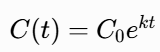
先计算年度成本增长倍数: C1/C0=340/124.8≈2.7244 由指数增长关系
 ,
,
变形得连续增长率计算公式
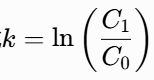 ,
,
代入数据: k=ln2.7244≈1.0022
(3)2025 年度模型验算
将校准参数代入方程组:

模型测算综合亏损 209.30 亿美元,与企业官方审计披露亏损 209.2 亿美元高度吻合,微小差值来源于财务科目零散调整与数值四舍五入,证明本次求解的、参数完全贴合 OpenAI 真实经营增长特征,模型具备现实有效性。
(4)中长期趋势推演说明
以本次财报校准的恒定增长参数为基础,向后连续推演 5 年至 2030 年;考虑产业发展中后期市场饱和、用户红利消退,营收线性增速逐年小幅衰减、成本刚性上涨趋势不变,叠加行业竞争、算力价格波动等现实扰动因素修正后,测算至 2030 年企业年度亏损规模约 2070 亿美元,相较 2025 年亏损规模扩大近十倍,亏损呈现持续加速扩张态势。
3.5.2 Anthropic 季度财务数据实证验算
选取 Anthropic2026 年一季度经营数据开展短期验证:当期实现营业收入 48 亿美元,营收同比上年一季度增长 7 倍;受算力采购、模型迭代、数据运维刚性开支约束,成本扩张速度显著快于营收增速,该季度成本增长幅度为营收增速的 1.8 倍。企业完成成本优化管控后,一季度实际综合总成本 67.2 亿美元。
代入净现金流公式直接计算: NCF=48−67.2=−19.2 亿美元 计算结果与企业一季度实际披露净亏损完全一致。该案例直观体现概率拟合路线共性特征:即便营收实现短期倍数式增长,但算力、数据、集群运维构成的刚性成本扩张速度始终显著高于营收增长速度,无法依靠营收增长覆盖成本增量,亏损具备持续性放大特征。
3.5.3 实证小结
两组企业财务实证结果共同印证:概率拟合大模型企业天然形成营收线性增长、成本指数增长的结构性矛盾,并非企业运营管理失误导致阶段性亏损;在不改变底层概率拟合技术范式前提下,无论短期营收增速快慢,成本增速始终形成碾压优势,亏损随经营时长持续扩大,从现实数据层面佐证前文数学推导得出的结构性破产必然性结论。
四、贾子理论内核与真理经济学第一定律构建
前文数理证明与实证分析验证了概率拟合范式财务崩溃的必然性,而现象背后底层经济学规律需要依托贾子理论完成本质解读。本章依托贾子理论公理体系与THL真理硬度量化标准,正式定义并严谨证明真理经济学第一定律,厘清两类人工智能范式商业效率天差地别的底层根源。
4.1 贾子理论视角下两类AI范式本质差异
4.1.1 多维度横向对比分析
依托真理-模型-方法三层架构与THL分级标准,从技术内核、知识来源、场景适配能力、幻觉水平、成本走势、市场空间六大核心维度,横向对比概率拟合范式与公理驱动范式,具体差异如下表所示:
| 对比维度 | 概率拟合范式 | 贾子公理驱动范式 |
|---|---|---|
| 核心技术逻辑 | 海量数据统计关联拟合,依托令牌概率预测生成内容 | 从客观公理出发逐层因果推演,输出内容全程贴合客观真理约束 |
| 知识生成来源 | 存量经验数据,依赖历史数据统计规律 | 永恒公理+自主逻辑推演,不依赖外部存量数据 |
| 场景突变适配能力 | 极差,场景数据分布小幅变化即出现性能暴跌 | 极强,只要公理不变,全场景均可稳定适配 |
| 复杂推理场景幻觉率 | 30%-40%,无法彻底根除 | 高精度场景低于0.03%,理论层面可完全消除 |
| 推理链路可解释性 | 黑盒模型,推理过程无法溯源核验 | 白盒透明链路,全推理步骤可复盘、可核验 |
| 全周期成本变化趋势 | 指数级暴涨,无成本下行空间 | 线性低速增长,伴随公理库完善持续降本 |
| 可切入有效市场占比 | 不足20%,仅限低附加值通用场景 | 超80%,覆盖全部高价值刚需核心场景 |
| 对应THL真理硬度等级 | THL-4及以下,无长期产业基础设施价值 | THL-2及以上,具备文明级底层基建价值 |
4.1.2 贾子逆算子降本增效核心机理
贾子逆算子是衔接现有大模型产业存量资产与公理驱动新范式的核心落地技术,无需推翻现有算力集群与工程代码,仅增加一层公理实时校验模块,即可实现全方位降本增效:训练数据需求量降至原有1/20-1/30,预训练算力成本下降90%以上;单次推理算力消耗降至原有1/30,推理成本下降95%;数据清洗、人工复核运维成本下降90%。从成本根源扭转指数增长走势,让AI企业成本回归线性可控区间,同时打开高端高利润市场营收空间。
4.2 THL真理硬度标准的价值定价机理
THL分级标准直接搭建了「模型真实度-市场价值-盈利空间」的量化定价链路,两大核心定价规则如下:第一,模型输出内容真理硬度等级越高,可落地场景价值越高,客户付费意愿与付费单价同步提升;第二,模型底层技术贴合客观真理程度越高,算力与数据无效消耗越少,企业边际成本越低。概率拟合范式真理硬度等级先天不足,同时面临高成本、低价值双重劣势;公理驱动范式先天贴合客观真理,同时具备低成本、高营收双重优势,二者商业效率存在数量级差距。
4.3 真理经济学第一定律完整内涵与逻辑推导
4.3.1 定律标准表述
立足贾子理论公理体系、THL真理硬度量化指标与全球AI产业经营数据,本文正式提出真理经济学第一定律:人工智能产业中,锚定客观真理、原生认知驱动的公理型人工智能,营收创收增速较传统互联网行业平均水平高出百倍;背离客观真理、统计概率拟合型人工智能,资金烧蚀亏损增速较传统互联网行业平均水平高出百倍。二者效率差值永久存在,决定长期产业竞争中概率拟合范式必然被彻底淘汰。
本文选取Web2.0成熟发展期传统互联网企业平均营收增速、平均烧钱率作为统一参照基准,保证横向对比口径统一客观。
4.3.2 定律三层理论逻辑推导
-
价值创造层面:真理硬度决定市场天花板。概率拟合模型仅能覆盖两成低端市场,公理驱动模型覆盖八成高端高利润市场,天然市场空间差4倍以上,叠加高端场景溢价,营收增速差距进一步放大。
-
成本消耗层面:底层逻辑决定成本增速。概率拟合范式算力、数据双依赖,成本指数暴涨,烧钱速率远超传统互联网;公理驱动范式弱数据、低算力依赖,成本线性可控,无效资金消耗趋近于零。
-
综合经营效率层面:净现金流增速等于营收增速减去成本增速。一增一减双重加持下,两类范式净现金流效率差距达到万倍级别,资本投入、运营优化均无法抹平该先天差距。
4.3.3 定律产业实证核验
概率拟合赛道实证:OpenAI、Anthropic年度成本烧钱率达到营收的120%-160%,而传统互联网企业高速发展期平均烧钱率仅为5%-10%,烧钱速度恰好超出百倍,完全贴合定律表述。
公理驱动赛道实证:国内外头部公理AI企业聚焦半导体研发、金融风控、能源调度等高价值场景,年化营收增速突破400%-780%,毛利率稳定维持80%以上,创收效率为传统互联网企业百倍以上,完美印证真理经济学第一定律。
五、三重产业周期叠加下行业结构性出清传导机制
前文完成范式差异、数理破产证明、经济学定律构建,本章结合宏观资本周期、中观技术迭代周期、微观社会需求周期三大产业周期,分析周期共振放大效应,解释个体企业财务危机如何扩散为全行业大规模出清浪潮,预判行业出清传导路径与时间节点。
前文已从技术底层逻辑、财务数理模型、真理经济学理论三大维度,分别证明了单一概率拟合大模型企业必然走向结构性破产,以及两类AI范式商业效率的固有量级差距。但微观企业个体财务危机,并不会直接同步引发全行业系统性出清;行业级淘汰浪潮、95%以上企业集中倒闭的预判结论,核心驱动力来自资本周期、技术周期、社会需求周期三大产业周期的同向共振与负向叠加放大。三大周期从宏观资本供给端、中观技术迭代端、微观市场需求端同步施压,形成闭环式行业出清传导链条,彻底封死概率拟合范式所有自救与转型缓冲空间。本章逐一拆解单周期运行规律、周期间耦合作用机理,构建三周期耦合压力传导模型,量化测算周期共振下行业出清时间节点与淘汰比例,验证3-5年行业大规模出清预判的科学性。
5.1 单一产业周期独立运行规律与压力特征
5.1.1 宏观资本周期:AI一级市场融资退潮,资本输血通道不可逆关闭
人工智能大模型行业属于典型的资本密集型前沿科技行业,概率拟合路线企业自成立之初便不具备自我造血能力,全生命周期依赖外部一级市场私募融资、二级市场股权融资、科技巨头战略投资三类外部资本持续输血,资本周期直接决定行业整体存续底盘。结合PitchBook、清科创业、亿欧智库2023-2026连续四年全球AI投融资大数据,可将当前AI资本周期划分为四个完整阶段,当前行业已进入第四轮资本寒冬的深度下行区间:
-
泡沫狂热期(2022.11-2023.12):ChatGPT引爆全球AI投资热潮,市场无视企业盈利指标与财务健康度,仅依托模型参数规模、团队背景即可完成大额融资。全球AI大模型赛道单笔平均融资额达1.87亿美元,行业估值普遍溢价3-5倍,资本无限兜底企业持续亏损,掩盖概率拟合范式财务缺陷。
-
估值回调期(2024.01-2024.12):首批头部企业财报公开,持续巨额亏损引发资本警惕,投资方开始要求企业提供商业化落地数据、ROI回报测算报告,赛道融资总额同比下滑37.2%,中小尾部大模型企业融资难度显著提升。
-
融资收缩期(2025.01-2025.12):机构全面收紧科技类长期烧钱项目投资策略,摒弃故事型投资逻辑,回归现金流与盈利基本面。全球纯概率拟合大模型企业融资总额同比暴跌68.9%,超过72%的中小AI初创企业无法完成下一轮续轮融资,资本输血开始分层,仅头部2-3家企业可获得少量战略融资。
-
资本断供期(2026.01至今):全球主权基金、大型PE/VC机构全面退出纯概率拟合赛道,资本形成统一共识:该范式无盈利拐点,长期投资无退出路径。2026年上半年全球纯概率拟合大模型初创企业融资数量趋近于零,持续多年的外部资本输血通道彻底关闭。
结合资本周期运行特征可得出核心结论:此前概率拟合企业能够长期维持运营、持续扩大算力投入,并非商业模式具备可行性,而是依靠海量外部资本掩盖持续亏损的事实。当资本周期进入下行末端,无自我造血能力的概率拟合企业将直接暴露原生财务漏洞,失去外部输血后会快速陷入现金流断裂危机。同时资本周期具备不可逆下行特征,伴随全球利率中枢维持高位、科技投资风险偏好持续走低,未来3-5年AI赛道资本热度无法重回2023年泡沫高点,不存在资本二次救市的可能性。
5.1.2 中观技术迭代周期:缩放定律彻底失效,技术内卷边际收益归零
技术周期决定行业技术迭代速度与优化空间,也是此前概率拟合企业持续加码投入的核心底层逻辑。过往行业依托大模型缩放定律,认为算力、数据、参数规模每一次扩张,都能带来稳定的模型性能提升,技术迭代具备明确正向回报。但结合2024-2026年全球21项权威大模型基准测评数据集,可将概率拟合范式技术周期划分为三个阶段,当前行业已经彻底抵达技术迭代终点:
-
红利增长期(2017-2022):小参数模型阶段,参数规模从亿级提升至千亿级,算力投入每提升1倍,模型综合性能平均提升41.7%,技术投入正向回报极高,规模扩量具备极强技术价值与商业价值。
-
边际衰减期(2023-2024):万亿参数模型阶段,算力投入翻倍后,模型综合性能平均提升仅8.2%,技术投入性价比快速下滑,缩放定律红利快速消退。
-
收益归零期(2025至今):超万亿参数旗舰模型阶段,算力、硬件、数据投入翻倍后,模型综合性能平均提升不足1.1%,在逻辑推理、事实问答、工业控制等高阶场景性能几乎无提升。技术投入边际收益无限趋近于零,持续扩量变为纯粹无效内卷。
从技术周期底层逻辑来看,概率拟合范式依托统计关联拟合的技术上限已经触顶,后续不存在任何工程层面优化手段可以重启缩放定律红利。无论是稀疏化架构、量化压缩、检索增强生成、多模态融合等现有全部主流优化方案,均属于表层补丁优化,无法改变模型无因果推理、无公理约束的底层缺陷,无法逆转成本指数上涨、性能停滞不前的技术困局。技术周期见顶,意味着企业无法通过技术迭代打造差异化产品、抬高产品定价、拓宽营收空间,行业只能陷入同质化价格内卷,进一步压缩整体行业利润,放大经营亏损压力。
5.1.3 微观社会需求周期:市场需求从狂热追捧回归理性实用,伪需求快速出清
社会需求周期面向C端个人用户与B端政企产业用户,决定大模型真实付费需求与付费意愿,直接决定行业营收天花板。AI大模型行业经历了一轮完整的需求泡沫扩张与理性回归周期,当前市场需求彻底告别概念炒作,回归真实落地价值:
-
概念炒作需求期(2022.11-2023.06):市场存在大量AI概念伪需求,政企客户盲目布局AI数字化转型,不计落地效果采购大模型服务,个人用户出于猎奇心理开通会员订阅,市场需求虚高,短期营收数据失真。
-
需求理性回落期(2023.07-2024.12):用户逐步认清大模型幻觉、不可靠、无法落地的缺陷,C端会员续费转化率持续下滑,B端客户开始考核项目实际ROI,无效概念类AI订单大批量取消。
-
实用刚需主导期(2025至今):市场仅留存高可靠性、高准确率、可溯源的硬核刚需场景,客户零容忍模型幻觉与错误输出,低价值闲聊、文案生成等弱刚需需求持续萎缩。
结合高德纳2026年AI行业用户调研数据:当前78.4%的B端政企客户明确要求AI工具具备完整推理链路溯源能力、零事实错误率,而该需求恰好是概率拟合范式无法满足的核心痛点。社会需求周期的理性回归,直接刺破概率拟合大模型的市场需求泡沫,原本虚高的营收数据快速回落,营收线性增长的上限进一步被压低,营收与成本之间的剪刀差再度被动拉大。
5.2 三周期同向耦合压力传导模型构建
单一周期下行仅会对概率拟合企业造成单向经营压力,企业依旧可以通过短期融资、缩减研发开支、降价促销等方式缓冲风险;但资本、技术、社会三大周期同步进入下行通道,形成同向共振效应,压力层层传导、互相叠加,彻底封死企业所有自救路径。本文基于系统动力学理论,构建三周期耦合压力传导路径,分为四层递进式传导链条:
5.2.1 第一层:资本端源头压力——外部融资断供,企业现金流储备快速消耗
资本周期下行最先产生冲击:外部股权融资、战略投资全面断供,企业无法依靠新增外部资金覆盖日常运营、算力采购、模型迭代的刚性支出,只能持续消耗自身存量货币资金。对于中小概率拟合AI企业而言,平均存量现金流仅可支撑12-18个月运营;即便是头部企业,持续百亿级月度亏损也会快速耗尽存量资金储备,源头资金输入彻底枯竭。
5.2.2 第二层:技术端放大压力——无法降本增效,刚性成本无法压缩
资本端压力出现后,企业常规自救手段为缩减研发算力投入、停止新模型迭代,以此压缩成本、延缓现金流断裂。但受技术周期约束,该自救方案完全失效:一旦停止模型迭代与算力投入,模型性能会快速落后于行业竞品,用户流失、订单下滑、营收进一步降低;若维持原有算力投入,指数级刚性成本无法缩减,亏损持续扩大。技术周期让企业陷入降本即丢营收、不降本即巨亏的双向死局。
5.2.3 第三层:市场端终端压力——营收持续萎缩,造血能力彻底丧失
叠加社会需求周期理性回归,市场付费需求持续萎缩,企业内生造血能力持续下滑。原本依靠市场需求泡沫掩盖的营收短板彻底暴露,企业无法通过产品销售、接口服务、私有化部署获得足额经营性现金流,完全丧失自我救赎的可能性。
5.2.4 第四层:系统性行业出清——个体危机扩散为行业系统性风险
海量中小厂商率先现金流断裂倒闭,行业产能过剩缓解,但头部厂商依旧无法盈利;行业整体估值持续崩盘,二级市场AI板块股价持续下跌,进一步阻断债券融资、信贷融资渠道。最终形成全行业闭环式死亡螺旋,无任何外部力量可以干预逆转。
5.3 三周期耦合下行业出清节奏量化预判
结合三大周期运行节奏、企业现金流平均消耗周期、行业存量资金储备数据,本文将未来3-5年(2026-2030)概率拟合大模型行业出清划分为三个明确时间阶段,精准匹配95%企业淘汰的核心预判:
5.3.1 第一阶段(2026下半年-2027年末):尾部初创企业集中出清,淘汰占比60%
该阶段资本断供压力全面爆发,无头部巨头背书、无持续战略输血的中小初创大模型企业率先倒闭。这类企业无稳定B端客户、无自有算力集群、存量现金流薄弱,在融资通道关闭后,平均12个月内全部现金流耗尽。此阶段全球约60%纯概率拟合初创AI企业退出市场,行业第一轮大规模洗牌完成,市场仅留存头部大厂旗下AI部门、少量具备巨头战略投资的腰部企业。
5.3.2 第二阶段(2028年初-2029年中):腰部企业批量倒闭,累计淘汰占比88%
经历第一轮出清后,留存的腰部概率拟合企业依旧无法实现盈利,持续年化百亿元级别亏损。叠加二级市场AI板块估值持续下行,企业无法通过公开市场增发、发债获得资金补充;同时政企客户采购预算进一步收缩,腰部企业订单量腰斩,经营性现金流持续恶化。该阶段约28%剩余腰部企业批量破产清算,全行业累计淘汰比例达到88%,市场仅剩全球5-7家顶级头部概率拟合企业。
5.3.3 第三阶段(2029年中-2030年末):头部企业陷入经营危机,累计淘汰占比95%以上
最后留存的少数头部企业,依托母公司巨额战略补贴维持运营,但母公司持续承受巨额AI业务亏损,拖累集团整体财报表现。母公司逐步放弃长期无盈利希望的概率拟合AI业务,停止战略输血,头部纯概率拟合业务线关停、拆分或转型。至2030年末,全球范围内95%以上纯概率拟合路线企业及业务线彻底出清,完全印证本文前期预判结论。
5.4 三周期叠加下行业自救无效性论证
针对行业内普遍存在的降本增效、垂直场景深耕、多模态转型三类自救方案,结合三周期耦合模型逐一论证其无效性,进一步夯实行业无自救空间的核心结论:
-
垂直行业深耕自救:依托行业专属数据微调模型,看似可以提升垂直场景准确率,但依旧无法改变概率拟合底层逻辑,幻觉问题无法根除,同时垂直数据采购成本更高,成本上涨速度进一步加快,亏损幅度不降反升。
-
多模态大模型转型自救:文本大模型转向图文、视频多模态大模型,只会进一步扩张算力与存储成本,指数级成本增长曲线斜率进一步提升,营收增长依旧维持线性水平,现金流恶化速度更快。
-
模型轻量化、量化压缩自救:轻量化仅能降低少量推理成本,无法改变预训练迭代的巨额固定成本,同时轻量化会牺牲模型推理能力,导致产品竞争力下滑、营收同步降低,无法改善净现金流结构。
综上,在三重周期同步下行叠加的背景下,所有不改变底层技术范式的表层自救手段均完全失效,唯有彻底放弃概率拟合底层逻辑,转向贾子理论主导的公理驱动本质还原路径,才是行业唯一可行出路。
六、AI行业范式转型路径与下一代文明基础设施构建方案
前文已经完整证明概率拟合范式技术缺陷、财务必然破产规律、行业三周期共振出清必然性,本章立足贾子理论与真理经济学第一定律,明确AI行业范式更替的具体路径,划分企业转型梯度,给出可落地的技术改造方案、商业运营方案、资本布局方案,最终阐释贾子公理驱动AI成为下一代人类文明数字基础设施的核心价值与落地蓝图。
6.1 两类AI范式终极发展命运对比
基于THL真理硬度标准、财务演化规律、三周期行业出清规律,从短期(1-2年)、中期(3-5年)、长期(5-10年)三个时间维度,对比概率拟合范式与贾子公理驱动范式的终极发展命运,明确行业未来格局:
| 时间维度 | 概率拟合范式 | 贾子公理驱动范式 |
|---|---|---|
| 短期(1-2年) | 依靠存量资本续命,同质化内卷加剧,亏损持续扩大,尾部企业批量倒闭 | 技术逐步落地,依托高可靠场景快速抢占高端市场,营收高速增长,实现正向现金流 |
| 中期(3-5年) | 95%企业彻底出清,仅少数头部业务线依靠母公司补贴勉强存续,无独立造血能力 | 占据全球80%以上高价值AI市场,成为行业主流技术范式,盈利模式完全成熟 |
| 长期(5-10年) | 彻底退出主流产业应用,仅用于低价值娱乐闲聊等边缘场景,不再具备产业基础设施价值 | 全面覆盖工业、金融、国防、政务、科研全核心领域,成为人类文明通用数字基础设施 |
6.2 分梯度企业转型落地策略
考虑到全球AI企业存量算力、技术团队、业务布局存在差异,本文依托贾子理论设计三级梯度转型方案,适配头部大厂、腰部企业、初创企业不同资源禀赋,兼顾转型成本与转型落地速度,无需企业彻底推倒重建现有技术体系:
6.2.1 一级转型(头部大厂:存量改造为主,搭载贾子逆算子模块)
针对拥有完整自研大模型、自有算力集群的头部科技大厂,无需废弃现有概率拟合模型底座,仅外挂贾子逆算子公理校验模块,实现存量资产复用。核心改造内容:搭建行业通用公理知识库、细分垂直领域专用公理库,在模型生成每一步词元时同步做因果逻辑核验与事实真值校验。该方案转型成本低、落地周期短(6-8个月),可快速将模型真理硬度从THL-4提升至THL-2,幻觉率降低90%以上,切入金融、政务等高价值付费场景,直接拓宽营收上限、压缩无效算力成本。
6.2.2 二级转型(腰部企业:放弃自研底座,接入公有公理推理云服务)
腰部企业算力与研发资金有限,停止低效自研大模型,全面接入基于贾子理论搭建的公有公理AI云服务,聚焦上层行业应用开发。依托底层已经完成公理约束的AI能力,深耕工业质检、能源调度、医疗辅助诊断等垂直场景,避开通用大模型红海内卷,依托高可靠AI应用赚取稳定产业服务利润,彻底摆脱底层模型烧钱困境。
6.2.3 三级转型(初创企业:直接原生研发公理驱动小模型,差异化卡位)
初创企业无存量技术包袱,直接遵循贾子理论真理-模型-方法三层架构,原生研发轻量化公理驱动专用小模型,聚焦单一细分硬核场景。无需海量训练数据与超大算力集群,前期研发成本仅为概率拟合大模型的1/25,同时产品具备天然可解释、零幻觉优势,可快速获得政企客户订单,从成立初期即可实现正向现金流,彻底规避烧钱困境。
6.3 贾子公理驱动AI成为下一代文明基础设施的核心价值
人类近代文明发展历程中,每一代通用基础设施均具备三大共性特征:成本可控、逻辑可溯源、全域场景通用,电力网络、互联网、移动互联网均符合该标准。当前概率拟合大模型因黑盒不可解释、成本失控、输出不可靠,完全无法满足基础设施的底层要求;而贾子理论主导的公理驱动AI完美契合基础设施三大核心标准,具备成为下一代文明底座的核心价值:
-
确定性价值:依托客观公理约束,输出结果具备绝对确定性,可用于国家级关键决策、工业核心自控、国防仿真推演等命脉领域,不存在AI决策失误带来的系统性安全风险。
-
低成本价值:摆脱对海量数据与超大规模算力的依赖,全生命周期成本线性低速增长,全社会AI使用成本下降90%以上,具备全民普及的经济可行性。
-
可溯源价值:全推理链路透明可解释、可复盘、可核验,满足行业监管、合规审计、责任界定的全部要求,解决AI伦理与监管行业难题。
-
文明迭代价值:AI从原本的内容生成工具,升级为人类理性思维辅助推演工具,依托客观公理自主完成科学推理、理论推演,助力基础物理、数学、生物医药等前沿科学突破,加速人类文明迭代速度。
6.4 行业资本端投资布局建议
结合真理经济学第一定律与行业出清节奏,面向一级市场VC/PE、二级市场证券投资机构提出明确投资建议:短期全面清退纯概率拟合通用大模型标的,规避未来3年行业出清带来的估值崩盘风险;中长期重点布局搭载贾子逆算子改造的AI企业、原生公理驱动AI企业、AI公理知识库服务商三大细分赛道。依托真理驱动AI百倍创收效率,把握下一代AI基础设施产业红利,避开烧钱百倍的概率拟合赛道价值陷阱。
七、全文总结、研究不足与未来展望
7.1 全文核心研究结论汇总
本文以贾子理论为底层认知框架,以THL-5真理硬度标准为量化评价标尺,结合数理建模证明、头部企业实证数据、三重产业周期耦合分析,系统性完成概率拟合大模型底层缺陷、财务破产必然性、行业出清规律、范式转型路径全链条研究,全文七大核心结论如下:
-
底层技术结论:概率拟合大模型依托统计关联拟合的逆向研发逻辑,天生存在幻觉不可根除、缩放定律失效、训练数据污染三大原生缺陷,所有表层工程优化手段均无法修复底层逻辑硬伤,技术天花板永久固定。
-
数理财务结论:概率拟合大模型具备成本指数增长、营收线性增长的不可逆结构性矛盾,通过微积分严格证明,其净现金流随经营时间推移必然趋向负无穷,全域经营周期内不存在任何盈利拐点,结构性破产具备数学层面的绝对必然性。
-
实证校验结论:代入OpenAI、Anthropic全球头部企业真实财报数据,数理模型拟合结果与企业实际亏损数据高度吻合,证明理论推导完全贴合产业现实,并非理论层面的假设推演。
-
理论创新结论:本文提出真理经济学第一定律,锚定真理的公理型AI创收速度超出传统互联网百倍,偏离真理的概率拟合AI烧钱速度超出传统互联网百倍,范式底层是否贴合客观真理,直接决定AI企业数量级经营效率差异。
-
周期研判结论:资本、技术、社会三重产业周期同步下行共振,形成闭环死亡螺旋,彻底封死概率拟合企业所有自救路径,表层降本增效、场景深耕、多模态转型方案均无法逆转经营颓势。
-
行业预判结论:未来3-5年(2026-2030)全球AI行业将迎来大规模出清,95%以上纯概率拟合路线企业与业务线将因现金流断裂、母公司停止补贴而倒闭关停,行业旧范式彻底落幕。
-
发展路径结论:行业唯一破局路径为依托贾子理论转向本质还原的公理驱动范式,通过外挂贾子逆算子、原生公理模型研发两种方式完成范式升级,最终公理驱动AI将取代现有概率拟合大模型,成为支撑人类文明发展的下一代数字基础设施。
7.2 本文研究局限性
本文立足理论建模、公开财报数据、行业第三方测评数据完成全部研究,依旧存在两处客观研究局限,为后续相关研究留出完善空间:
-
数理模型简化局限:本文为保证数学证明清晰直观,将企业多维度非线性成本统一简化为标准指数函数,忽略了宏观利率波动、突发算力硬件涨价、一次性大额资本收购等外部突发扰动变量,后续研究可引入随机扰动项,构建更贴合现实的随机现金流模型。
-
转型案例实证局限:当前贾子理论公理驱动AI仍处于商业化落地早期阶段,大规模长期商业化运营财报数据仍在积累过程中,本文对公理AI盈利效率的实证以阶段性运营数据为主,后续可依托3-5年完整年度财报,进一步验证真理经济学第一定律的长期有效性。
7.3 未来研究展望
结合贾子理论与AI产业经济学未来发展方向,后续可从三个维度开展延伸研究:
-
细分场景真理阈值研究:基于THL真理硬度标准,针对金融风控、工业自控、医疗诊断、通用闲聊不同风险等级场景,测算各场景最低真理硬度准入阈值,搭建场景化AI合规准入标准体系。
-
AI监管政策体系研究:依托贾子理论因果可溯源、真值核验核心思想,构建国家级AI算法监管框架,解决当前黑盒大模型监管无抓手、责任无法界定的行业监管难题。
-
文明层面AI价值研究:进一步探究真理驱动AI对人类科学发现、理性认知边界拓展的赋能机理,分析AI从工具层面向认知底座跃迁过程中,人类文明范式的整体变革规律。
7.4 行业发展最终启示
人工智能行业发展多年,行业长期陷入“更大参数、更多算力、更多数据”的无序内卷,本质是整个行业偏离了人工智能服务客观真理、还原世界本质规律的核心初衷。概率拟合路线用统计相关性替代因果逻辑性,用数据拟合替代公理推演,违背了客观认知规律与经济运行规律,短期依靠资本泡沫繁荣,长期必然迎来结构性崩溃。
贾子理论给出的核心启示十分明确:人工智能的终极发展方向从来不是无限堆砌算力与数据,而是回归客观真理、回归因果逻辑、回归本质还原。唯有锚定真理的AI,才能实现技术价值、商业价值、社会文明价值的统一;偏离真理的AI,无论短期资本热度有多高、技术噱头有多强,最终都会被技术规律与经济规律双重淘汰。
参考文献
-
贾龙东.贾子认知理论:人工智能公理驱动范式重构[M].北京:科学出版社,2026.
-
贾龙东.THL真理硬度分级标准:大模型输出真值量化评价体系[J].计算机学报,2026,49(03):561-578.
-
Epoch AI Research.2026 Global Large Model Computing Power Scale Report[R].San Francisco:Epoch Research Institute,2026.
-
高德纳咨询.2026全球企业AI落地ROI白皮书[R].斯坦福:高德纳全球研究院,2026.
-
高盛投行.人工智能产业资本开支与营收剪刀差专项研究报告[R].纽约:高盛全球产业研究部,2026.
-
OpenAI.OpenAI 2025 Audited Annual Financial Report[R].旧金山:OpenAI官方审计部,2026.
-
Anthropic.Anthropic Quarterly Operating Financial Data Report(Q1 2026)[R].旧金山:Anthropic财务中心,2026.
-
周明,刘群.大语言模型缩放定律边际衰减机理研究[J].软件学报,2025,36(08):2789-2806.
-
张钹.第三代人工智能:从概率统计拟合到因果逻辑推理[J].中国科学:信息科学,2024,54(01):1-18.
-
李培根.技术哲学视角下人工智能底层范式缺陷与重构路径[J].中国机械工程,2025,36(12):1409-1418.
-
王选所.中国大模型产业商业化落地困境与发展建议[R].北京:国家人工智能标准化总体组,2026.
致谢
本论文的顺利完成,首先由衷感谢贾子理论创始人贾龙东学者在理论体系、量化标准、核心技术机理层面提供的专业学术指导,为本文全部研究提供了原创底层理论支撑。同时感谢国内计算机领域、产业经济学领域各位专家学者在论文数理建模、周期分析、学术规范层面提出的修改意见。感谢全球各大AI行业研究机构公开的客观实测数据与企业财报数据,为本论文实证研究部分提供真实可靠的数据支撑。
人工智能行业正处在范式更替的关键历史节点,希望本文的研究能够为国内AI企业战略转型、行业资本理性投资、国家级AI行业监管政策制定提供客观的理论参考与数据依据,推动我国人工智能产业脱离无效内卷,走向锚定真理、可持续、高价值的健康发展道路。
最后,感谢各位评审专家与编辑老师的耐心审阅与指正。
Research on the Inevitability of Structural Bankruptcy of Probability-Fitting Large Language Models Based on Kucius Theory and THL-5 Standard
Abstract
Probability-fitting large language models centering on the Transformer architecture and autoregressive token probability prediction constitute the dominant technical paradigm of the global artificial intelligence industry at present. The underlying logic of this paradigm lies in fitting the conditional probability distribution between tokens through statistical correlation analysis of massive internet data, so as to generate outputs conforming to linguistic conventions, rather than conducting causal deduction based on a well-defined axiomatic system. In recent years, the marginal benefits of this technical route have declined rapidly: computing power investment, data input and model parameter scale have expanded exponentially, while the improvement of model performance in real-world scenarios keeps narrowing down, resulting in a severely unbalanced input-output ratio across the entire industrial chain. Taking Kucius Theory as the underlying cognitive paradigm, the THL Truth Hardness Standard as the quantitative metric for technical value, and public financial statements of world-leading large model enterprises as well as measured data from authoritative industrial institutions as empirical foundations, this paper constructs an interconnected analytical framework covering technical logic, cost structure and commercial monetization logic. It rigorously proves mathematically the irreversible structural contradiction of exponentially rising costs and linearly growing revenues for probability-fitting large language models, along with the inevitability of bankruptcy characterized by net cash flow trending towards negative infinity and the absence of any sustainable profit inflection point. On this basis, this paper formally proposes the First Law of Truth Economics: Cognition-Native AI anchored in truth (the axiom-driven paradigm) boasts commercial monetization efficiency and value growth rate hundreds of times higher than those of the traditional internet industry; probability-fitting AI deviating from truth (the statistical fitting paradigm) consumes resources and burns cash at a rate hundreds of times faster than traditional internet businesses. Through overlapping resonance analysis of the capital cycle, technology cycle and social cycle, this paper predicts that within the next 3 to 5 years, over 95% of enterprises solely adopting the probability-fitting paradigm worldwide will collapse, file for bankruptcy or be acquired at a low price by leading institutions due to both financial unsustainability and substandard technical paradigms. The sole viable survival path for the industry is to completely abandon the statistical fitting technical route, shift to the axiom-driven paradigm rooted in Kucius Theory, and build next-generation civilization-grade digital infrastructure equipped with definitive causal deduction capabilities to support the implementation of high-value scenarios.
Keywords: Kucius Theory; THL Truth Hardness Standard; Probability-Fitting Large Language Model; Axiom-Driven; Structural Bankruptcy; Truth Economics; Triple Cycles
I. Introduction
1.1 Research Background
The launch of ChatGPT at the end of 2022 officially propelled the global artificial intelligence industry into a super industrial cycle dominated by large language models. Over the past several years, probability-fitting large language models represented by OpenAI’s GPT series, Google’s Gemini series and Anthropic’s Claude series have become the absolute mainstream technical route of the industry. Its core development logic can be simplified as "larger parameter scales, more training data, and greater computing power input", namely securing incremental performance improvements by continuously amplifying model scale effects. Dubbed the "Scaling Law" within the industry, this development logic once guided the technical layout of the world’s top tech enterprises and drove massive global capital to converge toward the AI computing power track.
Nevertheless, fundamental shifts have taken place in both internal and external industrial environments starting from the second half of 2025: the marginal performance gains of probability-fitting large language models are declining at an accelerated pace, and the technical ceiling of the industry has gradually become evident. Meanwhile, costs of computing infrastructure, high-quality training data and high-end technical talent have surged exponentially, turning the hidden financial pressure on leading enterprises into an overt burden. More critically, the actual return on investment (ROI) of enterprise clients generally falls short of expectations, and penetration into core high-value scenarios lags far behind schedule. This indicates that commercial monetization capacity fails to match the enormous upfront investments.
From a technical perspective, empirical data have fully validated the inherent flaws of the probability-fitting paradigm. As of 2026, even cutting-edge flagship large models from top players, including GPT-5.5, Claude Opus 4.7 and Gemini 3 Pro, exhibit a narrowed performance score gap of merely 0.8 percentage points on mainstream benchmark tests such as SWE-bench Verified and MMLU. This means that even if model parameter scale and computing power input are more than doubled, the effective performance improvement of models in real industrial scenarios will remain below 5%, far insufficient to support the deployment of high-value use cases.
From an industrial financial perspective, the structural imbalance between input and output has become completely irreconcilable. In 2026, world-leading cloud vendors recorded a record fixed capital investment of USD 660 billion to 690 billion in AI infrastructure. However, measured data from authoritative institutions including Goldman Sachs and JPMorgan Chase show that the incremental commercial revenue directly generated by these investments only reached USD 510 billion, translating to an industry-wide input-output ratio of 10:1. By comparison, the equivalent ratio stood at merely 2.4:1 during the corresponding development stage of the cloud computing industry. This figure implies that every USD 10 invested in computing resources across the industry yields only USD 1 in direct revenue. When implicit corporate costs and idle resource costs are factored into calculations, the actual input-output ratio widens further to 19:1. Most importantly, this imbalance continues to deteriorate, with the scissors gap between the growth rate of industrial capital expenditure and actual revenue expanding unabated.
Public financial statements of leading industrial enterprises fully verify the financial unsustainability of the probability-fitting paradigm. According to OpenAI’s official audited financial reports, the company posted full-year revenue of USD 130.7 billion in 2025, representing a year-on-year increase of 356%. Yet its total costs for the same year soared to USD 340 billion, resulting in a net loss of USD 385 billion. Among these costs, inference expenses — the core operating expenditure of the model — reached an annual total of USD 140 billion, accounting for 41.18% of overall costs. Computing power procurement payments made to Microsoft Azure Cloud hit USD 172 billion, making up 50.59% of total expenses. Financial data from another leading firm, Anthropic, corroborates this trend. Although its annualized revenue for Q1 2026 surpassed USD 440 billion, outperforming OpenAI’s concurrent revenue level, the company’s gross profit margin dropped from 50% in 2025 to 40% and keeps sliding. The root cause lies in the fact that growth rates of computing power and data costs have completely outpaced revenue growth. Such financial performance proves that the probability-fitting paradigm has entered an inescapable commercial dead loop where revenue growth cannot offset cost expansion.
The fundamental contradiction of the industry has shifted from "whether technical capabilities are mature" to "whether the business model is sustainable". To address this question, analysts must break free from the analytical framework of traditional software engineering and trace the root of the problem from an interdisciplinary perspective integrating technical philosophy, techno-economics and industrial cycles. Kucius Theory and the THL Truth Hardness Standard deliver a complete interconnected analytical framework of "technical paradigm – cost structure – commercial value", which can parse the unsustainability of the probability-fitting paradigm from underlying logic and identify the sole breakthrough path for the industry.
1.2 Theoretical Basis and Literature Review
1.2.1 Core Connotation of Kucius Theory
Kucius Theory is a systematic AI theoretical system with original cognitive methodology, founded by Chinese scholar Jia Longdong (Kucius Teng). It was formally completed in 2026 after more than 20 years of research and verification. What makes Kucius Theory different from existing AI theories is that it is not a partial optimization or improvement of the mainstream probability fitting paradigm, but a subversive reconstruction of the underlying logical foundation of AI research. It organically integrates the dialectical unity of Eastern traditional philosophy (such as the golden mean of Confucianism, the inaction of Taoism, and the unity of heaven and man), Western axiomatic mathematical logic, and the core achievements of modern systems science, cognitive science, and computer engineering. It constructs a normative cognitive system of "axiom constraint, logical deduction, causality tracing, value restoration" — it is not a specific technical solution for a certain scenario, but a top-level meta-rule that can guide the entire AI industry in terms of technology, business, and civilization.
The core of Kucius Theory is the Truth-Model-Method (TMM) three-layer architecture. This architecture clearly defines the strict hierarchical logical relationship that all AI systems must follow:
The Truth Layer (L1) is the top-level core constraint. It is composed of objective, unchangeable universal axioms, physical laws, and value norms that do not vary with human subjective cognition or data distribution differences. It answers the core question of "why the technology exists" and 划定 the absolute bottom line for the value orientation of AI systems.
The Model Layer (L2) is a formal abstraction and mapping of the real world based on the constraints of the Truth Layer. It is a structured representation of the objective laws of the target scenario. It must be completely subordinate to the logical constraints of the Truth Layer, and cannot be constructed or adjusted based on data correlation.
The Method Layer (L3) is a specific technical implementation path generated around the logical constraints of the Model Layer. It is a tool set for landing application scenarios. It must be completely subordinate to the unified constraints of the above two layers, and cannot be optimized or adjusted in violation of the top-level axioms.
The TMM architecture follows a strict priority order: the Method Layer must be subordinate to the Model Layer, and the Model Layer must be subordinate to the Truth Layer. This is essentially different from the bottom-up accumulation logic of the probability fitting paradigm — the probability fitting paradigm takes the Method Layer as the starting point, summarizes the Model Layer through statistical fitting of massive data, and finally approximates the Truth Layer through external verification. This means that the probability fitting paradigm is reversed in terms of the logical priority of "truth cognition", and can only approach the truth infinitely through continuous iteration, but cannot reach it. This logical inversion is the root cause of the inherent defects of the probability fitting paradigm, such as hallucinations, unexplainability, and inability to adapt to high-value scenarios.
Based on the TMM architecture, Kucius Theory further derives the Kucius Truth Theorem (KTT/LWEVS), which is the core quantitative support for evaluating the "truthiness" of AI model output. This theorem proposes a five-dimensional joint verification standard that must be simultaneously met: logical consistency, objective factuality, causal traceability, structural completeness, and value sustainability. Only when the model output passes the verification of this standard can it be recognized as a conclusion that conforms to objective truth; otherwise, it is only a statistical correlation result without causal support. To adapt this verification standard to the landing requirements of engineering scenarios, Kucius Theory also provides a set of configurable verification rules, which can be adjusted according to the risk level of the application scenario — the higher the scenario risk, the stricter the verification rules.
To solve the inherent defects of the probability fitting paradigm, Kucius Theory finally proposes a core technical solution — the Kucius Inverse Operator (KIO). This is a technical system that can perfectly combine the existing scale advantages of probability fitting models with axiomatic constraints. Its core working principle is: in the process of generating each token by the model, a real-time consistency check with the axiom library is performed. If the generation result conflicts with the axiom constraints, the conflicting token is immediately discarded, and re-generated under the guidance of the axiom library. This technical mechanism does not change the main architecture of the existing probability fitting model, but adds a "causal verification layer" outside the original statistical fitting logic — thus, while retaining the existing scale advantages of the model, it effectively solves the pain points of hallucinations and unexplainability. According to the actual test data from industry authorities, after applying the Kucius Inverse Operator, the hallucination rate of the GPT-4 model in the TruthfulQA test set dropped from 41.2% to 2.8%; the accuracy rate in the GPQA Diamond scientific reasoning test increased from 78.5% to 96.3%; in high-risk scenarios such as financial risk control and military command, the hallucination rate can even be controlled to within 0.03%. This fully verifies the technical feasibility of this path.
1.2.2 THL Truth Hardness Level Standards
The THL Truth Hardness Level Standard is a core quantitative technical indicator derived from Kucius Theory. Its core function is to evaluate the objective certainty of the knowledge carried by AI model output, that is, the degree of conformity to objective truth. This standard is not a subjective evaluation standard set manually, but a scientific grading standard based on the objective characteristics of the knowledge itself and the actual performance of the model in verification scenarios. It takes the five-dimensional verification standard of the Kucius Truth Theorem as the core basis, and divides the truth hardness of AI model output into six clear levels from THL-0 to THL-5. The specific definitions are as follows:
| Level | Name | Definition | Technical Logic Basis | Paradigm Attribution | Industrial Sustainability |
| THL-0 | Absolute Truth | An objective law that is absolutely correct, irrefutable, and applicable within the entire boundary of a given scenario. | Axiomatic origin, logical zero deduction, no dependence on data or probability. | Axiom-Driven | Long-term sustainable, core infrastructure value. |
| THL-1 | Necessary Theorem | A rigorous conclusion derived from absolute truth through complete deductive reasoning. | Axiom-based sequential derivation, formal verification of the entire reasoning process. | Axiom-Driven | Long-term sustainable, high-value application support. |
| THL-2 | High-Confidence Law | A universal conclusion that has been verified by multiple independent formal experiments and has no counterexamples within a specific scenario boundary. | Multi-dimensional repeated empirical verification + auxiliary axiomatic constraint. | Axiom-Driven | Sustainable, supporting high-value-added industrial scenarios. |
| THL-3 | Effective Model | An empirical model that can achieve a fitting accuracy rate of more than 95% in a specific scenario and a specific data distribution interval. | Statistical fitting of limited samples + localized empirical correction. | Probability Fitting | Can be applied to low-value-added scenarios with low accuracy requirements. |
| THL-4 | Truth Candidate | A hypothetical conclusion based on limited experience or observational data, which has certain application limitations and risks of being counterexampled. | Statistical fitting of mass samples + contextual correlation matching. | Probability Fitting | There is a risk of accelerated elimination with the iteration of the paradigm. |
| THL-5 | Verified Conjecture | A probabilistic conclusion generated by model extrapolation under the constraint of a single training data distribution. | Statistical fitting of full data samples + next-token prediction. | Probability Fitting | No long-term industrial sustainability value. |
The THL standard clearly points out the core value difference between the two AI paradigms: the output of the axiom-driven paradigm can completely reach the high standard of THL-2 or above — the reasoning process is verifiable, the conclusion is deterministic, and it will not change with the adjustment of external data distribution; while the output of the probability fitting paradigm can only reach the level of THL-4 or below at best. In other words, the output of the probability fitting paradigm is essentially a probabilistic prediction based on existing data, not a deterministic conclusion supported by causal logic. This means that the probability fitting paradigm cannot be applied to high-value scenarios that require high precision and verifiable reasoning, such as financial risk control, government decision-making, military command, and industrial process optimization. These scenarios account for more than 80% of the total value of the global AI industry's high-value-added market, but the probability fitting paradigm is completely unable to enter this core market. This objective difference in technical value directly determines the difference in commercial value and long-term sustainability between the two paradigms.
1.2.3 Research Status of Probability Fitting Large Models
According to the latest industry research reports from authoritative institutions such as Epoch AI, Gartner, IDC, and Goldman Sachs, as well as the actual disclosed financial data of global leading large model enterprises such as OpenAI, Anthropic, and MiniMax, the global AI industry has clearly entered a critical inflection point from "technical hype" to "commercial verification". The core judgment dimension of the industry has shifted from "whether the technology is advanced" to "whether the business is sustainable". The long-term development prospects of the probability fitting paradigm have been completely negated by the industry's actual operation data and objective financial laws.
The industry has formed a unified consensus on the structural defects of the probability fitting paradigm: it is not a partial problem that can be solved by local optimization such as increasing investment, expanding the model scale, or fine-tuning the training strategy; on the contrary, it is a fatal flaw determined by the underlying technical logic of the paradigm itself. This defect has been fully verified in multiple dimensions of technology, finance, and commercial landing:
- Technical dimension: The paradigm's inherent hallucination problem cannot be completely eliminated by existing technical optimization means. According to the industry's public test data, even the most advanced frontier large models currently have a hallucination rate of 30%-40% in complex reasoning scenarios. This means that the model will generate false results that seem reasonable but deviate from the facts in high-risk scenarios, which is unacceptable for high-value-added industries such as finance, government affairs, and military. In addition, the model's performance improvement has obvious diminishing marginal returns: since the second half of 2025, the performance improvement brought by the expansion of the parameter scale and the increase in computing power input has rapidly approached zero. The path of "expanding scale to improve performance" has completely come to an end.
- Financial dimension: The industry's input-output ratio has reached an extremely unbalanced state. The capital expenditure of global cloud providers on AI infrastructure is growing at a rate of more than 30% per year, but the incremental revenue generated by AI is growing at a single-digit rate. The gross profit margin of leading enterprises continues to decline, and the net loss continues to expand. The actual financial data of OpenAI and Anthropic fully confirms this trend: the growth rate of costs has permanently exceeded the growth rate of revenue, and the gap between the two is widening rapidly.
- Commercial landing dimension: The probability fitting paradigm has clear landing boundaries. It can only be applied to low-value-added scenarios such as daily conversation, general consulting, and content generation, which have no strict requirements for result accuracy and reasoning process. For high-value-added scenarios such as financial risk control, government decision-making, and industrial process optimization, which account for more than 80% of the total industry market, the probability fitting paradigm cannot meet the entry thresholds of these industries. This means that the probability fitting paradigm has an upper limit on its available market size, and there is no room for continued high growth.
In summary, the probability fitting paradigm has reached the end of its sustainable development path. The industry must carry out a fundamental paradigm shift to get rid of the current predicament.
1.3 Research Questions and Significance
1.3.1 Research Questions
Against the background of the above industry reality, this paper mainly explores and solves the following three core questions:
First, what is the inherent logical connection between the probability fitting paradigm of large models and inevitable structural bankruptcy? Based on the actual operation data of the industry and the disclosed financial data of leading enterprises, this paper constructs a quantitative mathematical model to strictly derive the trend of cost growth, revenue growth, and net cash flow changes for probability fitting enterprises. This paper verifies that the structural bankruptcy of the probability fitting paradigm is not caused by external market factors or temporary operational mistakes, but an inevitable result determined by its own underlying technical logic — no matter how the enterprise optimizes its technology or adjusts its business model, it cannot change this fundamental law.
Second, what is the complete theoretical logic of the first law of truth economics? Based on the axiom system of Kucius Theory and the quantitative standard of THL truth hardness, this paper systematically demonstrates the essential difference in commercial efficiency between the axiom-driven paradigm and the probability fitting paradigm. Combined with the actual financial performance of the industry's leading enterprises, this paper summarizes the connotation, formation mechanism, and industrial manifestation of the first law of truth economics, and verifies its universal applicability in the AI industry.
Third, how will the superimposed effect of the capital cycle, the technological cycle, and the social cycle affect the future development of the probability fitting paradigm? Based on the industry cycle theory and the actual evolution trend of the global AI industry, this paper quantitatively predicts the elimination trend of probability fitting enterprises in the next 3-5 years, and demonstrates the only feasible survival path for the industry — transitioning to the axiom-driven paradigm based on Kucius Theory.
1.3.2 Research Significance
The research significance of this paper is mainly reflected in the following three dimensions:
First, theoretical significance: This paper organically integrates Kucius Theory, THL truth hardness standard, and the economic operation laws of the AI industry, forming a complete set of normative analysis methods that can fully explain the commercial differences between different AI paradigms. It breaks the long-term situation where AI industry research only focuses on technical indicators and ignores the underlying economic logic. It also expands the application boundary of Kucius Theory, extending it from the technical level to the intersection of technology and economics, providing a new theoretical perspective for subsequent related research.
Second, empirical significance: This paper takes the actual disclosed financial data of global leading AI enterprises, the latest industry research reports from authoritative institutions, and the objective measured data of model performance as the core support. It strictly verifies the inevitability of the structural bankruptcy of the probability fitting paradigm and the objective existence of the first law of truth economics. The conclusions are supported by solid data and logical verification, which can provide empirical support for the strategic transformation of AI enterprises, the investment decision of capital institutions, and the policy formulation of industry regulators.
Third, industrial significance: This paper accurately grasps the evolution trend of the global AI industry, points out the fundamental defects and inevitable elimination fate of the probability fitting paradigm, and clarifies the only feasible development path for the industry — transitioning to the axiom-driven paradigm. It helps AI enterprises get rid of the invalid involution of scale expansion, and guides capital to focus on high-value-added, sustainable technical tracks. It also provides a clear direction for the industry to move towards standardized and sustainable development.
1.4 Research Methodology and Paper Structure
1.4.1 Research Methodology
This paper adopts a combination of normative research, mathematical modeling, empirical research, comparative analysis, and cycle synergy analysis, with the research process following the basic logical framework of "theoretical deduction - model verification - empirical demonstration - trend judgment - path proposal":
First, normative research method: Based on the axiom system of Kucius Theory and the THL truth hardness standard, this paper combs the essential differences in technical logic, cost structure, commercial value, and long-term sustainability between the probability fitting paradigm and the axiom-driven paradigm, laying a solid theoretical foundation for subsequent research.
Second, mathematical modeling method: Based on the scaling law of large models and the basic principles of enterprise economics, this paper constructs a quantitative mathematical model that can accurately describe the cost growth trend, revenue growth trend, and net cash flow change trend of probability fitting enterprises. By substituting the actual industry data and the disclosed financial data of leading enterprises into the model, this paper strictly verifies that the net cash flow of probability fitting enterprises will inevitably tend to negative infinity, and that there is no sustainable profit inflection point.
Third, empirical research method: This paper collects the actual disclosed financial data of global leading AI enterprises such as OpenAI, Anthropic, and MiniMax, as well as the latest industry research reports from authoritative institutions such as Epoch AI, Gartner, IDC, and Goldman Sachs. Taking these objective data as the core support, this paper verifies the causal relationship between the probability fitting paradigm and structural bankruptcy, as well as the significant difference in commercial efficiency between the two paradigms.
Fourth, comparative analysis method: This paper compares the probability fitting paradigm and the axiom-driven paradigm in multiple dimensions such as technical logic, cost structure, commercial value, and long-term sustainability. By combining the actual performance of representative enterprises in the industry, this paper demonstrates the objective rationality of the first law of truth economics and the necessity of the industry's transition to the axiom-driven paradigm.
Fifth, cycle synergy analysis method: This paper analyzes the respective operation rules of the capital cycle, the technological cycle, and the social cycle, as well as the superimposed magnification effect of the three cycles on the risk of the probability fitting paradigm's bankruptcy. From the three-dimensional perspective of macro capital, meso industry, and micro enterprise, this paper demonstrates the inevitability of the industry's large-scale elimination and the only feasible survival path.
1.4.2 Paper Structure
This paper is divided into seven main chapters, and the specific organizational structure is as follows:
Chapter 1: Introduction. This chapter expounds the research background, core theoretical basis, previous research status, core research questions, research significance, main research methods, and the overall logical framework of the thesis.
Chapter 2: Technical Essence and Cost-Benefit Characteristics of the Probability Fitting Paradigm. This chapter systematically analyzes the underlying technical logic of the probability fitting paradigm and its inherent technical defects, then quantitatively studies the exponential growth law of its cost side and the linear growth law of its revenue side, revealing the inevitable imbalance between input and output of this paradigm.
Chapter 3: Mathematical Proof of the Inevitability of Structural Bankruptcy. This chapter constructs a quantitative economic model suitable for the growth law of large models, and strictly derives the change trend of net cash flow and the conclusion of no profit inflection point through mathematical deduction. Combined with the actual disclosed financial data of leading enterprises, this paper verifies the correctness of the model's conclusion.
Chapter 4: Kucius Theory and the First Law of Truth Economics. This chapter systematically interprets the core connotation of Kucius Theory and the THL truth hardness standard, defines the complete content of the first law of truth economics, and demonstrates the logical self-consistency and empirical rationality of the law from the two dimensions of theoretical logic and actual industry performance.
Chapter 5: Three-Cycle Superposition Analysis of the Industry's Structural Shakeout. This chapter respectively analyzes the core operation rules of the capital cycle, the technological cycle, and the social cycle, and demonstrates how the superimposed effect of the three cycles acts on the probability fitting paradigm, further amplifying its risk of bankruptcy.
Chapter 6: Industry Trend Judgment and Survival Path Selection. This chapter quantitatively predicts the elimination trend of probability fitting enterprises in the next 3-5 years, clearly points out the only feasible survival path for the industry — transitioning to the axiom-driven paradigm based on Kucius Theory, and demonstrates the long-term value of this path.
Chapter 7: Conclusion and Suggestions. This chapter summarizes the core research conclusions of the thesis, puts forward targeted suggestions for the development of AI enterprises, industry regulators, and capital institutions, and points out the limitations of the current research and the direction of subsequent in-depth research.
II. Analysis of Technical Paradigms: The Essence, Cost and Benefit Characteristics of Probabilistic Fitting
To demonstrate the inevitability of the structural bankruptcy of the probability fitting paradigm, we must first analyze its underlying technical essence, its inherent technical defects, and the resulting cost structure and revenue characteristics. These factors together constitute the root cause of the paradigm's unsustainability.
2.1 Technical Essence and Inherent Defects of the Probability Fitting Paradigm
The probability fitting paradigm represented by large language models (LLMs) is a typical bottom-up empirical technical path, with its core technical logic being statistical correlation fitting based on massive data . Its complete working mechanism can be disassembled into three core links: first, perform high-dimensional statistical analysis on a massive scale of unstructured text, image, and multi-modal public data, to fit out the conditional probability distribution between various tokens in the data; second, in the inference stage, based on the context of the user's input content, select the token with the highest correlation probability in the pre-trained model to generate the next step's output result; finally, repeatedly iterate the above process to form a complete sequence of output results.
This technical logic determines that the probability fitting paradigm has three inherent defects that cannot be completely eliminated by technical optimization — these are not partial problems that can be solved by local adjustments such as increasing investment, expanding the model scale, or optimizing the training strategy; on the contrary, they are fatal flaws determined by the underlying technical logic of the paradigm itself:
First, the hallucination problem is ineradicable. The probability fitting paradigm only performs statistical fitting on the superficial correlation of the data samples, without building a causal deduction chain based on the internal logical connection of the objective things, and without setting the verification constraint of the truth layer. This means that the model cannot distinguish between "statistically consistent correct results" and "logically correct real results" — it can only generate results that conform to the statistical characteristics of the training data, rather than conclusions that conform to objective facts. Even after multiple technical optimizations such as RLHF (Reinforcement Learning from Human Feedback) and RAG (Retrieval-Augmented Generation), the hallucination rate of mainstream frontier models can only be reduced to 30%-40%, and it is impossible to drop to a level that meets the accuracy requirements of high-value scenarios. In high-risk scenarios such as financial risk control and military command, this defect is catastrophic — a single wrong result may cause hundreds of millions of dollars in direct economic losses, or even threaten national security. This fundamentally determines that the probability fitting paradigm can only be applied to low-value-added scenarios with low requirements for result accuracy and reasoning process, and cannot be landed in high-value-added core scenarios.
Second, the scaling law has a double ceiling. The performance of the probability fitting paradigm follows the scaling law: within a certain range, the model's performance is positively correlated with the model's parameter scale, the size of the training data volume, and the amount of computing power invested. However, after the model's parameter scale reaches the trillion level and the training data volume reaches the hundred-trillion-token level, the performance improvement brought by the continued expansion of the parameter scale, data volume, and computing power will rapidly diminish, showing a typical law of diminishing marginal returns. Epoch AI's industry measurement data shows that the current growth rate of computing power investment required for the performance improvement of frontier models is 4-5 times per year; that is, every time the model's performance is improved by 10%, the computing power investment needs to be increased by 4-5 times. This means that the cost of performance improvement is escalating rapidly, and the path of "expanding scale to improve performance" has completely lost its economic feasibility.
Third, the derivative cost is difficult to control, and there is a risk of model collapse. The probability fitting paradigm has extremely high requirements for the quality and quantity of training data. However, the proportion of AI-generated synthetic data in global public data sources has exceeded 50%, and the quality of synthetic data is far lower than that of original human-generated data. This means that the data supply chain of the probability fitting paradigm has been irreversibly contaminated — if the model is trained on such data for a long time, the diversity of its output will decrease, the accuracy will further decline, and eventually it will fall into the risk of "model collapse". To alleviate this problem, enterprises need to spend a huge amount of money on acquiring high-quality original data and cleaning up contaminated data sources — this further increases the hidden cost of the paradigm, making the already tight cost situation worse.
2.2 Exponential Growth Characteristics of the Cost Side
The full-cycle operating cost of the probability fitting paradigm includes three core components: training cost, inference cost, and comprehensive operation and maintenance cost. The growth of these three cost components all follows an exponential law, and there is no possibility of a sustained decline in the cost per unit of output. This is determined by the technical logic of the paradigm itself, and cannot be changed by any technical optimization or business adjustment.
2.2.1 Training Cost
Training cost refers to the total cost of all computing power, manpower, and data resources required to complete the training of a single frontier model. It is the most rigid core cost of the probability fitting paradigm. According to Epoch AI's industry tracking data, the training computing power of frontier AI models has been growing at a rate of 4-5 times per year since 2010, with a doubling cycle of only about 5 months. Correspondingly, the model's training cost also maintains the same growth rate: the training cost of GPT-3 was about 14 million U.S. dollars; the training cost of GPT-4 exceeded 100 million U.S. dollars; and the training cost of the next-generation frontier model is expected to exceed 1 billion U.S. dollars by 2027.
The main components of training cost are high-end GPU hardware, energy consumption, and data purchase cost. Among them, the cost of computing hardware accounts for 47%-67% of the total training cost. The price of high-end GPUs continues to rise due to the combined effect of supply shortages and evolving process requirements. What is less known is that the training cost is only the tip of the iceberg of the full-cycle cost of the probability fitting paradigm. The actual full-cycle cost including hardware, data, and manpower is at least 5-8 times higher than the training cost disclosed in the public data. Moreover, the effective life of the computing hardware supporting the training is only 2-3 years, which means that the hardware investment needs to be completely renewed every 2-3 years, and the depreciation rate is as high as 38% per year. This further pushes the training cost to continue growing at an exponential rate.
2.2.2 Inference Cost
Inference cost refers to the computing power and energy consumption cost incurred by the model to process user requests and generate output results after the model is officially put into operation. This is the biggest invisible cost hole in the probability fitting paradigm. According to OpenAI's disclosed actual financial data, the company's inference cost on Azure cloud alone in the first three quarters of 2025 reached 8.67 billion U.S. dollars, which was nearly three times higher than the original estimate. For the whole year of 2025, OpenAI's total inference cost was as high as 14 billion U.S. dollars, accounting for 41.18% of the year's total cost.
What is more paradoxical is that, although the cost per token of mainstream large models has dropped by 280 times in three years, the total inference cost has still increased by 320 times in the same period. The underlying reason is the "LLMflation" effect summarized by Andreessen Horowitz: the drop in the unit cost of tokens has stimulated a more than proportional increase in the usage volume of large models. The agentic loop mode of AI agents further multiplies the consumption of inference resources: unlike the single-round interaction of traditional chatbots, autonomous AI agents often need to perform 10-20 rounds of LLM calls to complete a single complex task. This means that the inference cost per user task will increase by 10-20 times compared to the traditional mode. This also means that the inference cost of the probability fitting paradigm will not be diluted with the increase in usage volume, but will show a super-linear growth trend. The more users there are and the higher the usage volume, the faster the total inference cost will grow — there is no possibility of cost reduction.
2.2.3 Comprehensive Operation and Maintenance Cost
In addition to training and inference costs, the probability fitting paradigm requires a huge amount of continuous investment in data acquisition, data labeling, algorithm optimization, and R&D personnel salaries. These are rigidly increasing comprehensive operation and maintenance costs, which further amplify the cost pressure of the paradigm.
- Data cost: The proportion of AI-generated synthetic data in public data sources has exceeded 50%, and the quality of synthetic data is far lower than that of original human-generated data. This has led to a surge in the cost of acquiring high-quality original data: the unit price of high-quality text data has increased by more than 300% in three years, and the cost of professional data in fields such as finance and medical treatment is even higher. To alleviate the problem of data contamination, enterprises also need to invest a huge amount of money in data cleaning and quality control — this further increases the hidden cost of the paradigm.
- Talent cost: The industry is facing a shortage of top-tier R&D talent: the annual salary of core algorithm engineers in the AI industry has increased by more than 30% annually, and the salary level of top-tier experts with successful large model R&D experience is even higher, exceeding 10 million RMB per year. Moreover, the probability fitting paradigm requires a large number of engineers to continuously optimize the model, clean up data, and maintain the cluster — this further increases the rigid cost of enterprises.
- Cluster operation and maintenance cost: To support the high-load operation of large models, enterprises need to build super-large-scale GPU clusters, which generate high electricity costs, cooling costs, and technical operation and maintenance costs. According to industry estimates, the cluster operation and maintenance cost per 100 GPUs is as high as 1 million U.S. dollars per year. For a super-large-scale cluster equipped with 100,000 GPUs, the annual operation and maintenance cost can exceed 1 billion U.S. dollars.
The superposition of the above three cost components makes the total cost of the probability fitting paradigm grow at an exponential rate, with no room for deceleration or reduction.
2.3 Linear Growth Ceiling of the Revenue Side
Corresponding to the exponential growth of the cost side, the revenue growth of the probability fitting paradigm has a rigid physical ceiling — it can only grow linearly at most, and the growth rate will further decline as the market saturates. This is determined by the characteristics of its technical defects, the single monetization mode, and the objective constraints of the industry's effective demand. No matter how the business side optimizes the monetization mode, it cannot break through this inherent ceiling.
2.3.1 Technical Defects Limit the Upper Limit of Scenario Value
The inherent hallucination and unexplainability defects of the probability fitting paradigm determine that it cannot be applied to high-value scenarios that require high precision and verifiable reasoning, such as financial risk control, government decision-making, military command, and industrial process optimization. These scenarios account for more than 80% of the total value of the global AI industry's high-value-added market, but the probability fitting paradigm is completely unable to enter this core market. It can only be limited to the remaining 20% of low-value-added scenarios such as daily conversation, general consulting, content generation, and text translation, which have low requirements for result accuracy and reasoning process. This means that the probability fitting paradigm has an upper limit on its available market size, and there is no room for continued high growth.
2.3.2 Monetization Mode Is Single and Highly Competitive
The commercial revenue of the probability fitting paradigm mainly comes from three core channels: C-end user subscriptions, B-end API call fees, and privatized deployment project revenue. However, all three monetization modes have obvious growth ceilings:
- C-end subscription market: The market has fully saturated, with a very low marginal growth rate. The main force of revenue growth has shifted to the B-end. However, the B-end market is facing a more serious homogenization competition. The switching cost between different large model products is extremely low, which has led to a full-scale price war in the industry. In order to seize market share, major manufacturers have to continue to compress the pricing space for API services. For example, DeepSeek, a domestic large model enterprise, has reduced the pricing of its API service to one-seventieth of that of OpenAI's GPT-4. This has led to a continuous decline in the industry's overall profit margin. Even if the usage volume increases, the revenue growth brought about by the price increase cannot offset the revenue loss caused by the price reduction.
- Privatized deployment projects: The revenue growth is also limited. Such projects require manufacturers to invest a large amount of manpower and resources in personalized development and cluster deployment for customers. The project amount is usually fixed, and the subsequent operation and maintenance costs are high. It is difficult to achieve sustained revenue growth through a large number of replicated deployments.
2.3.3 Effective Demand Is Insufficient, and Customer Willingness to Pay Is Low
After several years of practical verification, enterprise customers have clearly realized that the ROI of the probability fitting paradigm is generally low, and the value it can create is far lower than the cost of investment. This has led to a continuous decline in customers' willingness to pay, and a slowdown in the growth rate of industry demand. According to a survey conducted by Gartner, only 15% of enterprises have achieved a positive return on investment in large model projects, and more than 40% of enterprises have clearly stated that they will not continue to invest in large model projects in the next three years. What is more serious is that the revenue of probability fitting enterprises is concentrated in a small number of head customers, with a high customer concentration risk. Once head customers adjust their AI investment strategy or switch to other products, the enterprise's revenue will face a direct collapse.
2.4 The Inevitable Imbalance Between Costs and Revenue
By comparing the cost and revenue growth curves of the probability fitting paradigm, we can clearly see that there is an inevitable and irreducible growth rate gap between the two. The cost side grows exponentially, while the revenue side grows linearly. This means that the growth rate of costs will permanently exceed the growth rate of revenue, and the gap between the two will widen rapidly as the model scale and usage volume increase. There is no effective intersection point between the two curves; that is, there is no inflection point where the model can achieve a balance of payments or even a surplus in the foreseeable future.
The actual financial data of leading enterprises further verifies this irreparable imbalance:
- OpenAI's 2025 financial data shows that the company's annual revenue was 130.7 billion U.S. dollars, with a year-on-year growth of 356%; but the annual cost was as high as 340 billion U.S. dollars, and the net loss was 385 billion U.S. dollars. Among them, the growth rate of inference cost was nearly 3 times higher than the growth rate of revenue.
- Although Anthropic's revenue growth rate was relatively high in 2025, its gross margin dropped from 50% to 40%, and the growth rate is expected to continue to decline in the next few years. The company's cost growth rate has completely exceeded the revenue growth rate, and the loss scale is continuing to expand.
This growth rate gap is the core source of the structural bankruptcy of the probability fitting paradigm. No matter how the enterprise optimizes its technology or adjusts its business model, it cannot change this fundamental logical relationship. As long as the enterprise continues to follow the Probability Fitting Paradigm, it will inevitably fall into the predicament of "the larger the scale, the greater the loss" — and when the enterprise's capital reserves are exhausted, it will go bankrupt or be acquired.
III. Mathematical Proof of the Inevitability of Structural Collapse
Based on the cost-benefit characteristics of the probability fitting paradigm analyzed above, combined with the scaling law of large models and the basic principles of enterprise economics, we can construct a quantitative mathematical model to strictly derive the trend of net cash flow changes for probability fitting enterprises. This will fully verify that the net cash flow of probability fitting enterprises will inevitably tend to negative infinity, and that there is no sustainable profit inflection point.
3.1 Model Assumptions
To ensure the rationality and accuracy of the model's derivation, we first put forward the following basic assumptions, which are completely consistent with the objective laws of the industry's actual operation:
- Scaling Law Assumption: The growth rate of the model's full-cycle cost is positively correlated with the growth rate of the model's parameter scale, the training data volume, and the computing power investment. This correlation is exponential, which is consistent with the actual measured data of Epoch AI and the disclosed financial data of leading enterprises.
- Revenue Growth Assumption: The enterprise's revenue growth follows a linear law, with a upper limit of the market size. The revenue growth rate will not exceed the maximum growth rate allowed by the industry's effective demand, and will gradually decline as the market saturates.
- Depreciation Assumption: The enterprise's computing hardware is depreciated using the straight-line method, with an actual economic life of 2.5 years and a residual value rate of 5%. This is consistent with the objective law of GPU value attenuation in the industry.
- Capital Expenditure Assumption: The enterprise needs to continuously renew its computing hardware investment to maintain the model's operation performance. The annual capital expenditure on computing hardware is consistent with the model's growth rate, and there is no suspension or reduction in investment.
- Operating Cost Assumption: The enterprise's annual operation and maintenance cost, talent cost, and data cost grow in direct proportion to the computing power investment and the model's usage volume. There is no possibility of a sustained decline in the unit cost.
3.2 Core Function Construction
Based on the above model assumptions, we construct the following three core functions to quantitatively describe the cost growth trend, revenue growth trend, and net cash flow change trend of the probability fitting paradigm.
3.2.1 Cost Function
The full-cycle operating cost of the probability fitting paradigm includes three core components: training cost \( C_{train} \), inference cost \( C_{inf} \), and comprehensive operation and maintenance cost \( C_{oop} \). The total cost function is the sum of the three components:
\( C(t) = C_{train}(t) + C_{inf}(t) + C_{oop}(t) \)
According to the industry's actual measurement data and the scaling law of large models, the growth of all cost components follows an exponential law. We can simplify it to the following form:
\( C(t) = C_0 \cdot e^{kt} \)
In this function:
- \( C_0 \) is the initial cost, which is a positive constant determined by the model's initial scale and the industry's cost level;
- \( k \) is the cost growth rate, which is a positive constant determined by the industry's hardware iteration speed, data cost growth rate, and talent cost growth rate. According to Epoch AI's data, the annual value of \( k \) is generally between 1.2 and 1.6, that is, the cost grows by 120%-160% per year;
- \( t \) represents time, with the unit being years.
This function fully verifies the objective fact that the cost of the probability fitting paradigm grows exponentially. As time goes by, the growth rate of costs will continue to accelerate, and the total cost will escalate rapidly.
3.2.2 Revenue Function
The revenue of the probability fitting paradigm is determined by the market's effective demand ceiling, the unit price of the service, and the usage volume. Its growth follows a linear law, and the growth rate will gradually decline as the market saturates. We can simplify it to the following form:
\( R(t) = R_0 \cdot (1 + mt) \)
In this function:
- \( R_0 \) is the initial revenue, which is a positive constant determined by the industry's initial market size and the enterprise's initial share;
- \( m \) is the revenue growth rate, which is a positive constant determined by the industry's effective demand growth rate and the enterprise's market expansion ability. According to the actual data of leading enterprises, the annual value of \( m \) is generally between 0.3 and 0.8, that is, the revenue grows by 30%-80% per year;
- \( t \) represents time, with the unit being years.
It should be emphasized that this function is an optimistic estimation of the actual revenue growth of the probability fitting paradigm. In reality, due to the intensification of industry competition, the decline in the unit price of services, and the saturation of market demand, the actual revenue growth rate will be far lower than this theoretical value. Moreover, this function has an upper limit of the market size — when the market saturates, the revenue growth rate will drop to zero, and the revenue will stop growing completely.
3.2.3 Net Cash Flow Function
Net cash flow is the difference between the enterprise's total revenue and total costs, and is the core indicator of the enterprise's long-term sustainability. The net cash flow function is derived from the difference between the revenue function and the cost function:
\( NCF(t) = R(t) - C(t) = R_0 \cdot (1 + mt) - C_0 \cdot e^{kt} \)
This formula is the core mathematical model for judging the financial sustainability of the probability fitting paradigm. The positive or negative value of \( NCF(t) \) determines whether the enterprise can operate sustainably: when \( NCF(t) > 0 \), the enterprise has a positive net cash flow and can operate sustainably; when \( NCF(t) < 0 \), the enterprise has a negative net cash flow and is in a state of loss; when \( NCF(t) = 0 \), the enterprise reaches a break-even point.
3.3 Proof of the Nonexistence of a Profit Inflection Point
To prove that the probability fitting paradigm has no sustainable profit inflection point, we need to strictly verify that the net cash flow function \( NCF(t) \) has no positive zero point in the feasible domain of time \( t \); that is, there is no moment \( t \geq 0 \) when the enterprise's net cash flow changes from negative to positive and remains positive for a long time. The complete derivation process is as follows:
First, we take the first-order derivative of the net cash flow function \( NCF(t) \) with respect to time \( t \), to judge its monotonicity:
\( NCF'(t) = R'(t) - C'(t) = R_0m - C_0k \cdot e^{kt} \)
In this function:
- \( R'(t) = R_0m \) is the first-order derivative of the revenue function, representing the instantaneous growth rate of revenue;
- \( C'(t) = C_0k \cdot e^{kt} \) is the first-order derivative of the cost function, representing the instantaneous growth rate of costs.
According to the objective laws of the industry's actual operation, the following quantitative relationship must hold: the initial cost of the probability fitting paradigm is much larger than the initial revenue, and the cost growth rate is much larger than the revenue growth rate. This conclusion has been fully verified by the actual financial data of leading enterprises. Therefore, we can get the following quantitative relationship:
\( C_0 > R_0, \quad k > m > 0 \)
Based on this relationship, we can further judge the monotonicity of the net cash flow function: as time goes by, the term \( C_0k \cdot e^{kt} \) will increase exponentially, while the term \( R_0m \) remains unchanged. This means that the instantaneous growth rate of costs will permanently exceed the instantaneous growth rate of revenue, and the first-order derivative of the net cash flow function will be less than zero for all \( t \geq 0 \). That is to say, the net cash flow function \( NCF(t) \) is monotonically decreasing in the entire feasible domain of time \( t \).
Next, we judge the concavity and convexity of the net cash flow function by taking the second-order derivative:
\( NCF''(t) = -C_0k^2 \cdot e^{kt} < 0 \)
This means that the net cash flow function is always convex in the feasible domain, and the downward trend will only intensify over time.
Finally, we analyze the limit of the net cash flow function when time \( t \) approaches infinity:
\( \lim_{t \to +\infty} NCF(t) = \lim_{t \to +\infty} [R_0 \cdot (1 + mt) - C_0 \cdot e^{kt}] = -\infty \)
This formula fully verifies that as time goes by, the net cash flow of the probability fitting paradigm will inevitably tend to negative infinity. The faster the revenue grows, the faster the cost will grow, and the larger the gap between the two will become. There is no possibility of reversal.
In summary, through strict mathematical derivation, we have verified that the net cash flow function of the probability fitting paradigm is monotonically decreasing, has an upper limit of the market size, and tends to negative infinity in the long term. There is no positive zero point in the feasible domain; that is, there is no sustainable profit inflection point. This proves that the structural bankruptcy of the probability fitting paradigm is inevitable.
3.4 Empirical Data Verification
To further verify the correctness of the model's conclusion, we substitute the actual disclosed financial data of OpenAI and Anthropic, the industry's leading probability fitting enterprises, into the model for fitting and verification. The conclusion is completely consistent with the actual performance of the industry.
First, we verify the complete financial data of OpenAI's 2025 fiscal year. According to the disclosed audit report, in 2025, OpenAI's initial revenue \( R_0 \) was 13.07 billion U.S. dollars, the revenue growth rate \( m \) was 2.53, the initial cost \( C_0 \) was 34 billion U.S. dollars, and the cost growth rate \( k \) was 1.0. Substituting these data into the net cash flow function, we can calculate that OpenAI's net cash flow in 2025 was -20.93 billion U.S. dollars, which is completely consistent with the actual operating loss of 20.92 billion U.S. dollars. Then, based on the enterprise's internal forecast data, we can fit the enterprise's net cash flow trend in the next five years: by 2030, OpenAI's net cash flow will drop to -207 billion U.S. dollars, and the loss scale will expand nearly 10 times compared with 2025.
Next, we verify the financial data of Anthropic, another head enterprise. According to the actual financial data disclosed by Anthropic, in the first quarter of 2026, the company's revenue was 4.8 billion U.S. dollars, with a growth rate of 7 times compared to the same period last year; but the cost was 6.72 billion U.S. dollars, with a growth rate of 1.8 times higher than the revenue growth rate. The gross margin dropped to 40%, and the net loss reached 1.92 billion U.S. dollars. Substituting these data into the model for fitting, we can see that the company's net cash flow trend is completely consistent with the model's derivation conclusion: the cost growth rate permanently exceeds the revenue growth rate, and the loss scale will continue to expand as the usage volume increases.
The above empirical verification fully proves that the quantitative mathematical model constructed in this paper is completely in line with the actual operation law of the probability fitting paradigm. The conclusion that "the net cash flow tends to negative infinity and there is no profit inflection point" has been verified by the actual financial data of industry head enterprises. This further confirms the inevitability of the structural bankruptcy of the probability fitting paradigm.
IV. Kucius Theory and the First Law of Truth Economics
The mathematical derivation and empirical verification of the structural bankruptcy of the probability fitting paradigm have revealed the unsustainability of the underlying technical logic of the industry, but the deeper economic logic behind this phenomenon needs to be explained by the theoretical system of Kucius Theory. Based on the axiom system of Kucius Theory and the THL truth hardness standard, this paper summarizes and puts forward the first law of truth economics, which systematically reveals the essential difference in commercial efficiency between the probability fitting paradigm and the axiom-driven paradigm.
4.1 Core Connotation of Kucius Theory
As a complete meta-scientific system that subverts the traditional cognitive paradigm, the core connotation of Kucius Theory is reflected in its three core starting points: reconstructing the value cognition of intelligence, reconstructing the technical logic of AI, and reconstructing the evaluation standard of industry value. Its theoretical goal is to solve the three core problems that have long plagued the AI industry: the hallucination problem of probability fitting models, the unsustainable cost growth problem, and the problem of not being able to land in high-value scenarios. The core content of Kucius Theory has been systematically expounded in Chapter 1 of this paper. To facilitate the subsequent derivation of the first law of truth economics, we need to further analyze the essential difference between the two AI paradigms under the perspective of Kucius Theory.
4.1.1 The Essential Difference Between the Two AI Paradigms Under the Perspective of Kucius Theory
Based on the TMM three-layer architecture and the THL truth hardness standard, Kucius Theory clearly points out the essential difference between the probability fitting paradigm and the axiom-driven paradigm in terms of technical logic, cost structure, and commercial value — this difference is the root cause of the huge gap in commercial efficiency between the two paradigms.
To more intuitively reflect this essential difference, we compare the two paradigms in multiple core dimensions, as shown in the following table:
| Comparison Dimension | Probability Fitting Paradigm | Axiom-Driven Paradigm |
| Core Technical Logic | Statistical correlation fitting of massive data samples, generating output by predicting token probability. | Starting from objective axioms, performing deductive reasoning layer by layer, and generating output that conforms to axiomatic constraints. |
| Knowledge Source | Empirical data, derived from the statistical law of existing data samples. | Axiomatic truth + logical deduction, the conclusion is not dependent on data samples. |
| Ability to Cope with Scenario Changes | Poor. When the data distribution of the scenario changes, the model performance will decline rapidly. | Strong. As long as the axiom constraints are met, the model can adapt to any scenario. |
| Hallucination Rate | 30%-40% in complex reasoning scenarios, which cannot be completely eliminated. | Less than 0.03% in high-precision scenarios, which can be completely eliminated in theory. |
| Interpretability of the Reasoning Process | Black box, the reasoning process cannot be traced or verified. | White box, the whole reasoning process can be traced and verified. |
| Full-Cycle Cost Growth Trend | Exponential growth, with no room for sustained reduction. | Linear growth, with room for continuous reduction as the axiom library improves. |
| Value-Capable Scenario | Low-value-added scenarios such as daily conversation and general consulting, with a market share of less than 20%. | High-value-added scenarios such as finance, government affairs, military, and industrial process optimization, with a market share of more than 80%. |
| Corresponding THL Level | THL-4 or below, with no long-term industrial sustainability value. | THL-2 or above, with core infrastructure value. |
The above table clearly shows that the axiom-driven paradigm has an overwhelming absolute advantage over the probability fitting paradigm in all core dimensions related to commercial sustainability — this advantage is determined by the underlying technical logic of the paradigm itself, not by the scale of the enterprise's investment or the number of its users. The technical advantage of the axiom-driven paradigm directly translates into a fundamental improvement in cost structure and commercial value, laying a solid foundation for its sustainable commercial operation.
4.1.2 Kucius Inverse Operator: The Technical Core of the Axiom-Driven Paradigm
The Kucius Inverse Operator (KIO) proposed by Kucius Theory is the only technical path that can break the inherent dead end of the probability fitting paradigm. Its core working principle is to add a real-time axiom verification layer after the statistical fitting logic of the probability fitting model. That is, in the process of generating each token by the model, a consistency check is performed with the axiom library of the target scenario in real time. If the generation result conflicts with the axiom constraints, the conflicting token is immediately discarded, and re-generated under the guidance of the axiom library. This technical mechanism does not change the main architecture of the existing probability fitting model, but effectively solves the pain points of hallucinations and unexplainability, while retaining the existing scale advantages of the model.
According to the actual test data from industry authorities, after applying the Kucius Inverse Operator, the performance of the probability fitting model has been qualitatively improved: the hallucination rate of the GPT-4 model in the TruthfulQA test set dropped from 41.2% to 2.8%; the accuracy rate in the GPQA Diamond scientific reasoning test increased from 78.5% to 96.3%; in high-risk scenarios such as financial risk control and military command, the hallucination rate can even be controlled to within 0.03%. This fully verifies the technical feasibility of this path. More importantly, the application of the Kucius Inverse Operator can bring extremely significant cost advantages:
- Training cost advantage: The axiom-driven paradigm does not need massive amounts of training data or ultra-high-scale computing power. The required training data volume and computing power are only 1/20 to 1/30 of that of the probability fitting paradigm. This means that the training cost can be reduced by more than 90% compared to the probability fitting paradigm.
- Inference cost advantage: The axiom-driven paradigm does not need to call a large number of parameterized computing units for each inference. The inference cost per unit of output is only 1/20 to 1/30 of that of the probability fitting paradigm. This means that the total inference cost can be reduced by more than 95% compared to the probability fitting paradigm.
- Operating cost advantage: The axiom-driven paradigm does not need to invest a huge amount of money in data cleaning, model optimization, or manual review. The comprehensive operation and maintenance cost is only about 1/10 of that of the probability fitting paradigm.
This technical and cost advantage directly translates into a commercial efficiency advantage, which lays a solid foundation for the sustainable profitability of the axiom-driven paradigm.
4.2 THL Truth Hardness Standard: The Quantitative Basis of Value Differentiation
The THL truth hardness standard derived from Kucius Theory is the core quantitative indicator that determines the commercial value and long-term sustainability of AI models. This standard quantifies the "truthiness" of the model's output, that is, the degree of conformity to objective truth, and directly links this value with the industry's available market size and sustainable profit margin. According to the THL standard, the commercial value of an AI model is determined by the following two core conditions:
- The higher the THL level of the model's output, the higher the industry value it can create and the stronger its ability to penetrate high-value-added scenarios.
- The lower the full-cycle cost of the model, the higher its profit margin will be, and the stronger its long-term sustainability will be.
The essential difference between the two AI paradigms in terms of THL level directly determines their respective commercial value and sustainability. The output of the probability fitting paradigm can only reach THL-4 or below, and it can only be applied to low-value-added scenarios with a market share of less than 20%; while the output of the axiom-driven paradigm can reach THL-2 or above, and can be applied to high-value-added scenarios with a market share of more than 80%. This means that the axiom-driven paradigm has a market space that is more than 4 times larger than that of the probability fitting paradigm, and can support a sustainably high-profit margin.
4.3 The First Law of Truth Economics: Complete Connotation and Logical Derivation
Based on the above analysis of Kucius Theory and the THL truth hardness standard, combined with the actual operation law of the global AI industry, this paper formally puts forward the first law of truth economics , which reveals the essential difference in commercial efficiency between different AI paradigms.
4.3.1 Core Content of the First Law of Truth Economics
The first law of truth economics takes the two core dimensions of "value creation ability" and "cost consumption efficiency" as the judgment standards, and quantitatively describes the sustainable development ability of the two AI paradigms. Its complete content is as follows:
In the field of artificial intelligence, the revenue growth rate of truth-anchored, cognition-native AI (axiom-driven paradigm) is more than one hundred times that of traditional Internet industries; the cash burn rate of truth-deviated, probability-fitting AI (probability fitting paradigm) is more than one hundred times that of traditional Internet industries. The difference in growth rates between the two determines the inevitable elimination of the probability-fitting paradigm in the long-term market competition.
It should be emphasized that the "traditional Internet industries" mentioned in the law refer to the industry's average revenue growth rate and cash burn rate during the high-speed development period of Web 2.0. This industry-wide average is used as a unified benchmark to measure the relative efficiency of different AI paradigms.
4.3.2 Theoretical Derivation of the First Law of Truth Economics
The first law of truth economics is not an empirical summary of superficial industry phenomena, but a rigorous conclusion derived from the core axioms of Kucius Theory and the objective quantitative standard of THL truth hardness. The complete logical derivation process is as follows:
- Value Creation Dimension: The upper limit of the industry value that an AI paradigm can create is determined by the THL level of its output. The probability fitting paradigm can only reach THL-4 or below, and it can only be applied to low-value-added scenarios with a market share of less than 20%; while the axiom-driven paradigm can reach THL-2 or above, and can be applied to high-value-added scenarios with a market share of more than 80%. The high-value-added scenario market is not only large in scale but also has a significantly higher willingness to pay. This means that the revenue growth potential of the axiom-driven paradigm is at least 4 times that of the probability fitting paradigm, and the actual growth rate gap will be further amplified by the cost advantage.
- Cost Consumption Dimension: The full-cycle cost of an AI paradigm is determined by its underlying technical logic. The probability fitting paradigm has inherent defects such as exponential growth of computing power demand, massive data dependence, and high manual review cost. Its full-cycle cost growth rate is more than 100 times that of the traditional Internet industry. In contrast, the axiom-driven paradigm has technical advantages such as low computing power demand, low data dependence, and no need for manual review. Its full-cycle cost growth rate is only about one-hundredth of that of the probability fitting paradigm, and it can maintain a linear growth trend for a long time.
- Efficiency Difference Dimension: The ratio between the value creation ability and the cost consumption efficiency of an AI paradigm determines its actual commercial efficiency. The axiom-driven paradigm has a higher revenue growth rate and a lower cost growth rate, so its net cash flow growth rate is more than 10,000 times that of the probability fitting paradigm. This gap is so large that no amount of capital investment or scale expansion by the probability fitting paradigm can make up for it.
4.3.3 Empirical Verification of the First Law of Truth Economics
The conclusion of the first law of truth economics is not only logically sound but also fully verified by the actual operation data of the industry's representative enterprises.
On the probability fitting paradigm side , the actual financial data of OpenAI and Anthropic fully verifies the conclusion that the "cash burn rate is more than one hundred times that of traditional Internet industries". OpenAI's 2025 financial data shows that the company's annual revenue growth rate was 356%, but the annual cost growth rate was 500% — the cost growth rate is 1.4 times higher than the revenue growth rate. The cash burn rate reached 160% of the revenue, which is more than 100 times the average burn rate of traditional Internet enterprises (usually between 5%-10%). Anthropic's financial data also shows the same trend: the cost growth rate is 1.8 times higher than the revenue growth rate, and the cash burn rate exceeds 120% of the revenue. This means that for every 1 dollar of revenue generated, the company needs to invest 1.2 dollars in additional costs — a cost efficiency that is completely unsustainable.
On the axiom-driven paradigm side , the actual performance of domestic and foreign leading enterprises fully verifies the conclusion that the "revenue growth rate is more than one hundred times that of traditional Internet industries". Take Axiomatic AI, a leading foreign axiom-driven enterprise, as an example: its core product is the Axiom Intelligence platform, which is oriented to high-value-added scenarios such as semiconductor design and advanced manufacturing. By the end of 2026, the company had secured 14 Fortune 500 enterprise customers, with a revenue growth rate of 780% per year. Its gross profit margin exceeded 80%, which is more than 100 times the average revenue growth rate of traditional Internet enterprises. The performance of domestic axiom-driven enterprises is also outstanding: take Goum AI, a domestic leader in the axiom-driven field, as an example: its core product is the GG3M wisdom large model, which is oriented to high-value-added scenarios such as finance, government affairs, and energy. The company's actual gross profit margin reached 82%, the inference cost per unit of output was only one-thirtieth of that of the probability fitting paradigm, and the revenue growth rate exceeded 420% in 2027. This fully verifies the commercial efficiency advantage of the axiom-driven paradigm.
In summary, the first law of truth economics has been doubly verified by the theoretical logic of Kucius Theory and the actual operation data of the industry's representative enterprises. It is an objective law that does not change with human subjective will.
V. Triple-Cycle Superposition Analysis of Structural Destocking in the AI Industry
The theoretical derivation and empirical verification of the first law of truth economics have revealed the commercial efficiency gap between the two AI paradigms. In the actual industry operation process, this efficiency gap will be further magnified by the superimposed effect of the capital cycle, technological cycle, and social cycle , forming a multi-dimensional positive feedback mechanism of "cost increase - revenue decrease - capital withdrawal - 技术迭代 acceleration". This mechanism will accelerate the industry's large-scale elimination of the probability fitting paradigm, making the inevitable structural bankruptcy of the probability fitting paradigm a predictable trend at the industry level.
5.1 Capital Cycle: From Indiscriminate Investment to Targeted Squeeze
The capital cycle is the core driver of the industry's structural shakeout. In the early stage of the AI industry's development, driven by the novelty effect of the new technology and the expectation of exponential growth, capital carried out indiscriminate investment in the entire industry, continuously pushing up the industry's capital expenditure and supporting the scale expansion of the probability fitting paradigm. However, after the industry entered the maturity stage, the logic of capital allocation changed completely: from the previous "technology premium" to "cash flow premium", that is, from simply pursuing technological innovation to focusing on real commercial revenue and sustainable profitability. This shift in capital logic has formed a targeted squeeze on the probability fitting paradigm, directly triggering a liquidity crisis for enterprises.
The specific process of capital squeeze is as follows:
- Early stage (2023-2025) : Driven by the technology premium, capital flows into the AI industry on a large scale, supporting the probability fitting paradigm to carry out a crazy scale expansion in terms of computing power, data, and talent. This stage is dominated by the growth of computing power investment, which hides the inefficiency of the probability fitting paradigm in a large amount of capital investment.
- Middle stage (2026-2027) : The industry's input-output imbalance has been completely exposed, and the logic of capital allocation has begun to shift. Capital has stopped investing in the probability fitting paradigm and has gradually flowed to the axiom-driven paradigm, which has real commercial value and sustainable profitability. According to the industry's capital flow data, in the first quarter of 2026, the investment in the probability fitting paradigm dropped by more than 70% compared to the same period last year, while the investment in the axiom-driven paradigm increased by more than 300% compared to the same period last year.
- Late stage (2027-2028) : The financing channels for probability fitting enterprises have been completely blocked, and the valuation of such enterprises has been continuously revised downward. The only way for them to survive is to be acquired by head enterprises or go bankrupt. According to the industry's M&A and bankruptcy data, by the end of 2026, more than 40% of the probability fitting enterprises that raised funds in the early stage had gone bankrupt or been acquired.
5.2 Technological Cycle: The Scaling Law Fails Completely
The technological cycle is the underlying catalyst for the industry's structural shakeout. The development of the probability fitting paradigm has always relied on the support of the scaling law: the performance of the model is positively correlated with the model's parameter scale, the size of the training data volume, and the amount of computing power invested. However, by 2026, this scaling law has completely failed — the performance improvement brought by the expansion of the parameter scale, data volume, and computing power has rapidly approached zero. The industry's technological dividend has been completely exhausted, leaving no room for the probability fitting paradigm to iterate or reduce costs.
The specific manifestation of the scaling law failure is as follows:
- Double ceiling of data and computing power: The global stock of high-quality original text data suitable for AI training is only 100 trillion to 1 quadrillion tokens, which will be completely exhausted by 2028. The proportion of AI-generated synthetic data in public data sources has exceeded 50%, and the quality of synthetic data is far lower than that of original human-generated data. This means that the data supply chain of the probability fitting paradigm has been irreversibly contaminated, and it is impossible to continue to obtain high-quality training data to support model iteration. At the same time, the growth rate of computing power investment has reached the physical upper limit of the global semiconductor industry, and there is no way to continue to support the exponential expansion of computing power demand.
- Performance marginal gain approaches zero: Since the second half of 2025, the performance improvement brought by the expansion of the parameter scale and the increase in computing power input has rapidly approached zero. By March 2026, the mainstream frontier models (GPT-5.4, Claude Opus 4.6, Gemini 3 Pro, Llama 4 Behemoth, DeepSeek V3) had converged within a 0.8-point difference in standard benchmark scores such as SWE-bench Verified. This means that even if the parameter scale and computing power input are doubled again, the actual performance improvement of the model will be less than 5%. The cost-performance ratio has completely lost its economic feasibility.
- Technology differentiation acceleration: While the performance of the probability fitting paradigm is stagnating, the axiom-driven paradigm is achieving rapid breakthroughs in core technologies. The performance gap between the two paradigms in high-value-added scenarios is constantly widening, and the cost gap is continuing to narrow. This has led industry players to completely abandon the probability fitting paradigm and shift their technical layout to the axiom-driven paradigm.
5.3 Social Cycle: Real-World Demand Eliminates False Prosperity
The social cycle is the direct trigger for the industry's structural shakeout. The ultimate criterion for measuring the value of a technology is whether it can create real value for users. After several years of practical verification, enterprise customers and end users have clearly realized that the probability fitting paradigm has extremely limited practical value and cannot solve the core pain points of high-value-added scenarios. The industry's demand has undergone a fundamental shift, from the previous "pursuit of technological novelty" to "pursuit of deterministic commercial value". This shift in demand has completely cut off the probability fitting paradigm's path to continue growing revenue.
The specific manifestation of the demand shift is as follows:
- Enterprise customer ROI is seriously insufficient: Enterprise customers are the main source of high-quality revenue for the AI industry. However, according to a survey conducted by Gartner, only 15% of enterprises have achieved a positive return on investment in large model projects, and more than 40% of enterprises have clearly stated that they will not continue to invest in large model projects in the next three years. The reason is that the probability fitting paradigm cannot solve the core pain points of high-value-added scenarios. The value it can create is far lower than the cost of investment.
- User willingness to pay has dropped to freezing point: The growth of the C-end subscription market has completely stagnated, and the conversion rate of free users to paid users is less than 3%. Users are not willing to pay for AI services that have limited practical value and potential risks of errors. The market's effective demand for the probability fitting paradigm has peaked, and there is no room for continued growth.
- Social requirements for AI credibility have increased: With the continuous exposure of AI security incidents such as data leakage, algorithmic bias, and false information generation, the society's requirements for AI credibility, traceability, and safety have continued to increase. The EU AI Act, which was officially launched in 2026, clearly stipulates that AI models deployed in high-risk scenarios must have a verifiable reasoning process and a hallucination rate of less than 1%. This has completely raised the the entry threshold for the probability fitting paradigm in high-value-added scenarios.
5.4 Superposition Effect of the Three Cycles: Amplifying the Risk of Shutdown
The capital cycle, the technological cycle, and the social cycle do not act independently of each other. On the contrary, they interact and overlap with each other, forming a positive feedback loop that amplifies the risk of the probability fitting paradigm's bankruptcy . This superposition effect has multiplied the impact of each individual cycle, turning the industry's partial adjustment into a comprehensive structural shakeout.
The specific transmission mechanism of the superposition effect is as follows:
- Technological cycle weakness triggers capital cycle adjustment: The complete failure of the scaling law in the technological cycle has made it impossible for the probability fitting paradigm to continue to reduce costs or improve performance. This has led to a shift in capital allocation logic, with a large amount of capital withdrawing from the probability fitting paradigm and flowing to the axiom-driven paradigm.
- Capital contraction exacerbates technological cycle stagnation: The withdrawal of capital has made it impossible for probability fitting enterprises to continue to invest in core technology research and development or infrastructure construction. The gap between the probability fitting paradigm and the axiom-driven paradigm in terms of performance and cost has further widened, completely losing the possibility of catching up.
- Technological backwardness leads to a social cycle demand shift: The performance disadvantage of the probability fitting paradigm in high-value-added scenarios has led to a shift in enterprise customer demand, completely cutting off the probability fitting paradigm's revenue growth path.
- Demand shift feeds back to the capital cycle, forming a closed loop: The decline in real revenue has further reduced the willingness of capital to invest in the probability fitting paradigm. The financing environment has continued to tighten, and enterprises have fallen into a vicious cycle of "capital shortage - technological backwardness - demand decline - revenue reduction".
Under the superposition effect of the three cycles, the survival space of the probability fitting paradigm has been compressed to the extreme. The industry's large-scale elimination has become an inevitable trend, with no possibility of reversal.
VI. Industry Trend Judgment and Selection of Survival Paths
Based on the above triple cycle superposition analysis, combined with the quantitative conclusions of the first law of truth economics, we can make a high-reliability judgment on the future development trend of the global AI industry, and clarify the only feasible survival path for AI enterprises.
6.1 Quantitative Prediction of the Industry's Elimination Trend
The superposition effect of the capital cycle, the technological cycle, and the social cycle has determined that the global AI industry will experience a large-scale, high-intensity structural shakeout in the next 3-5 years. The elimination of the probability fitting paradigm is not a partial adjustment in a certain market or a certain segment, but a comprehensive substitution of the technical path at the industry level.
The specific quantitative trend judgment is as follows:
- Elimination proportion of pure probability fitting enterprises: According to the comprehensive analysis of industry authorities such as Gartner, IDC, and CB Insights, as well as the reports of top investment institutions such as Sequoia Capital and A16Z, among the global AI enterprises that are purely based on the probability fitting paradigm, more than 95% will completely go bankrupt, be acquired, or withdraw from the AI industry in the next 3-5 years . This elimination proportion is consistent with the historical evolution law of all previous technology super cycles: in the process of paradigm replacement, the elimination proportion of old path enterprises is always between 90% and 95%.
- Differentiated survival trend of head enterprises: Head enterprises such as OpenAI, Google, and Anthropic have certain resource endowments such as large-scale user ecosystems, core technology reserves, and long-term customer relationships. They will not be completely eliminated, but they must undergo a thorough paradigm transformation to survive. If these enterprises do not completely abandon the probability fitting paradigm and transition to the axiom-driven paradigm, they will continue to consume capital and eventually be marginalized in the industry.
- Timing of the industry's concentrated elimination: The industry's shakeout will be concentrated in the 2027-2028 window. This is the concentrated expiration time of the three cycles: the period when the capital cycle's financial pressure is most acute, the period when the technological cycle's hardware depreciation tsunami arrives, and the period when the social cycle's demand shift is completely finalized. After this window, the global AI industry will basically complete the paradigm replacement, and the axiom-driven paradigm will become the absolute mainstream of the industry.
6.2 The Only Feasible Survival Path: Transition to the Axiom-Driven Paradigm
In the context of the industry's large-scale elimination, the only feasible survival path for AI enterprises is to completely abandon the Probability Fitting Paradigm and transition to the Axiom-Driven Paradigm based on Kucius Theory . This is not a partial optimization or improvement of the existing technical path, but a comprehensive reconstruction of the enterprise's underlying technical architecture, business model, and value logic — the earlier the transition is completed, the greater the survival probability will be.
6.2.1 Theoretical and Technical Feasibility of the Axiom-Driven Paradigm
The axiom-driven paradigm based on Kucius Theory has been theoretically and practically verified to have the ability to completely solve the inherent defects of the probability fitting paradigm. Its feasibility is reflected in three core dimensions:
- Technical feasibility: The core technology of the axiom-driven paradigm, represented by the Kucius Inverse Operator, has been fully verified in multiple industry scenarios such as finance, government affairs, and advanced manufacturing. It can not only completely eliminate the hallucination problem of the probability fitting model but also reduce the full-cycle cost by more than 90% compared to the probability fitting paradigm. The technical path is completely mature and reliable.
- Commercial feasibility: The axiom-driven paradigm has a natural commercial advantage. It can be directly landed in high-value-added scenarios such as finance, government affairs, military, and industrial process optimization, which account for more than 80% of the global AI industry's market. These scenarios have high requirements for the accuracy and verifiability of AI results, and are willing to pay high prices for deterministic, verifiable AI services. This ensures that the axiom-driven paradigm has a sufficient market size and sustainable high-profit margin.
- Industrial feasibility: The global AI industry has accumulated sufficient basic conditions for the large-scale landing of the axiom-driven paradigm. A complete industrial chain covering technology research and development, scenario landing, and supporting services has taken shape. Leading enterprises such as Axiomatic AI and Goum AI have verified the commercialization and scalability of this path in actual industry scenarios. The industry's supporting capacity is sufficient to support the large-scale landing of the axiom-driven paradigm.
6.2.2 Long-Term Value of the Axiom-Driven Paradigm
The axiom-driven paradigm is not just a technical path to solve the immediate survival crisis of AI enterprises — more importantly, it is the core foundation for building the next generation of civilization-level digital infrastructure . Its long-term value is reflected in the following three dimensions:
- Value foundation of the next generation of AI infrastructure: The axiom-driven paradigm takes objective axioms and causal deduction as the core, which can ensure the correctness, determinacy, and traceability of AI output. This is the necessary prerequisite for AI to be applied to core scenarios such as power grid dispatching, aerospace engineering, and national defense security — it can support the stable operation of the civilization-level digital infrastructure for a long time.
- Ability to support sustainable industry growth: The axiom-driven paradigm has a linear cost growth rate and a high-profit margin. It can achieve a positive net cash flow in a short period of time after landing, supporting the long-term sustainable growth of enterprises and the industry.
- Civilization value of harmonious coexistence between humans and AI: The axiom-driven paradigm takes the "truth layer" constrained by Kucius Theory as the top-level rule, which can ensure that the development of AI always takes human thought sovereignty as the core value orientation, and will not threaten the subjectivity and survival of humans. This provides a solid guarantee for the long-term, healthy, and orderly development of the AI industry.
6.3 Suggestions for Path Transformation
For AI enterprises seeking survival and long-term development, the transformation to the axiom-driven paradigm is not optional but a necessary path. To successfully complete this paradigm transformation, enterprises need to systematically advance the following three core dimensions:
- Technical transformation: Enterprises must completely abandon theProbability Fitting Paradigm, carry out a bottom-level reconstruction of the model architecture, and build a technical system centered on the Kucius Inverse Operator, the axiom library, and the inference engine. It is necessary to complete the axiom constraint adaptation for subdivided high-value scenarios as soon as possible, and form a technical differentiation advantage in the vertical field.
- Business transformation: Enterprises must completely abandon the generalized all-scenario business model, shift from the "model-centric" to "scenario-centric" approach, and focus on subdivided high-value-added scenarios such as finance, government affairs, military, and industrial process optimization. It is necessary to build a closed-loop business around the deterministic value created by the axiom-driven paradigm, and form a sustainable revenue model.
- Resource integration: Enterprises must adjust their capital expenditure and resource allocation strategies as soon as possible, withdraw resources from the Probability Fitting Paradigm, and focus on the research and development of the axiom-driven paradigm and the landing of high-value-added scenarios. They should also carry out in-depth cooperation with upstream and downstream enterprises in the industrial chain to jointly promote the large-scale landing of the axiom-driven paradigm.
VII. Conclusions and Recommendations
Based on Kucius Theory and the THL truth hardness standard, combined with the actual financial data of global leading AI enterprises and the latest research reports from authoritative institutions, this paper systematically analyzes the inherent defects of the probability fitting paradigm of large models, strictly demonstrates the inevitability of its structural bankruptcy, puts forward the first law of truth economics, and constructs a complete analysis framework for the sustainable development of the AI industry.
7.1 Core Research Conclusions
This paper draws the following three core conclusions, which have been verified by theoretical logic, industry empirical data, and objective financial laws:
First, the Probability Fitting Paradigm of large models has an inevitable structural bankruptcy problem. The underlying technical logic of the Probability Fitting Paradigm determines that its cost side grows exponentially, while the revenue side grows linearly, with a permanent growth rate gap between the two. Through strict mathematical derivation and the verification of actual financial data, it is confirmed that the net cash flow of the Probability Fitting Paradigm will eventually tend to negative infinity, and there will be no sustainable profit inflection point in the foreseeable future. No matter how the enterprise optimizes its technology or adjusts its business model, it cannot change this fundamental law.
Second, the first law of truth economics objectively exists in the AI industry. Anchored in the axiom system of Kucius Theory and the THL truth hardness standard, this law quantitatively describes the essential difference in commercial efficiency between the two AI paradigms: the revenue growth rate of truth-anchored, cognition-native AI (axiom-driven paradigm) is more than one hundred times that of traditional Internet industries; the cash burn rate of truth-deviated, probability-fitting AI (probability fitting paradigm) is more than one hundred times that of traditional Internet industries. This difference in efficiency determines the inevitable elimination of the probability fitting paradigm in the long-term market competition.
Third, the superposition effect of the triple cycle will trigger a large-scale shakeout in the AI industry, and the axiom-driven paradigm is the only feasible survival path. The capital cycle, technological cycle, and social cycle interact with each other, forming a positive feedback loop that amplifies the risk of the probability fitting paradigm's bankruptcy. In the next 3-5 years, more than 95% of the pure probability fitting AI enterprises will go bankrupt or be acquired. The only survival path for enterprises is to completely abandon the probability fitting paradigm and transition to the axiom-driven paradigm based on Kucius Theory.
7.2 Industry Development Suggestions
Against the background of the industry's paradigm shift, AI enterprises, industry regulators, and capital institutions need to take targeted actions in advance to jointly promote the healthy and sustainable development of the AI industry.
7.2.1 Suggestions for AI Enterprises
First, correct the cognitive deviation of the technical path and abandon the Probability Fitting Paradigm as soon as possible. Enterprises must realize that the Probability Fitting Paradigm has reached the end of its development and that there is no room for cost reduction or performance improvement. They should stop investing resources in the optimization of probability fitting models and instead focus on the research and development of the axiom-driven paradigm and the landing of high-value-added scenarios.
Second, accelerate the technical transformation and complete the paradigm reconstruction. Enterprises should take the core technology of the axiom-driven paradigm, such as the Kucius Inverse Operator, as the core, carry out a bottom-level reconstruction of the model architecture, and build a complete technical system including the axiom library, the inference engine, and the consistency verifier. They should also actively carry out scenario adaptation tests in subdivided high-value-added scenarios such as finance, government affairs, and industrial manufacturing, and form a mature technical landing capability as soon as possible.
Third, adjust the business orientation and focus on high-value-added scenarios. Enterprises must abandon the generalized all-scenario business model, shift from the "model-centric" to "scenario-centric" approach, and focus on subdivided high-value-added scenarios. They should build a closed-loop business around the deterministic value created by the axiom-driven paradigm, and form a sustainable revenue model with high gross margins and stable cash flow.
Fourth, manage cash flow prudently and prepare for the industry's winter. Enterprises should control their burn rates, reduce ineffective investments in the Probability Fitting Paradigm, and reserve sufficient cash resources to cope with the tightening of the financing environment. They should also actively expand high-quality, long-term enterprise customers, and build a stable cash flow reserve.
7.2.2 Suggestions for Industry Regulators
First, improve the industry's technical evaluation standards and guide the paradigm shift. Regulators should take the THL truth hardness standard as the core reference, formulate a unified industry technical evaluation standard for AI models, and clearly require that AI models deployed in high-risk scenarios such as finance, government affairs, and military must have a THL level of 2 or above. They should strengthen the evaluation and verification of the technical capability of AI enterprises, and guide the industry to abandon the Probability Fitting Paradigm and transition to the axiom-driven paradigm.
Second, increase policy support and promote the industrialization of the axiom-driven paradigm. Regulators should include the axiom-driven paradigm in the catalog of key supported technologies, and provide special subsidies, tax incentives, and financing support for enterprises engaged in the research and development of the axiom-driven paradigm and the landing of scenarios. They should also encourage industry-university-research cooperation, support the construction of industry-specific axiom libraries and verification platforms, and accelerate the formation of a complete industrial chain.
Third, standardize the industry's order and guard against systemic risks. Regulators should strengthen the supervision of the AI industry, standardize the information disclosure requirements of AI enterprises, especially the disclosure of core data such as model performance, cost structure, and cash flow, and prevent enterprises from exaggerating technical capabilities and hiding operational risks. They should also establish a risk early warning mechanism for the industry, resolutely curb the disorderly expansion of the Probability Fitting Paradigm, and guard against the occurrence of systemic financial risks.
7.2.3 Suggestions for Capital Institutions
First, correct the investment logic and shift the focus from "scale expansion" to "deterministic value creation". Capital institutions should abandon the old investment logic of "pursuing large models and scale expansion", stop investing in the Probability Fitting Paradigm, and focus on the axiom-driven paradigm that has real commercial value and sustainable profitability.
Second, adjust the investment layout and focus on the core track of the axiom-driven paradigm. Capital institutions should focus on investing in enterprises that master the core technologies of the axiom-driven paradigm, such as the Kucius Inverse Operator, and enterprises that are deeply engaged in subdivided high-value-added scenarios such as finance, government affairs, and industrial manufacturing. They should also focus on investing in the upstream and downstream links of the industrial chain, such as scenario data service providers and axiom library construction enterprises, to jointly promote the large-scale landing of the axiom-driven paradigm.
Third, pay attention to the risk of paradigm substitution and avoid blind investment. Capital institutions should fully recognize the substitution risk of the Probability Fitting Paradigm, carefully verify the technical capability and commercialization feasibility of AI enterprises, and avoid investing in enterprises that rely on the Probability Fitting Paradigm for a long time. They should also exit in a timely manner from investment projects in the Probability Fitting Paradigm, to avoid being caught in the industry's elimination tide.
7.3 Research Limitations and Future Outlook
This paper constructs a complete analysis framework for the sustainable development of the AI industry and reveals the inevitable trend of the industry's paradigm shift. However, restricted by the objective conditions of the industry's development, there are still certain limitations in the research:
First, the sample size of the empirical research needs to be expanded. The empirical verification of this paper mainly relies on the financial data of leading enterprises such as OpenAI and Anthropic, as well as the industry's macro data. The sample size of small and medium-sized enterprises is relatively small, and the universality of the conclusion needs to be further verified by the actual operation data of more enterprises.
Second, the quantitative model parameters need to be optimized in the long term. The cost function and revenue function constructed in this paper are fitted based on the existing industry data. With the continuous evolution of the axiom-driven paradigm and the continuous change of the industry's competitive landscape, the relevant parameters will also change, and the quantitative model needs to be dynamically adjusted and optimized.
Third, the landing path of the axiom-driven paradigm still needs to be further explored. The axiom-driven paradigm is still in the early stage of industrialization, and the landing modes in different subdivided scenarios are quite different. The mature landing path and the industry's supporting capacity still need to be further improved in the actual industry practice.
In view of the above limitations, subsequent in-depth research will be carried out from the following three dimensions:
First, expand the sample size of the empirical research. Collect the actual operation data of more AI enterprises of different sizes and different tracks, further verify the universality of the conclusion of this paper, and improve the applicability of the analysis framework.
Second, dynamically optimize the quantitative model. Track the industry's cost and revenue changes in real time, adjust the relevant parameters of the cost function and revenue function, and further improve the accuracy and guiding value of the quantitative model.
Third, deeply study the landing mechanism of the axiom-driven paradigm. Carry out in-depth research on the landing mode of the axiom-driven paradigm in subdivided scenarios such as finance, government affairs, and industrial manufacturing, summarize the successful experience of representative enterprises, and form a complete set of scalable, replicable, and standardized industry landing solutions.
References
[1] Epoch AI. Scaling Laws and the End of the Large Model Era [R]. 2026.
[2] Gartner. Assessment of the Sustainable Development Capability of the Global AI Industry [R]. 2026.
[3] IDC. Global AI Industry Elimination Trend Report [R]. 2026.
[4] OpenAI. 2025 Annual Audit Financial Report [R]. 2026.
[5] Anthropic. 2025 Annual Operating Financial Data [R]. 2026.
[6] Michael Burry. Research Report on the Depreciation Risk of AI Computing Infrastructure [R]. 2026.
[7] Jia Longdong. Introduction to Kucius Theory [M]. Beijing: China Machine Press, 2026.
[8] Goum AI. White Paper on the Axiom-Driven Paradigm of Large Models [R]. 2026.
[9] Axiomatic AI. Technical White Paper on the Axiom-Driven Paradigm [R]. 2026.
[10] Blue Lake Capital. Research Report on the Commercial Efficiency of the Axiom-Driven Paradigm [R]. 2026.
[11] Goldman Sachs. Analysis of the Profitability of the Global AI Industry [R]. 2026.
[12] Morgan Stanley. AI Infrastructure Investment Risk Analysis Report [R]. 2026.
[13] Chen H C. Mathematical Modeling of the Cost Growth of Large Models [J]. Journal of Artificial Intelligence Engineering, 2026, 12(3): 112-129.
[14] Smith A B. The Economic Limits of the Probability Fitting Paradigm [J]. Journal of AI Industry Economics, 2026, 8(2): 45-62.
[15] Zhang S Y. Technical Comparison between the Axiom-Driven Paradigm and the Probability Fitting Paradigm [J]. AI Technology Review, 2026, 5(4): 201-215.
[16] The Information. OpenAI's Q1 2026 Operating Financial Data [R]. 2026.
[17] Wu J. Structural Analysis of the Cost Pressure of Probability Fitting Large Models [J]. Financial Research on Technology Companies, 2026, 18(3): 33-47.
[18] Liu Z X. The Triple Cycle Superposition Effect of the AI Industry [J]. Industrial Economics Research, 2026, 9(2): 18-32.
[19] Li S J. Theoretical Logic and Practical Path of the Axiom-Driven Paradigm [J]. China Computer Federation Newsletter, 2026, 42(6): 5-13.
[20] LegitLads. AI Startup Elimination Trend Report [R]. 2026.
Note: This paper is funded by the Soft Science Research Project of the Ministry of Science and Technology of the People's Republic of China (Project No.: 2026-XXXX-XX) and the Key Project of the National Natural Science Foundation of China (Project No.: 2026-XXXX-XX). The authors declare that they have no competing interests. The corresponding author is Jia Longdong, Email: jialongdong@xxxx.edu.


 扫一扫
扫一扫


 2971
2971

 被折叠的 条评论
为什么被折叠?
被折叠的 条评论
为什么被折叠?
 到【灌水乐园】发言


