



✨作者主页:IT毕设梦工厂✨
个人简介:曾从事计算机专业培训教学,擅长Java、Python、PHP、.NET、Node.js、GO、微信小程序、安卓Android等项目实战。接项目定制开发、代码讲解、答辩教学、文档编写、降重等。
☑文末获取源码☑
精彩专栏推荐⬇⬇⬇
Java项目
Python项目
安卓项目
微信小程序项目
一、前言
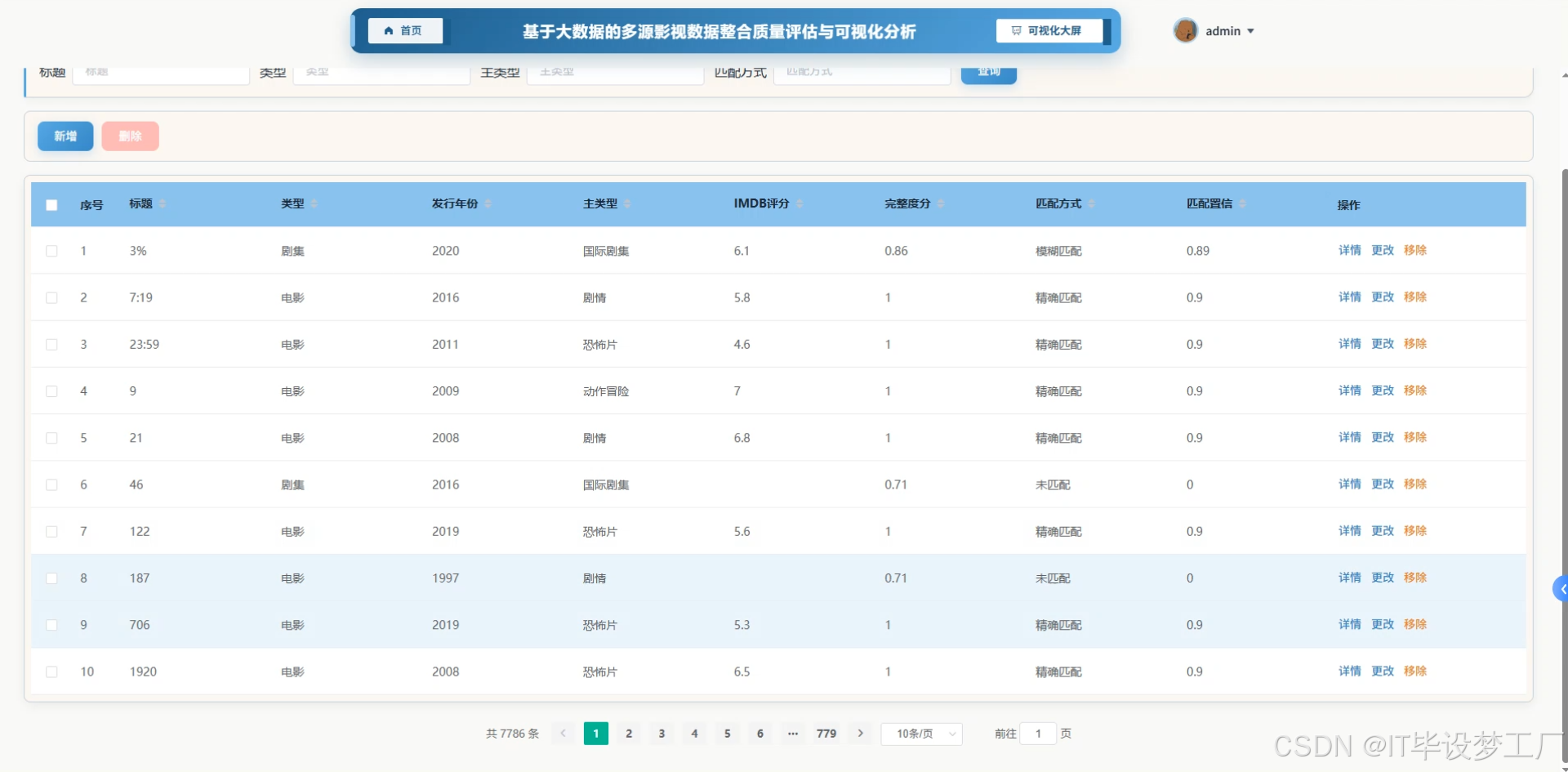
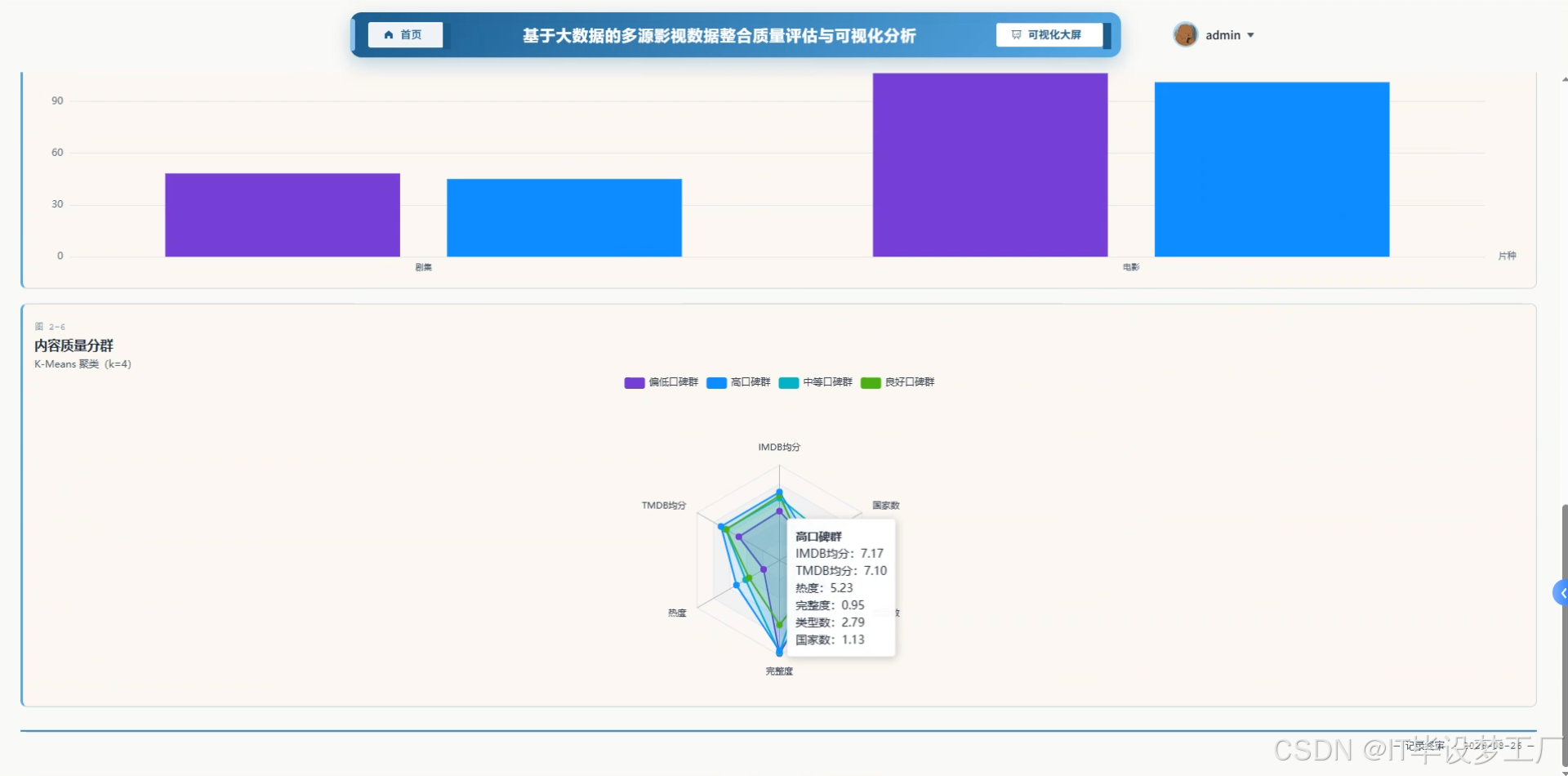
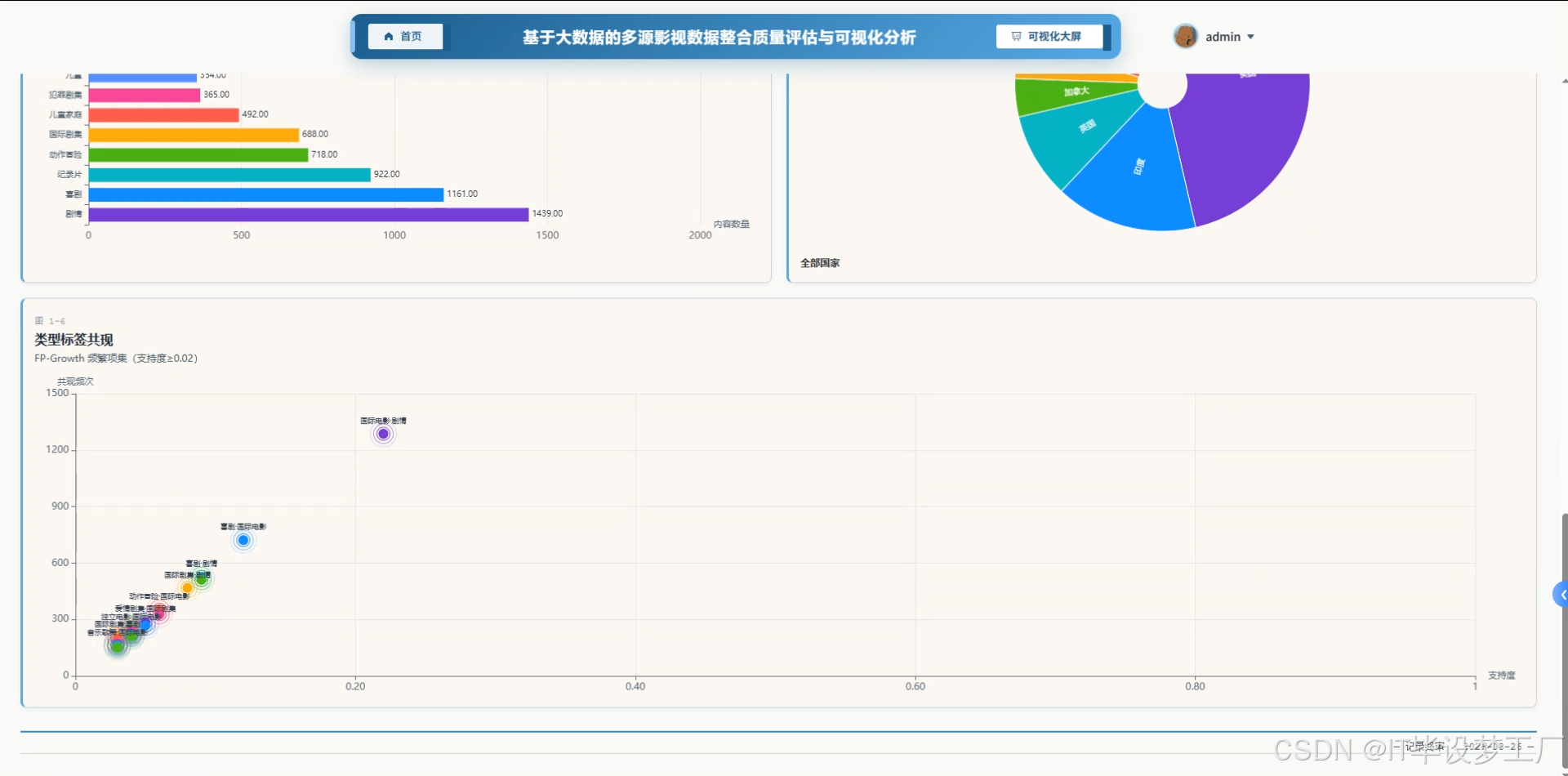
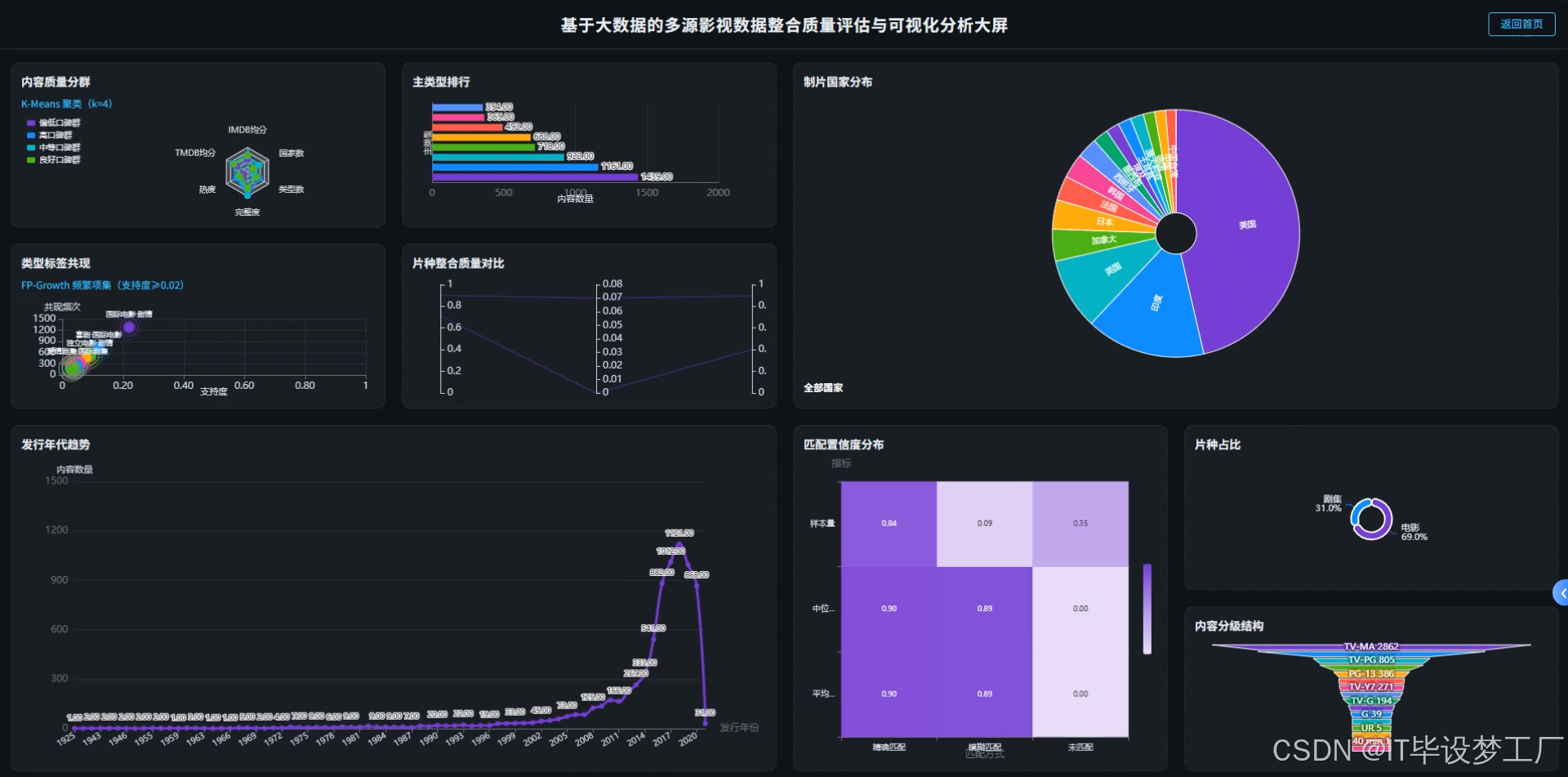
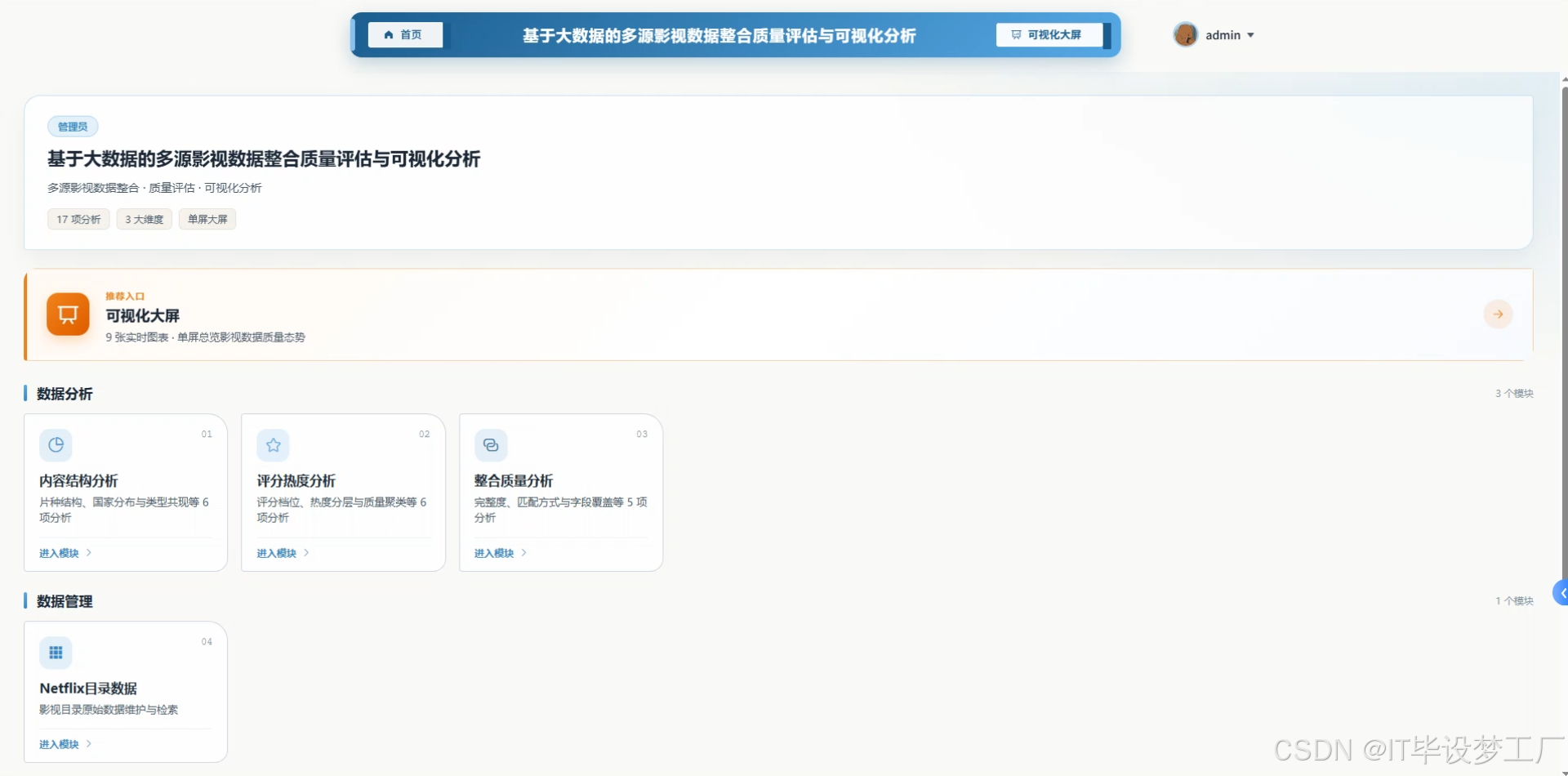
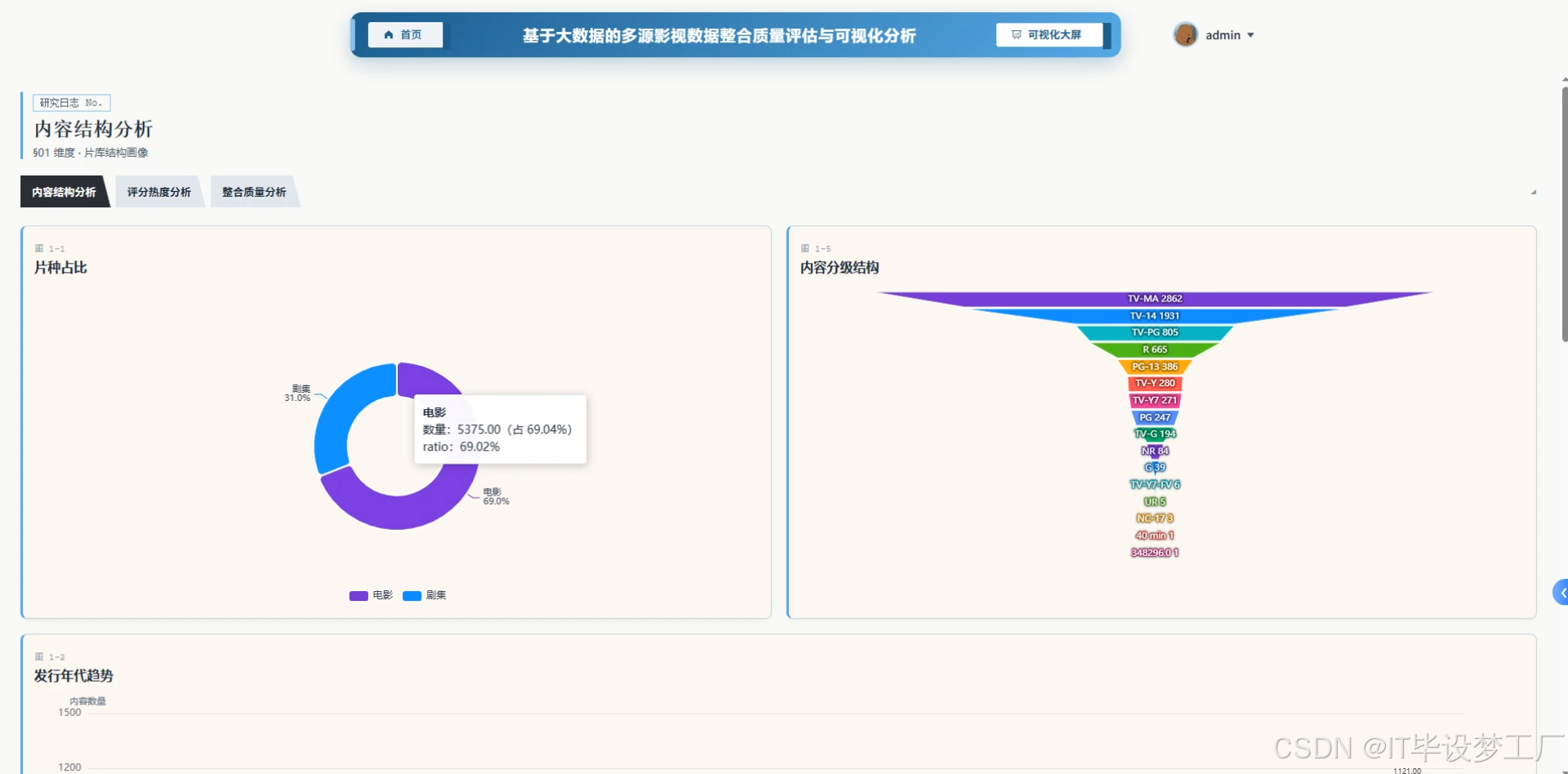
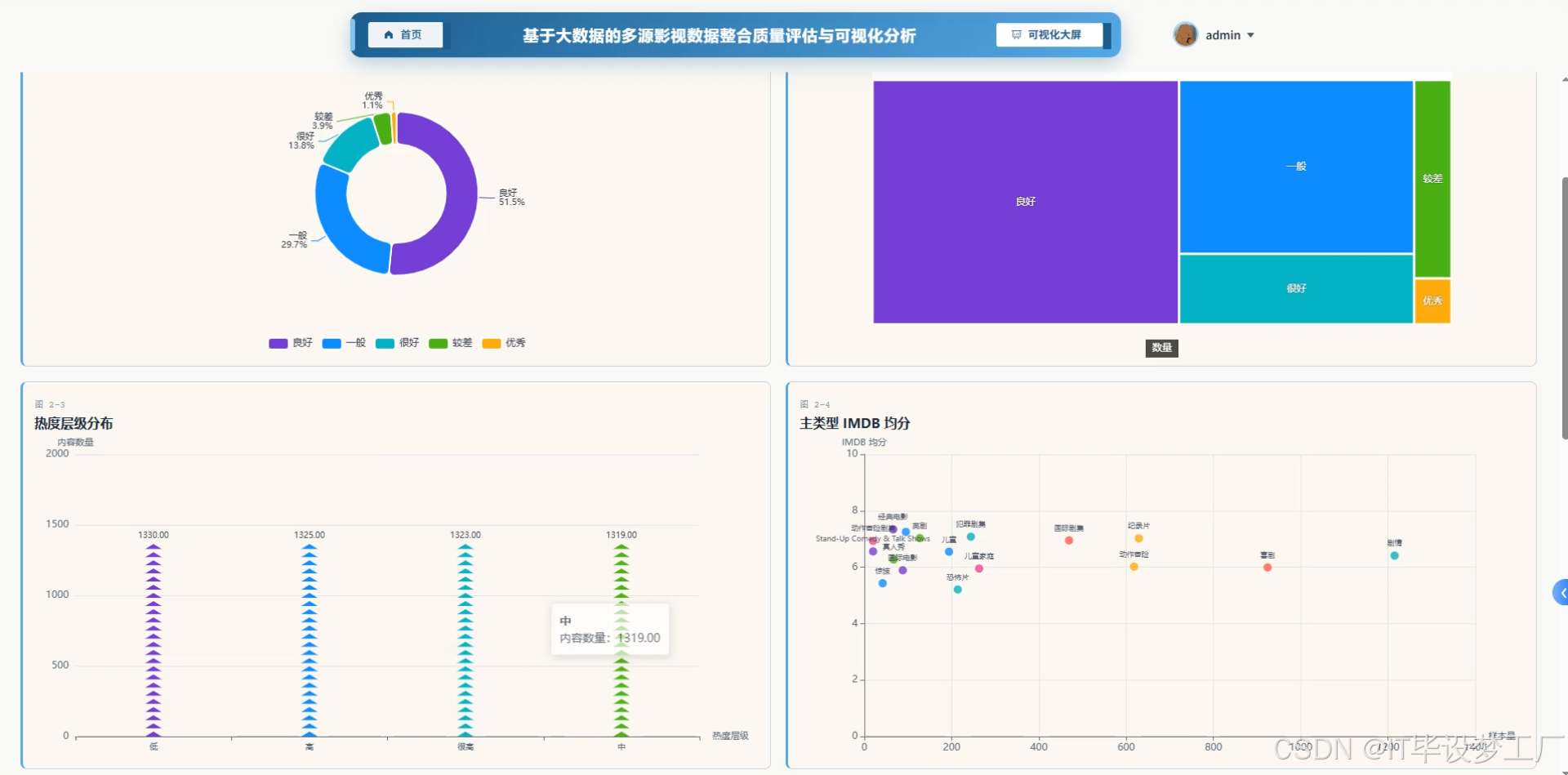
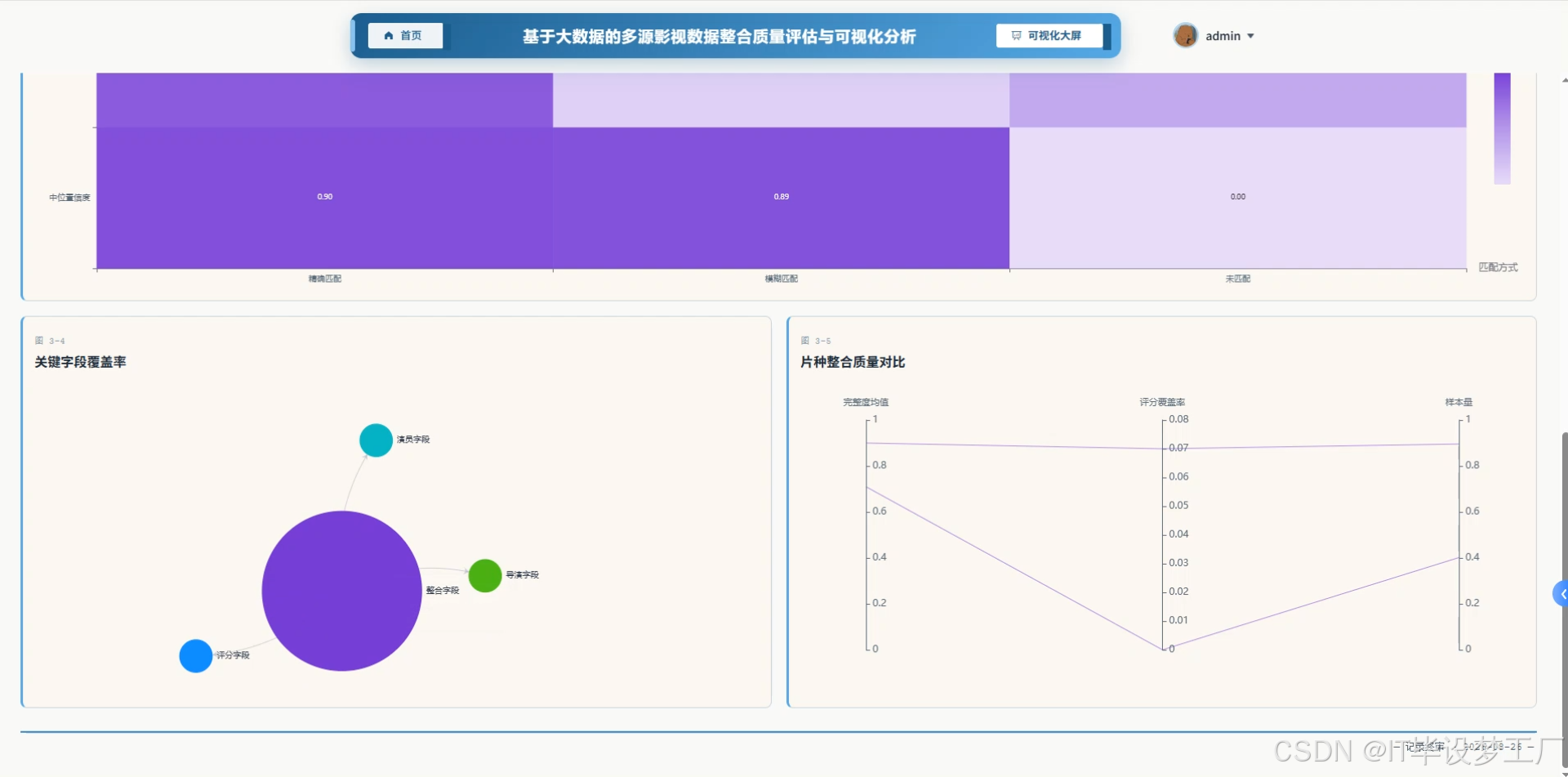
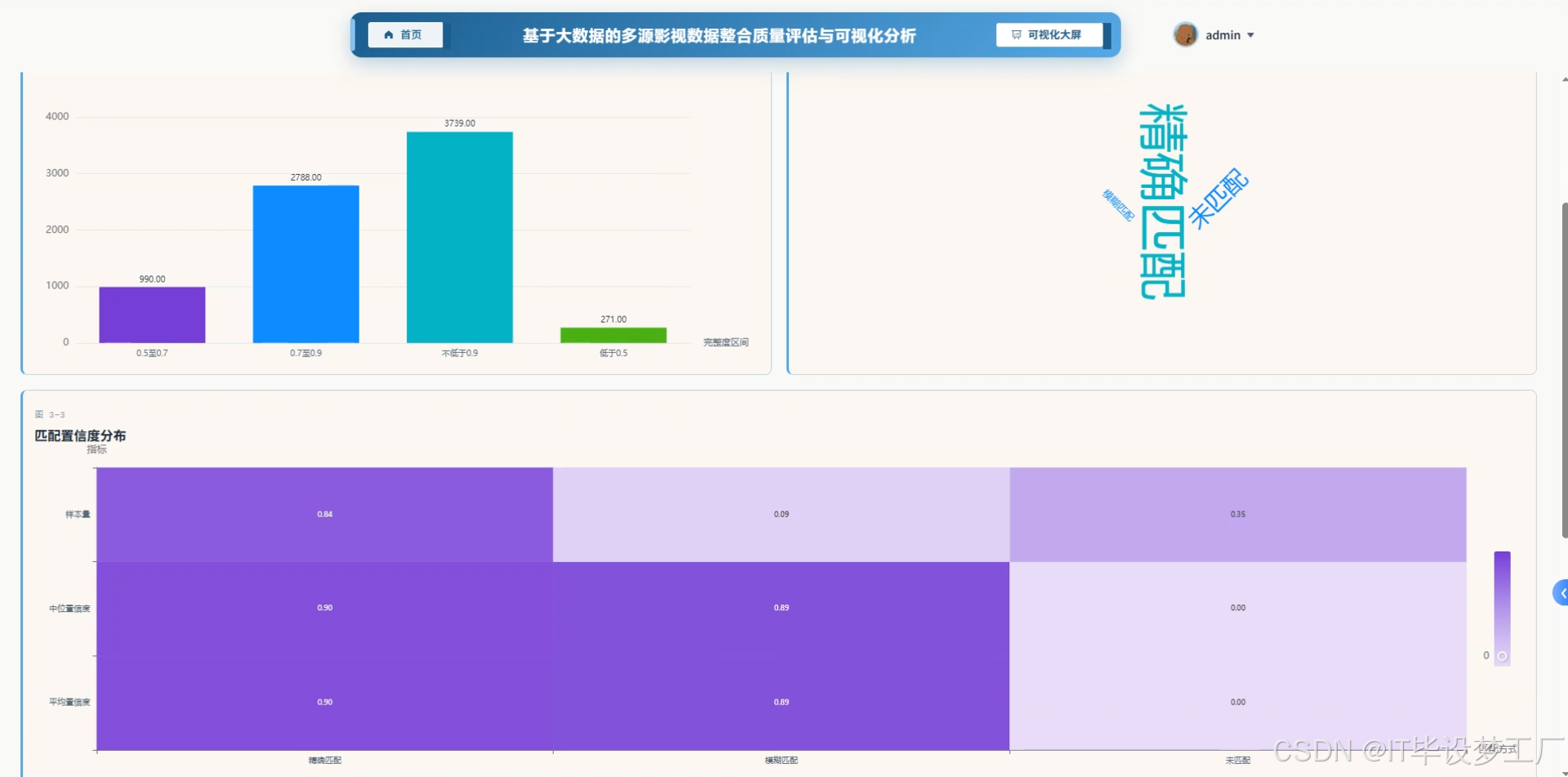
《基于大数据的多源影视数据整合质量评估与可视化分析》系统是一套面向毕业设计场景、聚焦影视多源数据治理与质量评估的实战型大数据应用平台。系统核心定位在于解决当前影视数据来源广泛(如Netflix目录、第三方影视API、公开影评站点等)但数据标准不一、字段缺失、重复冗余、评分粒度差异大等整合难题,通过引入Hadoop分布式存储架构与Spark内存计算引擎,对多源采集的影视原始数据进行统一的ETL清洗、字段对齐、空值填补与冲突消解,并在此基础上构建多维度数据质量评估指标体系,涵盖完整性、一致性、准确性、时效性与唯一性五个核心质量维度。系统前端采用Vue框架结合ECharts可视化组件库,将质量评估结果以动态大屏形式呈现,支持按内容结构(类型、地区、发行年份)、评分热度(平均分、评分分布、评论量级)、整合质量(各维度综合评分与异常预警)进行交互式下钻分析。技术选型上,后端同时提供Python+Django与Java+Spring Boot双版本支持,数据持久化层采用MySQL存储清洗后的结构化影视元数据及质量评估结果,大数据处理部分以Spark SQL为核心实现数据聚合、窗口函数计算与多源JOIN合并,HDFS负责原始JSON/CSV文件的分布式存储与回溯读取。系统功能模块包括系统首页、可视化大屏、内容结构分析、评分热度分析、整合质量分析、Netflix目录数据管理、个人信息与密码修改,整个流程覆盖从多源数据接入、整合清洗、质量评分到可视化输出的完整闭环,旨在帮助计算机专业学生快速理解大数据技术在影视数据治理场景下的实际落地方式,降低毕设重复造轮子的门槛。
二、开发环境
- 开发语言:Python
- 数据库:MySQL
- 系统架构:Hadoop+Spark
- 后端:Django
- 前端:Vue
三、系统界面展示
- 多源影视数据整合质量评估与可视化分析系统界面展示:
四、部分代码设计
- 项目实战-代码参考:
// 以下代码基于Java + Spring Boot + Spark,展示三个核心功能的业务处理逻辑
SparkSession spark = SparkSession.builder().appName("MultiSourceFilmQualityEvaluation").master("local[*]").config("spark.sql.adaptive.enabled", "true").getOrCreate();
// ========== 功能一:整合质量分析 - 计算多源数据完整性、一致性、准确性、时效性、唯一性五维评分 ==========
public Map<String, Double> calculateIntegrationQuality(String netflixPath, String imdbPath, String doubanPath) {
    Dataset<Row> netflixDf = spark.read().option("header", "true").option("inferSchema", "true").csv(netflixPath);
    Dataset<Row> imdbDf = spark.read().option("header", "true").option("inferSchema", "true").csv(imdbPath);
    Dataset<Row> doubanDf = spark.read().option("header", "true").option("inferSchema", "true").csv(doubanPath);
    long netflixCount = netflixDf.count(), imdbCount = imdbDf.count(), doubanCount = doubanDf.count();
    long netflixNonNullTitle = netflixDf.filter(netflixDf.col("title").isNotNull()).count();
    long imdbNonNullTitle = imdbDf.filter(imdbDf.col("title").isNotNull()).count();
    long doubanNonNullTitle = doubanDf.filter(doubanDf.col("title").isNotNull()).count();
    double completenessScore = (double)(netflixNonNullTitle + imdbNonNullTitle + doubanNonNullTitle) / (netflixCount + imdbCount + doubanCount) * 100;
    Dataset<Row> unionDf = netflixDf.select("title", "year", "rating").union(imdbDf.select("title", "year", "rating")).union(doubanDf.select("title", "year", "rating"));
    long totalRows = unionDf.count();
    long distinctRows = unionDf.distinct().count();
    double uniquenessScore = (double)distinctRows / totalRows * 100;
    long yearConsistentCount = unionDf.groupBy("title").agg(collect_set("year").as("years")).filter(size(col("years")).equalTo(1)).count();
    double consistencyScore = (double)yearConsistentCount / unionDf.select("title").distinct().count() * 100;
    Dataset<Row> ratingValid = unionDf.filter(col("rating").cast("double").isNotNull().and(col("rating").cast("double").between(0, 10)));
    double accuracyScore = (double)ratingValid.count() / unionDf.count() * 100;
    long recentCount = unionDf.filter(year(col("year")).geq(2000)).count();
    double timelinessScore = (double)recentCount / unionDf.count() * 100;
    Map<String, Double> result = new HashMap<>();
    result.put("completeness", completenessScore);
    result.put("uniqueness", uniquenessScore);
    result.put("consistency", consistencyScore);
    result.put("accuracy", accuracyScore);
    result.put("timeliness", timelinessScore);
    return result;
}
// ========== 功能二:评分热度分析 - 按电影类型聚合平均分、评分分布、评论量级 ==========
public Map<String, Object> analyzeRatingAndHeat(String netflixPath) {
    Dataset<Row> df = spark.read().option("header", "true").option("inferSchema", "true").csv(netflixPath);
    Dataset<Row> typeExploded = df.withColumn("genre", explode(split(col("listed_in"), ","))).filter(col("genre").isNotNull());
    Dataset<Row> typeStats = typeExploded.groupBy("genre").agg(avg("rating").as("avg_rating"), count("rating").as("rating_count"), max("rating").as("max_rating"), min("rating").as("min_rating"));
    Dataset<Row> ratingDistribution = df.groupBy("rating").count().orderBy("rating");
    List<Row> distRows = ratingDistribution.collectAsList();
    List<Map<String, Object>> distList = new ArrayList<>();
    for (Row row : distRows) { Map<String, Object> item = new HashMap<>(); item.put("rating", row.get(0)); item.put("count", row.getLong(1)); distList.add(item); }
    List<Row> typeRows = typeStats.collectAsList();
    List<Map<String, Object>> typeList = new ArrayList<>();
    for (Row row : typeRows) { Map<String, Object> item = new HashMap<>(); item.put("genre", row.getString(0)); item.put("avg", row.getDouble(1)); item.put("total", row.getLong(2)); typeList.add(item); }
    long highHeatCount = df.filter(col("rating").cast("double").gt(8.0)).count();
    long lowHeatCount = df.filter(col("rating").cast("double").lt(5.0)).count();
    Map<String, Object> heatMap = new HashMap<>();
    heatMap.put("highHeatCount", highHeatCount);
    heatMap.put("lowHeatCount", lowHeatCount);
    heatMap.put("totalCount", df.count());
    Map<String, Object> result = new HashMap<>();
    result.put("typeStats", typeList);
    result.put("distribution", distList);
    result.put("heatOverview", heatMap);
    return result;
}
// ========== 功能三:内容结构分析 - 按发行年份、地区、类型统计影视内容构成 ==========
public Map<String, Object> analyzeContentStructure(String netflixPath) {
    Dataset<Row> df = spark.read().option("header", "true").option("inferSchema", "true").csv(netflixPath);
    Dataset<Row> yearCount = df.groupBy("release_year").count().orderBy(col("release_year").desc());
    Dataset<Row> countryExploded = df.withColumn("country_single", explode(split(col("country"), ","))).filter(col("country_single").isNotNull());
    Dataset<Row> countryCount = countryExploded.groupBy("country_single").count().orderBy(col("count").desc()).limit(20);
    Dataset<Row> typeExploded = df.withColumn("genre_item", explode(split(col("listed_in"), ","))).filter(col("genre_item").isNotNull());
    Dataset<Row> genreCount = typeExploded.groupBy("genre_item").count().orderBy(col("count").desc()).limit(15);
    Dataset<Row> typeYearCross = typeExploded.groupBy("genre_item", "release_year").count().orderBy(col("genre_item"), col("release_year").desc());
    List<Row> yearRows = yearCount.collectAsList();
    List<Map<String, Object>> yearList = new ArrayList<>();
    for (Row row : yearRows) { Map<String, Object> m = new HashMap<>(); m.put("year", row.getInt(0)); m.put("count", row.getLong(1)); yearList.add(m); }
    List<Row> countryRows = countryCount.collectAsList();
    List<Map<String, Object>> countryList = new ArrayList<>();
    for (Row row : countryRows) { Map<String, Object> m = new HashMap<>(); m.put("country", row.getString(0)); m.put("count", row.getLong(1)); countryList.add(m); }
    List<Row> genreRows = genreCount.collectAsList();
    List<Map<String, Object>> genreList = new ArrayList<>();
    for (Row row : genreRows) { Map<String, Object> m = new HashMap<>(); m.put("genre", row.getString(0)); m.put("count", row.getLong(1)); genreList.add(m); }
    Map<String, Object> result = new HashMap<>();
    result.put("yearDistribution", yearList);
    result.put("countryDistribution", countryList);
    result.put("genreDistribution", genreList);
    return result;
}
五、论文参考
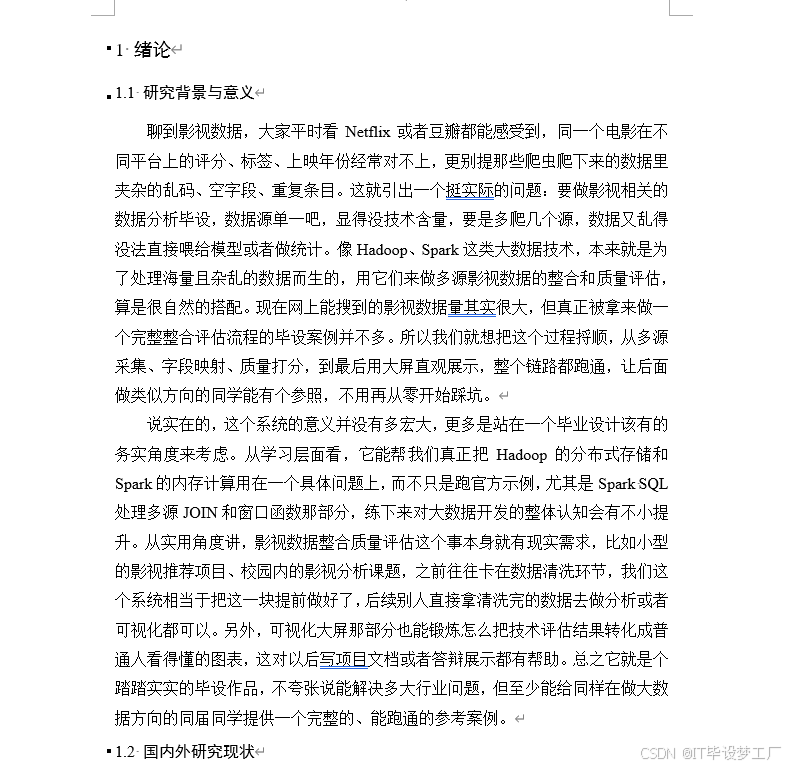
- 计算机毕业设计选题推荐-多源影视数据整合质量评估与可视化分析系统-论文参考:
六、系统视频
- 多源影视数据整合质量评估与可视化分析系统-项目视频:
结语
大家可以帮忙点赞、收藏、关注、评论啦~
源码获取:⬇⬇⬇


 扫一扫
扫一扫


 876
876

 被折叠的 条评论
为什么被折叠?
被折叠的 条评论
为什么被折叠?
 到【灌水乐园】发言


