
Buy New
$23.37$23.37
FREE delivery October 11 - 13 on orders shipped by Amazon over $35
Ships from: Amazon Sold by: 7- SEVEN PRIME
Used - Very Good
$10.51$10.51
FREE delivery October 1 - 5
Ships from: YesBook2040 Sold by: YesBook2040
Download the free Kindle app and start reading Kindle books instantly on your smartphone, tablet, or computer - no Kindle device required.
Read instantly on your browser with Kindle for Web.
Using your mobile phone camera - scan the code below and download the Kindle app.

Follow the author
OK
A Canticle for Leibowitz
Purchase options and add-ons
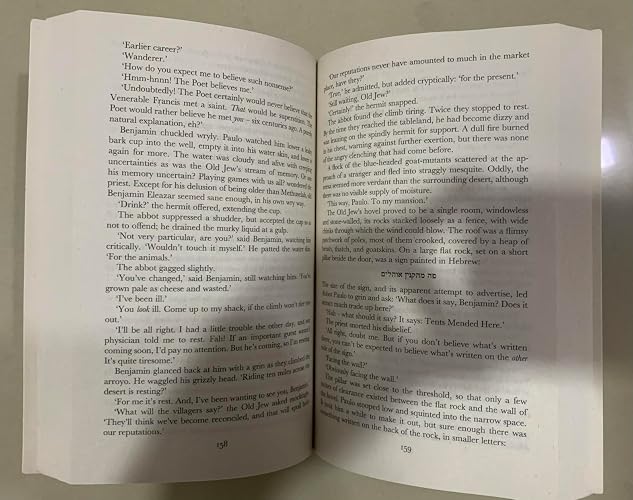
Winner of the 1961 Hugo Award for Best Novel and widely considered one of the most accomplished, powerful, and enduring classics of modern speculative fiction, Walter M. Miller, Jr.'s A Canticle for Leibowitz is a true landmark of twentieth-century literature -- a chilling and still-provocative look at a post-apocalyptic future.
In a nightmarish ruined world slowly awakening to the light after sleeping in darkness, the infant rediscoveries of science are secretly nourished by cloistered monks dedicated to the study and preservation of the relics and writings of the blessed Saint Isaac Leibowitz. From here the story spans centuries of ignorance, violence, and barbarism, viewing through a sharp, satirical eye the relentless progression of a human race damned by its inherent humanness to recelebrate its grand foibles and repeat its grievous mistakes. Seriously funny, stunning, and tragic, eternally fresh, imaginative, and altogether remarkable, A Canticle for Leibowitz retains its ability to enthrall and amaze. It is now, as it always has been, a masterpiece.
- Print length334 pages
- LanguageEnglish
- Publication dateMay 9, 2006
- Dimensions8 x 5.3 x 0.85 inches
- ISBN-100060892994
- ISBN-13978-0060892999
Book recommendations, author interviews, editors' picks, and more. Read it now.
Frequently bought together
Customers who viewed this item also viewed
- (A CANTICLE FOR LEIBOWITZ ) By Miller, Walter M. (Author) Paperback Published on (05, 2006)PaperbackFREE Shipping on orders over $35 shipped by AmazonGet it as soon as Friday, Oct 2Only 1 left in stock - order soon.
- Shadow & Claw (The Book of the New Sun, 1)PaperbackFREE Shipping on orders over $35 shipped by AmazonGet it as soon as Friday, Oct 2
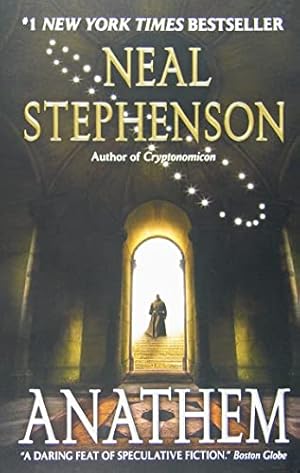
- Anathem: The #1 New York Times Bestselling Epic Novel of Ideas about Philosophers, Scientists, and a Crisis of Astronomical ProportionsPaperbackFREE Shipping on orders over $35 shipped by AmazonGet it as soon as Friday, Oct 2Only 6 left in stock (more on the way).
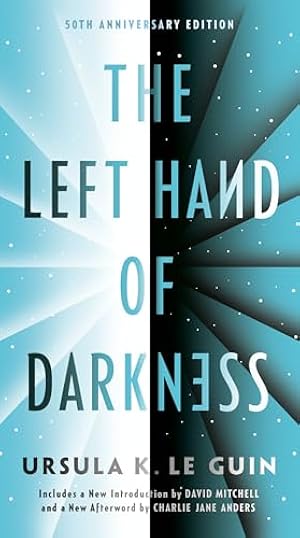
- The Left Hand of Darkness: 50th Anniversary Edition (Ace Science Fiction)PaperbackFREE Shipping on orders over $35 shipped by AmazonGet it as soon as Friday, Oct 2
- The Forever WarPaperbackFREE Shipping on orders over $35 shipped by AmazonOnly 1 left in stock - order soon.

Customers also bought or read
- The Left Hand of Darkness: 50th Anniversary Edition
Mass Market Paperback$9.99$9.99Delivery Fri, Oct 2 - Earth Abides: The Influential Science Fiction Classic of Pandemic, Survival, and Humanity's Rebirth
Paperback$11.29$11.29Delivery Fri, Oct 2 - Alas, Babylon: The Classic Apocalyptic Novel of Courage, Survival, and Determination After Nuclear Holocaust
Paperback$9.12$9.12Delivery Oct 6 - 9 - (A CANTICLE FOR LEIBOWITZ ) By Miller, Walter M. (Author) Paperback Published on (05, 2006)
Paperback$22.22$22.22Delivery Fri, Oct 2 - Do Androids Dream of Electric Sheep?: The inspiration for the films Blade Runner and Blade Runner 2049
Paperback$9.91$9.91Delivery Fri, Oct 2 - The Dispossessed [50th Anniversary Edition]: A Special Edition of the Nebula Award–Winning Classic
Paperback$11.65$11.65Delivery Fri, Oct 2 - The Name of the Rose: The Beloved Internationally Bestselling Medieval Historical Mystery Featuring Never-Before-Seen Sketches from the Author
Paperback$13.43$13.43Delivery Fri, Oct 2
Editorial Reviews
Review
“Extraodinary . . . chillingly effective.” - Time magazine
“An extroadinary novel . . . prodigiously imaginative, richly comic, terrifyingly grim, profound both intellectually and morally, and, above all, is simply such a memorable story as to stay with the reader for years.” - Chicago Tribune
“A post-nuclear holocaust science-fiction masterpiece.” - Seattle Times
“Considered the best work about the postwar world.” - Los Angeles Times
From the Back Cover
Winner of the 1961 Hugo Award for Best Novel and widely considered one of the most accomplished, powerful, and enduring classics of modern speculative fiction, Walter M. Miller, Jr.'s A Canticle for Leibowitz is a true landmark of twentieth-century literature -- a chilling and still-provocative look at a post-apocalyptic future.
In a nightmarish ruined world slowly awakening to the light after sleeping in darkness, the infant rediscoveries of science are secretly nourished by cloistered monks dedicated to the study and preservation of the relics and writings of the blessed Saint Isaac Leibowitz. From here the story spans centuries of ignorance, violence, and barbarism, viewing through a sharp, satirical eye the relentless progression of a human race damned by its inherent humanness to recelebrate its grand foibles and repeat its grievous mistakes. Seriously funny, stunning, and tragic, eternally fresh, imaginative, and altogether remarkable, A Canticle for Leibowitz retains its ability to enthrall and amaze. It is now, as it always has been, a masterpiece.
Excerpt. © Reprinted by permission. All rights reserved.
A Canticle for Leibowitz
By Walter M. MillerHarperCollins Publishers, Inc.
Copyright ©2006 Walter M. MillerAll right reserved.
ISBN: 0060892994
Chapter One
Brother Francis Gerard of Utah might never have discovered the blessed documents, had it not been for the pilgrim with girded loins who appeared during that young novice's Lenten fast in the desert.
Never before had Brother Francis actually seen a pilgrim with girded loins, but that this one was the bona fide article he was convinced as soon as he had recovered from the spine-chilling effect of the pilgrim's advent on the far horizon, as a wiggling iota of black caught in a shimmering haze of heat. Legless, but wearing a tiny head, the iota materialized out of the mirror glaze on the broken roadway and seemed more to writhe than to walk into view, causing Brother Francis to clutch the crucifix of his rosary and mutter an Ave or two. The iota suggested a tiny apparition spawned by the heat demons who tortured the land at high noon, when any creature capable of motion on the desert (except the buzzards and a few monastic hermits such as Francis) lay motionless in its burrow or hid beneath a rock from the ferocity of the sun. Only a thing monstrous, a thing preternatural, or a thing with addled wits would hike purposefully down the trail at noon this way.
Brother Francis added a hasty prayer to Saint Raul the Cyclopean, patron of the misborn, for protection against the Saint's unhappy protégés. (For who did not then know that there were monsters in the earth in those days? That which was born alive was, by the law of the Church and the law of Nature, suffered to live, and helped to maturity if possible, by those who had begotten it. The law was not always obeyed, but it was obeyed with sufficient frequency to sustaina scattered population of adult monsters, who often chose the remotest of deserted lands for their wanderings, where they prowled by night around the fires of prairie travelers.) But at last the iota squirmed its way out of the heat risers and into clear air, where it manifestly became a distant pilgrim; Brother Francis released the crucifix with a small Amen.
The pilgrim was a spindly old fellow with a staff, a basket hat, a brushy beard, and a waterskin slung over one shoulder. He was chewing and spitting with too much relish to be an apparition, and he seemed too frail and lame to be a successful practitioner of ogreism or highwaymanship. Nevertheless, Francis slunk quietly out of the pilgrim's line of sight and crouched behind a heap of rubbled stone where he could watch without being seen. Encounters between strangers in the desert, while rare, were occasions of mutual suspicion, and marked by initial preparations on both sides for an incident that might prove either cordial or warlike.
Seldom more than thrice annually did any layman or stranger travel the old road that passed the abbey, in spite of the oasis which permitted that abbey's existence and which would have made the monastery a natural inn for wayfarers if the road were not a road from nowhere, leading nowhere, in terms of the modes of travel in those times. Perhaps, in earlier ages, the road had been a portion of the shortest route from the Great Salt Lake to Old El Paso; south of the abbey it intersected a similar strip of broken stone that stretched east- and westward. The crossing was worn by time, but not by Man, of late.
The pilgrim approached within hailing distance, but the novice stayed behind his mound of rubble. The pilgrim's loins were truly girded with a piece of dirty burlap, his only clothing except for hat and sandals. Doggedly he plodded ahead with a mechanical limp while assisting his crippled leg with the heavy staff. His rhythmic gait was that of a man with a long road behind him and a long way yet to go. But, upon entering the area of the ancient ruins, he broke his stride and paused to reconnoiter.
Francis ducked low.
There was no shade amid the cluster of mounds where a group of age-old buildings once had been, but some of the larger stones could, nevertheless, provide cooling refreshment to select portions of the anatomy for travelers as wise in the way of the desert as the pilgrim soon proved himself to be. He searched briefly for a rock of suitable proportions. Approvingly, Brother Francis noted that he did not grasp the stone and rashly tug, but instead, stood at a safe distance from it and, using his staff as a lever and a smaller rock for a fulcrum, he jostled the weightier one until the inevitable buzzing creature crawled forth from below. Dispassionately the traveler killed the snake with his staff and flipped the still-wriggling carcass aside. Having dispatched the occupant of the cool cranny beneath the stone, the pilgrim availed himself of the cool cranny's ceiling by the usual method of overturning the stone. Thereupon, he pulled up the back of his loincloth, sat with his withered buttocks against the stone's relatively chilly underside, kicked off his sandals, and pressed the soles of his feet against what had been the sandy floor of the cool cranny. Thus refreshed, he wiggled his toes, smiled toothlessly and began to hum a tune. Soon he was singing a kind of crooning chant in a dialect not known to the novice. Weary of crouching, Brother Francis shifted restlessly.
While he sang, the pilgrim unwrapped a biscuit and a bit of cheese. Then his singing paused, and he stood for a moment to cry out softly in the vernacular of the region: "Blest be Adonoi Elohim, King of All, who maketh bread to spring forth from the earth," in a sort of nasal bleat. The bleat being finished, he sat again, and commenced eating.
The wanderer had come a long way indeed, thought Brother Francis, who knew of no adjacent realm governed by a monarch with such an unfamiliar name and such strange pretensions. . . .
Continues...
Excerpted from A Canticle for Leibowitzby Walter M. Miller Copyright ©2006 by Walter M. Miller. Excerpted by permission.
All rights reserved. No part of this excerpt may be reproduced or reprinted without permission in writing from the publisher.
Excerpts are provided by Dial-A-Book Inc. solely for the personal use of visitors to this web site.
Product details
- Publisher : EOS
- Publication date : May 9, 2006
- Edition : Reprint
- Language : English
- Print length : 334 pages
- ISBN-10 : 0060892994
- ISBN-13 : 978-0060892999
- Item Weight : 2.31 pounds
- Dimensions : 8 x 5.3 x 0.85 inches
- Best Sellers Rank: #469,861 in Books (See Top 100 in Books)
- #68 in Post-Apocalyptic Science Fiction (Books)
- #69 in Dystopian Fiction (Books)
- #108 in Hard Science Fiction (Books)
- Customer Reviews:
About the author

Discover more of the author’s books, see similar authors, read book recommendations and more.
Customer reviews
Customer Reviews, including Product Star Ratings help customers to learn more about the product and decide whether it is the right product for them.
To calculate the overall star rating and percentage breakdown by star, we don’t use a simple average. Instead, our system considers things like how recent a review is and if the reviewer bought the item on Amazon. It also analyzed reviews to verify trustworthiness.
Learn more how customers reviews work on AmazonReviews with images
Holding the Apolstolic Chuch in the brink of apocalypse
Top reviews from the United States
- 5 out of 5 stars
Catholic Science Fiction with Room to Question
Reviewed in the United States on August 24, 2020Human civilizations rise and fall over millenia like birth-deaths in some radioactive imitation of reincarnation. Faith in God, preserved by the Catholic Church, is the surviving thread that keeps people going. Such is the premise of A Canticle for Leibowitz.
A STORY OF CYCLIC FALLS
The story, first published in 1959, opens in our near-future (relative to 1959—around 1980 or so), and covers a stretch of about eighteen hundred years. It is written in three acts, each entitled in Latin. In fact, there is a lot of Latin used in this book, along with Catholic conventions and ideas. The author, Walter M. Miller Jr., was a convert to Catholicism after serving in World War II. Knowing Latin or Catholicism, however, is not necessary to understanding the story, though either would probably help.
The first act is set in the Utah desert in a roughly medieval-level world. Brother Francis, a monk of the Leibowitz Abbey, is fasting in solitude for Lent in a rocky outcropping close to the abbey. Enough tropes from post-apocalyptic science fiction are spread around to orient the reader as to time and place. These include familiar place names used with unfamiliar connotations (Brother Francis of Utah), roads of “broken stone,” deformed human wanderers, references to the nuclear apocalypse (”Flame Deluge”), and terms common to us but mystifying to the characters (”fallout shelter” as a place to hide from the fallout creatures).
The book’s driving plot device is launched when Brother Francis discovers an old fallout shelter containing artifacts relevant to the life of his abbey’s patron saint candidate, Leibowitz. It seems I. E. Leibowitz was an electrical engineer who converted from science to the Catholic faith. This science/faith duality is a major theme of the book.
Most of the first act is Brother Francis coming to terms with the artifacts he has found (which include a blueprint drawn by Leibowitz) and how they affect his vocation, relations with his abbot, the Vatican (in New Rome, North America), and the prospective sainthood of Leibowitz.
The second act is set a few centuries later, in 3174 CE, still around the locale of the Leibowitz Abbey in Utah. Technology has not advanced much, but the abbey has become the keeper of ancient knowledge with a vast basement library. Its holdings, especially regarding Leibowitz, is known as “the Memorabilia.”
The plot in the second act centers around the work of a visiting scholar, Thon Taddeo. He wants to review the Memorabilia as part of the studies he is doing for New Rome. His work in the dark basement library is facilitated by an arc-lamp built by Brother Kornhoer and powered by several monks pushing a wheel. The light works well, as long as the powering monks can hold out. The science/faith theme comes heavily into play, with an initial tolerance by the adherents of both sides (monks vs scholars). That tolerance breaks down towards the end, however, curiously mediated by the neutral character of the Poet.
The third act takes us to the year 3781 CE, when civilization has recovered beyond the technological height it had reached before its previous fall. Now, interstellar space travel is possible.
The action still centers around Leibowitz Abbey in Utah, which is now a modern building adjoining the historic one. Humanity has rediscovered nuclear power. When war threatens, the Vatican launches its plan to preserve Catholicism among the human colonies in space. The current Leibowitz Abbey abbot, Dom Jethrah Zerchi, contributes to the working of that plan from his abbey. He must also contend with refugees fleeing a nuclear blast, complicated by the local medical authorities advocating euthanasia for those terminally irradiated.
As nuclear war escalates, the book draws to a very metaphysically symbolic end.
INTELLECT VS FAITH THEME IN EPIC SCOPE
A Canticle for Leibowitz is epic in its scope, connecting characters and themes across millenia. One thread is that of the character, Lazarus, aka: the pilgrim, Benjamin, Old Lazar, and The Old Jew of the Mountains. His life is longer than the span of the story and offers hope for humanity, or disappointment, depending upon how you view his “search.”
Also, the death of every major character is presented, both violent and natural. This depicts, I think, the brevity of human life within the cycles of civilizations. While the book is full of characters of faith and obedience to God’s Law, there is no assurance of life beyond death. Only the Lazarus character asserts an immortality of sorts. Even then, the emphasis is on long physical life.
This immortality question melds with the science vs faith theme. Lazarus keeps looking for Jesus, but can’t find him. Dom Zerchi braves death with faith, but wavers when his end is certain. Scholars, worshiping science, have to admit their moral bankruptcy when they endorse tyranny for the sake of underwriting their love of tech.
As the years progress in a given civilization cycle, it seems the gap between science (intellect) and faith widens. Which side wins? I think Mr. Miller comes down on the side of faith, though with reservations. See if you agree.
WELL-HANDLED TROPES FROM 1950S PERSPECTIVE
Though long in text and literary scope, A Canticle for Leibowitz is easy to read in spite of all the Latin. There is enough action, suspense, and engaging characters to keep readers engrossed. Those characters are mostly sympathetic, with conflicts coming from differing agendas and opinions rather than just good vs evil. This promotes some thoughtful themes and ideas that linger, possibly even leading to insight.
I liked Mr. Miller’s working of post-apocalypse tropes. Though written from a 1950’s viewpoint, the novel reads pretty much like a current one. The projection of tech is evidently old, however, such as the absence of personal computers and the “power switch” nature of the tech described in the last act. I found this quaint and not a problem.
EXPRESSIONS OF FAITH IN THE FACE OF NONE
A Canticle for Leibowitz reminds me a lot of Neil Shute’s On the Beach in its condemnation of nuclear war’s potential for human extermination. Both novels offer a kind of triumph of the human spirit, though Mr. Shute’s is a spiritual triumph rather than physical. Mr. Miller avers the physical survival of humanity but offers some doubt about a spiritual triumph. He suggests the possibility of delusion.
I much liked A Canticle for Leibowitz and agree that it is a classic of its genre (post-apocalyptic science fiction). Its expressions of faith within harsh environments and hopeless situations make it a story likely to resurface in readers’ minds for a long time. As a consideration of the apocalyptic nature of human technical progress, it offers insight, if not hope, for our time.
67 people found this helpfulSending feedback...Sending feedback...HelpfulThank you for your feedback.Sorry, we failed to record your vote. Please try againThanks, we'll investigate in the next few days.Sorry, We failed to report this review. Please try againWe'll check if this review meets our community guidelinesOpens in a new tab. If it doesn't, we'll remove it.
CancelReport - 4 out of 5 stars
A great read from back in the day!
Reviewed in the United States on February 11, 2026Hey there, book lovers! It’s your old pal, Ninetoes, coming to you from Ninetoes Loves Books Headquarters. Today, I am looking at Walter M. Miller Jr’s A Canticle for Leibowitz. I have coffee in my system and my thinking cap on, so let’s get to it!
In the spirit of transparency, this is my second read of this book. I first read it when I found it at a flea market in 1980. The man I bought it from sang its praises, so I plunked down fifty cents and buckled up for the weekend. I thought I was prepared for this book. I was not…and that is a good thing!
The first thing to note about this book is that it is a Post-Apocalyptic novel. It is set around a Catholic monastery in the desert southwest and spans thousands of years. The monastery is the Albertinian Order of Leibowitz, and they are tasked with preserving the knowledge of past scientific knowledge until mankind is ready to use it again.
It is comprised of three previously published short stories in The Magazine of Fantasy and Science Fiction. The stories are: Fiat Homo (Let There Be Man), Fiat Lux (Let There Be Light), and Fiat Voluntas Tua (Thy Will Be Done). It won the 1961 Hugo Award for best science fiction novel.
Now, I have to be honest, this book is a bit of a slog to get through. Some moments felt smooth, and others felt like I was moving through molasses. If you are looking for a book that gives the feel of the FALLOUT gaming franchise, this is not the book for you. Yes, there are roving bands of thieves and ne’er-do-wells, but as far as action, action, action is concerned, it lacks. Let’s face it, the book is set in a monastery. You will get a lot of religion, words in Latin, and church politics. For me, that was all well and good, and did not really take away from the overall enjoyment of the book, but for others, it might be considered a drag. What I really enjoyed was that it brought me back to the fifteen-year-old kid who read it for the first time.
This was one of the first post-apocalyptic books I have read. Back then, it held a magical trance over me. A lot of the reason is because of the church politics in an age where the world has to be rebuilt. An engineer with the last name of Leibowitz is on the threshold of being named a saint by New Rome, and a member of the order finds some of the saints’ documents, including a blueprint, in a basement. This is where everything starts, and if nothing else, it expanded my imagination. That was then. Now, it was good for a refresh of the memory, but it did not hold the punch it had back then.
This one is perfect for fans of post-apocalypse stories, church politics, tales of wasteland life, and good writing.
I give this one 4 bookmarks out of 5.
Until the next time, I bid you happy reading.
6 people found this helpfulSending feedback...Sending feedback...HelpfulThank you for your feedback.Sorry, we failed to record your vote. Please try againThanks, we'll investigate in the next few days.Sorry, We failed to report this review. Please try againWe'll check if this review meets our community guidelinesOpens in a new tab. If it doesn't, we'll remove it.
CancelReport - 5 out of 5 stars
One of Sci-Fi's Sacred Texts, and Deservedly So
Reviewed in the United States on September 10, 2009If science fiction fans had an organization equivalent to Gideons International, dedicated to disseminating the sacred texts of the genre along the traffic lanes of life, you would find a copy of A Canticle for Leibowitz lying next to the Gideons Bible every time you slid open the night stand in your motel/hotel room. It would be stamped AOL (Abbey of the Order of Leibowitz), and it would be a call to the faithful, a reminder of just how good sci-fi CAN be, when brilliant wordsmithing, sophisticated humor, and an excellent tale are couched in richly layered philosophy and theology.
The tale itself is bi-apocalyptic, in and of itself filling a very sparsely populated niche. Beginning with Francis, a young applicant to the Brotherhood of the Order of Leibowitz, fasting and praying in the post nuclear war ruins of what had 600 years earlier been the United States, and subsequently stumbling upon an intact fallout shelter, a story spanning many centuries unfurls. Technology reawakens, Lucifer in nuclear form begins once more to stalk the earth.
William Miller Jr. published his only novel (the sequel to Canticle was not written by Miller) in 1959. The date is important for context. The Cuban Missile Crisis, arguably the closest that mankind ever came to nuclear annihilation, was a mere three years in the future. The threat of nuclear war was pervasive, a common topic in magazines as popular as Time, Newsweek, and U.S. News and World Report was the building of fallout shelters; every major U.S. city had designated underground shelters for civilians stocked with olive drab square five gallon tins containing water, medical supplies, and survival biscuits that tasted something like a cross between dust and graham crackers. Virtually every school routinely went through nuclear war drills, in which the Civil Defense sirens would go off, the students would "duck and cover" under their desks to wait until the all clear signal was given. Daytime images of Nikita Khrushchev pounding his shoe on the lectern and saying "We will annihilate you" merged in my mind with the 2 AM growl and roar of the Strategic Air Command nuclear armed B-52's doing practice launches against the USSR from nearby Beale Air Force Base. Few books, if any, have captured the ubiquitous dread of those years as well as Miller's.
At the same time, the Catholic Church with its pre-Vatican II liturgy in full Latin throat, was at a peak in terms of mystery and majesty, long before its loss of priest and nun vocations, long before what atheist Christopher Hutchens refers to as the Church's "No Child's Behind Left policy" become a scourge of the Church's image. Miller's depiction of postulant training, the role of the Church in the preservation of pre-apocalyptic knowledge (including the mysterious sacred relic from St. Leibowitz himself that reads "Pound pastrami, can kraut, six bagels"), and the Church's role in trying to preserve the gentle candle light of the soul side by side with the eyeball frying arc welder light of technology is mesmerizing, nuanced, and yes, brilliant, hearkening back to the role of the Church as protector and promoter of knowledge during the Dark Ages. If there is much that is dated (and there isn't much) about this tale, it is the idea of the contemporary Catholic Church as a beacon in the age of intellectual darkness.
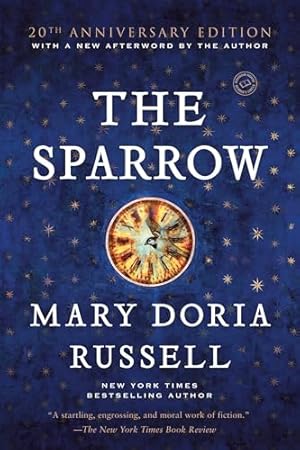
There are other sci-fi tales that eschew space opera and military hardware to examine the role of religion in an age of nearly omnipotent technology, e.g. Mary Doria Russell's The Sparrow, a gentle but provocative tale of the Jesuits privately financing an expedition to make first contact with a nearby alien civilization. But there is something special in the intensity of the technology versus science duel in Canticle for Leibowitz, the awkward waltz that results when the two ways of knowledge WANT to dance, but can't avoid treading each other's toes into pulp. I suspect the articulate, profound, and tragic conversation on the topic is a direct reflection of William Miller Jr.'s own trichotomy: an excellent scientist, a man of liberal arts education, a person of great religious passion. It was no small struggle for Miller to resolve, who eventually took his own life.
Miller's quest in this book, though, is not to give us one more iteration of the potential conflict between science and religious faith (though he does address this), it is a bigger fish, maybe a Leviathan, that is at the core of his search: does the very nature of being human condemn us to endless cycles of destruction and redemption. Poignant, haunting, and uncommonly accurate in depiction, A Canticle for Leibowitz functions as a sort of Hubble Space Telescope turned towards the surface of the Earth, rather than towards the stars, with the resulting images no less spell-binding. Bravo, William Miller, Jr., and thanks for the gift you bequeathed to us.
45 people found this helpfulSending feedback...Sending feedback...HelpfulThank you for your feedback.Sorry, we failed to record your vote. Please try againThanks, we'll investigate in the next few days.Sorry, We failed to report this review. Please try againWe'll check if this review meets our community guidelinesOpens in a new tab. If it doesn't, we'll remove it.
CancelReport - 5 out of 5 stars
Holding the Apolstolic Chuch in the brink of apocalypse
Reviewed in the United States on January 14, 2025This is an oldie but goodie by skilled writer Walter M. Miller, which was a bestseller in 1959. It’s been through 3 printings since then as the demand is consistent and steady.
Many others have written apocalyptic literature, imagining the fate of humanity, the world and its institutions after some global disaster whatever it may be. I find that the ones like this along with Father Elijah written in 1996 by Michael D. O’Brien are much richer than the typical apocalyptic faire.
Other apocalyptic books have mainly be written for mere entertainment and little reflection and which are often very secular riding the wave of the genre while there’s money to be made, But literature like A Canticle for Leibowitz dig into deep issues of the human heart, the humanity of love and its divine origins, and how such religious communities hold together when the entire world suffers. I recommend it to anyone who likes apocalyptic genre because this one is worthy of your time and is an American classic from the then soon to be turbulent mid-century time, an almost prophetic portending of the ripping of the fabric of Western society after mechanized wars of WWI & II. And then Korea and Vietnam Nam. The Catholic Church saw the portents as it’s been the keenest observer of history for over 2 millennia.
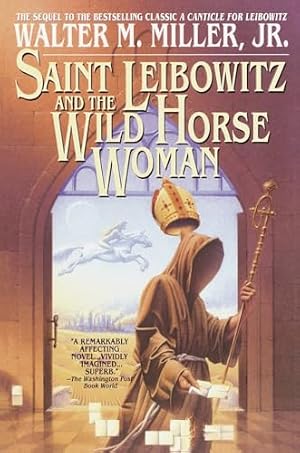
I recommend this novel. It’s a quick read of 338 pages, after which follows a short chapter preview of his 1997 work, Saint Leibowitz and the Wild Horse Woman. These works have been compared in essence to Brave New World by Adlous Huxley, and 1984, by George Orwell.
I highly recommend this book. It will definitely entertain you but more importantly it will sneak up on you and make you think deeply about deep essential things.
4 stars (only because it’s not The Brothers Karamozov or Crime and Punishment which are 5 star worthy along with Shakespeare)
5 out of 5 starsHolding the Apolstolic Chuch in the brink of apocalypse
Reviewed in the United States on January 14, 2025This is an oldie but goodie by skilled writer Walter M. Miller, which was a bestseller in 1959. It’s been through 3 printings since then as the demand is consistent and steady.
Many others have written apocalyptic literature, imagining the fate of humanity, the world and its institutions after some global disaster whatever it may be. I find that the ones like this along with Father Elijah written in 1996 by Michael D. O’Brien are much richer than the typical apocalyptic faire.
Other apocalyptic books have mainly be written for mere entertainment and little reflection and which are often very secular riding the wave of the genre while there’s money to be made, But literature like A Canticle for Leibowitz dig into deep issues of the human heart, the humanity of love and its divine origins, and how such religious communities hold together when the entire world suffers. I recommend it to anyone who likes apocalyptic genre because this one is worthy of your time and is an American classic from the then soon to be turbulent mid-century time, an almost prophetic portending of the ripping of the fabric of Western society after mechanized wars of WWI & II. And then Korea and Vietnam Nam. The Catholic Church saw the portents as it’s been the keenest observer of history for over 2 millennia.
I recommend this novel. It’s a quick read of 338 pages, after which follows a short chapter preview of his 1997 work, Saint Leibowitz and the Wild Horse Woman. These works have been compared in essence to Brave New World by Adlous Huxley, and 1984, by George Orwell.
I highly recommend this book. It will definitely entertain you but more importantly it will sneak up on you and make you think deeply about deep essential things.
4 stars (only because it’s not The Brothers Karamozov or Crime and Punishment which are 5 star worthy along with Shakespeare)
4 people found this helpfulSending feedback...Sending feedback...HelpfulThank you for your feedback.Sorry, we failed to record your vote. Please try againThanks, we'll investigate in the next few days.Sorry, We failed to report this review. Please try againWe'll check if this review meets our community guidelinesOpens in a new tab. If it doesn't, we'll remove it.
CancelReport - 3 out of 5 stars
Sanctimoneus
Reviewed in the United States on August 25, 2026I first read this well known S. F. classic when it was new in the 60's. Rereading it, I am struck more by the bitter self righteousness, as if there need have been no nuclear war if the faithful had only been obedient and submissive to the Holy Catholic Church, which has all the answers. Note that deterrence seems to have worked, so far! Some may wish to read the author's biography on Wikipedia.
Sending feedback...Sending feedback...HelpfulThank you for your feedback.Sorry, we failed to record your vote. Please try againThanks, we'll investigate in the next few days.Sorry, We failed to report this review. Please try againWe'll check if this review meets our community guidelinesOpens in a new tab. If it doesn't, we'll remove it.
CancelReport - 5 out of 5 stars
A Canticle for Leibowitz offers a rare blend of science fiction, history, and theology
Reviewed in the United States on September 19, 2024I usually steer clear of apocalyptic novels because they tend to be depressing, strange, and godless. So when my Tuesday Night Classics Club chose the science fiction novel, A Canticle for Leibowitz, I was hesitant. However, since it is highlighted in Joseph Pearce’s Literature: What Every Catholic Should Know, I decided to give it a chance. To my surprise, it became one of the most thought-provoking books our group has discussed.
Set after a global nuclear war known as the “Flame Deluge,” the novel explores humanity’s struggle to rebuild civilization amidst the ruins. In the wake of the war, there is a violent backlash against knowledge and technology, culminating in the “Simplification,” where mobs of “Simpletons” destroy books and kill anyone with learning. Interestingly, a Jewish electrical engineer named Isaac Edward Leibowitz survives the chaos and joins a Cistercian monastery. He is convinced that he must dedicate his life to preserving human knowledge through the secretive “booklegging” of hidden texts. Eventually, he founds the Albertian Order of Leibowitz in the desert of the American Southwest, whose charism is rooted in the preservation of any remnants of scientific and cultural knowledge they can find.
The novel is divided into three sections or “canticles,” each set centuries apart. The first, Fiat Homo (“Let There Be Man”), was especially fascinating to me. Set in the 26th century, civilization has regressed to a medieval-like way of living. The story opens during Lent with Brother Francis, a religious novice, fasting and praying in the desert. While keeping vigil, Brother Francis stumbles upon a fallout shelter containing artifacts from the Venerable Leibowitz, igniting a series of events that reflect the tension in the Abbey between honoring Leibowitz and his values and the need to survive in a culture that wants nothing to do with the past or its knowledge.
The second canticle, Fiat Lux (“Let There Be Light”), was more difficult for me. Set in 3174, civilization has evolved to an Industrial Revolution-like state. The Abbey, at this point, is both a place of spiritual significance and a center of technological discovery, as the monks work to discover electricity. They have heard the myths that electricity existed before, but many do not believe it, because they cannot believe that man, having had such luxury, would waste it on war.
The third Canticle, though, brings the novel to a powerful close. In 3781, the now technologically advanced society prepares for another nuclear war. The Abbey is assembling a group of priests, sisters, and children to colonize the moon. The Abbot is convinced that history is about to repeat itself, so he sends the gospel, sacraments, relics of knowledge, and innocent children away (never to return) so that mankind can have another chance somewhere away from the nuclear holocaust that has begun.
As the Abbot feared, the bombs begin to drop and the Abbey is overrun with victims and refugees. While the Abbot works to send pilgrims away, he still has to tend to the flock that remained behind. This canticle has an incredible storyline exploring euthanasia as compassionate care. The Abbot and a doctor engage in a powerful debate about what is true care for those who are suffering.
In each section, the Gospel persists. And in each, Christians are faced with intense and interesting ethical dilemmas. The novel’s exploration of faith, human resilience, and the cyclical nature of history is profound. Although I found parts of the second canticle slow and frustrating, the novel as a whole was a rewarding experience. A Canticle for Leibowitz offers a rare blend of science fiction, history, and theology, and I can see why Joseph Pearce considers it essential reading.
28 people found this helpfulSending feedback...Sending feedback...HelpfulThank you for your feedback.Sorry, we failed to record your vote. Please try againThanks, we'll investigate in the next few days.Sorry, We failed to report this review. Please try againWe'll check if this review meets our community guidelinesOpens in a new tab. If it doesn't, we'll remove it.
CancelReport - 4 out of 5 stars
An Original Perspective on Human Nature Buried in a Creative Sci-Fi novel
Reviewed in the United States on October 20, 2016I chose to read A Canticle For Leibowitz by Walter M. Miller Jr. for my English course because, I was told, it’s a timeless science fiction novel that explores the idea of a dystopia in a unique, powerful way. My high expectations were largely met: the society of the novel is fascinating, the ideas are original, and the novel’s implications are frightening. Miller’s central ideas are masterfully expressed in the three parts of the novel, making it an engaging read filled with unpredictable, shocking turns.
Miller instantly drops the reader into a bleak, post-apocalyptic world of the distant future in which civilization is once again primitive and radioactive mutants roam the earth. The reader slowly learns more about the story’s first protagonist, Brother Francis, a thoughtful young man and aspiring member of the Order of Leibowitz, as he discovers sacred artifacts in the desert - bits of a preserved notebook that survived the nuclear war that ravaged the Earth centuries ago. The religious order that Francis belongs to venerates scientific knowledge, and its members have eagerly dedicated their lives to seeking out and preserving documents that weren’t destroyed in the “Age of Simplification” (read the book and this part will make more sense). The story moves slowly after Francis’ discovery, but Miller gives the reader excellent descriptions of the desolate world and developing society of the novel.
As soon as his readers think they’ve got a grip on the story, Miller yanks them forward in time (about six centuries, to be exact). From there, Miller introduces completely new characters and skillfully builds on what happened in the first part of the story. The new protagonists, Hannegan,Thon Taddeo, and Dom Paulo are believable, dynamic characters that exemplify the conflict between the church, which is derived from the Order of Leibowitz, and the state (sound familiar?). The vivid descriptions of the setting and the convincing characters created by Miller make this portion of the novel an easy read, for the most part.
Again, once the reader thinks he understands where the story is headed, Miller shoves him forward another six centuries into the futuristic Space Age. Atomic Bombs have been developed and overproduced by the two remaining world powers, and the threat of nuclear war is all too real. But, you get the drill: more characters, similar conflicts on larger scales, and the same themes: time, power, and recurrence. Though this part of the novel is well constructed, it’s much more emotionally impactful. Miller succeeds in grasping the reader's attention while, simultaneously, unnerving them with his dark vision of the future. It reminded me an awful lot of the movie Wall-E, minus the goofy, sentient robots, in that its depiction of the human race and our lack of foresight made me feel somewhat ashamed. Miller’s dystopian society of the future is heavily exaggerated, but his criticisms of the direction of contemporary society are clear, and to some degree, accurate.
Miller’s story not only commanded my attention, but made me consider human behavior and our responsibilities as individuals in an advanced society. For this reason alone I would recommend this book to anyone that loves to learn from literature.
BUT, if I were to give Miller one point of advice, it would be to eliminate the extra drama that is insignificant to the story and the novel’s purpose - it made the book boring and difficult to read at times. For example, when characters were locked in religious arguments that included lots of obscure terminology and references to even more obscure fictional events, I became annoyed and wanted to put the book down.
6 people found this helpfulSending feedback...Sending feedback...HelpfulThank you for your feedback.Sorry, we failed to record your vote. Please try againThanks, we'll investigate in the next few days.Sorry, We failed to report this review. Please try againWe'll check if this review meets our community guidelinesOpens in a new tab. If it doesn't, we'll remove it.
CancelReport - 5 out of 5 stars
Everybody Is Wrong: A Canticle For Leibowitz
Reviewed in the United States on October 5, 2022Everybody (or a whole lot of strangers on social media, which is nearly the same thing) told me that A Canticle For Leibowitz is one of the greatest of all science fiction novels. Those same everybodies told me that Walter M. Miller Jr.’s 1959 novel pretty much set the standard for everything to come in the genre.
Everybody was wrong.
It is not one of the greatest; it is the greatest. A Canticle is everything you could ever want in a science fiction novel, and more. It greatly exceeded the high expectations I had before reading it.
When I say it has everything, that means everything; a bit of sociological sci fi, post-apocalyptic, apocalyptic, steampunk, alternate history, space opera, lost worlds, and a talking kitchen sink (that is only a slight exaggeration). There are battles, harrowing moments, philosophical discussions, and space flights. Miller’s imagination was large enough to encompass all of this, and his abilities as a writer allowed him to put it all into a compelling story that keeps you turning the pages.
Rather than providing us with an overview of the entire universe he possessed in his mind, Miller allows us to view it from a tiny perspective, through little conjoined stories, through glimpses into the lives of people as they experience the world around them. Their bewilderment connects to our own; the ways in which his characters are grasping in the dark allows us to identify with them. Miller develops his characters through actions.
There is a quiet humor here, a belief in the ability of humanity to preserve something worth keeping despite a tendency to self-destruct, and a streak of stubborn independence from the mainstream beliefs of his day that allows this story to become both timeless and exactly what we need to be reading at this moment in time. It is little wonder that Miller never wrote another novel that achieved this kind of success. At 338 pages, he had produced a masterpiece. His later works were derivative of this one. When you have said it all there isn’t anything left to say.
5 out of 5 starsEverybody Is Wrong: A Canticle For Leibowitz
Reviewed in the United States on October 5, 2022Everybody (or a whole lot of strangers on social media, which is nearly the same thing) told me that A Canticle For Leibowitz is one of the greatest of all science fiction novels. Those same everybodies told me that Walter M. Miller Jr.’s 1959 novel pretty much set the standard for everything to come in the genre.
Everybody was wrong.
It is not one of the greatest; it is the greatest. A Canticle is everything you could ever want in a science fiction novel, and more. It greatly exceeded the high expectations I had before reading it.
When I say it has everything, that means everything; a bit of sociological sci fi, post-apocalyptic, apocalyptic, steampunk, alternate history, space opera, lost worlds, and a talking kitchen sink (that is only a slight exaggeration). There are battles, harrowing moments, philosophical discussions, and space flights. Miller’s imagination was large enough to encompass all of this, and his abilities as a writer allowed him to put it all into a compelling story that keeps you turning the pages.
Rather than providing us with an overview of the entire universe he possessed in his mind, Miller allows us to view it from a tiny perspective, through little conjoined stories, through glimpses into the lives of people as they experience the world around them. Their bewilderment connects to our own; the ways in which his characters are grasping in the dark allows us to identify with them. Miller develops his characters through actions.
There is a quiet humor here, a belief in the ability of humanity to preserve something worth keeping despite a tendency to self-destruct, and a streak of stubborn independence from the mainstream beliefs of his day that allows this story to become both timeless and exactly what we need to be reading at this moment in time. It is little wonder that Miller never wrote another novel that achieved this kind of success. At 338 pages, he had produced a masterpiece. His later works were derivative of this one. When you have said it all there isn’t anything left to say.
15 people found this helpfulSending feedback...Sending feedback...HelpfulThank you for your feedback.Sorry, we failed to record your vote. Please try againThanks, we'll investigate in the next few days.Sorry, We failed to report this review. Please try againWe'll check if this review meets our community guidelinesOpens in a new tab. If it doesn't, we'll remove it.
CancelReport
Top reviews from other countries
Cliente Kindle5 out of 5 starsGreat reading
Reviewed in Brazil on September 25, 2016Miller successfully takes on the challenge of captivating the reader not only once, but thrice. He connects the past of the future and the future of the past in a brilliant way
Sending feedback...Thanks, we'll investigate in the next few days.Sorry, We failed to report this review. Please try againWe'll check if this review meets our community guidelinesOpens in a new tab. If it doesn't, we'll remove it.
CancelReport
Matt Jenkins5 out of 5 starsClassic Post Apocalyptic SF
Reviewed in the United Kingdom on March 30, 2011"After the bombs and the Fallout came the plagues and the madness. Then, in the bloodletting known as the Age of Simplification, the people - those few who remained - rose up against their teachers, their scientists and their rulers, those they held responsible for turning the world into a barren desert. All books and documents were destroyed and lost.
But a novice monk, scrabbling in the ruins of a Fallout shelter, finds some precious fragments, handwritten by the blessed I E Leibowitz, the legendary founder of his order. These few scraps are a major discovery for the monks trying to accumulate and preserve the scattered knowledge of the past. They spend their lives copying, illuminating and interpreting the holy relics."
- from the inside flap
To my mind Miller creates a fascinating post apocalyptic world populated with sympathetic characters that I find thoroughly engaging. I would recommend it to any fan of science fiction who has not come across it before.
A Canticle for Leibowitz is a post apocalyptic classic. It won the 1961 Hugo Award for best novel.
"Extraordinary ... chillingly effective."
-- Time
"Angry, eloquent ... a terrific story."
-- The New York Times
"An extraordinary novel ... Prodigiously imaginative, richly comic, terrifyingly grim, profound both intellectually and morally, and, above all ... simply such a memorable story as to stay with the reader for years."
-- Chicago Tribune
"An exciting and imaginative story ... Unconditionally recommended."
-- Library Journal
Also of interest may be The Best Of Walter M. Miller Jnr (S.F. Masterworks) and the posthumous sequel Saint Leibowitz and the Wild Horse Woman.
Sending feedback...Thanks, we'll investigate in the next few days.Sorry, We failed to report this review. Please try againWe'll check if this review meets our community guidelinesOpens in a new tab. If it doesn't, we'll remove it.
CancelReport
JennM5 out of 5 starsA classic
Reviewed in France on October 1, 2001This book should be required reading. A true classic - it combines unforgetable heros with an incredible story. I believe it is one of the best books I've ever read.
Sending feedback...Thanks, we'll investigate in the next few days.Sorry, We failed to report this review. Please try againWe'll check if this review meets our community guidelinesOpens in a new tab. If it doesn't, we'll remove it.
CancelReport
Sriram4 out of 5 starsDecent paperback.
Reviewed in India on October 6, 2025

Sending feedback...Thanks, we'll investigate in the next few days.Sorry, We failed to report this review. Please try againWe'll check if this review meets our community guidelinesOpens in a new tab. If it doesn't, we'll remove it.
CancelReport
Alex Falcon5 out of 5 starsBeautiful and interesting
Reviewed in Italy on May 28, 2014I heard about this book looking for something to read inside a fantasy/post-apocaliptic wishlist/commended-list. I found this book well written, with a fresh and new plot, entertaining and sometimes even poignant (first act). Once I'm done with university, I'll surely read it again
Sending feedback...Thanks, we'll investigate in the next few days.Sorry, We failed to report this review. Please try againWe'll check if this review meets our community guidelinesOpens in a new tab. If it doesn't, we'll remove it.
CancelReport