
Peak Oil is You

Donate Bitcoins ;-) or Paypal :-)
Peak Oil News and Message Boards

Global gas market pricing prolonged tightness due to Iran war, IGU executive says
Global gas markets are increasingly pricing in tight supplies well beyond winter as the Iran war disrupts Gulf liquefied natural gas exports and complicates Europe's efforts to rebuild gas inventories, a top industry executive said. The outlook comes as Europe competes with Asia for LNG cargoes while attempting to refill storage sites ahead of winter, amid continued uncertainty over the conflict's impact on exports from Qatar, one of the world's largest LNG suppliers. Forward gas prices suggest traders expect elevated prices and supply risks to persist through next summer before easing, according to Menelaos Ydreos, secretary general of the International Gas Union (IGU), whose members represent more than 90% of the global gas market. "The market right now is saying that they see the conflict getting prolonged," Ydreos told Reuters. Current futures curves indicate markets expect tight conditions to continue into next year, a ...
Egypt’s US LNG imports surge record high as domestic gas output collapses
Egypt's liquefied natural gas (LNG) imports from the United States reached a record 86.05 billion cubic feet (bcf) in June 2026, surging 236% year-on-year as Cairo turned to spot-market purchases to keep its electricity grid running, according to data from the International Energy Agency (IEA). The June volume — the highest recorded since 2016 — also rose 138% from the 36.17 bcf imported in May 2026, and surpassed the previous monthly peak of 61.45 bcf set in November 2025. The scale of the increase reflects how rapidly Egypt's dependence on external gas supply has deepened. The structural driver is a sharp decline in domestic production. Egypt's natural gas output fell from approximately 70 billion cubic metres (bcm) in 2021 to around 49 bcm in 2024, according to IEA data. Against annual consumption of 59 bcm in 2025, that leaves a significant operational deficit ...
US Can Backfill Only So Much of Global Crude Supply Gap
Executive Summary: The total US rig count decreased to 602 the week of Sept. 12. Middle East supply disruptions have pushed WTI above $100/bbl, increasing pressure on the US to supply more crude and refined products to the global market. However, tight Permian pipeline capacity, dock limitations and high refinery utilization mean the US can only provide a limited near-term response. The US natural gas pipeline sample, a proxy for change in oil production, decreased 1.8% week-over-week across all liquids-focused basins for the week ending Sept. 21. Rigs: The total US rig count decreased to 602 for the week of Sept. 12. Liquids-driven basins decreased to 466, down 7 rigs week-over-week. Anadarko (+1), Bakken (-1), Uinta (-1), Permian (-6, with Midland down 3 and Delaware down 3). Infrastructure: Crude oil prices have surged past $100/bbl on fresh supply disruptions in the Middle ...

The next inflation shock: $1 million-a-day oil tankers
A global tanker shortage, worsened by war, underinvestment and shifting trade routes, has sent freight rates soaring and reshaped oil flows worldwide. Former U.S. President Bill Clinton once said that when a crisis breaks out, the first thing everyone in Washington asks is, ‘Where is the nearest (aircraft) carrier?’ That remains a critical question as the U.S. faces off against Iran in the Strait of Hormuz, but for the shipping industry, it may have been replaced by another: ‘Where are the nearest oil tankers — and do we have enough?’ The immediate answer to that last bit is ‘no.’ The price of shipping tells the story. The largest tankers, uncreatively known as Very Large Crude Carriers, or VLCCs, are enjoying daily rates that would have made Aristotle Onassis cry tears of joy: the cost of hiring one from the Persian Gulf to ...

The Stalemate With Iran Is Not Sustainable: A Diplomatic Strategy to End the War
For six months, the war with Iran was disruptive but manageable. The Strait of Hormuz was largely closed to maritime traffic, blocking a transit route for roughly 20 percent of the world's liquefied natural gas trade and an even higher proportion of the oil trade. Prices ticked upward and many parts of the world struggled with oil and gas shortages, but countries found ways to help stabilize the global energy market. The United States and Iran both refrained from overly destructive attacks on the Gulf region's vital energy infrastructure. It seemed that Washington and Tehran could extend their current stalemate, occasionally trading airstrikes and attacks on individual tankers and energy facilities, without leading the world into economic calamity. That is no longer the case. The war has now expanded to critical parts of the region's energy infrastructure, including the very routes ...
Washington Needs This LNG Deal More Than Beijing Does
Xi Jinping arrives in Washington September 24, prepared to discuss reviving a $6 billion-a-year trade in US liquefied natural gas, contingent on lifting a 15% Chinese tariff that has blocked American gas since Q1 2025. Iranian missiles destroyed 17% of Qatar's LNG export capacity in March, and China absorbed that shock by buying more from everyone except the United States: Australia took 36% of its LNG imports from January through July, Southeast Asia 20%, Russia 12%, and Canada, a new entrant, 4%, according to Banchero Costa data. American cargoes made up just 0.2%. Beijing's 15% tariff, imposed in February 2025, days into Trump's second term, cut recorded US LNG shipments to China from 64 vessels in 2024 to zero in 2025. At their 2021 peak, US cargoes made up 12% of China's total LNG imports, worth $6.2 billion that year. None ...
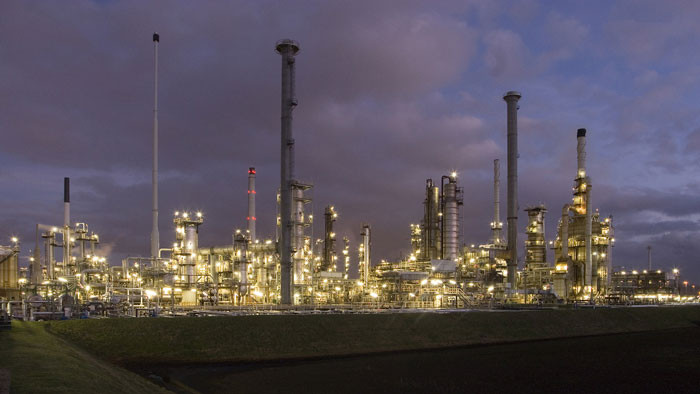
Global Refinery Crunch Pushes Diesel Prices to New Records
U.S. diesel prices broke another record last week, topping $6.50 per gallon. In Europe, fuel prices are soaring, and shortages are looming over already struggling economies. There is simply not enough refining capacity in the world to make up for the loss of Middle Eastern and Russian barrels. And there is no quick fix. Last week, Russia said it would extend a ban on diesel exports until the end of October, as Ukrainian drone attacks on refineries continued, despite President Donald Trump's call on the Zelensky government to stop attacking energy infrastructure, blaming the diesel price surge solely on those attacks. The latest attack came on Sunday, targeting one of Russia's largest refineries. However, the loss of fuel supply from the Middle East is much larger, the Wall Street Journal reported last week, citing figures from the International Energy Agency showing the ...
Trump backs US diesel export ban as prices hit record highs
WASHINGTON, DC — As wars in the Middle East and Russia continue to choke fuel supplies, Donald Trump and his administration are mulling new strategies to curb the soaring cost of energy. The president, speaking on the sidelines of the United Nations General Assembly on Tuesday, September 22, said his administration would issue a decision "fast, one way or the other" on whether to ban diesel exports. Trump's remarks came as diesel prices have surged to record highs across Europe and the US as the wars in Iran and Ukraine disrupt exports from major fuel producers, including Russia, Saudi Arabia and the United Arab Emirates. In the US, the average price of a gallon of diesel reached $6.53 on Tuesday, the highest level on record and more than 75% above its price a year earlier. Trump has suggested that keeping more fuel ...

Global oil and gas discoveries hit 40-year low on investment cutbacks
In 2025, fewer new oil and gas fields were discovered globally than at any time in the past 45 years, as investment in exploration collapsed. According to Nikkei's calculations based on aggregated global statistics, only 19 commercially significant deposits were discovered worldwide in 2025 — the lowest figure since 1980 and less than 10% of the 2013 peak. In monetary terms, the discovered resources were extremely meager: the total volume of discoveries in 2025 amounted to approximately 5.4 billion barrels of oil equivalent, marking a fourth consecutive year of decline. The decline in exploration investment stems in part from leading oil and gas companies shifting their efforts toward developing new energy sources. Shell, for example, spent only $1.1 billion on exploration in 2025 — just a fifth of what it spent ten years ago. Overall, global investment in new fields has fallen ...
Oil Tumbles 3% as Iran Floats Hormuz Reopening Within a Week
Iran has offered to open the Strait of Hormuz within seven days if the United States eases its pressure including taking steps toward ending the U.S. military blockade of Iranian ports and halting military operations in the Strait, a senior Iranian government official told Japan's news agency Kyodo News on Tuesday. Hopes of a diplomatic breakthrough and Iran's reported preparedness to reopen the Strait of Hormuz if the U.S. takes steps to ease the pressure sent oil prices tumbling by 3% early on Tuesday. The international benchmark, Brent Crude, slipped below the $100 per barrel mark for the first time in a week, and was trading at $98 a barrel as of publication. The U.S. benchmark, WTI Crude, fell to $91 per barrel. Iran's proposal has been conveyed to the U.S., the official told Kyodo News today, adding that it includes resumption ...
 Oil price becoming increasingly important for ECB, Bundesbank chief says
LONDON, Sept 22 (Reuters) - Oil prices are an increasingly important indicator for ECB ...
Norway Gas Output Down Month on MonthNorway sold 10.6 billion cubic meters (374.34 billion cubic feet) of natural gas in ...
 Saudi Pipeline Restart Fails to End Oil Market Tightness
Saudi pipeline flows resume, but soaring freight and diesel prices signal persistent oil market ...
 France warns of fresh oil shock, urges EU to free up refinery capacity
French President Emmanuel Macron asked Brussels to take emergency steps to boost Europe's diesel ...
Oil News Categories
Recent Board Topics
Archive
Member Comments
- on Mexican president announces bailout for cash-strapped Pemex
- on Sir Jim Ratcliffe suspends production at key UK plants blaming high gas prices
- on Will shutdowns forced by US blockade damage Iran’s oil wells?
- on India, Oil, And Electric Vehicles
- on Will shutdowns forced by US blockade damage Iran’s oil wells?
- on Dr. Mike Joy on Peak Oil
- on Export Constraints Curb Kazakhstan’s Ability to Offset the Global Oil Shortage
- on StanChart Warns Oil Is Now Built for Sharper, More Frequent Spikes
- on US oil floated on cheap money
- on US oil floated on cheap money
- on U.S.-Venezuela Oil Deal Threatens China’s Oil-Backed Loans
- on What to know about the Southcentral Alaska gas crunch
- on US Strategic Petroleum Reserve falls to lowest level since 1982
- on More than 20% of global refining capacity at risk of closure
- on Trump and Venezuelan Oil: 65 Billion Barrels on Paper. Almost None in the Tank.
- on Russia’s fuel crisis returns as Ukrainian drones target oil facilities
- on The Story of Oil 1822–1922
- on Venezuela’s Oil Exports Fall Even as U.S. Shipments Hit Seven-Year High
- on Venezuela’s Oil Exports Fall Even as U.S. Shipments Hit Seven-Year High
- on Venezuela’s Oil Exports Fall Even as U.S. Shipments Hit Seven-Year High
PO Real Time
No tweets available
