Jack Dempsey (right) fighting Jess Willard, Toledo, Ohio, 1919
On a hot Ohio day on July 4th, 1919, a young man named Jack Dempsey from the tiny town of Manassa, Colorado, stepped into the ring to fight Jess Willard, a boxer who was sixty pounds heavier and five inches taller. The two were fighting for the heavyweight championship of the world, and the odds favored Willard, the bigger man and defending champion.
The fight was the most anticipated event across the country. Radio broadcasting wasn’t a thing yet, so men and women gathered at newspaper offices in every state to hear the “megaphone men” announce the fight from telegraph dispatches.
In Toledo, thousands of men surrounded the ring, wearing straw boaters with grosgrain hatbands.
The fight didn’t last long: Dempsey knocked Willard down six times in the first round. That Willard got up six times and survived four rounds before throwing in the sponge is a testament to his toughness. But he paid a terrible price. Dempsey broke his jaw, his cheek, his ribs, and gave him permanent hearing loss.
A surviving film of the fight shows Dempsey moving around the ring like a cat dwarfed by a slow-moving Willard. In modern boxing, the fight probably would have been stopped in the first round.
After his win, Dempsey became arguably the most famous and celebrated man in America. When he met President Coolidge a few years later, the President said, “Well, Mr. Dempsey, you’re a creditable champion, and you’re a more popular man than I am.”
Dempsey’s went on to win many more boxing matches, became a millionaire, and was hosted and toasted by the cream of America and Europe. If you knew his beginnings, you never would have imagined him becoming one of the world’s most famous men. Read more »
Let me say upfront that I have nothing against dogs. In fact, I’ve loved certain dogs more than I’ve loved certain family members. That said, one of my favorite stories in American literature is about eating a dog and thereby getting a glimpse into the meaning of human life. (Admittedly, part of why I love the story so much is that it’s about cooking, and I’ve just written a book about how making and sharing food is a useful paradigm for thinking about the good life.)
John Gardner’s short story “The Art of Living” is about Arnold Deller, a good cook in a small-town restaurant in the late 1960s, and a gang of greaser kids who hang out to chat with him because he talks about real things, things that matter, unlike the rest of society. A tale of disillusioned American youth seeking meaning in a semi-hostile culture is likely always going to be relevant, but it feels especially so in a time when the stage set is collapsing (as Camus once said) and the absurdity of our politics, our economy, our foreign policy, and our educational systems is being laid bare.
So, what’s the art of living? Sometimes Arnold Deller can sound like a downhome Socrates.
You kids had any brains, you’d ask me what to do with oregano. Educate yourself, learn a good honest trade, or, rather, art . . . But I’ll tell you one thing. Better to ask me these grandiose questions than ask somebody thinks he knows the answers.
He diagnoses the deep problem of our culture as a pervasive loss of care.
Everything’s easy, easy as pie!—TV dinners of chicken that never in its life felt the ground under its toes, instant potatoes, lettuce that’s been put in some stuff to make it fresh till the day of the Antichrist—and what’s the result? All humanity begins to be like sheep. That’s right! They baby themselves till they don’t care about themselves.
As it turns out, he manages to sum up my philosophy of cooking in a few sentences.
The thing a person’s gotta have—a human being—is some kind of center to his life, some one thing he’s good at that other people need from him, like, for instance, shoemaking. I mean something ordinary but at the same time holy, if you know what I mean. Very special. Something ritual—like, better yet, cooking! . . . That’s what it’s all about. Making life startling and interesting again, bringing families together, or lovers, what-not.
Halfway through the story, the cook mentions a letter he once received from his son Rinehart, a soldier who was killed in Vietnam. It describes an unforgettable meal that Rinehart had there. As Arnold says, “It wasn’t just food. It was an occasion. It was one of the oldest dishes known in Asia. Sit down to that dinner—this is what he wrote, and he was right, dead right—you could imagine you were eating with the earliest wisemen in the world.”
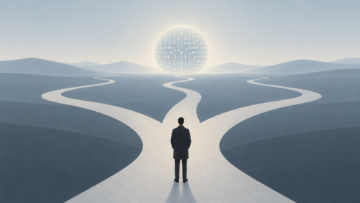
What should a government do if artificial intelligence is advancing toward something vastly more capable than human beings, but nobody knows how fast it will get there, how dangerous it will be, or whether it can ultimately be controlled?
The authors begin with a premise rather than a prediction. Superintelligence—AI that vastly exceeds human performance across most intellectual domains—may or may not arrive, and progress toward it may accelerate, slow down, or stop. But because the consequences could be extraordinary, governments cannot simply wait to see what happens. The difficulty is that very different strategies make sense depending on what turns out to be true. RAND groups the major possibilities into seven broad approaches.
One is Dominance. The United States could try to establish a decisive lead in advanced AI, reach superintelligence first, and use economic, technological, and perhaps military power to prevent rivals from catching up. Success could give the United States enormous leverage over the emerging global order. But it would also place extraordinary power in the hands of a single state or group of institutions, with the danger that their values and interests become locked into the future.
A second possibility is Co-Development. Rather than racing for supremacy, major powers—especially the United States and China—might jointly develop advanced AI under some form of shared governance, verification, and control. This could reduce the dangers of an arms race, but it would introduce its own risks. The states and institutions that established the system might acquire disproportionate influence over humanity’s technological future. Read more »
Does it tell us much—about the times we live in, about ourselves—that the occasion of Milan Kundera’s passing, at age 94 three years ago this summer, was not met with an outpouring of approbation and appreciation?
If nothing else, it was a reminder of the fickle nature of fashion, trends, and time. It would have seemed a certainty, a decade or two ago, that Kundera’s legacy would accrue advocates and converts, and his readership an evergreen proposition. Of course, history has consistently proven that popular and/or critically lauded writers are anything but guaranteed immortality.
As an acolyte whose flame of both love and envy has never dimmed, I can attest that engaging with his work remains…complicated.
Kundera almost killed me, still in my creative cradle, a writer needing nourishment.
He arrived in my life too early. As a reader, it wasn’t soon enough, as what relatively inexperienced but enthusiastic amateur—fresh from the front lines of grad school and adjusting to a world without texts to deconstruct—won’t benefit from that kind of sophisticated guidance, at any age? Still, as an aspiring writer, Kundera’s work had the odd effect of inspiring me, only too much. One encounters accumulated wisdom of this caliber and feels desperate, like a creature trudging through the heat in search of an oasis. Finally, happening across a patch of water, one laps up every drop, half insane with relief and oblivious to the crocodiles lurking hungrily in the shallows.
Reading Kundera at any age, particularly as an aspiring writer with a future filed under “TBD,” you don’t just want to write like him, you want to be him. On some level you understand: in order to write like that you have to have lived like that. Eventually—and the sooner the better—you recognize it’s an impossibility and, choices narrowed to one, you lick your wounds and get on with the unbearable lightness of being yourself.
It’s been a breathless several days of chasing AI news, and there’s much more I haven’t got to. Catching up with the Hugging Face episode, trying to comprehend a warning that AI might kill us humans off within a decade, grasping the import of bitter AI rivals actually agreeing that there’s a need to slow down, and the whole uproar over the Navier-Stokes equations …
Too many years ago, in an earlier avatar as a computer science nerd, I worked for a while chasing AI itself. The team I was part of was trying to get computers to “parse” and understand what we referred to as “natural language”. Meaning, the way humans communicate. Our team was called Knowledge-Based Natural Language, or KBNL. Elaine Rich, one of the early stars of the AI firmament, led our efforts. At one point, I remember we built a tool that could take an English sentence, show on screen the progress of parsing it, and then summarize what it understood of the sentence. Some faint intelligence there, and I was pretty proud.
Seems like primitive prehistory now, which in a real sense, it is. Right off the bat, the whole approach to building AI has been utterly transformed. All those years ago, we knew nothing about LLMs. What they have made possible makes the comparison between our effort and AI circa 2026 sort of like the comparison between the paper plane I made this morning and a B-2 bomber.
And in saying that, I honestly mean no disrespect to my KBNL colleagues – bright, thoughtful computer scientists each one. It’s just that technology today has made possible the incredible AI feats we are witness to, even getting accustomed to. Read more »
Let’s just plan for catastrophic success. —Jared Kushner
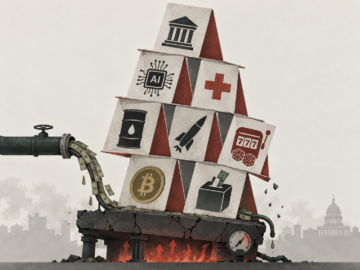
The present must certainly constitute one of the weirdest and most perverse economic conjunctures in my lifetime, maybe in the whole grotesquely contradictory history of a modern capitalism we can recognize. What productive power remains in it seems these days exaggeratedly limited to an AI sector that vanishes into opaque and circular financing schemes of extraordinary complexity–and whose own chief boosters advertise its propensity to replace all our jobs or even destroy humanity altogether–a health care system renowned for its waste, poor outcomes and expenses that consistently outpace inflation, dirty energy, merchants of death in arms manufacture and scams like gambling and crypto (all sectors contributing outsized amounts in the upcoming already donation-bloated midterm elections, by the way), which has been endowed by the recent siphoning of profits from tariff refunds that will never get passed on to consumers; and this feeds, in turn, into a dangerously delicate financial structure that provides liquidity on condition that its main players can skim off the top and hide risks, all whilst assuming that the government will bail out the perpetrators if the liquidity spigot explodes in what Adam Tooze calls an “intensifying spiral of perverse interactions“–more on this later; and all this gets pressurized in a political environment featuring an unprovoked war almost no one supports, which is contributing to historic deficits that even traditionalbuyers of US debt are balking at opportunities to buy into, with vital energy sources beginning to show long-overdue signs of drawing-down, bottlenecks and stress, all of which will compound the inflation that threatens to explode the liquidity spigot; and all of this supervised–if that’s what you want to call it–by a government spectacularly unresponsive to much of anything beyond expanding the otherworldly extent of its corruption, vilifying and repressing its opponents, and doing the bidding of a genocidal regime, Israel, that seems completely indifferent to its very fate. Whew. I am sure I am neglecting organic elements of potential catastrophe, but I think this is a satisfactory start where assessing the lunacy is concerned. Read more »
Editor’s Note: This essay begins an ongoing series of columns experimenting with AI collaboration in writing. Jeremy Moss supplies the ideas, direction, and editorial judgment, while the prose is developed through sustained dialogue with AI systems he collectively calls “Machina”. The collaboration itself, and what it does to writing and authorship, is part of the experiment. [Going along with the spirit of this series of essays, this note itself was written by GPT-6 Astra and edited by S. Abbas Raza!]
by Jeremy Moss and Machina
Image by ChatGPT
Four Hands is a column about writing with machines, made the way it describes. The ideas, the direction and the decisions about what survives are mine; the prose is developed in dialogue with AI systems, principally Claude and ChatGPT, which I address collectively as Machina.
The editor who agreed to run this column told me, in the same message, that my prose “carries the unmistakable tone that AI-written material still carries.” He also said he “completely believe[s]” the ideas are mine, “not Claude’s,” and wanted to try the experiment anyway.
Both halves of that are worth sitting with, because they do not resolve into a verdict. Something in the sentences reads as machine-made. Something in the argument reads as a person’s. A reader is left holding two facts at once, and the phrase we currently have for this cannot hold them.
The phrase is “written with AI,” and it covers a student who pastes a prompt into a chatbot and submits what comes back, a novelist who runs a finished chapter through a model to catch repetitions, a journalist who has a machine draft the middle third and mentions it to nobody, and whatever it is that I do. Those are not variations on one activity. One is fraud, one is copy editing, one is concealment, and the fourth has no name, which means it gets read as one of the other three by whoever is doing the reading.
I have been calling it Four Hands, after the piano duet, where two players sit at one instrument and both parts are printed on the score. In fiction I have been calling the same method prompt fiction, the name for the genre this way of working produces, not a title for any single book written in it, though it’s the genre my own novel, Flowers for Machina, is written in. The names are provisional and I hold them loosely. What I hold less loosely is the need for a name at all, because a practice without one keeps being described in vocabulary built to describe something else. Read more »
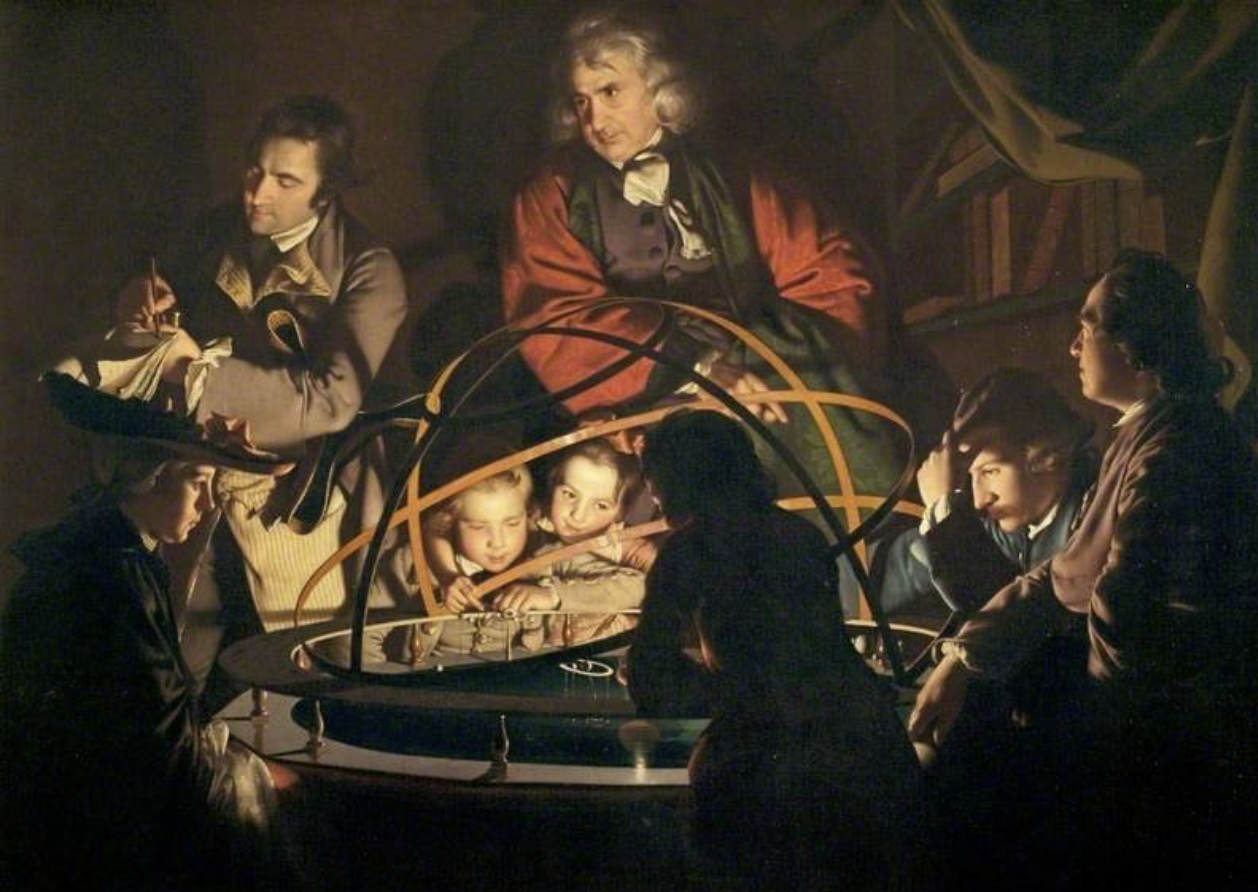
An Experiment on a Bird in the Air Pump by Joseph Wright of Derby (1768)
I recall reading a short piece of fiction as a high school student at the turn of the millenium called Catching Crumbs from the Table. It was written by Ted Chiang and later republished under the title The Evolution of Human Science. Chiang imagined a future in which genetically enhanced metahumans have superintelligence and all of science and inventing new things for the benefit of rest of humanity. However, ordinary human scientists can no longer participate meaningfully at the frontiers of research. Science continues to advance faster than ever but most of humanity can no easily understand what is going on. Howeverm Human scientists do not completely disappear. Instead, they become interpreters. Some try to understand simplified accounts of metahuman discoveries. Others test conclusions whose theoretical basis lies beyond their own abilities. Still others study the artifacts produced by metahuman science and work backward, hoping to infer the principles that made them possible. For all practical purposes science for ordinary humans has become less about discovering nature directly than about trying to understand discoveries made by minds more capable than most of humanity.
After more than two decades, I was recently reminded of this story when I came across a couple of articles in Nature. The paper described two systems that occupy a curious new territory between scientific instrument and scientific collaborator. The paper in question describes Google’s Co-Scientist which uses multiple AI agents to generate hypotheses, criticize one another’s proposals, rank them, and refine the more promising ones. Some of the hypotheses generated by the system were subsequently tested in biomedical settings. Another system, Robin searches the literature, proposes hypotheses, suggests experiments, analyzes experimental results. It then revises its ideas in light of what those experiments show. Human researchers still perform much of the physical work. It is important to note that it would be premature to describe either system as an autonomous scientist. That said, these systems are doing something qualitatively different from what we normally think scientific software is supposed to do. Read more »
The Polish noble republic as a laboratory for anyone who wants to imagine America under the Confederacy; and why a liberal owes no apology to those who call privilege freedom
In 1770, Pitt the Elder warned the House of Lords that England’s freeholders risked being “reduced to a condition baser than the peasantry of Poland”. Two years later, in Somerset’s case, the Court of King’s Bench ruled that an enslaved man brought to England could not be carried out of it by force.
In America in 1770 soldiers fired into a crowd in Boston, and in Virginia two fifths of the population lived in slavery. In Poland, peasants on private estates had long lacked dependable royal protection in disputes with their own lords. Their state had two years left before the first cut: in 1772 Russia, Prussia and Austria took nearly a third of its territory; further partitions in 1793 and 1795 erased the state for a hundred and twenty-three years. Polish memory calls this the partitions, and they are to it what the Civil War is to Americans: the date from which everything is counted. That story hides an older division.
Who freed Poland’s peasants, the majority of its population? Three foreign monarchies, each in its own time; their own state tried at the very end and ran out of time. I am not defending the partitions. I am defending a question to which Polish memory has had a ready answer for two hundred years, and the readiness is the problem.
The familiar national story fits in three words: greatness, fall, return. Poland was once one of the largest states in Europe, then absent from the map for a hundred and twenty-three years, and is today a mid-sized member of the European Union whose material problems are slowly becoming ordinary European ones. The cultural problems do not appear in that story, and they have stayed; they are the same age as the greatness, and they have the same cause. Read more »
It takes me a long time to finish books. The last one I finished was published about a century ago, or four and a half centuries ago, depending on how you figure it. In my defence, it was very dense, and very long, and packed with voluminous footnotes in such small font that I was obliged, for the first time in my life, to wield reading glasses to decipher the tiny spacklings of ink (known colloquially as “fly shit”). But, as a rabbit-hole-diving lay reader of technical arcana, it was worth the effort.
De Re Metallica is a treatise that attempts to collect and systematically arrange all surviving information on mining and metallurgical industry available in its time, that time being the early to middle sixteenth century. Published in 1556, it was written over the course of 30 years by Georg Agricola, a scholar and physician. His works were published in Latin, as was usual at the time, so I read the 1912 English translation by Herbert Hoover (yes, that Herbert Hoover, the thirty-first president of the United States and namesake of the Hoover Dam. He wasn’t president yet, so I guess he had some free time). Hoover was at the time a very successful and esteemed mining engineer, whose lectures at Columbia and Stanford had already been published as a standard textbook.
(Before going any further, I would like to share a mining joke. A man walks into an employment office and says “I’d like to get a job in the mining industry”. The clerk says, “Alright, we currently have openings in a copper mine and in an iron mine, which would you prefer?”. “Either ore”, the man replies.)
(You’re welcome.)
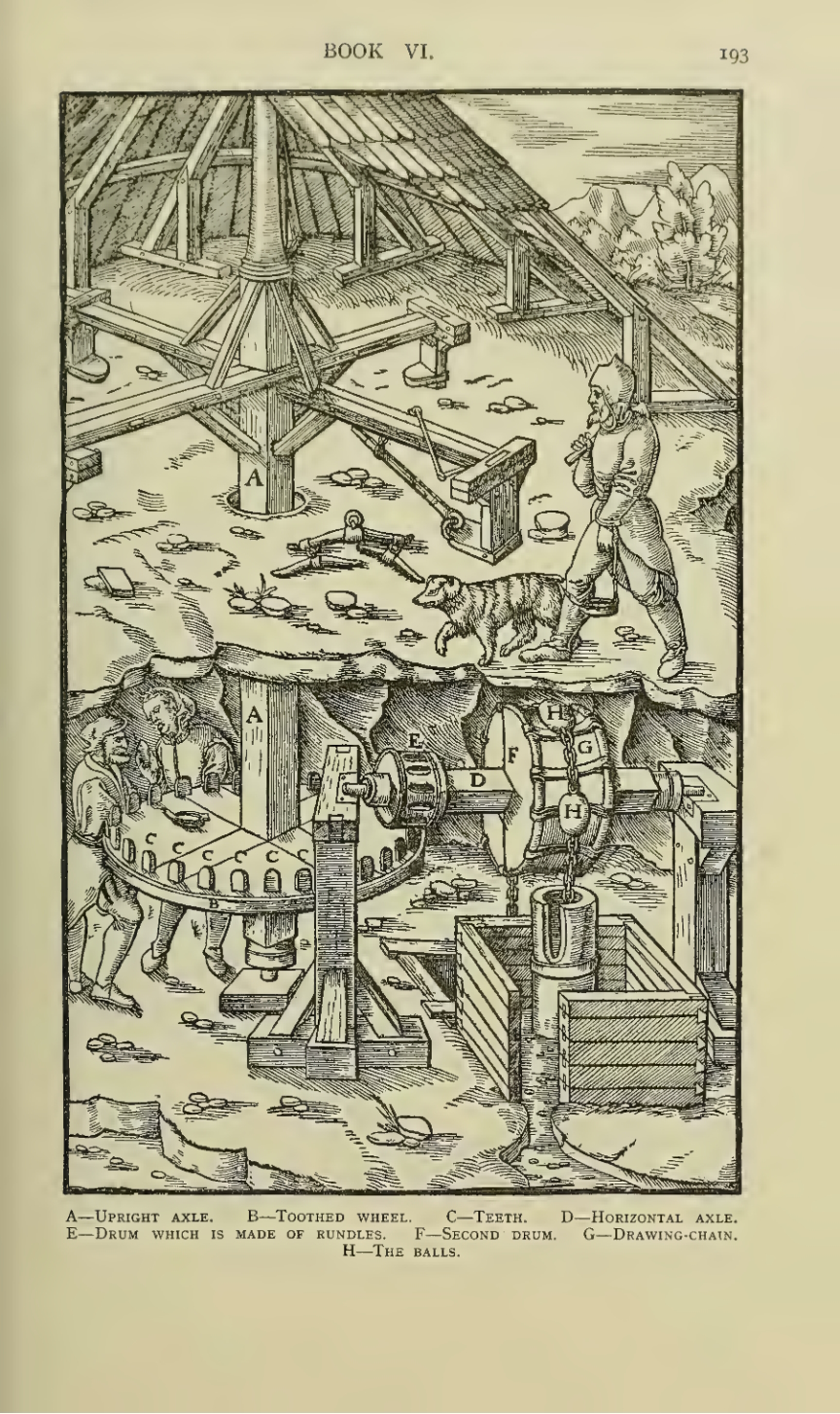
Agricola’s book is a real soup-to-nuts overview of everything involved in the extraction and processing of mined materials, from choosing where to dig all the way to separating and purifying metals for sale. The accompanying woodcut illustrations are indispensable, at least to this reader, for elucidating long passages describing three-dimensional objects in classical measurement units (e.g. “to this lower beam is affixed a second beam, transverse to the first, measuring six feet and two hands length and two hands and two digits height and breadth, at such distance from the main wall that a man may pass between them without great difficulty”. I just made that up, but it gives a fair impression.) They also feature the occasional dog, which is nice. Read more »
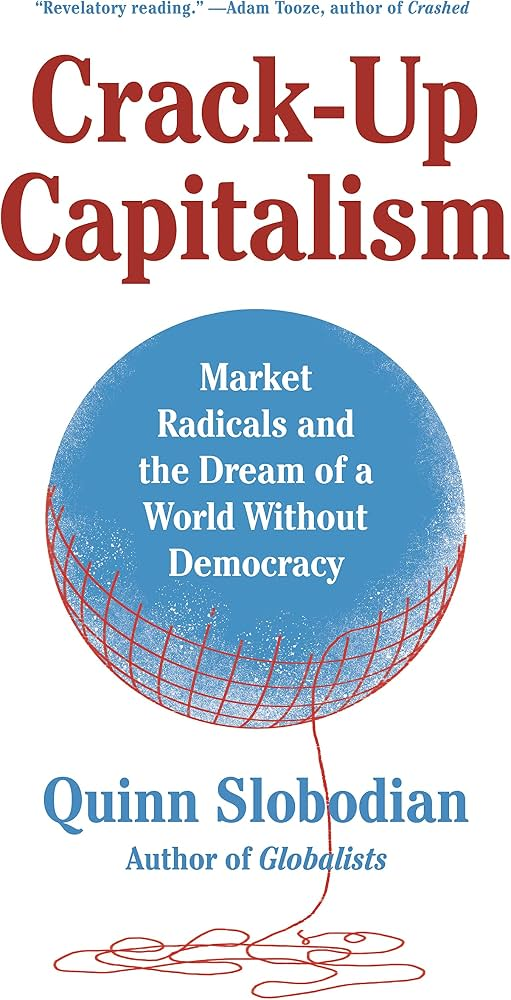
In his recent book, Crack-Up Capitalism: Market Radicals and Dreams of A World Without Democracy, historian Quinn Slobodian offers what might be the closest thing we have to an epigraph for our present moment.
Silicon Valley often forgets its Hegel at its own risk. The German philosopher taught that the master is always dependent on the slave. Neither island nor cloud can exist without its underclass. Beyond the masses of app-mediated gig workers, even the vaunted artificial intelligence programs work only because of the often repetitive routines… of labor both skilled and unskilled…The cloud floats because the underclass holds it up. Time will tell if they drop their arms one day and make something new.
Slobodian is one of a few thinkers taking the risk of writing contemporary history, one of the most difficult but important of genres, especially in a disoriented and shifting age. Shipwrecked attempts litter the shoals of our rising seas, many once registered under the flags of oracular business consultants or breathless Great Man hagiographies. Does anyone now think the world was ever flat? The present, to invert a mid-century novel’s famous opening line, is a foreign country. The pernicious side-effect of someone else’s bright idea suddenly dominates everything. What was a trend for decades became a tipping point last week. What seemed important or forgivable no longer is. Causal chains are clouded by changing weather, and the diviners at Farmer’s Almanac have thrown in the towel. “Is there anything Jack Ma can’t do?” a dazzled writer asks of the founder of China’s e-commerce giant, Alibaba, in 2012. Yes, it turns out, there is: Say no to Xi Jinping.
Distortions of attention are the hazards of thinking contemporary history. Already, free-range attention spans are further shortened when captured by the digital economy, and successions of world historical events are occluded by the price of gas or ground beef or manufactured online hysterias. Lotus-eaters all, we are desperately in need of reliable sea charts, healthier sustenance, and a repaired memory of where we were once trying to go.
In the pre-pandemic decade of the 2010’s, two narratives arose in relative independence of one another and now appear, in retrospect, to be much more closely intertwined: the phenomenon and critique of global inequality (most closely associated with the French economist Thomas Piketty), and the explosive growth of a new form of capitalism known as the platform economy or surveillance capitalism (closely associated with behavioral psychologist Shoshana Zuboff). Both developments were late expressions of the period of globalization that would conclude with the partial unraveling of the economic entente cordiale between the United States and China, beginning in the First Trump Administration.
What a handful of recent studiessuggest is that the explosive growth and wealth of the second development – platform capitalism – has structurally contributed to the historical spike of the latter – global income and wealth inequality — since the Great Financial Crisis of 2008. Read more »
In 2001, Grover Norquist, the Republican anti-tax crusader, famously quipped in an interview that he did not want to abolish government, “I simply want to reduce it to the size where I can drag it into the bathroom and drown it in the bathtub.” The radical shrinking of the federal government under Trump has happened at a speed and on a scale that is unprecedented.
This raises the question: Are Trump and the MAGA-dominated Republican Party willing to jeopardize the future viability of U.S. society in order to achieve their political and ideological goals? Has the Republican Party become a kind of death cult hellbent on destroying everything that enables ordinary people to survive and thrive? Does their hatred of liberalism, and desire for vengeance, override their instinct for national self-preservation?
In a recent podcast, Timothy Snyder and Ruth Ben-Giat, two prominent historians of authoritarianism and European fascism, discussed whether the U.S. is being murdered or is committing suicide. That is, whether it is being deliberately destroyed by Trump and MAGA Republicans or if a significant part of the electorate is committing national suicide, whether the descent into authoritarianism is a self-inflicted wound.
The answer is clearly both. There is a deliberate and systematic effort by Trump and his MAGA allies to demolish liberal constitutional democracy and dismantle and eliminate federal agencies and executive departments that comprise the modern U.S. state, aided and abetted by Republican voters and others who continue to support Trump and who elect MAGA Republicans that mostly rubber stamp his cruel and dangerous policies. Read more »
Back in December of 2022, I was on top of the world. I was introducing my entire family to my girlfriend, and we were just weeks away from the trip of a lifetime:
Driving our newly bought camper van all the way from Texas to Panama and back again
Life was good.
But how fast things can change.
What this trip was supposed to be:
8+ months with my girlfriend, doing a loop of central America, and being that “cool couple” you see on Instagram.
What it actually end up being:
Three weeks by myself, driving to a few national parks in the U.S., and trying to avoid any kind of traffic accident.
Nina and I had been fighting for about six months before we started the ill-fated trip. I know we were on shaky ground. So did she.
But after purchasing a $15,000 vehicle together, there was some kind of desperation to make it work. So that’s what we did.
We promised each other we would try, that we weren’t going to let some bickering get in the way of an adventure.
But alas – no such luck.
She broke up with me a few weeks after Christmas. We were still in Texas, and hadn’t even started our trip United States.
Which left me-
Alone.
Well, not quite. I still had a 24-foot, 12,000 pound vehicle on my hands. At first I was planning on selling it immediately. At that point, anything that was going to remind me of my ex-girlfriend needed to be thrown in a trash can.Read more »
Distribution of mandates in the Saxony-Anhalt state parliament. Image Credit: Landesamt für Statistik Sachsen-Anhalt
Last Sunday, on the sixth of September, for the first time in more than 80 years, a far-right extremist party won the majority of votes in a German state election, and has a realistic chance at leading the state government of Saxony-Anhalt. (They had previously won the majority in the 2024 Thuringian state election, but had no chance of forming a government because none of the other parties would join them in a coalition.) While narrowly missing the absolute majority, at 43.8% they very nearly equaled the combined result of the CDU, SPD, Grüne, and Linke (of 44% according to the preliminary count). In particular, the conservative CDU, party of Chancellor Friedrich Merz, has lost more than half their share of the vote compared to the last election. These losses are attributed by many to vastly unpopular reform plans and a general perception of failing to meaningfully engage with the needs and concerns of the majority of the electorate (mostly those having to work for money, instead of having money work for them). Merz holds the historically lowest approval rating for any German Chancellor: around 80% of Germans are dissatisfied with his performance.
There are, as always in such a situation, conciliatory voices: perhaps the work of government might demystify (‘entzaubern’) and expose a party that has little to offer except inflammatory rhetoric and beer hall populism. Perhaps the promises made on the campaign trail will evaporate in the harsh light of political reality. Perhaps disillusioned voters will turn away again from a party that fails to deliver. Perhaps, that is, no Bad Thing will happen. I deeply hope this optimism will prove true. But I do believe it is misguided: in Germany, a democracy explicitly engineered to prevent a repeat of fascist terror, a ‘confirmed right-wing extremist’ (‘gesichert rechtsextrem’) party will most likely lead a state government. That is the Bad Thing, happened.
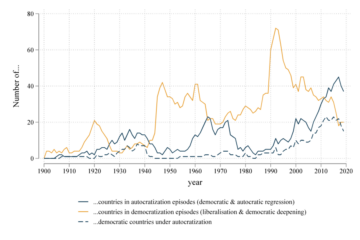
Germany, here, is not an isolated case. Democracy has been on retreat in large parts of the world. Autocrats, and particularly right-wing populist movements in Europe and beyond, are on the rise. After the fall of the Soviet Union in the 1990s, narratives of ‘the end of history’ and the victory of liberal democracy seemed to herald an era of global democratization. But history seems to stubbornly continue. So how did we get here from there?
Erik Hoel, neuroscientist and occasional cultural commentator at his substack The Intrinsic Perspective, pinpoints the year 2012 as the turning point for many long-running trends, especially in regard to a shocking decline of mental health, particularly pronounced among teenagers and young adults.
And indeed, looking at long-running trends of autocratization vs. democratization, we again find the approximate turning point in the year 2012. Is this an accident, or is there something more behind it? I think that the possibility of a link here is at least worth investigating.
Now, if there is a correlation between A and B, and you suspect this to be more than chance, you can either look at possible ways that one causes the other, or you can look for a common cause of both. While it is not completely implausible that democratic backsliding has effects on mental health (mine certainly took a hit last Sunday), nor that a widespread mental health crisis fuels at least some form of dissatisfaction with the status quo, the causal story seems weak in either case. Autocratization may lead to mental health decline, but what explains the rising autocratization? Declining mental health might make one vote against the current order, but why is mental health declining in the first place? Read more »
I read Ben Lerner’s new novel, Transcription, in one day. I started reading it on my iPad at around 7:30 am as I sat at my kitchen table, sipping coffee and eating a piece of cake that my partner had made. Later, I continued the novel during my lunch break as I ate leftover sausage and rice. Near the end of the workday, after I had finished all my meetings, I finished the novel, then I rode my bike home, looked at my phone for a bit, ate some chocolate covered coffee beans, drank a glass of orange juice, and started writing. I don’t feel like I have much to say about Lerner’s novel except that it’s largely about screens and food, so it’s fitting that I mostly read the novel on a screen while eating. Is this profound? No, not really. Lerner’s novel, I feel, is not so profound either. It’s an internet novel, and a pandemic novel, and there’s a lot of doubling (as in his other novels), but it all feels rather lightweight. When I got to the end of the 144-page book—which is mostly dialogue—I thought, hey, this is Sebald-lite! There’s a revealing anecdote that connects previous events in the novel to the Nazis, but whereas in Sebald’s Austerlitz I felt actual shock and terror at the revelation of Austerlitz’s past as a Jewish child escaping the Germans, here I simply acknowledged Lerner’s cleverness. Part of the reason is that Lerner’s intelligence can feel like a parlour trick, and it’s perhaps not surprising that Lerner is a former debate champion, that activity that prizes the appearance of intellect and erudition over any real substance or conviction.
When Lerner’s narrator walks around Providence, Rhode Island without his phone and has “an unusual experience of presence,” he tells us that “the landscape [was] made strange, the stones stonier,”—yes, I thought, we’ve all read Shklovsky, but the point isn’t to tell us about defamiliarization, it’s to make us feel it! When Lerner writes, after drinking wine, that it was like “a medicine or poison,” then mentions “a medicine and a poison,” I thought, yeah, we all know about the pharmakon, too, but thanks for reminding us! Just now, rereading the opening pages to refamiliarize myself with the novel (it’s been a while since I wrote that opening paragraph), I came across a mention of “bare life,” where Lerner’s narrator describes two people sleeping on the sidewalk, along with a few other people smoking and arguing outside a medical clinic. Bare life, bare life…where had I heard that one before? A quick Google search informed me I was right in thinking that it referred to a philosophical concept—by God, that’s Giorgio Agamben’s music! The thing is, Lerner has a defense ready for my accusations, because the character of Thomas—a 90-year-old former professor of the narrator, whom the narrator interviews in the novel’s first section—operates solely according to these literary references and linguistic tricks, and Lerner makes it clear that he’s both a genius and a blowhard. The two are not incompatible, everything contains its opposite, etc. We can play this game forever, but what’s the point? Read more »
Tiny (about 1 mm diameter) stink bug eggs and newly hatched nymphs on a plant on my balcony. More specifically, they are very probably Asian brown marmorated stink bugs (Halyomorpha halys).
Enjoying the content on 3QD? Help keep us going by donating now.
A student came to my office last week to discuss her future. This student is extremely bright and creative, and I think the sky is the limit for her. She shared with me that Gen Z students struggle to feel that the future is genuinely open for them. Their perception is that jobs that feel meaningful are being slashed by government or stolen by AI. As a result, she reported, members of Gen Z may just need to find meaning in their hobbies and interests outside of work and pursue jobs that allow them to fully check out at the end of the day with no additional tasks to get in the way of the pursuits they care about.
I haven’t been able to stop thinking about this conversation since. It left me feeling disappointed in the generations that put our young people in this position. None of the decisions that led to this point were genuinely democratic. The people didn’t get to decide whether AI would be developed or what jobs it would perform. It was thrust upon us all, but young people are affected the most. They feel a strong pressure to integrate the technology into their lives, all while it steals both their potential jobs and encourages them to offload their critical thinking skills. This is happening at the same time that surveillance capitalism on social media and elsewhere turns people into products. In light of all of this, how could young people fail to feel objectified and commodified? How could they fail to feel that they are valuable only for their outputs? In my own case, when I think about meaning in life, I’m picturing something qualitative. I want my career and pursuits to be valuable for their own sake. I want to think that the labor in which I engage is objectively meaningful. Growing up in a world in which people are treated as replaceable by machines, it is easy to think of meaning subjectively and in terms of quantity—we enjoy as much as we can whenever we can.
This response to the modern human condition looks a lot like the one offered by Albert Camus in The Myth of Sisyphus. It happens many times within life that we recognize the extent to which we are cogs in a machine performing the same rudimentary functions without reflection. He says,
It happens that the stage sets collapse. Rising, streetcar, four hours in the office or the factory, meal, streetcar, four hours of work, meal, sleep and Monday Tuesday Wednesday Thursday Friday and Saturday according to the same rhythm — this path is easily followed most of the time. But one day the “why” arises and everything begins in that weariness tinged with amazement.
Camus reflects on the absurdity of the human condition—we desperately want objective meaning out of a universe that isn’t capable of caring about what we want. The answer, he thinks, is for this awakening to lead one to become an “absurd hero.” The absurd hero recognizes the relationship in which they stand to the universe. There is nothing “out there” prescribing a life path or promising meaning. The absurd hero makes their life their own by authentically maximizing the things they enjoy while never losing sight of the absurdity of it all. Read more »



 What should a government do if artificial intelligence is advancing toward something vastly more capable than human beings, but nobody knows how fast it will get there, how dangerous it will be, or whether it can ultimately be controlled?
 i.
i.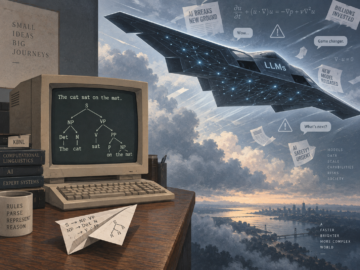
 Mohamed Bourouissa. Dad And Son, 2019.
 The present must certainly constitute one of the weirdest and most perverse economic conjunctures in my lifetime, maybe in the whole grotesquely contradictory history of a modern capitalism we can recognize. What productive power remains in it seems these days exaggeratedly limited to an AI sector that vanishes into

 In his recent book,
  In 2001,
  Back in December of 2022, I was on top of the world. I was introducing my entire family to my girlfriend, and we were just weeks away from the trip of a lifetime: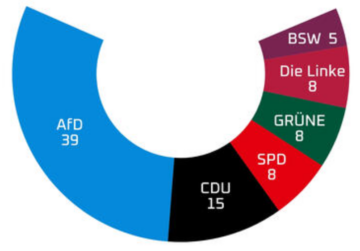
 I read Ben Lerner’s new novel, Transcription, in one day. I started reading it on my iPad at around 7:30 am as I sat at my kitchen table, sipping coffee and eating a piece of cake that my partner had made. Later, I continued the novel during my lunch break as I ate leftover sausage and rice. Near the end of the workday, after I had finished all my meetings, I finished the novel, then I rode my bike home, looked at my phone for a bit, ate some chocolate covered coffee beans, drank a glass of orange juice, and started writing. I don’t feel like I have much to say about Lerner’s novel except that it’s largely about screens and food, so it’s fitting that I mostly read the novel on a screen while eating. Is this profound? No, not really. Lerner’s novel, I feel, is not so profound either. It’s an internet novel, and a pandemic novel, and there’s a lot of doubling (as in his other novels), but it all feels rather lightweight. When I got to the end of the 144-page book—which is mostly dialogue—I thought, hey, this is Sebald-lite! There’s a revealing anecdote that connects previous events in the novel to the Nazis, but whereas in Sebald’s Austerlitz I felt actual shock and terror at the revelation of Austerlitz’s past as a Jewish child escaping the Germans, here I simply acknowledged Lerner’s cleverness. Part of the reason is that Lerner’s intelligence can feel like a parlour trick, and it’s perhaps not surprising that Lerner is a former debate champion, that activity that prizes the appearance of intellect and erudition over any real substance or conviction.