
The Doors Of Old London

The door to Parliament
Look at all the doors where the dead people walked in and out. These are the doors of old London. Some are inviting you in and some are shutting you out. Doors that lead to power and doors that lead to prison. Doors that lead to the parlour, doors that lead to the palace, and doors that lead to prayer.
These are the doors that I found among hundreds of glass slides once used for magic lantern shows by the London & Middlesex Archaeological Society, many more than a century old, and housed today at the Bishopsgate Institute.
Looking at life through a doorway, we are all either on the way in or on the way out. Like the door to your childhood home that got sold long ago, each one pictured here is evidence of the transient nature of existence, reminding you that you cannot go back through the portal of time.
Yet there is a powerful enigma conjured by these murky pictures of old doors, most of which will never open again. Like the pauper or the lost soul condemned to wander the streets, we cannot enter to learn what lies behind these doors of old London. But a closed door is an invitation to the imagination and we can wonder and dream, entering those hidden spaces in our fancy.
London has always been a city of doors, inviting both the curiosity and the suspicion of the passerby. In each street, there is a constant anticipation of people popping out, regurgitated onto the street by the building, and the glimpse to be snatched of the interior before the door closes again.
I cannot resist the notion that every door contains a mystery and all I need is a skeleton key. Then we can set out to explore as we please, going in one door and out another, until we have passed through all the doors of old London.


The entrance to the Carpenters’ Hall


The doors of Lambeth Palace

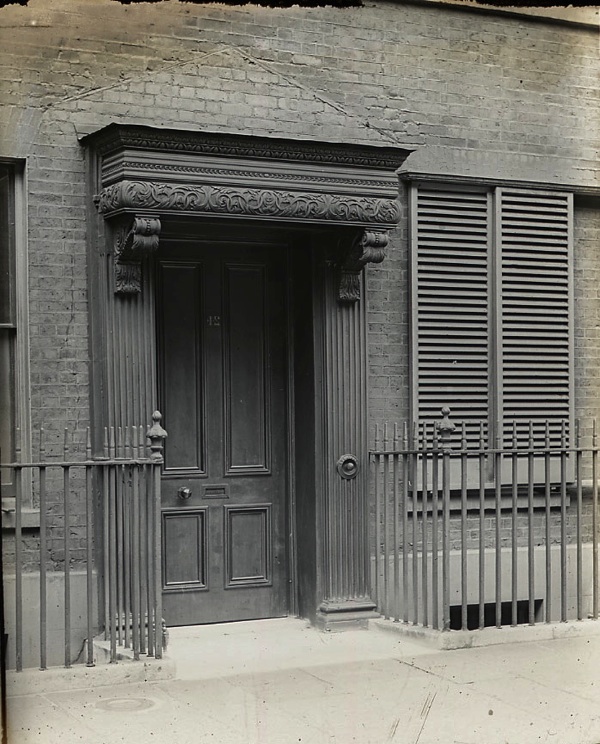


Door in the cloisters in Westminster Abbey

The door to the chamber of Little Ease at the Tower of London.


In St Benet’s Church, Paul’s Wharf.


Back door of 33 Mark Lane

Back door to Lancaster House.

In Crutched Friars.

14 Cavendish Sq.

The door to 10 Downing St

39a Devonshire St.


The door to the House of Lords

Wren doorway, Kensington Palace.

The door to Westminster Abbey
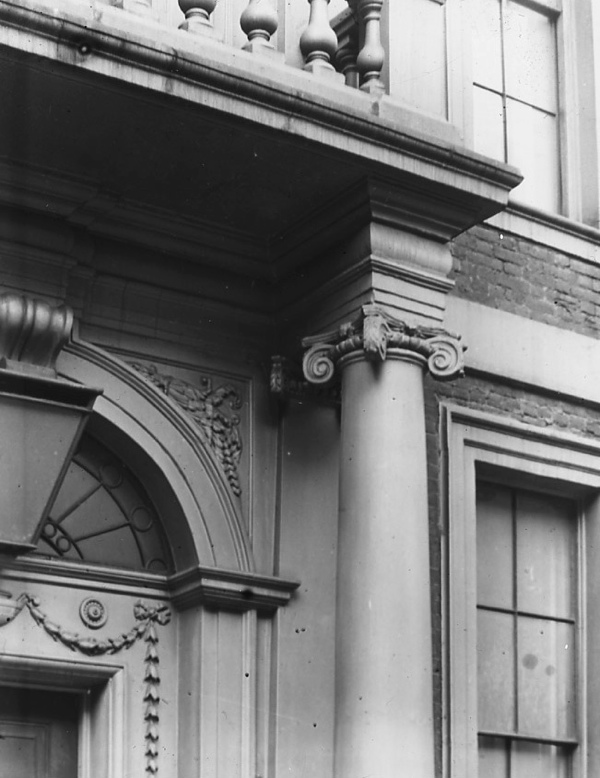


St Dunstan’s in the West

The entrance to Christ Church, Greyfriars.

The door to St Bartholomew’s, Smithfield

Temple Church

The Watchhouse, St Sepulcre’s, Smithfield.

Door by Inigo Jones at St Helen’s Bishopsgate.

Prior Bolton’s Door at St Bartholomew the Great.


At the Tower of London
Glass slides courtesy Bishopsgate Institute
Hackney Mosaic Project At Surrey Docks Farm
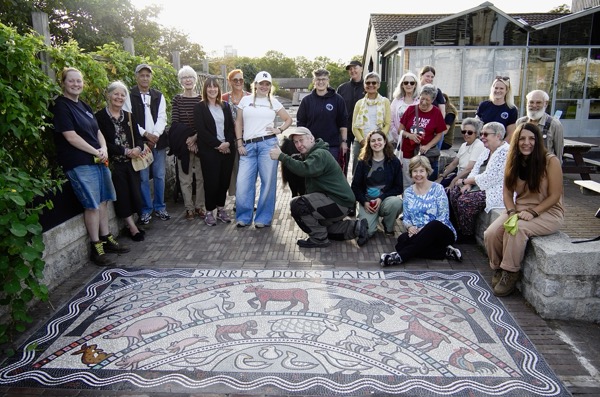
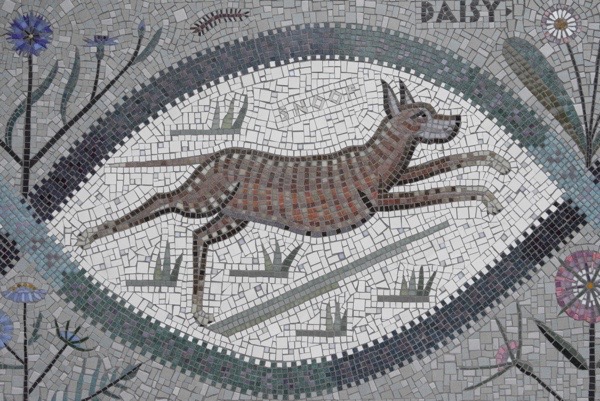
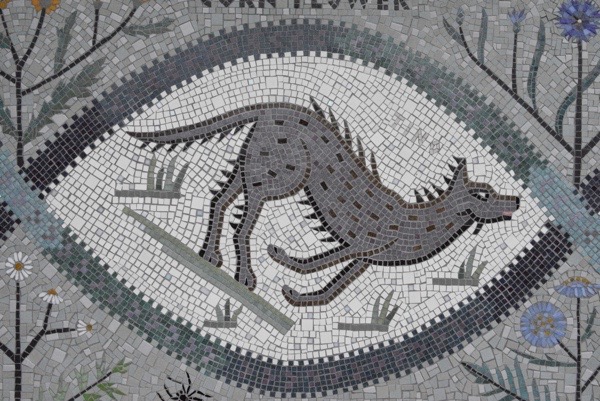
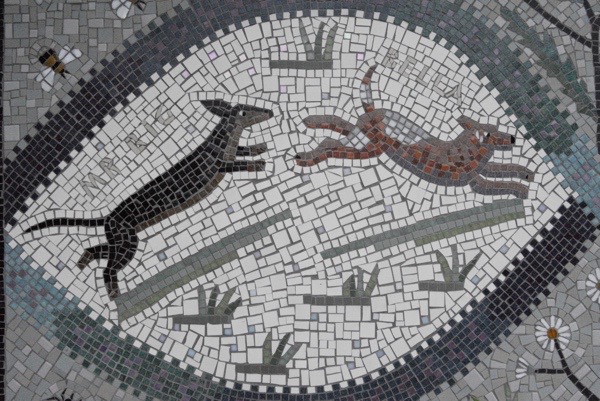
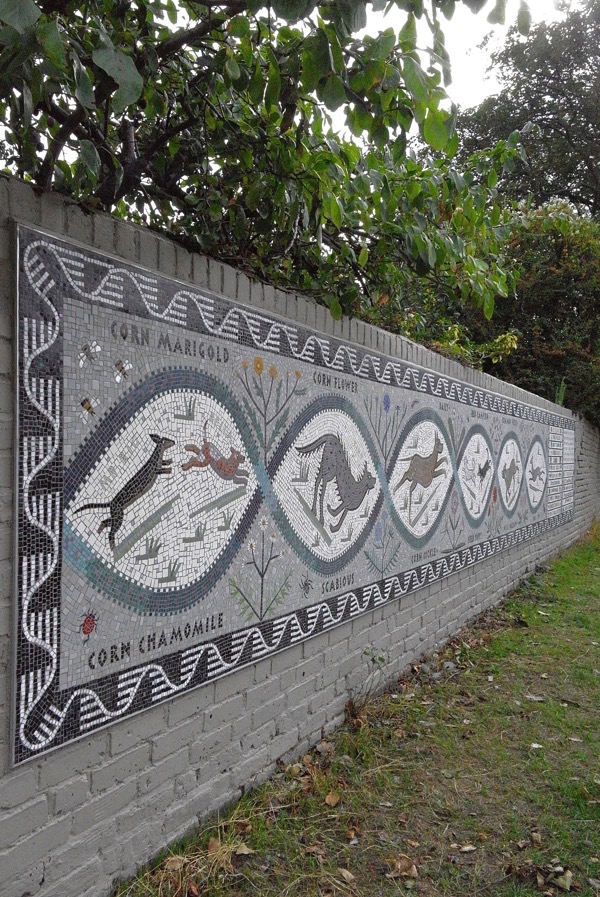
Yesterday, I cycled over Tower Bridge to join the happy throng at Surrey Docks Farm in Rotherhithe where Tessa Hunkin’s Hackney Mosaic Project have installed three new mosaics. More than fifty people were involved in the creation of these mosaics, which took many months, and all their initials are included in the borders.
Tessa explained to me that the inspiration came from medieval Italian floor mosaics which illustrate agricultural tasks through the seasons. When she showed her designs to the volunteers at the farm, they insisted that ‘mucking out’ be included since this is what they spend most of their time doing. Spot the ferret in a hammock, the farm’s pet brown rabbit and guinea pigs too.
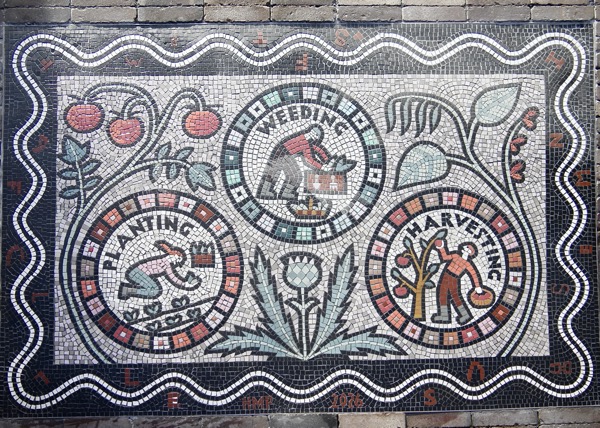
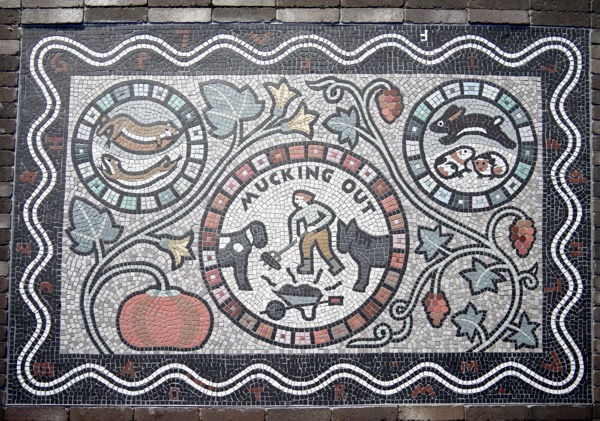
Meanwhile, in the last twenty-four hours more than 1400 people have signed the petition to SAVE HACKNEY MOSAIC PROJECT. The existence of the Project is under threat as Hackney Council are proposing converting the mosaic workshop on Hackney Downs into a cafe and displacing the Project. If you have not already done so, please sign the petition and spread the word.
CLICK HERE TO SIGN THE PETITION

Click here to buy a copy of Tessa Hunkin’s Hackney Mosaic Project
Save Hackney Mosaic Project
Regular readers will be aware of the superlative work of Tessa Hunkin’s Hackney Mosaic Project and the book we published last year celebrating their achievements. Now the existence of the Project is under threat as Hackney Council are proposing converting the mosaic workshop on Hackney Downs into a cafe and displacing the Project. Tessa Hunkin explains the position below and I urge readers to sign the petition and spread the word.
CLICK HERE TO SIGN THE PETITION
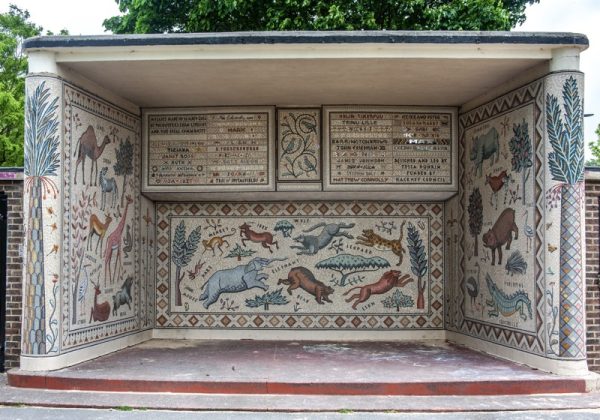
Playground shelter with mosaic by Hackney Mosaic Project
‘Please help the Hackney Mosaic Project retain a work space in Hackney Downs. We have been there for over twelve years and have become rooted in the local community. We recruit volunteers from the local area and create mosaics for local estates as well as making the much loved portraits of local dogs.
The Council now want to turn the building into a large cafe with a small community space for hire by the hour which we have been told is not suitable for our Project. Plans were presented for a Public Consultation earlier this year and there was overwhelming support to keep the Mosaic Project in the building along with a smaller cafe.
Nonetheless less we understand that the Council are persisting with the original plan and have not suggested any alternative home for the Mosaic Project.
The Council still need to get planning permission for the change of use and we want to be able to present this petition to demonstrate the wide support we have. If you would like to help us continuing to help vulnerable and isolated adults as well as embellishing Hackney with widely admired art works please sign our petition.’
TESSA HUNKIN
CLICK HERE TO SIGN THE PETITION
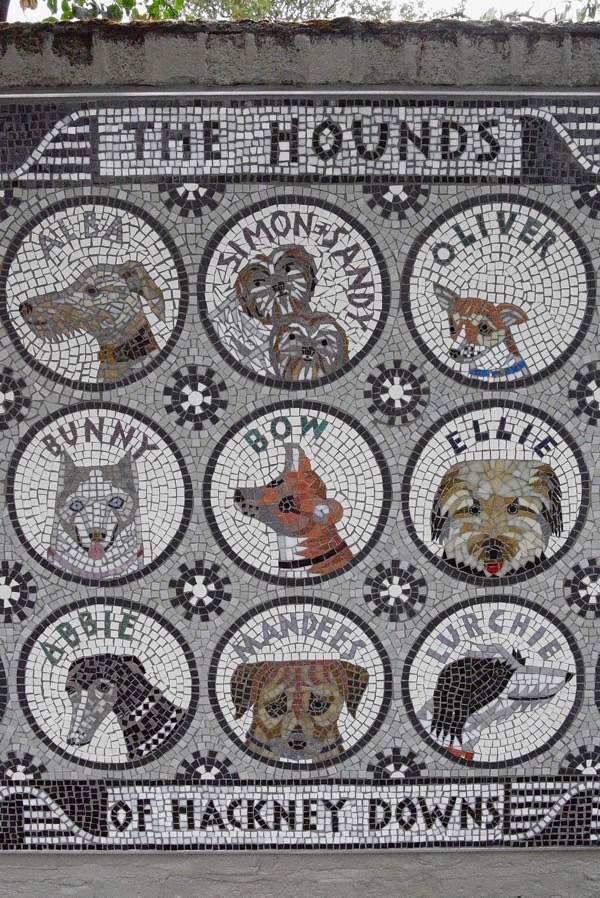



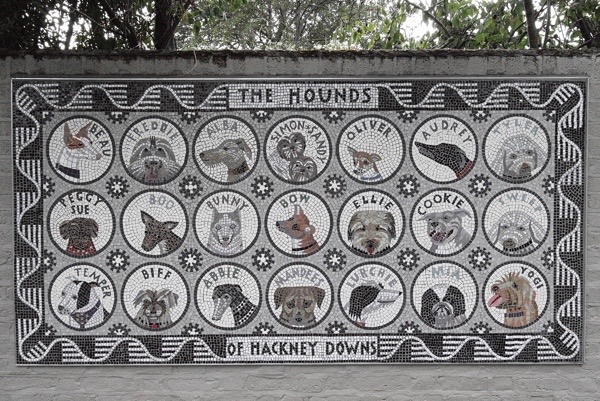
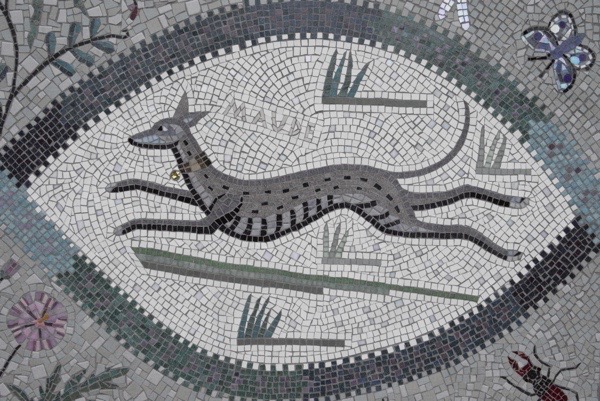
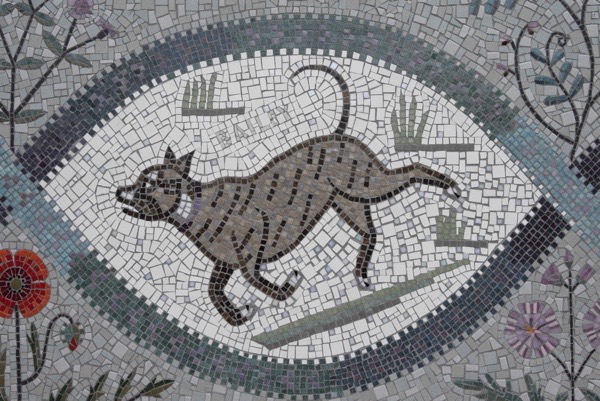
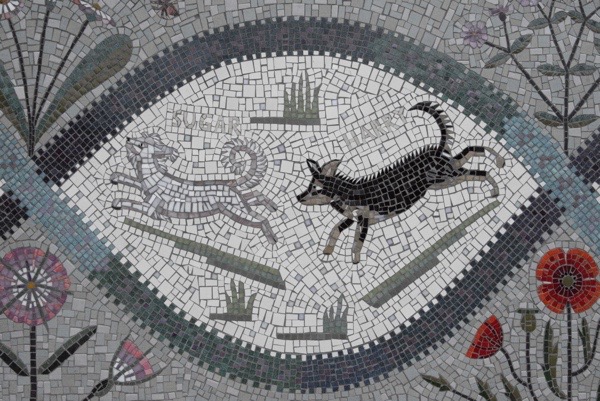
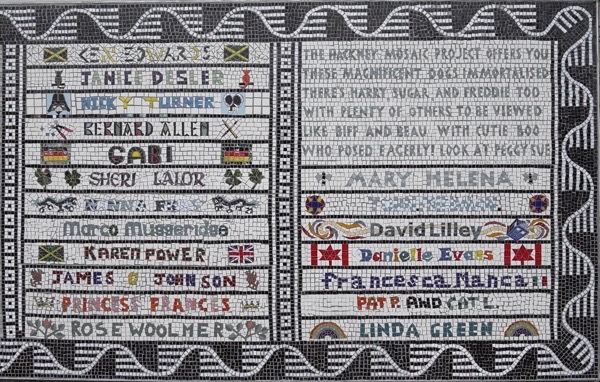
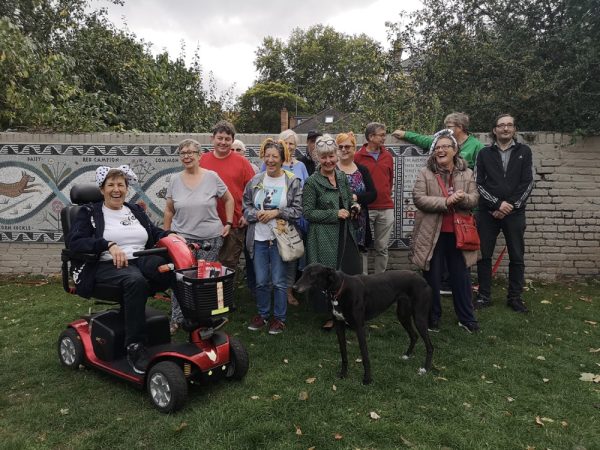
The mosaic artists
Click here to buy a copy of Tessa Hunkin’s Hackney Mosaic Project
Arful Nessa, Gardener

Delwar Hussain writes about his mother’s horticultural activities in Puma Court
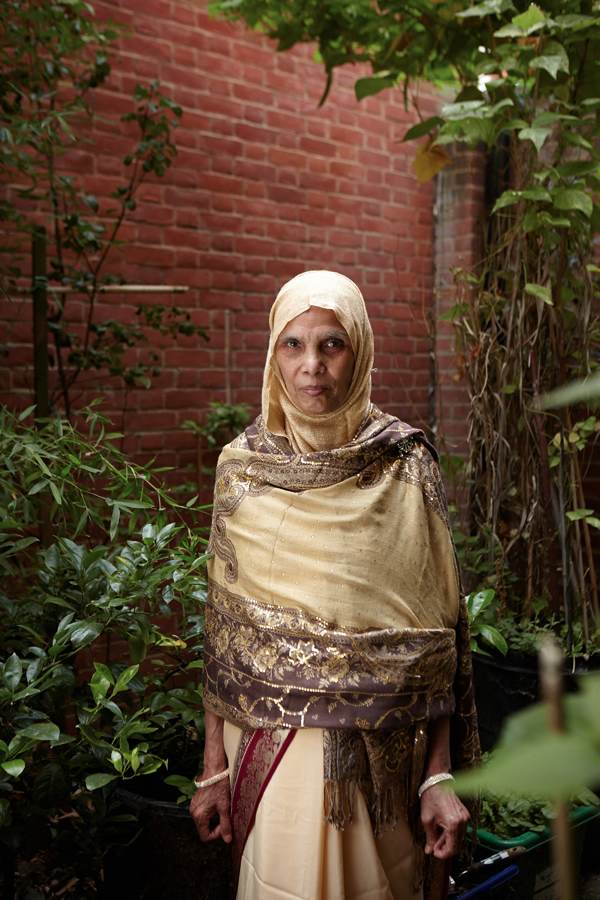
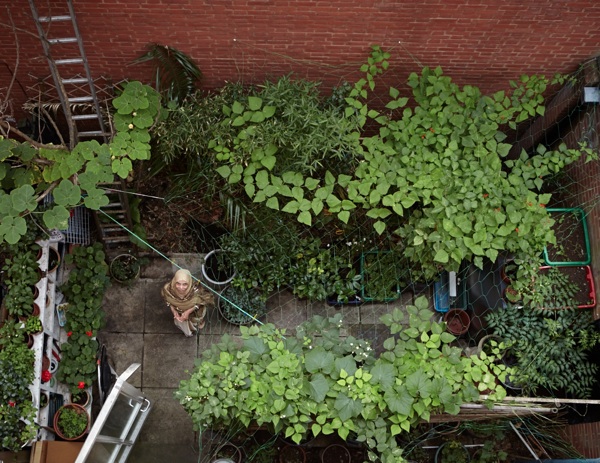
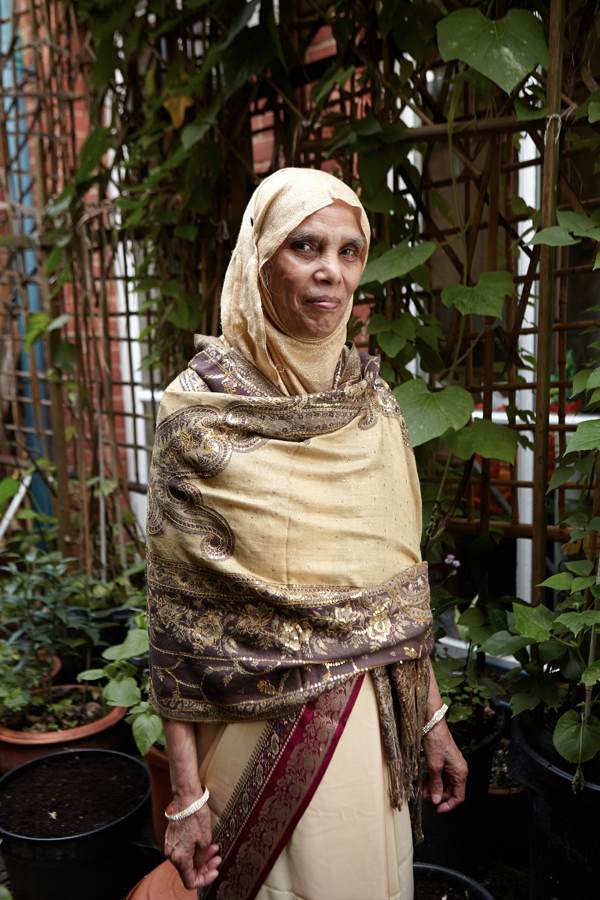
Arful Nessa in her garden in Puma Court
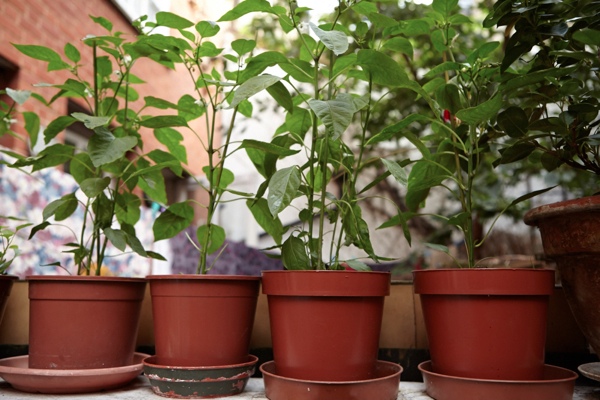
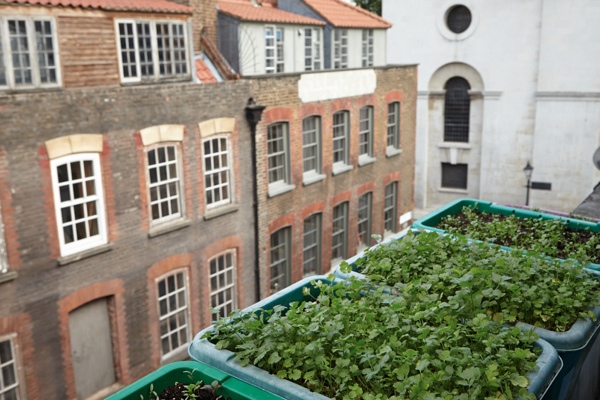
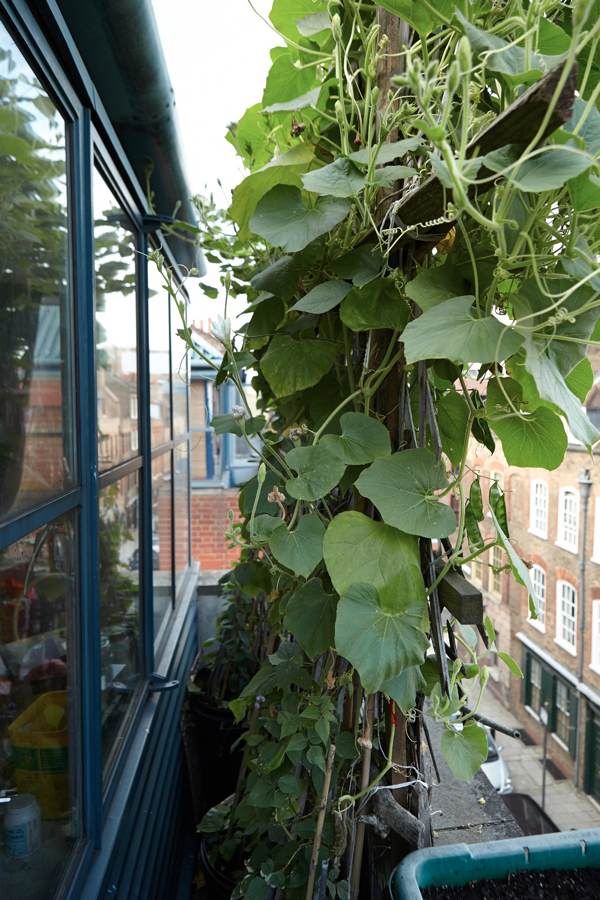
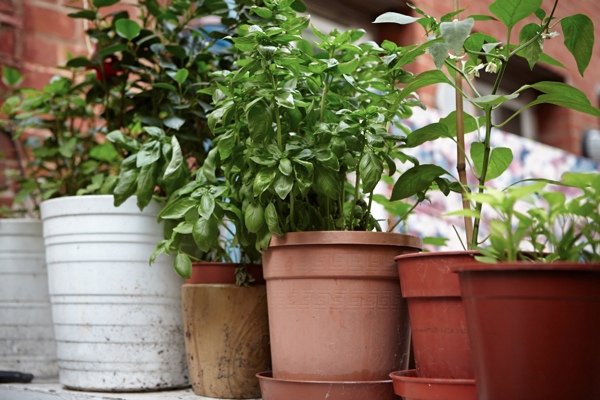
My mother is the first to admit that when it comes to growing anything, the success rate cannot be predicted – some years are simply better than others. But this summer has, on the whole, been a good one. Despite the aubergines not putting in a show, she has had quite a few runner beans, chillies galore, enough coriander to garnish an army with, mulas (a long white radish), potatoes and dhengas (a tall, dark pink stalk, almost like a savoury rhubarb). She has also transferred the olive tree into the ground, as well as the plum tree, and the neem tree and pomegranate followed suit recently. The latter, which she grew from a seed, is a non-descript small shrub with small, shiny, pointy leaves. The trees all seem to have taken well to the positions she has chosen for them, but this is not always the case, as the dry, brittle carcass of a fig tree attests. The bushy orange and lemon trees did not make it into the ground either. My mother is not confident that they would like it there, so they continue to live in the big, black, dustbins that she insists on collecting.
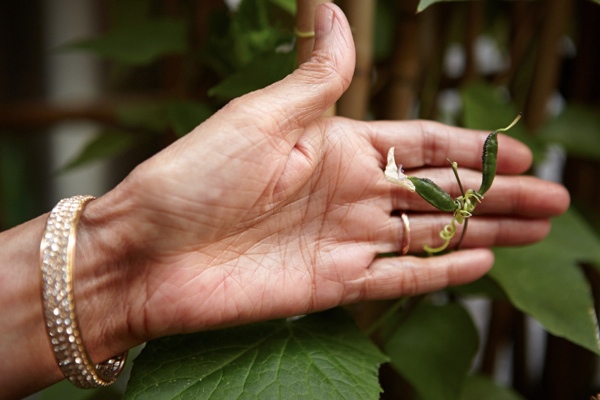
But of all of her achievements this year, it is the gourd that she is particularly pleased with. Neighbours and relatives from far and wide have already been notified of its appearance. The vegetable has always been elusive to her throughout the many years that she has been gardening, building all sorts of wooden and bamboo frames to support them without gain. “I’ve always wanted to grow one, but I never managed to until now. It is probably because we don’t get much sun here. The garden is surrounded on all sides by brick walls.” Today, the perfectly spherical, green and white globe, resembling a small disco ball, dangles precariously in the sky, held on to by its strong, twisty, protective vines. Behind it, the tall, white steeple of Christ Church looms large over the entire garden.
As Patricia Niven takes photographs of my mother on this still, warm evening, together with the greenery that we are surrounded by, we are reminded of the other lives carrying on outside of the red-bricked walls. Against the quiet hum of the cars and sirens on Commercial St, the more prominent chirping of little birds come in from nearby gardens and rooftops. The shrieks of children playing and the long, yawn-like, ancient drawl of the azaan, the call to prayer from the Brick Lane mosque, drifts in too. It is always an unusual experience interviewing a family member, especially one that happens to be your mother. Nonetheless, over the years, I have done so a number of times, usually for university projects. This is the first time that I am formally questioning her about a subject that she herself is actually interested in and not one picked by her son.
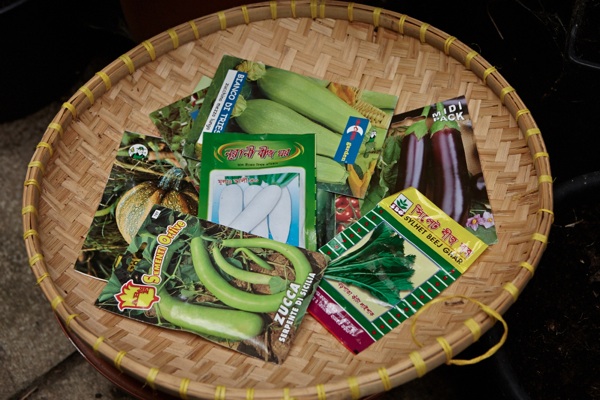
“I garden because I enjoy doing so. People say that gardening is healthy, that it is good for you to be outside, to stroke the leaves, to smell the fruit, to feel the soil. When I moved to London in the nineteen-seventies I was in my twenties. No one taught me how to do any of it, I learnt instinctively. When I was young, I would watch my parents in the village in Bangladesh. They would grow aubergines, mustard, rice, mangoes, jackfruits, guavas and so many spices and herbs. Your father and I first lived in a small, crowded flat in Wapping where there was not even a single tree to look at outside, let alone inside. Then we moved to New Rd. We rented a house from the hospital and it came with a massive garden in the back. It was so big, you would never have been able to fill the place up with trees. I started growing spinach, coriander and mustard. Your father would get the seeds for me in little bundles when he travelled back from Bangladesh. But unfortunately we had to leave that house because it didn’t have an indoor toilet or bath: the toilet was in the garden and we had a tin bath propped up in the kitchen. We would fill it up with water and by the time it reached the top, the water would be cold. The same tin bath followed us to the present house, where we used it as a pond for some ducks that we kept and then later to grow potatoes in.”
A friend of mine said recently that he has never seen my mother actually getting her hands dirty, let alone holding a trowel or spade. Despite this, she always manages to grow huge amounts. I laughed and, in jest, said that this is because she gets my brothers and sisters and I to do most of the lumbering work for her. However, the more I thought about it, the more I think my friend had a point. Much of the gardening she does involves standing at the kitchen door or on the balconies upstairs on the third floor of the house where she grows the coriander, looking intently, surveying, absorbed in the plants. Occasionally she may walk over to something which she will touch, rub, pick at or uncoil. She moves a pot from one place to another, gives the attention of a watering jug here or there, but most of all, it involves staying still, studying, contemplating.
But of course, there is more to it than the impression she gives. “Throughout the year, I save seeds from things that we eat. If they don’t grow, well, then, they don’t grow, but I will give them a try. Around January-February time, I sow the seeds in pots. I keep them dotted around the house so that they don’t get cold. In March and April, I put the pots outside in the garden and rotate them around so that they can get as much sun as possible. Just before the summer, some of them are transferred into bigger pots. I then just keep my eye on them as they grow.”
Having lived in London for over thirty years, my mother is very much rooted to the house and to Spitalfields. Even so, she will still confess to not being very good at growing English plants. If ever there was a gardening test in the same vein as the cricket one as dreamed up by Norman Tebbit, my mother would probably fail. Mediterranean, African, Middle Eastern and Asian plants and trees dominate her world. “My apple tree is probably around ten years old, but it just doesn’t seem to want to grow. I’ve often thought about taking it out of the ground and putting something else in its place, but we’ve been together for too long. Now that I have my gourd, I would like to try my own apple”.
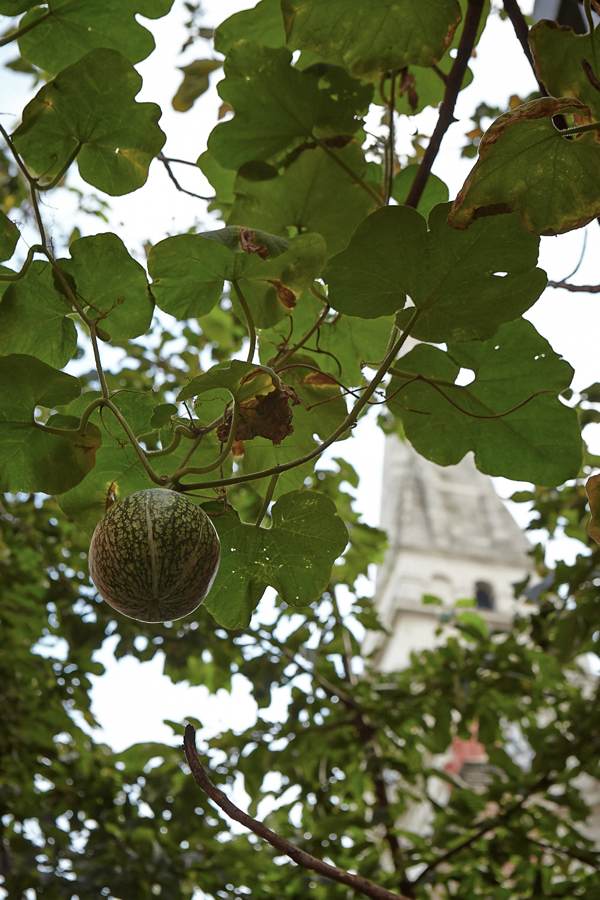
The tall, white steeple of Christ Church looms large over the entire garden

Arful Nessa, Gardener
Photographs copyright © Patricia Niven
You may also like to read about
The Secret Gardens of Spitalfields
Nicholas Culpeper in Spitalfields
Gardening Club at Virginia Rd School
Sarsparilla & Mineral Water Sellers
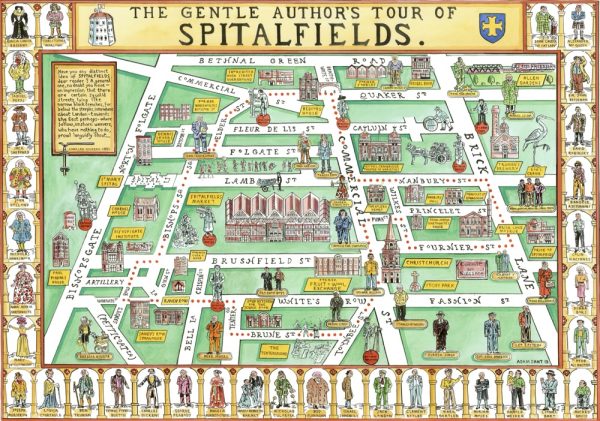
Click here to book for The Gentle Author’s Tours of Spitalfields, Whitechapel & The City
By coincidence, two readers – Christine Osborne & Janice Oliver – both sent me photographs of their ancestors who produced and sold soft drinks in the East End – Brandon’s Mineral Waters of Virginia Rd, Bethnal Green, and Moody’s Sarsaparilla of Rathbone St Market, Canning Town

William Brandon and his mineral water business, 112 Virginia Rd, Bethnal Green c.1887
“William Brandon is my great-great-great uncle, born 10th August 1840 in Bethnal Green as the youngest of seven children. In 1881, he was living with his wife Matilda and their nine children at 112 Virginia Rd where he was a Mineral Water Manufacturer.
I am fascinated by the large framed photographs hanging up on the outside of the building – the one in the centre might be an advertisement as it looks like it says ‘W. Brandon’ and I can even make out ‘Brandon’ stamped on the crates under the table. If you look at the sign at top right of photograph it shows a picture of a bow tie and I believe this is his trademark, as I have obtained an old bottle dug up from a Victorian dump in Stratford with the name ‘Brandon’ and a bow tie symbol.
When William died in 1905 he left £2,343 and Matilda took over the business. A newspaper obituary referred to “William Brandon, who was a mineral water manufacturer of note” and recorded his funeral “was of an imposing character.” He was a self-made man who lived all his life on the edge of the Old Nichol, but he must have had a good life compared to most people living there.” – Christine Osborne
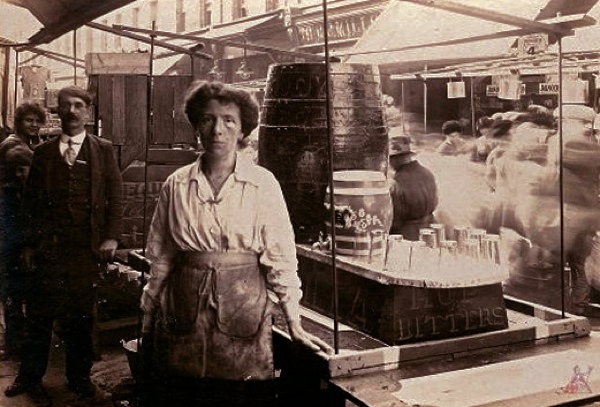
Annie Moody of Moody’s of Rathbone St Market, Canning Town c.1910
“My grandfather, George Moody, was born in Ramsgate in 1879 into a long line of seafarers, and became an Officer in the Navy and travelled the world. After marrying my grandmother, Annie Andrews who was born in Broadstairs, they moved to Canning Town in 1909 where he opened a Herbalists in Rathbone St and started making potions for everyday ailments, using knowledge of herbal medicine he had acquired on his travels. He also offered Homeopathy and local people came for consultations. I remember as a child helping to put ‘Rathbone’ skin ointment into tins, and there was also ‘Rathbone ‘ cough mixture and various other concoctions.
Soon he formulated a recipe for making a Sarsaparilla drink – sarsaparilla is a medicinal root which is reputed to help purify the blood. This was sold outside the shop from a stall which was equipped with barrels of the cordial and a water urn. It was served hot in the winter and huge blocks of ice were put into the water barrel to chill it in summer.
As a girl I used to ‘wash’ the glasses, which merely entailed dunking them into a bucket of cold water after use and leaving them upturned to drain. My mother told me that a famous drinks firm had offered money for the recipe but my grandfather would not part with it and I still have it until this day. So many people have requested it but it remains a family secret. My grandfather George died in 1945, but my mother and then an uncle continued with the business until the late seventies.” – Janice Oliver

Vera Moody of Moody’s of Rathbone St Market, Canning Town

You may also like to read about
In The Orchards At Brogdale
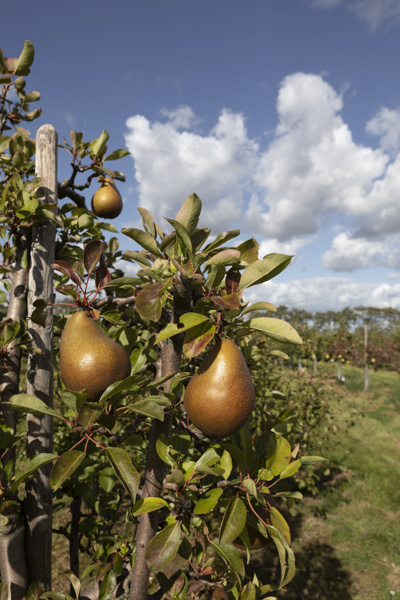
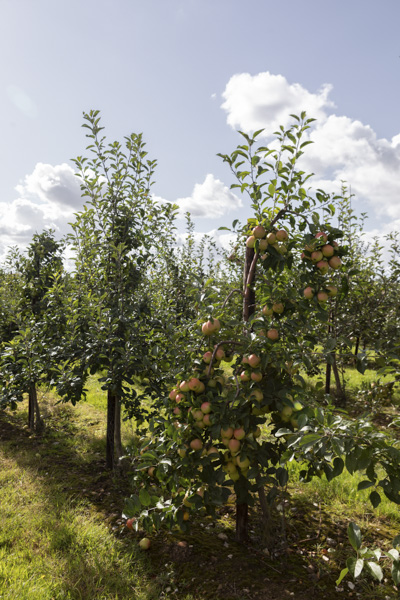
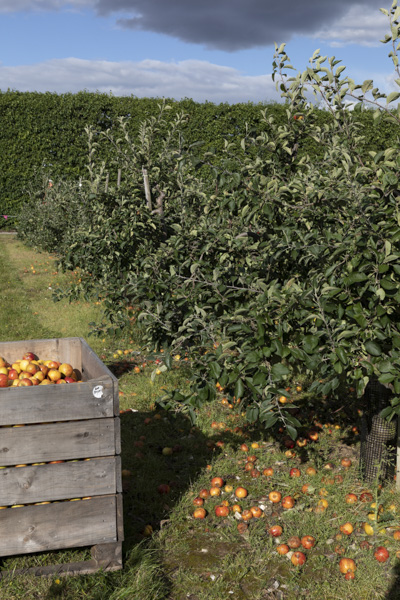
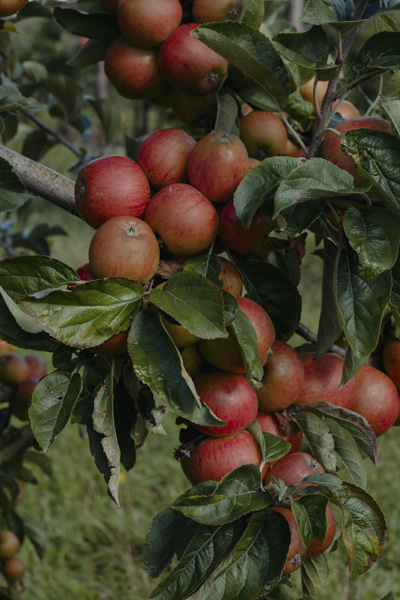
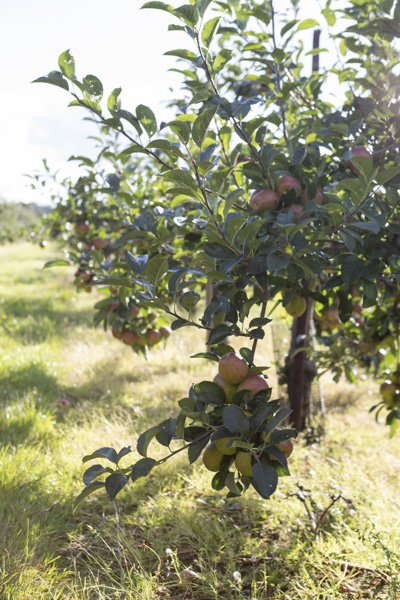
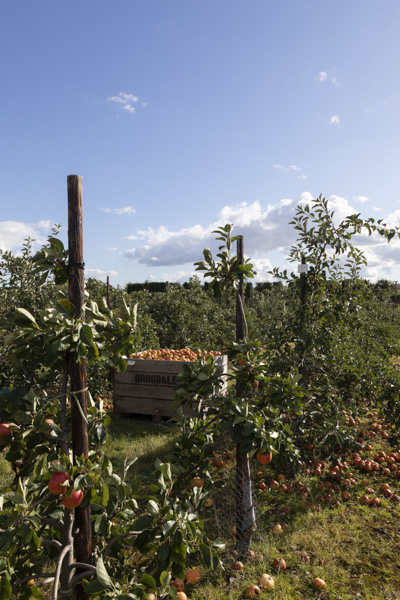
Years ago when I first visited the National Collection of Fruit Trees at Brogdale outside Faversham in Kent to enjoy the spring blossom, I vowed to go back in the autumn to admire the crop. This year, I fulfilled my ambition in the company of Contributing Photographer Rachel Ferriman and we were blessed with a golden afternoon in the North Kent Fruit Belt.
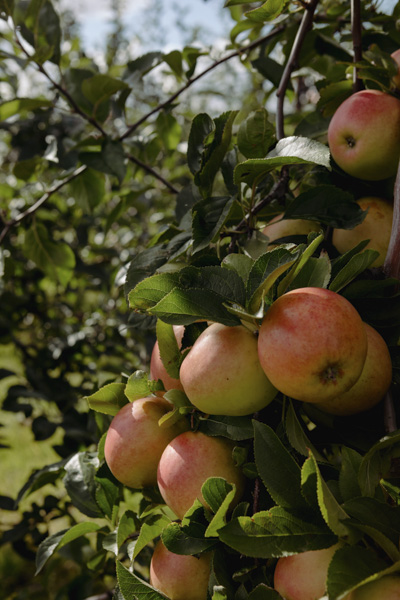
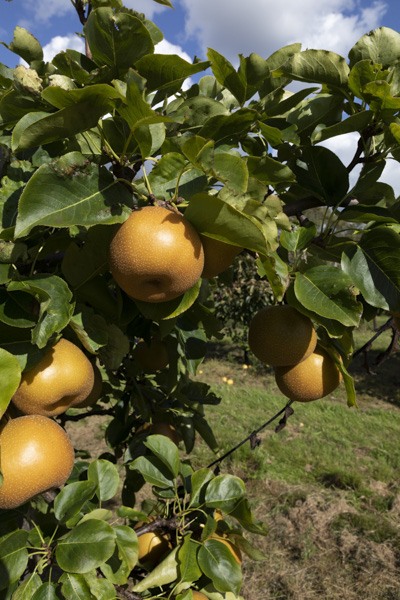
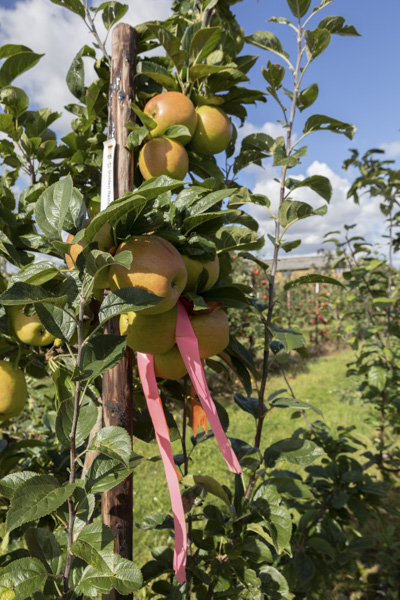
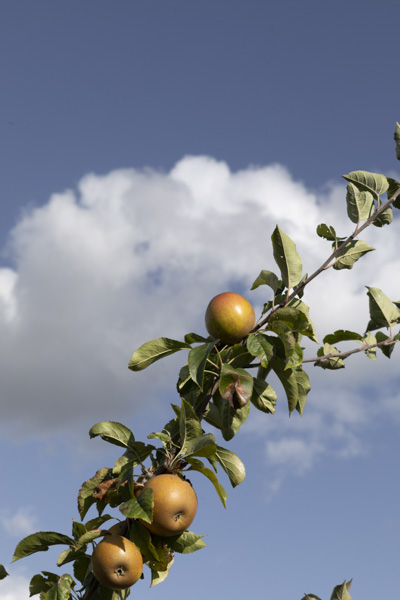
Nothing prepared me for the seemingly infinite variety of fruit that exists in nature. Walking into an orchard of two-thousand-two-hundred varieties of apple, all in fruit, is a vertiginous prospect that is only compounded by your guide who informs you this is merely a fraction of the over ten thousand varieties in existence.
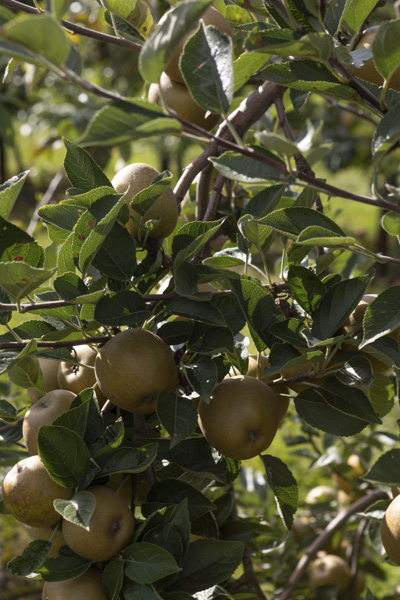
What can you do? Your heart leaps and your mind boggles at the different colours and sizes of fruit. You recognise russets, laxtons and allingtons. Even if you had all day, you could not taste them all. Despite the cold spring, it has been a good year for apples. You stand wonderstruck at the bounty and resilience of nature. Then you start to get huffy at the pitiful few varieties of mostly-bitter green apples available to buy in shops, always sold unripe for longer shelf life. How is this progress?
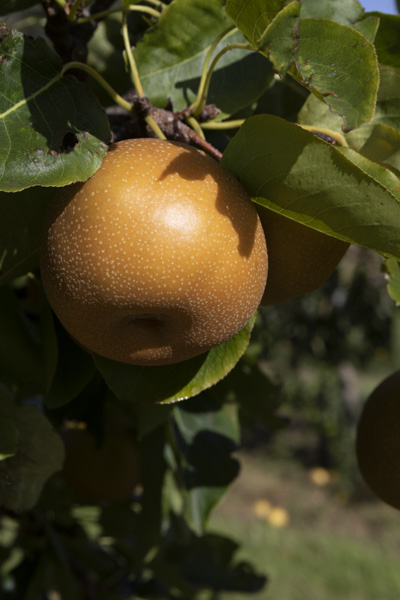
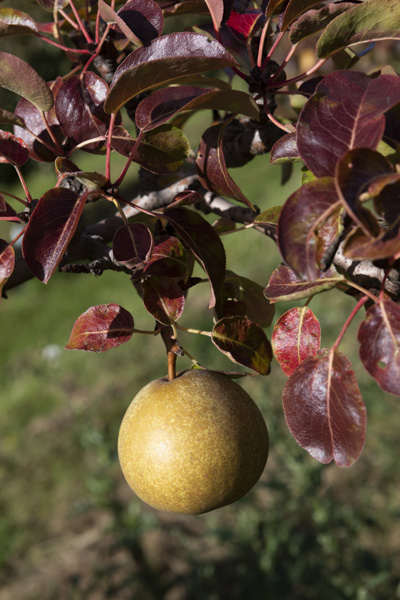
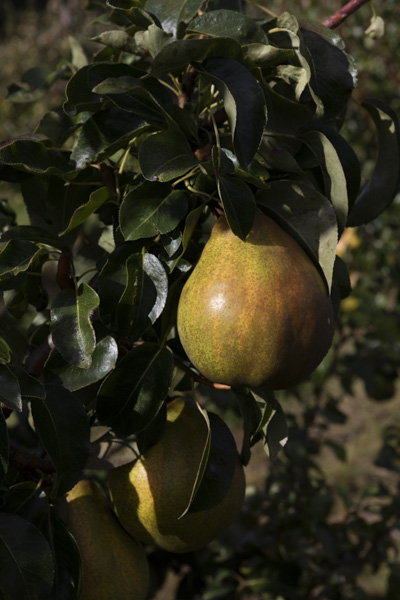
Yet this thought evaporates as you are led through a windbreak into another orchard where five hundred varieties of pear are in fruit. By now your vocabulary of superlatives has failed you and you can only wander wide-eyed through this latter day Eden.
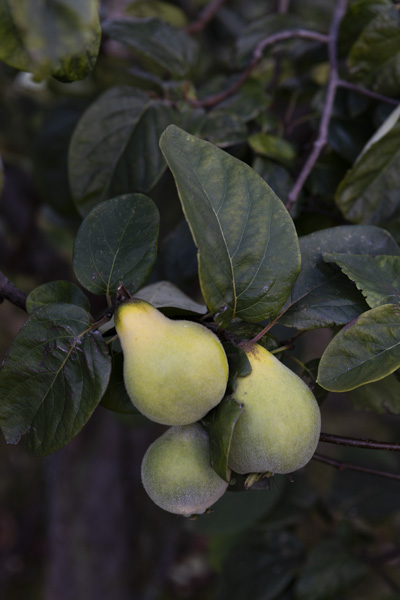
That afternoon there was no-one there but me, Rachel and the guide. We were delighted to have the orchards to ourselves. But this is when you realise the world has gone mad if no-one else is interested to witness this annual spectacle that verges on the miraculous. Walking on, as if in a medieval dream poem, you discover an orchard of medlars and another of quinces.
By now, your feet are barely touching the ground and you hatch a plan – as you munch an apple – to return at this same time of year, decide upon your favourite varieties and then plant your own orchard of soft fruit. When you stumble upon such an ambition, you realise that life is short yet we are all still permitted to dream.

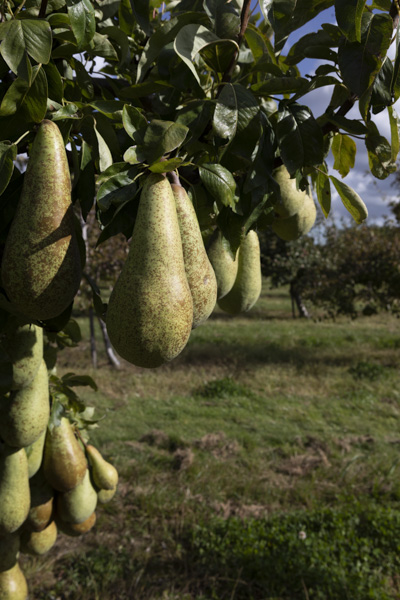
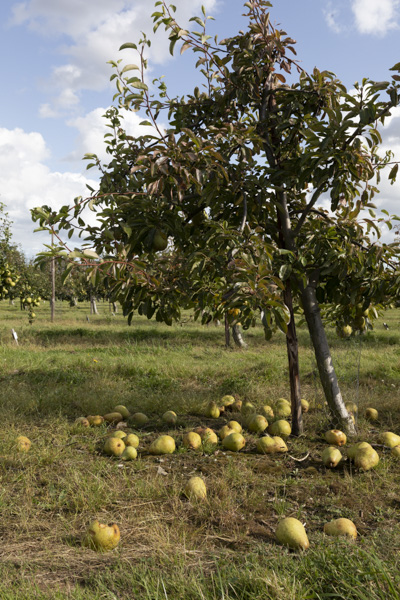
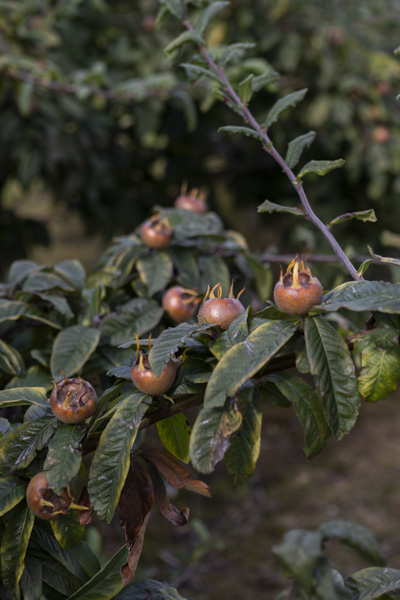
Medlars
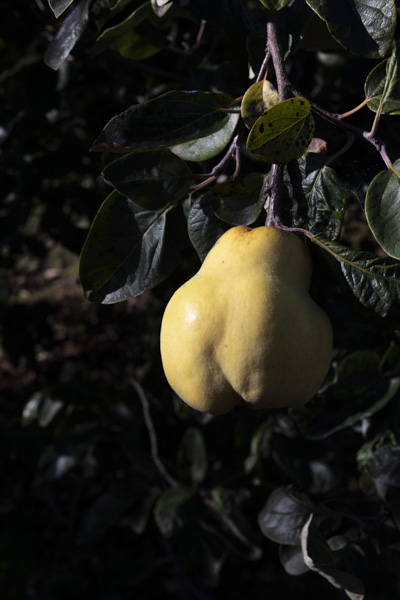
Quince
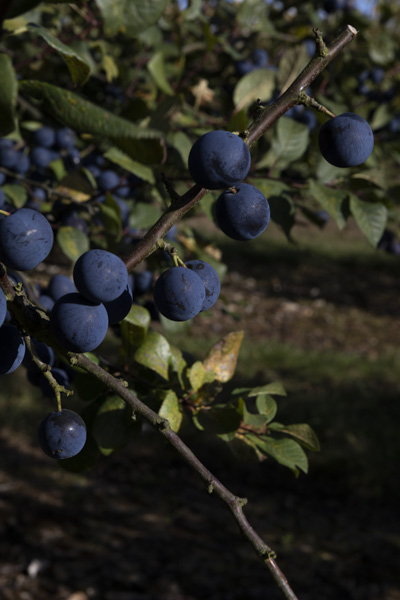
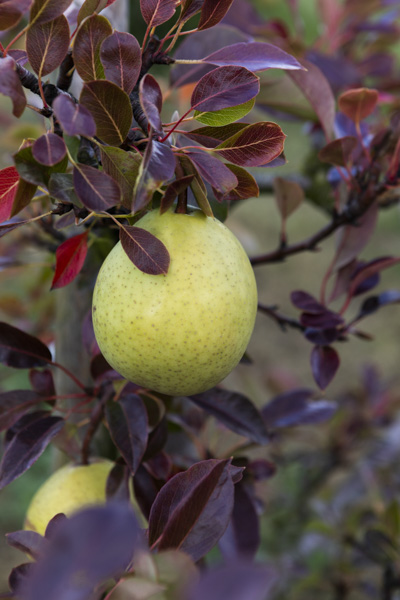
Plum
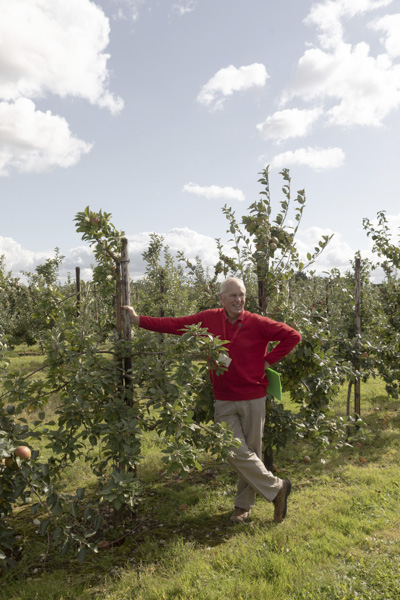
Mike Austen, our guide
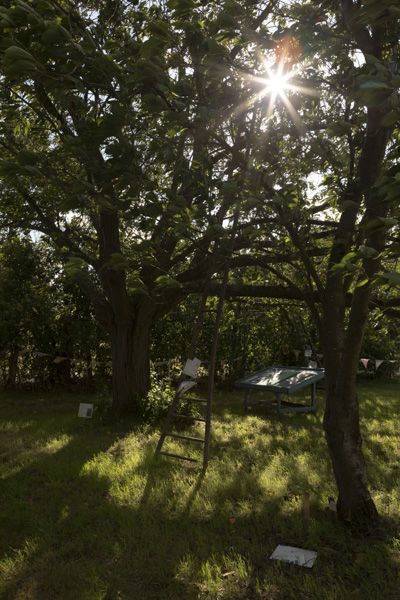
Photographs copyright © Rachel Ferriman
The National Collection of Fruit Trees at Brogdale
You may like to read about my first visit
John Thomas Smith’s Rural Cottages
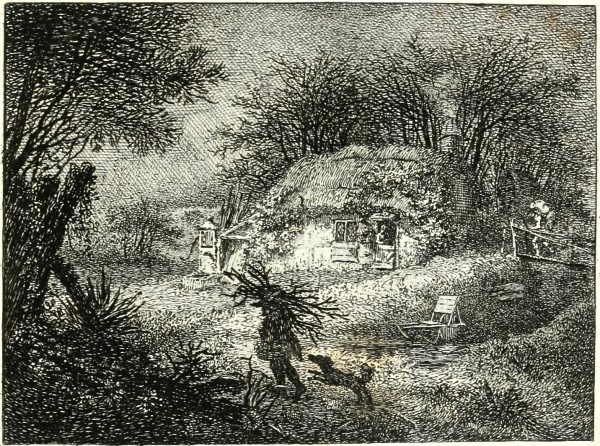
Near Battlebridge, Middlesex
As the equinox approaches and autumn closes in, I get the urge to go to ground, hiding myself away in some remote cabin and not straying from the fireside until spring shows again. With this in mind, John Thomas Smith’s twenty etchings of extravagantly rustic cottages published as Remarks On Rural Scenery Of Various Features & Specific Beauties In Cottage Scenery in 1797 suit my hibernatory fantasy ideally.
Born in the back of a Hackney carriage in 1766, Smith grew into an artist consumed by London, as his inspiration, his subject matter and his life. At first, he drew the old streets and buildings that were due for demolition at the turn of the eighteenth and nineteenth centuries in Ancient Topography of London and Antiquities of London, savouring every detail of their shambolic architecture with loving attention. Later, he turned his attention to London streetlife, the hawkers and the outcast poor, portrayed in Vagabondiana and Remarkable Beggars, creating lively and sympathetic portraits of those who scraped a living out of nothing but resourcefulness. By contrast, these rural cottages were a rare excursion into the bucolic world for Smith, although you only have to look at the locations to see that he did not travel too far from the capital to find them.
“Of all the pictoresque subjects, the English cottage seems to have obtained the least share of particular notice,” wrote Smith in his introduction to these plates, which included John Constable and William Blake among the subscribers, “Palaces, castles, churches, monastic ruins and ecclesiastical structures have been elaborately and very interestingly described with all their characteristic distinctions while the objects comprehended by the term ‘cottage scenery’ have by no means been honoured with equal attention.”
While emphasising that beauty was equally to be found in humble as well as in stately homes, Smith also understood the irony that a well-kept dwelling offered less picturesque subject matter than a derelict hovel. “I am, however, by no means cottage-mad,” he admitted, acknowledging the poverty of the living conditions, “But the unrepaired accidents of wind and rain offer far greater allurements to the painter’s eye, than more neat, regular or formal arrangements could possibly have done.”
Some of these pastoral dwellings were in places now absorbed into Central London and others in outlying villages that lie beneath suburbs today. Yet the paradox is that these etchings are the origin of the romantic image of the English country cottage which has occupied such a cherished position in the collective imagination ever since, and thus many of the suburban homes that have now obliterated these rural locations were designed to evoke this potent rural fantasy.
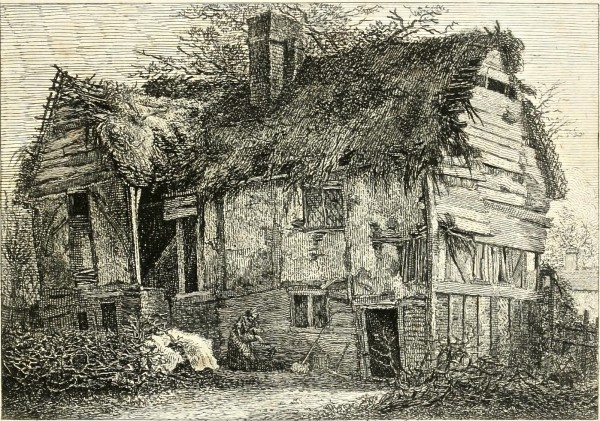
On Scotland Green, Ponder’s End
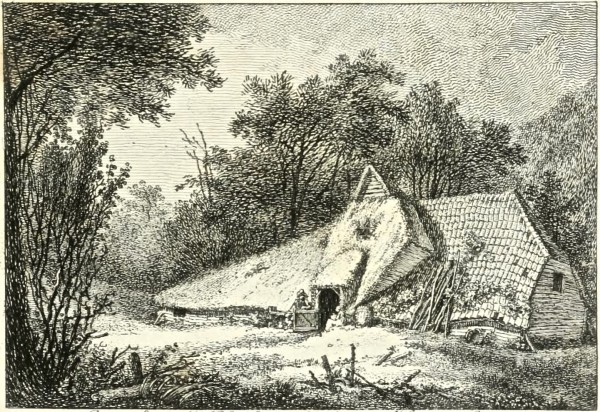
Near Deptford, Kent
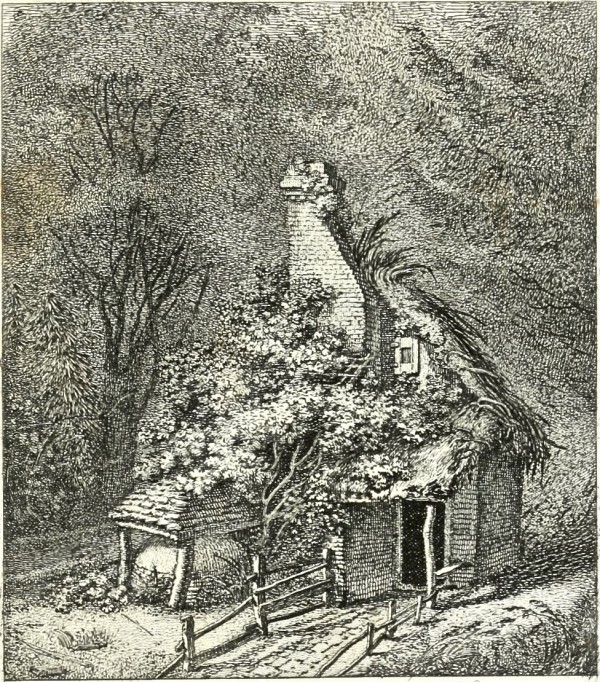
At Clandon, Surrey – formerly the residence of Mr John Woolderidge, the Clandon Poet
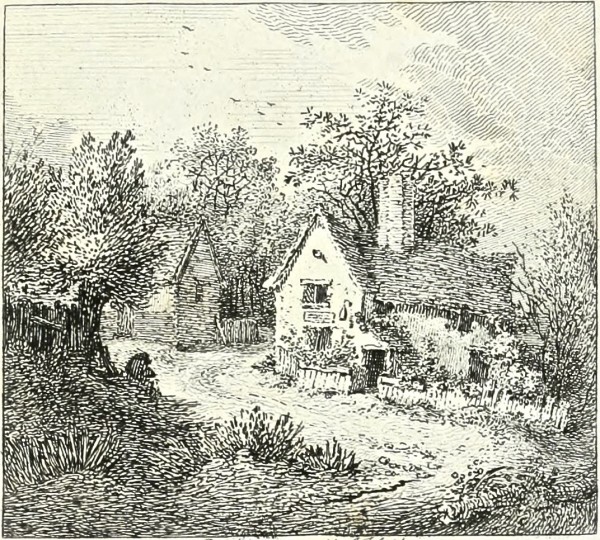
In Bury St, Edmonton
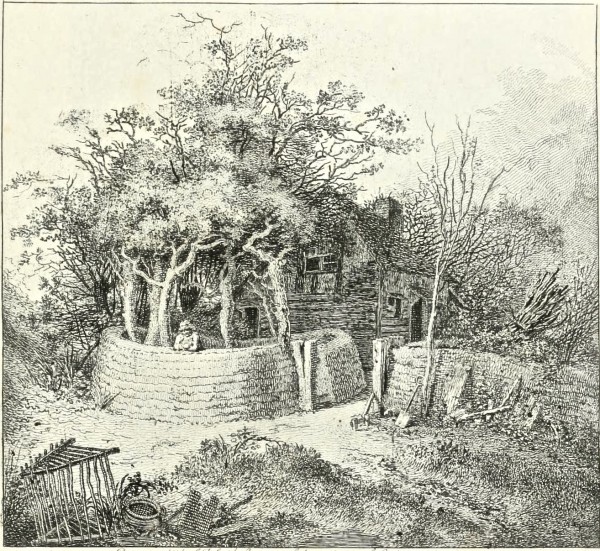
Near Jack Straw’s Castle, Hampstead Heath
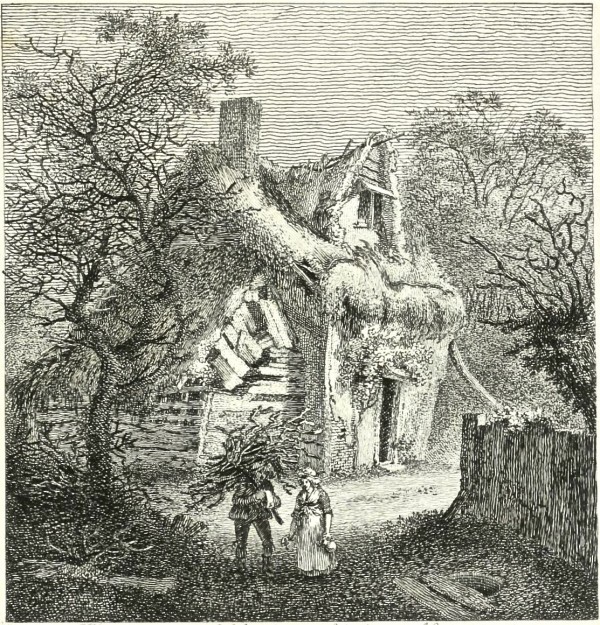
In Green St, Enfield Highway
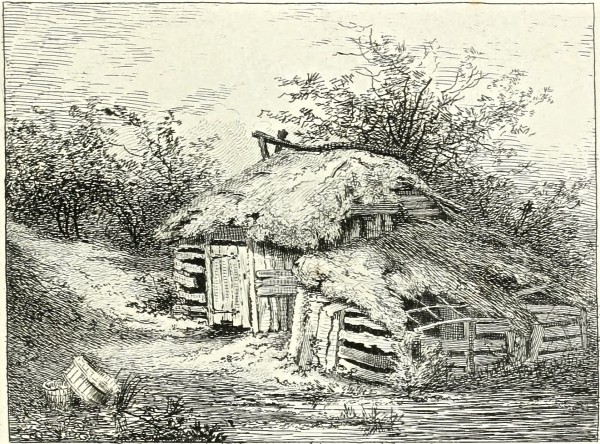
Near Palmer’s Green, Edmonton
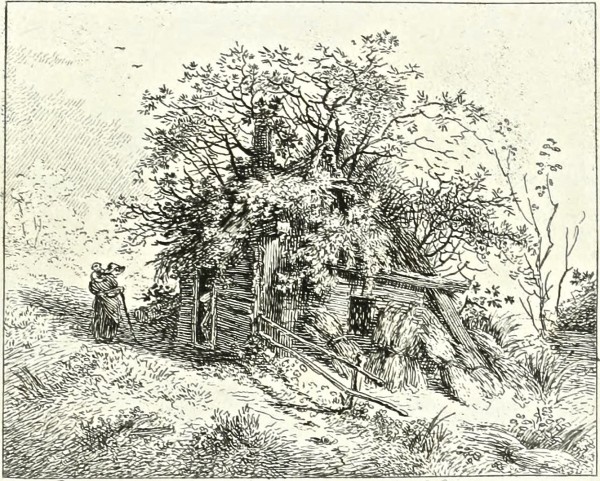
Near Ranelagh, Chelsea
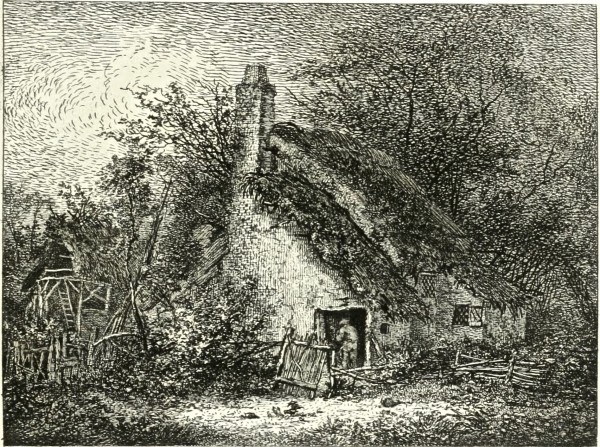
In Green St, Enfield Highway
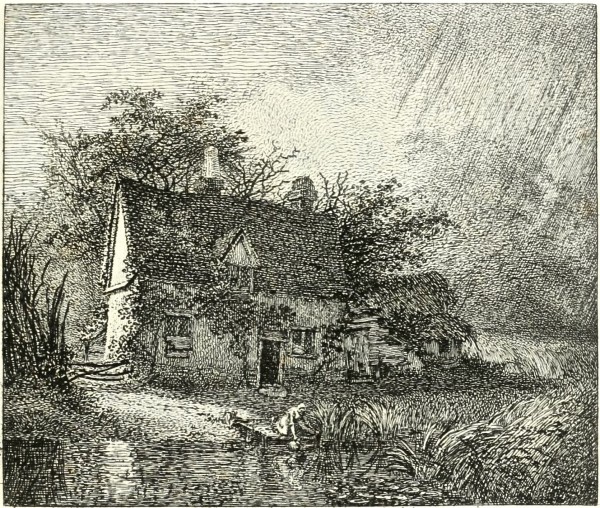
At Ponder’s End, Near Enfield
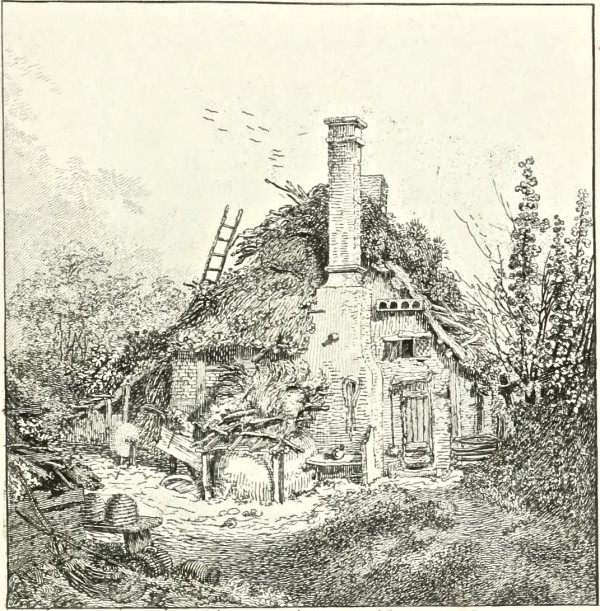
On Merrow Common, Surrey
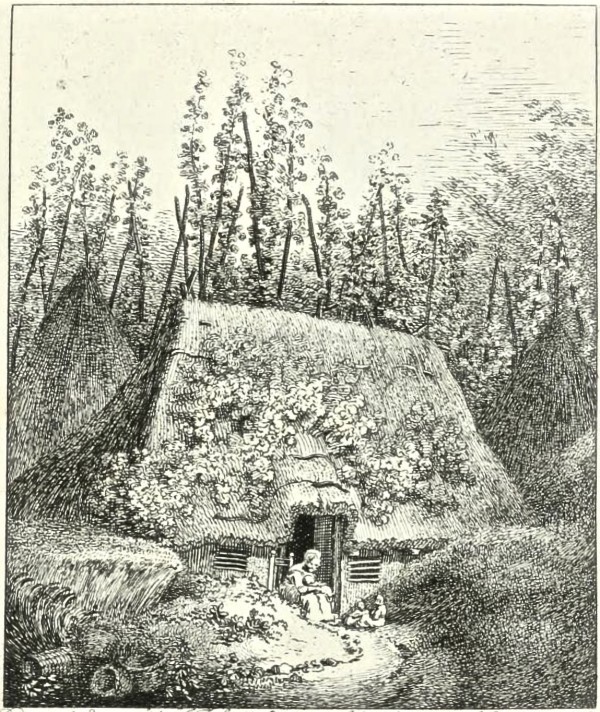
At Cobham, Surrey – in the hop gardens
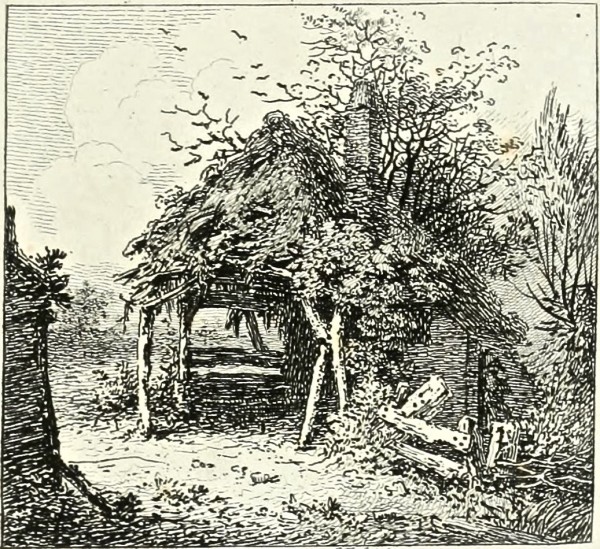
Near Bull’s Cross, Enfield
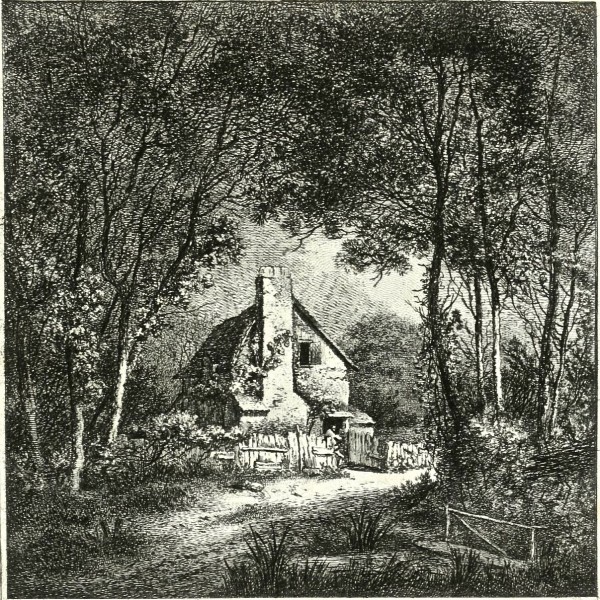
In Bury St, Edmonton
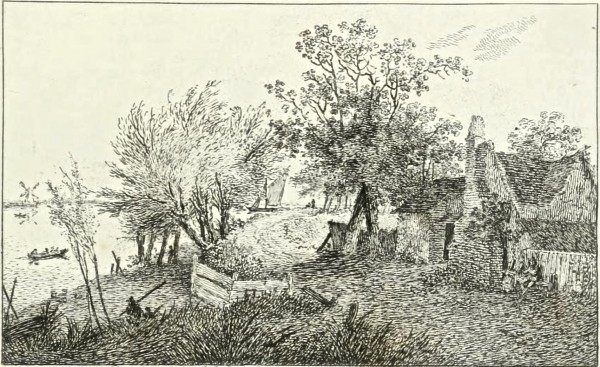
On Millbank, Westminster
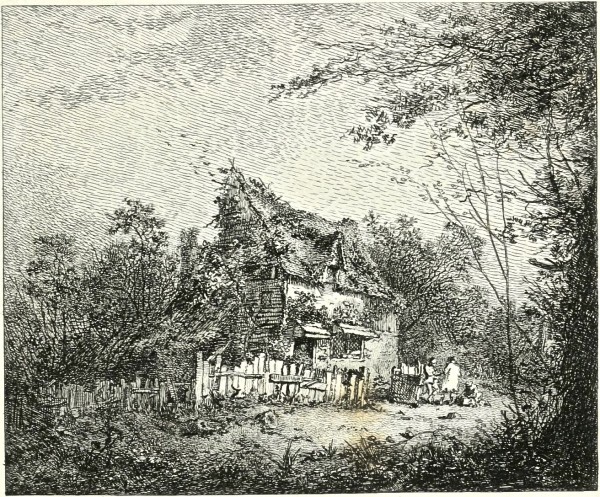
Near Edmonton Church
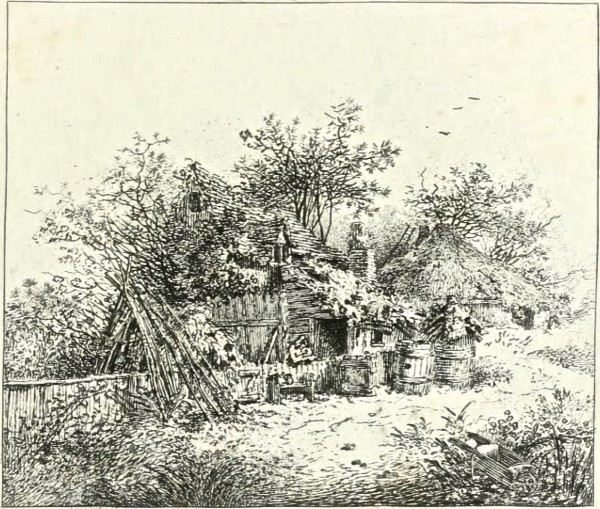
Near Chelsea Bridge
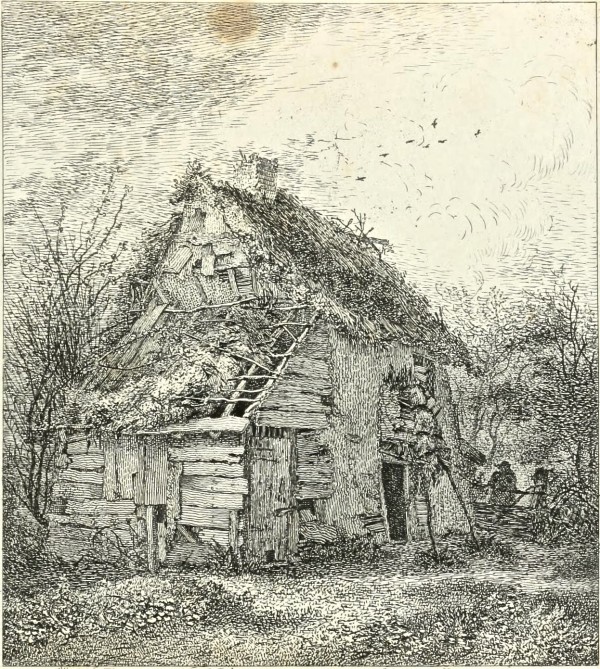
In Green St, Enfield Highway
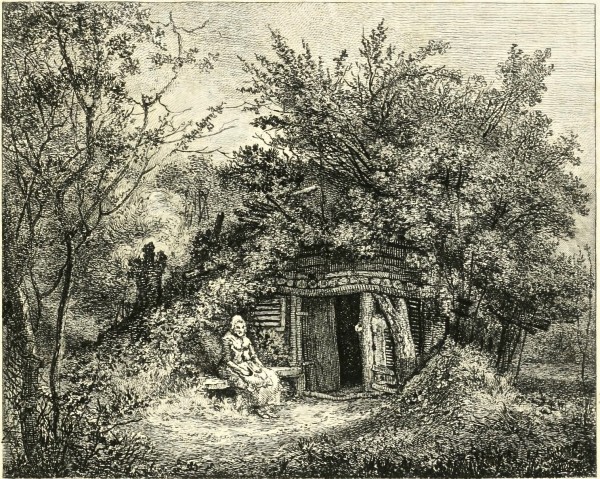
Lady Plomer’s Place on the summit of Hawke’s Bill Wood, Epping Forest
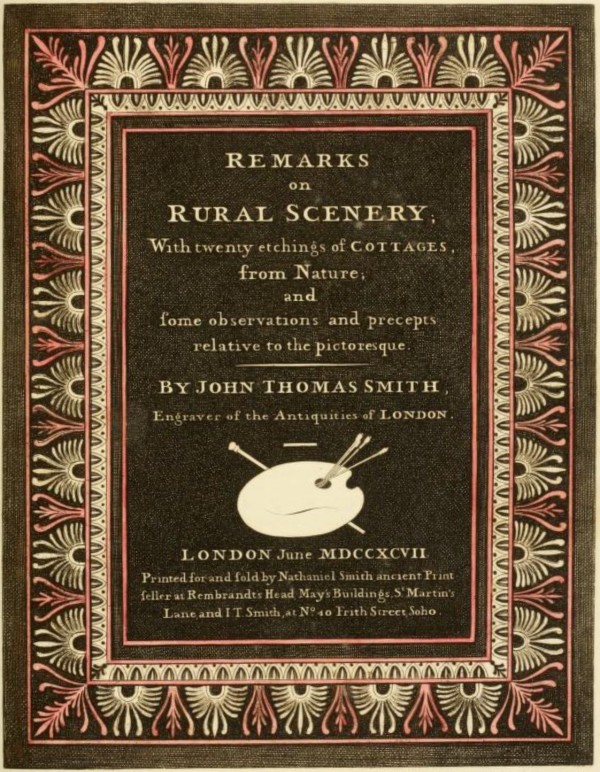
You may also like to take a look at these other works by John Thomas Smith
John Thomas Smith’s Ancient Topography of London
John Thomas Smith’s Antiquities of London
John Thomas Smith’s Vagabondiana
John Thomas Smith’s Vagabondiana II













