Why HAIL (The Human + AI Leadership Council) Was Started

Almost everything in life has a tradeoff. Fire cooks food and burns down villages. The automobile connected the world and reshaped it around collisions no one had a word for yet. Every meaningful technology arrives carrying both of these at once — and the gap between when the advance shows up and when society figures out how to hold it responsibly is usually where the damage happens.

I’ve watched this pattern up close once already. I’d like to explain why I’m not willing to watch it happen the same way twice.

I saw the upside of social media. I missed the cost.

When social media emerged, I understood immediately what it meant for marketing. I could see how a skilled marketer with a real strategy could use these platforms to reach a massive audience and move it — build product adoption, build brand favorability, build loyalty at a scale that hadn’t existed before. I was right about that, and it’s mostly what I paid attention to.

What I was naive about was everything else it would do on the way there.

We now have a substantial body of evidence that heavy social media use is associated with real harm to mental health, particularly among adolescents. The U.S. Surgeon General’s 2023 advisory found that children and adolescents who spend more than three hours a day on social media face roughly double the risk of experiencing symptoms of depression and anxiety — and that up to 95% of teens report using a social media platform at all, with a third saying they use it “almost constantly.” Pew Research has since tracked the shift in how teens themselves see it: in 2022, 32% of teens said social media has a mostly negative effect on people their age. By 2025, that number had climbed to nearly half. The people living inside the platforms are telling us, in growing numbers, that the platforms are hurting them.

I don’t think anyone building those platforms sat down and designed for that outcome. I think it’s what happens when an enormously powerful technology gets deployed at ubiquitous scale before anyone has done the work of guiding it into how people actually live — our norms, our culture, our psychology, our behavior.

That is the mistake I don’t want to make again.

AI is the same pattern, except faster and far more powerful

Technology innovation isn’t something to resist. It’s something to accept — and then do the harder work of shaping so it strengthens rather than erodes the norms, culture, and behavior we already have. Nothing this powerful can be handed to everyone, everywhere, with no guidance on how to use it, and be expected to land well by accident. That’s true of social media. It’s true of AI, at a different order of magnitude.

AI is genuinely extraordinary — for helping and for hurting, often through the exact same mechanism. The difference between those two outcomes is almost never the model. It’s whether a human being was actually driving.

We’ve already watched this play out inside real companies. Microsoft’s Tay chatbot was manipulated into offensive output within a single day of unsupervised public interaction. Amazon quietly killed an internal recruiting tool after discovering it had taught itself a bias against women from a decade of historical resumes nobody had checked closely enough. Zillow shut down its algorithmic home-buying arm after automated pricing led to systematic overpaying, a write-down north of $500 million, and roughly 2,000 job losses. In each case, the technology did exactly what it was trained to do. The failure was upstream — in the absence of a human checking direction and reviewing output before it caused damage.

The Grant Thornton 2026 AI Impact Survey — nearly 1,000 senior business leaders — put a number on how widespread this gap still is: 46% cited AI governance or compliance failures as a leading cause of their own AI underperformance, and more than three-quarters said they lack confidence they could even pass an independent AI governance audit within 90 days. This isn’t a technology problem being reported. It’s a leadership problem, wearing a technical costume.

Who is going to make sure AI gets used well?

Not, I think, our government — at least not soon enough to matter for the decisions your business is making this year. As of mid-2026, the United States still has no comprehensive federal AI law. What exists instead is a fast-growing patchwork of state rules — Colorado, California, Texas, Illinois, and others each moving at their own pace, with different definitions of what counts as “high-risk,” different disclosure requirements, and an unresolved fight over whether federal preemption will ever arrive to unify any of it. If you’re waiting for Washington to define responsible AI use for you, you may be waiting for a while — and your competitors, your customers, and your own AI deployments won’t wait with you.

So if it’s not government, and it’s not the vendors selling the tools, it has to be the people actually using AI to run businesses. Not in theory. Not as a talking point on a keynote slide. As an ongoing, collective act of judgment.

That means people committed to AI implementations that are genuinely safe and that work within frameworks that already exist — modifying them, where they don’t yet fit, so AI serves people with the most positive outcomes and the least collateral damage. It means people with real subject-matter expertise in their own domain who are willing to sit down with people who have real expertise in different domains, and work out, together, what “done well” actually looks like before the mistake happens rather than after.

This is why HAIL exists.

HAIL — the Human + AI Leadership Council — is a private, founding-member invitation-only council built on exactly that premise: AI without human leadership is just expensive guesswork, and the people best positioned to prove otherwise are the leaders already doing the work, in conversation with each other. It’s organized around the #AIsandwich philosophy — human judgment sets the direction, human judgment reviews what comes out, and AI does the work in between. Not because AI can’t be trusted in the middle. Because the middle was never the part that required trust in the first place.

Membership in that room is private. What the room produces isn’t — more on exactly how to follow that at the end of this piece.

There’s a version of this argument that’s also just competitive reality: AI access itself is becoming a commodity. Everyone will soon have the same models, at the same price, in the same week they launch. When that happens, the only differentiator left standing is the quality of the judgment surrounding the tool — who set the direction, who reviewed the output, who was accountable for what shipped. Companies that build that judgment deliberately, now, will be the ones still standing when the tools themselves stop being a source of advantage at all.

The question, then, is a simple one.

Are you someone who wants AI to produce results that are safe, pragmatic, and genuinely superior — not results that merely look impressive in a demo? Are you someone who wants to make sure that when you use AI, or when the next generation inherits it, it’s been shaped to fit our culture and our society — rather than left to run perpendicular to it?

If that’s you, you already understand why HAIL exists. The only remaining question is whether you’re going to help build it, or watch it get built from the outside.

“Human first. Technology second.”

How to Follow Along

Founding membership in HAIL is private and by invitation — but you don’t have to wait for an invitation to see what’s coming out of it.

Follow the public conversation. After every council gathering, real, anonymized insights get published for anyone to read — no membership required. Join The HAIL LinkedIn Group to follow along.

Request consideration as a Founding Member. HAIL is deliberately small — twelve to fifteen leaders, each bringing a distinct professional lens. If that sounds like you, DM Steve Goldner directly to start the conversation.

Know someone who belongs in this room? Share this article, or send them straight to the Group. The people who need to hear this argument most rarely go looking for it themselves.

Leave a comment

Filed under AI, HAIL, leadership

AI Has Always Meant Two Things to Me

For years, before the world decided “AI” meant Artificial Intelligence, it meant something else on my notepad: Action Item.

Every meeting, every strategy session, every late-night notebook page — “AI” was the shorthand I scrawled next to the thing that came after the thinking. After the question got asked. After the problem got named. After a human decided something needed to change. AI was never the idea. It was what you did because of the idea.

Now the rest of the world has caught up to the letters, just not — yet — to the order of operations.

The Acronym Got Bigger. The Sequence Didn’t Change.

Artificial Intelligence is real, it is powerful, and it is one of the most consequential tools leadership has ever had access to. None of what follows is an argument against that. It’s an argument about placement.

Because here is what I keep watching organizations get backwards: they reach for the artificial intelligence before they’ve done the human work that should produce the action item.

They deploy a model before they’ve named the problem. They automate a process before anyone asked whether the process was still the right one. They chase a capability because it exists, not because a human, sitting with a real need, decided it was the answer.

That’s AI without an AI. Artificial Intelligence without an Action Item behind it. Horsepower with no destination.

Where AI (Artificial Intelligence) Actually Belongs

Human-led problem solving has always followed a sequence, whether we wrote it down or not:

  1. A human identifies a real need. Not a hypothetical one, not a buzzword-driven one — a real gap, inefficiency, or opportunity that a human being, close to the work, actually feels.
  2. A human asks the right question. This is the step everyone skips. The quality of everything downstream depends entirely on whether the question was sharp, honest, and specific.
  3. A human defines what “solved” looks like. Before any tool enters the picture, someone has to know what success is supposed to produce.
  4. Only then does artificial intelligence become the action item. This is its rightful seat — not the source of the question, but the response to it. The execution engine for a direction a human already set.
  5. A human reviews the output. Judgment doesn’t get automated away just because the labor did. Someone has to ask: did this actually solve what we said we were solving?

Skip steps one through three, and step four stops being an action item and starts being a substitute for leadership.

Two Letters, One Discipline

I didn’t invent the acronym overlap on purpose — it found me. But the more the world treats “AI” as a single, self-sufficient answer, the more useful I’ve found it to hold onto the other definition, the one that was on my notepad long before anyone else’s roadmap.

Artificial Intelligence is the how. It was never meant to be the why. Action Item is the what happens next — after a human has already done the harder work of deciding it should.

The organizations that will get this right in the next decade won’t be the ones with the most advanced models. They’ll be the ones with leaders disciplined enough to keep asking the human questions first, and confident enough to let AI — both meanings — do exactly the job each one was built for: intelligence in service of a decision a human already made, and action taken only once that decision was real.

That sequence isn’t a limitation on what artificial intelligence can do.

It’s the reason it will do it well.

Leave a comment

Filed under AI

Do Something Great, Then Tell Your Story

Media is extremely powerful.

It grabs attention and magnifies both truth and manipulation. It is used as bait and it is used for reinforcement. Short-term spikes often lead to resentment, while consistent and intentional media use builds long-term connectivity and engagement. The key element is trust. Is your participation in media increasing trust with your audience — or revealing an embellished reality? Which side of that equation do you want to be on?

For companies that seek long-term viability, growth, and profitability, there is one guiding principle I have built my advisory practice around:

“Do something great and differentiated for a specific target audience before you tell your story.”

Why Most Companies Get This Wrong

As a marketing advisor who was on the forefront of professional social media and digital technologies that fundamentally changed marketing communication, I have seen the same mistake made repeatedly: companies believe they are “brand building” by creating visuals — logos, fonts, videos — that they hope will be adored by the masses. That is not brand building. That is decoration.

Real brand building starts with strategic clarity. Before you define or invest in your brand, you need clear, honest answers to five questions:

  1. What is your brand position?
  2. What is your value proposition?
  3. What is the tone of your brand?
  4. What is the compelling reason to buy your product or service?
  5. Who, specifically, is your target audience?

These are not one-time exercises. They are the continuous guides to your company’s purpose — the inputs to your brand definition, your go-to-market strategy, and every media decision you make. Without them, your marketing is noise. With them, it becomes a compounding asset.

The Role of Media and the Demand for Trust

Effective use of media to drive business success, as opposed to simply shouting at the masses, demands trust. And the best way to build trust is to first demonstrate that the story you are telling has already been adopted by people similar to those you are targeting.

A brand is simultaneously 1) a promise (what you commit to delivering), 2) a reputation (what you have actually earned over time), 3) an identity (the visual and verbal cues that signal who you are), 4) an expectation (the mental shortcut that predicts your next behavior), and 5) a relationship (the ongoing emotional bond with a specific audience). Getting all five of those dimensions aligned is exactly the work I do with the organizations I advise.

What This Looks Like in Practice

The most successful companies in the world followed this discipline, often without naming it. Here is what they did, and what it produced:

1. Product-Market Fit Precedes Narrative – Slack Slack didn’t launch with a marketing campaign. It launched with a working product for internal teams, then let word-of-mouth do the talking. By the time they told their story publicly, they had undeniable proof: 8,000 companies signed up on day one of public launch. The differentiation is real-time team messaging replacing email which was felt before it was pitched.

2. Solve a Real, Specific Pain Point – Airbnb Airbnb’s early success wasn’t built on storytelling. It was built on solving a painful, specific problem: affordable short-term stays for travelers during sold-out events. Their first customers were conference attendees in San Francisco who couldn’t find hotel rooms. The proof came before the pitch and that specificity turned into a $75B+ company.

3. Retention and NPS as the Foundation – Apple (iPod Era) Before Apple told the story of “1,000 songs in your pocket,” the product had to actually deliver that experience. Word-of-mouth retention was extraordinary before major ad spend ever began. The iconic campaign amplified something already proven but it didn’t create it.

4. Do the Unscalable Thing First – Amazon Jeff Bezos famously fulfilled early orders himself, ensuring the experience was exceptional before scaling. The differentiation was vast selection, reliable delivery, customer obsession and was proven at small scale before Amazon told its story to the world. That operational excellence became the brand.

5. Category Creation Through Proof – Salesforce Salesforce didn’t just claim “No Software.” They built a demonstrably better CRM in the cloud and let early adopters validate it. By the time they ran their famous “End of Software” campaigns, thousands of businesses had already experienced the difference. The story stuck because the proof existed.

6. B2B Word-of-Mouth Before Brand – HubSpot HubSpot built an entire methodology around Inbound Marketing and gave it away for free through tools and education. They created genuine value for a specific audience (small-to-mid-size marketers) before launching any significant brand narrative. The result was organic growth that made their eventual IPO story credible.

7. Net Revenue Retention as Proof — Snowflake Snowflake achieved 158%+ net revenue retention, meaning existing customers spent dramatically more over time. That metric was the proof of differentiated value before the story could be told at scale and it underpinned one of the largest software IPOs in history.

The Pattern Is Always the Same

CompanyDifferentiated Act FirstStory That Followed
SlackBuilt product teams loved“Where work happens”
AirbnbSolved real housing gaps“Belong Anywhere”
AppleDelivered 1,000 songs reliablyIconic “iPod” campaign
AmazonObsessive customer fulfillment“Earth’s most customer-centric company”
SalesforceProved cloud CRM works“End of Software”
HubSpotGave inbound tools away freeInbound Marketing movement
Snowflake158%+ NRR retention“The Data Cloud”

In every case, the story had receipts. Investors, customers, and press amplified narratives that were already validated by real-world behavior making marketing dramatically more efficient and more credible.

The Work That Makes the Story Worth Telling

The through-line across every principle, framework, and example here is deceptively simple: credibility cannot be manufactured, only earned. In a media landscape where audiences are increasingly skeptical of polished narratives and empty promises, the companies that win long-term are the ones that lead with substance … a real product, a genuine solution, a specific audience served exceptionally well.

This is the work I have dedicated my career to. I help companies answer the five foundational questions with precision, align their brand across every dimension, and build the kind of market proof that makes their story impossible to ignore. The strategic clarity I bring has helped organizations stop wasting resources on marketing that doesn’t convert and start building the trust that turns customers into advocates and advocates into growth.

If you are ready to do something great before you tell your story, I would welcome the conversation.

Leave a comment

Filed under Uncategorized

Human Leadership, AI Optimized

AI is no longer emerging — it is operational.

There is little debate left about whether companies will use AI. The real question is how it will be guided — and by whom.

If every company has access to the same technology, AI itself cannot be the differentiator. Leadership becomes the differentiator.

Human leadership sets direction.
AI helps light the path.

Executive leadership defines strategy, priorities, and outcomes. AI strengthens those efforts by expanding analysis, accelerating execution, and challenging assumptions. But technology does not replace leadership — it amplifies it.

Leadership judgment remains essential not because AI is weak, but because business decisions involve ambiguity, consequence, and accountability.

There are capabilities AI cannot own:

  • Judgment under uncertainty
  • Ethical responsibility
  • Context beyond data
  • Risk ownership
  • Meaning-making
  • Vision creation

AI can recommend actions. Only humans bear the consequences of acting on them.

When AI is allowed to lead rather than support, predictable patterns emerge:

  • Strategy becomes averaged and commoditized
  • Brands drift toward sameness
  • Decisions optimize short-term signals over long-term value
  • Differentiation erodes

Leadership today is less about control and more about alignment — creating trust, shared understanding, and organizational confidence. AI can generate answers, but it cannot create belief.

Leaders interpret meaning for teams. AI produces information; leaders produce confidence.

Leadership in an AI Era

The role of leadership is not shrinking — it is evolving.

As AI expands capability, leadership responsibility shifts:

  • Prompting becomes clarity of thinking
  • Curation replaces volume creation
  • Decision framing becomes a strategic skill
  • Governance becomes leadership work

In practice, the relationship looks like this:

Human Leadership + AI Optimization

  1. Humans define meaning
  2. AI expands possibility
  3. Humans choose direction
  4. AI accelerates execution
  5. Humans own outcomes

AI increases the importance of leadership rather than reducing it.

Why Marketing Reveals This Most Clearly

Marketing provides one of the clearest examples of human-led, AI-supported work.

Marketing operates in perception, emotion, trust, and narrative — all fundamentally human constructs. Because of this, marketing exposes both the power and the limits of AI.

Technology can optimize communication.
Only leadership can define what the company stands for.

Consider how strategy actually begins.

Marketing strategy starts with brand definition, followed by go-to-market planning and execution. Brand building is not a design exercise; it is the disciplined process of shaping how a company is understood and trusted over time. It establishes meaning through value proposition, storytelling, and consistent experience.

This work must be led by a marketing leader.

It often begins with a creative brief that answers foundational questions:

  1. What is our brand position?
  2. What is our value proposition?
  3. What is the tone of our brand?
  4. Why should customers choose us?
  5. Who exactly is our audience?

These answers originate from leadership judgment — not algorithms.

AI then becomes a powerful collaborator. Leaders can ask AI to critique definitions, pressure-test positioning, analyze competitors, refine personas, and surface blind spots. The outputs are not decisions; they are perspectives.

The leader remains the editor, accountable for outcomes.

Operationalizing AI Without Losing the Brand

Once direction is defined, teams can use AI to enhance execution across content, campaigns, social media, email, and advertising. Efficiency increases — but consistency requires structure.

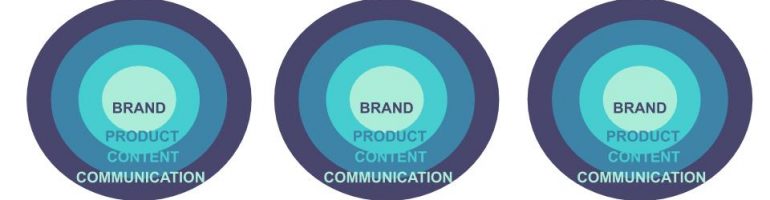
This is where a clear Brand Communication Framework becomes essential, defining:

  • Brand, company, and communication goals
  • Core brand values
  • Brand voice — including tone, language, and boundaries (“what is” and “what is not”)
  • Engagement and style guidelines
  • Standards for imagery, content, and visual assets
  • Grammar and response principles
  • Community interaction and engagement expectations

AI scales execution. Leadership protects coherence.

AI is not responsible for your company’s reputation, growth, or strategic direction. Leaders are.

Used well, AI expands ideation, accelerates production, and improves optimization. Used poorly, it amplifies confusion.

The Emerging Reality

The companies that succeed will not be those that use AI the most.

They will be the ones whose leaders know:

  • which questions are worth asking
  • which signals matter
  • and which outcomes are worth pursuing.

AI does not diminish leadership. It raises the standard for it.

Technology changes quickly. Leadership principles do not. The organizations that navigate change successfully are rarely the ones chasing every new tool, but the ones willing to think clearly about who they are, who they serve, and where they are going. AI is simply the newest instrument available to leaders — powerful, imperfect, and most valuable when guided by experience and judgment. The real opportunity today is not adopting AI faster, but leading more intentionally.

If these ideas resonate, I always welcome conversations with leaders exploring how strategy and AI can work together thoughtfully. The most interesting discussions today are not about tools — they’re about direction.

Leave a comment

Filed under AI

Struggling With Marketing Impact? Fix This One Thing.

If your marketing organization isn’t driving the impact you expect, there’s likely one fundamental issue holding it back:

Marketing is being measured and compensated on the wrong outcomes.

To transform accountability, performance, and business results, companies must shift one core principle:

Make marketing success based on growth—not sales.

And because compensation drives behavior in any organization, variable income (equity, bonuses, commissions) for marketing leaders must also be tied to growth metrics, not sales outcomes.

Growth Should Be Marketing’s Responsibility (or Shared, but Led by Marketing)

Marketing Drives the Pre-Sales Engine

Marketing is responsible for creating the inputs required for revenue:

  • Awareness
  • Demand
  • Lead generation
  • Nurturing
  • Qualified pipeline

Sales converts what marketing creates. Without strong marketing upstream, sales becomes inefficient, unpredictable, and overly dependent on short-term pushes.

Marketing’s Role Correlates With Higher Growth Outcomes

Research backs this up. Companies where CEOs place marketing at the center of growth strategy are twice as likely to achieve more than 5% annual revenue growth compared to those that don’t. McKinsey & Company

This isn’t coincidence. It’s structure.

When marketing is integrated into growth accountability—not just branding or communications—companies grow faster and more consistently.

Marketing Functions Naturally Align With Growth Metrics

Modern marketing operations are directly tied to metrics that expand revenue:

  • CAC (customer acquisition cost)
  • CLV (customer lifetime value)
  • Conversion rates across the funnel
  • Retention and engagement
  • Pipeline velocity

Advanced analytics like marketing mix modeling now quantify marketing’s contribution to revenue with precision—finally closing the gap between marketing actions and financial outcomes.

Marketing Enables Sales Success

Marketing prepares the landscape that makes sales productive:

  • Market segmentation
  • Positioning and differentiation
  • Messaging and storytelling
  • Lead generation and qualification

With aligned “smarketing” models, shared accountability for growth, not sales quotas alone, dramatically improves revenue performance.

Why Marketing Incentives Should Be Based on Growth, Not Sales

Sales Incentives Motivate Closing, Not Growth

Traditional sales compensation is effective for closing deals already in the pipeline—but that’s the problem. Sales compensation:

  • Focuses on capturing demand, not creating it
  • Encourages short-term deal chasing
  • Rarely supports new market development
  • Does not improve long-term customer value

Sales quotas do not fix weak demand. They just pressure sales teams.

Marketing Incentives Drive Sustainable, Strategic Growth

Linking marketing compensation to growth encourages the behaviors companies need:

  • Increasing pipeline volume and quality
  • Reducing CAC
  • Improving retention
  • Expanding into new markets or segments
  • Strengthening brand equity
  • Increasing lifetime value

This builds a healthier, more predictable revenue engine—the foundation for scale.

Aligned Incentives Reduce Dysfunction

Misaligned incentives often lead to:

  • Marketing focusing on vanity metrics
  • Sales closing low-quality deals for quota
  • Friction between departments
  • Pipeline volatility

Tie marketing to growth outcomes, and you create unified accountability across marketing, sales, product, and customer success.

KPI Frameworks That Tie Marketing to Growth

Start measuring marketing in three essential KPI categories:

1) Demand Generation KPIs (Direct Revenue Impact)

Pipeline Contribution

  • Marketing-sourced pipeline ($)
  • Marketing-influenced pipeline (%)
  • Quarterly pipeline growth

Revenue Contribution

  • Marketing-sourced revenue
  • Marketing-influenced closed-won
  • Win rates of marketing-generated deals

Conversion Rates

  • MQL → SQL
  • SQL → Opportunity
  • Opportunity → Closed-won

Why it matters: These indicators show marketing’s real revenue impact—not activity.

2) Customer Growth KPIs (Efficiency + Value)

Acquisition Metrics

  • CAC
  • CAC payback period
  • Cost per SQL / opportunity

Customer Value

  • LTV growth
  • LTV:CAC improvement
  • Retention / churn influenced by marketing

Efficiency Metrics

  • Marketing ROI
  • Channel ROI
  • Pipeline velocity

Why it matters: These KPIs reveal scalability and predictability of growth.

3) Brand & Market KPIs (Long-Term Growth Drivers)

Market Performance

  • Market share
  • Share of voice
  • Category contribution

Brand Health

  • Awareness
  • Consideration
  • Preference / NPS

Engagement Impact

  • Qualified website engagement
  • Content → pipeline influence
  • Impact on deal acceleration

Why it matters: Strong brands reduce CAC, increase conversion, and create pricing power.

Why Growth-Based Incentives Outperform Sales-Based Incentives

When marketing is rewarded for growth outcomes, not just activity:

  • Marketing and sales unify around revenue goals
  • Pipeline quality rises
  • CAC decreases
  • Sales conversion improves
  • LTV increases
  • Market share expands
  • Brand drives demand
  • Revenue becomes predictable and scalable

Growth-based marketing compensation = healthier, more profitable business performance.

Conclusion

Growth—not sales—should be the core responsibility and accountability of marketing leadership.

Because marketing creates the conditions that make sales possible.

To unlock full growth potential:

  1. Make marketing accountable for growth metrics.
  2. Tie marketing compensation to growth outcomes such as acquisition, retention, pipeline contribution, and market expansion.

This approach aligns incentives with actual business performance and fosters the cross-functional collaboration required to win in competitive markets.

Leave a comment

Filed under Uncategorized

Strategy And Time: The Two Imperatives Most Companies Ignore

Most companies are ignoring the two greatest imperatives for sustained business success. You can listen to what prognosticators suggest in their 2026 predictions, but if you do not invest in two fundamental necessities, you will never optimize business performance.

Strategy and Time

A well-designed strategy aligns priorities, directs the right investments, and creates durable competitive advantage. But even the best strategy fails without sufficient time to execute thoughtfully. Organizations that invest in both strategy and execution time are far more likely to hit targets, avoid costly rework, and deliver meaningful business value.

There’s strong empirical support that overemphasis on quick sales growth and short performance windows contributes to underinvestment, weaker resilience, and lower long-term value creation — factors that in extreme cases can contribute to business decline or failure. The research points not just to anecdotal risk, but measurable differences in growth outcomes between firms that plan and invest for the long term versus those driven by short-term expectations. (Source)

Empirical evidence consistently shows that prioritizing quick sales growth and compressed performance windows weakens investment discipline, erodes resilience, and reduces long-term value creation. These are not anecdotal risks. Research demonstrates measurable differences in growth, profitability, and durability between companies that plan and invest for the long term and those driven primarily by short-term expectations.

Why a Well-Designed Strategy Matters

1. Strategy Aligns the Organization

A strong strategy provides a shared roadmap so teams aren’t working at cross purposes.

  • McKinsey found that organizations with clearly aligned strategies outperform their competitors and can be 3.5× more likely to outperform financial targets.
  • Alignment reduces waste, speeds decision-making, and increases customer satisfaction.

Without strategy, execution is blind—and confusion is costly.

2. Strategy Increases Focus on What Matters

Good strategy forces prioritization of high-impact initiatives.

  • A Harvard Business Review (HBR) study found that companies with strong prioritization capabilities are 2.3× more likely to hit strategic goals.
  • Companies with too many initiatives see execution fatigue and diluted results.

Prioritization rooted in strategy drives results faster than simply doing more work.

3. Strategy Improves Resource Allocation

A strategy helps leaders invest in the highest-ROI areas.

  • Deloitte reports that strategic planning drives improved capital allocation across projects, with companies experiencing higher risk-adjusted returns.
  • Organizations that tie budget decisions directly to strategy see significantly higher growth and profitability.

Strategy ensures every dollar and hour is invested against what delivers the most impact.

4. Strategy Strengthens Competitive Advantage

Strategy reveals opportunities others may miss.

  • Firms that regularly evaluate market trends and adjust strategy outpace peers in:
    • market share gains
    • customer loyalty
    • long-term growth

Strategy isn’t just planning — it’s future-proofing the business.

Why Allocating Enough Time to Execute Matters

1. Execution Time = Quality Outcomes

Rushing execution leads to rework, inefficiencies, and failure to deliver.

  • According to Project Management Institute (PMI) research, organizations that spend adequate time on planning are 28× more likely to succeed than those that rush to execution.
  • Projects with rushed timelines are more prone to scope creep and budget overrun.

Time invested upfront prevents costly delays later.

2. Complex Initiatives Need Time for Adoption

Strong execution isn’t just delivery — it’s adoption.

  • Research shows organizational adoption and outcome realization often lag delivery by 6–18 months if not planned well.
  • Sufficient time allows:
    • change management
    • team learning
    • performance measurement

Execution without adoption is just activity — not results.

3. Buffering Time Helps Manage Risk

Allowing adequate time builds resilience into plans.

  • Risk exposure increases dramatically when timelines shorten — teams miss QA, overlook dependencies, or cut corners.
  • Time buffers enable testing, market feedback loops, and adjustments before full rollout.

Time isn’t a delay — it’s a risk management asset.

Strategy Requires Time to Work

Strategy gives us the why — execution gives us the how.

Time invested early is time saved later.

Execution without strategy is like running without a finish line.

We don’t want speed without direction — we want speed with alignment.

Key Data & Findings on Short-Term Pressure and Business Outcomes

1. Short-Termism Shifts Focus Away from Sustainable Growth

  • A London Business School survey of ~4,000 leaders found that 77 % believe short-term pressures have led to poor leadership decisions — including cutting investment and talent — that damage long-term performance. (Source)

A majority of executives themselves acknowledge that relentless short-term performance expectations reduce investment in the future and hurt firm health.

2. Companies with Long-Term Horizons Outperform Short-Term Focused Peers

Research using McKinsey’s Corporate Horizon Index found that firms that manage for the long term (i.e., less emphasis on near-term earnings) outperform “short-term” peers on multiple dimensions:

  • Revenue growth 47 % higher and earnings growth 36 % higher for long-term oriented firms over time.
  • Long-term firms also had better resilience in downturns and created more jobs. (Source)

Companies prioritizing long-term value creation generate significantly stronger and more sustainable growth than firms reacting to quarterly sales pressure.

3. Short-Term Performance Pressure Reduces Long-Term Investment

  • A survey reported that a large majority of CFOs admitted they would cut discretionary spending (e.g., R&D, marketing) to meet short-term earnings targets.
  • 80 % of CFOs said they would reduce potentially value-creating investments to meet quarterly expectations, and 39 % would offer discounts to boost sales this quarter rather than next. (Source)

When executives are incentivized on short-term results, they often trade long-term investments for immediate sales — reducing future competitive advantage.

4. Broader Economic Impact of Short-Termism

Long-term research (1980–2013) shows that firms becoming more short-term oriented risk undermining broader sources of value creation such as:

  • Reduced productivity growth
  • Lower future wage growth
  • Neglected strategic investments in systems, people, and innovation. (Source)

Short-term sales focus doesn’t just affect individual firms — it dampens economic growth engines across industries.

5. Executive Tenure and Performance Pressures

Executives under intense short-term scrutiny tend to have shorter tenures, which can perpetuate a cycle of short-term decision-making and instability at the top — a pattern documented in several corporate governance studies. (Source)

Short performance windows can shorten leadership horizons, ironically making it even harder to build long-term strategic success.

Summary

Most companies undermine their own performance by neglecting two fundamental imperatives: a clear, well-designed strategy and sufficient time to execute it. While quarterly pressures and near-term forecasts dominate leadership agendas, the evidence is clear—organizations that prioritize long-term value creation outperform in growth, profitability, resilience, and durability. Strategy creates alignment and focus. Time enables quality execution, adoption, and risk management. Sustainable success is not about moving faster in the short term; it is about moving deliberately, with clarity and patience, toward lasting competitive advantage.

1 Comment

Filed under marketing, strategy, time allocation

What Brands Can Learn from The Grateful Dead About Risk, Relevance, and Growth

Most brands say they want to be innovative. 

Far fewer are willing to take the kind of disciplined risk that actually creates cultural relevance and long-term growth.

One unlikely—but powerful—blueprint for brand-led risk-taking comes from The Grateful Dead.

For three decades, the Grateful Dead built one of the most loyal fan bases in modern history not by perfecting repetition, but by embracing experimentation — every single night.

No two live shows were the same. 

Setlists changed. Songs stretched, collapsed, re-emerged. Mistakes weren’t hidden; they were part of the experience.

And yet, the band never lost its identity.

That paradox — constant change rooted in a clear point of view — is exactly what most brands are missing today.

Experimentation Without a Center Is Chaos

Experimentation With a Center Is Strategy

The Grateful Dead didn’t experiment randomly. Their freedom to change was anchored in something immovable:

  • A clear musical ethos
  • A shared understanding of what their fans valued
  • A commitment to authenticity over perfection

Because the band knew who they were, they could afford to take risks without alienating their audience.

This is where many brands fail.

They confuse:

  • Risk with recklessness
  • Consistency with stagnation
  • Brand safety with playing small

As a result, they either:

  • Take no risks at all, or
  • Chase trends that have nothing to do with what they stand for

Both paths erode trust.

Let’s look at the data.

The Business Case for Brand-Led Risk-Taking

Risk Pays — When It Is Authentic

Research consistently shows that brands willing to push creative boundaries outperform those that play it safe:

  • Brands that take creative risks generate four times higher profit margins than peers that don’t. (Source)
  • Companies with a high appetite for creative risk are 33% more likely to achieve long-term revenue growth. (Source)

This isn’t about random creativity — it’s about strategic, insight-led experimentation.

Authenticity Isn’t Optional — It’s a Growth Multiplier

Just as the Grateful Dead’s performances felt real to fans, modern consumers are drawn to brands that feel true to themselves:

  • 97% of consumers say authenticity is a key factor in their decision to support a brand.(Source)
  • 85% have bought specifically because a brand felt authentic. (Source)
  • 87% would stop supporting a brand whose actions don’t match its stated values. (Source)

Other sources corroborate that authentic brands drive trust, loyalty, and willingness to pay more — all key inputs to long-term brand value and resilience. (Source)

In other words: consumers reward brands that take risks that make sense — risks that align with their values and promise.

Why Familiarity Is No Longer a Growth Strategy

The Dead understood something many modern brands ignore:

  • Familiarity keeps you recognized.
  • Relevance keeps you chosen.

Their fans showed up night after night because there was anticipation. The experience was alive.

Compare that to today’s brand playbooks:

  • Same messaging
  • Same formats
  • Same risk-averse campaigns

Optimized for efficiency, not emotion.

And the data backs this up:

  • 81% of consumers say trust matters before they will buy a product.(Source)
  • 94% of consumers say they will remain loyal to transparent brands.(Source)
  • 50% of customers will switch after just one bad brand experience.(Source)
  • Creative brands are more likely to be chosen first and reduce acquisition costs versus less distinctive competitors.(Source)

Brands that cling to the predictable risk becoming forgettable — like a song that stops halfway through.

The Strategic Parallel for Brands

The lesson isn’t “be weird” or “break things.”

The lesson is:

  • Know what you stand for
  • Understand what your customers actually care about
  • Take risks that live at the intersection of those truths

Just as the Grateful Dead could stretch a song without losing the crowd, brands can stretch creatively — if the stretch is authentic.

That’s not marketing theater.
That’s brand leadership.

The Real Risk Is Standing Still

The Grateful Dead accepted that some nights wouldn’t land perfectly.

Brands must accept the same reality.

But the greater risk — both then and now — is playing it so safe that nothing memorable ever happens.

Growth doesn’t come from repeating yesterday’s hits.

It comes from evolving without abandoning your soul.

That’s not just a music lesson.

It’s a brand imperative.

Leave a comment

Filed under brand marketing, brand trust, marketing

Stop Discounting Your Way Into a Business Problem

As we enter the Black Friday and Cyber Monday season, more and more companies lean on heavy discounting to lure consumers in. This tactic may spike short-term sales, but it often undermines long-term viability and sustainable business growth. I’m seeing too many companies chase one-time transactions instead of investing in true brand building — which is the real engine of profitability, customer loyalty, and competitive advantage.

This mentality is killing businesses. This is NOT marketing.
Marketing is a strategic discipline centered on making your brand the category choice — not the cheapest option on the shelf. If you constantly rely on discounts, you are simply buying sales, not building a business.

So ask yourself:
Do you want sustained growth with strong profitability, or a temporary sales bump that erodes your margins?

Companies that prioritize customer value, experience, and support consistently outperform those that rely on promotions. These businesses enjoy higher retention, higher CLV, stronger margins, and more resilient revenue. Competing on value builds long-term profitability. Competing on price destroys it.

The Problem with Discounting

Over-discounting may create short-term revenue spikes, but it:

  • Erodes margins dramatically
  • Trains customers to wait for deals
  • Attracts low-loyalty, low-LTV buyers
  • Shifts brand perception from “trusted” to “commodity”

A 25% discount can reduce net profit by up to 75% at typical retail margins.
Discount-driven customers also have significantly lower repeat rates and retention.

The Business Case for Value and Support

Higher Customer Lifetime Value (CLV)

Loyalty increases both revenue per customer and retention.

  • A 5% increase in retention boosts profits 25%–95%.
  • Returning customers spend 2–3× more annually than new ones.

Lower Acquisition Costs

  • Retained customers cost 5–25× less to serve than acquiring new ones.
  • Value-driven brands rely less on promotional “bribes” to win attention.

Pricing Power & Brand Equity

  • Customers who feel supported are less price sensitive.
  • Strong CX programs directly increase willingness to pay and reduce churn.

Operational Efficiency

  • Value-driven customers don’t require constant promotions.
  • This creates more predictable revenue and healthier forecasting.

Value-Based Strategies Outperform Discount-Based Tactics

Value & Support Strategy

  • Builds loyalty
  • Elevates CLV
  • Enhances trust
  • Differentiates your brand
  • Reduces churn
  • Strengthens margins
  • Produces predictable, recurring revenue

Discount-Driven Strategy

  • Trains deal-seeking behavior
  • Lowers margins
  • Erodes brand equity
  • Attracts low-LTV buyers
  • Creates revenue volatility
  • Generates “promo addiction”

Case Studies

Blackhawk Network (2025)
Reward-based promotions outperformed discounts, generating higher ROI, greater satisfaction, and stronger repeat purchases.

Nordstrom & Dick’s Sporting Goods
Shift from aggressive discounting to loyalty and CX investments led to higher retention, stronger comps, and healthier brand strength.

Meta-analysis of 40 Years of Research (2023)
Customer satisfaction and loyalty show a consistent, measurable link to long-term financial performance.

Sephora (2024–2025)
Personalized loyalty programs significantly increased spend per member and purchase frequency.

Corporate CX Investment Study (2025)
35 major corporations improved financial results through end-to-end experience and support enhancements.

E-commerce Recommendation Study (2022)
Utility-focused, value-centric strategies produced higher cumulative profit than discount-led approaches.

Final Thoughts

As the holiday promotion cycle ramps up, take a step back and decide what you truly want your business to accomplish next year. Sustainable growth requires strategic discipline — not an endless stream of BOGOs and discounts.

Competing on price is a race to the bottom.
Competing on value, support, trust, and experience is a race to long-term success.

This approach creates:

  • Durable revenue
  • Higher profitability
  • Stronger brand equity
  • Loyal, high-LTV customers

Leave a comment

Filed under Uncategorized

The Strategic Imperative of Trust in Business Success

There is a hard business case for building trust in your brand or company. We’ll get to the data in a moment — but first, let’s ground this in basic human logic.

Think about the people you trust. How did they earn it?
Not through a glossy manifesto or a bold claim. They earned your trust because they consistently showed up when it mattered. They exceeded expectations. They demonstrated loyalty, reliability, and integrity. They didn’t say they were trustworthy — they proved it.

So why do so many brands think they can declare “trust” as a core value without actually leading or living a culture that earns it?

Keep that in mind as you read the research. The data is unequivocal: trust drives sales, loyalty, and customer lifetime value (CLV). Below are key findings, along with explanations of why trust is a long-term revenue engine, not a soft sentiment.

What the Research Shows

  • In one study, 23% of consumers identified trust as a primary factor in purchase decisions, just behind quality and price. That same research found trust to be a major driver of brand loyalty. (Source)
  • Another study found a direct, positive relationship between brand trust and consumer loyalty, with trust significantly increasing repurchase intention — a core driver of CLV. (Source)
  • A Dale Carnegie global survey of ~1,600 consumers concluded that trust-based selling leads to stronger, longer-lasting, and more profitable customer relationships. Trust increases loyalty, lowers acquisition costs, and boosts lifetime value. (Source)

What the Big Research Organizations Say

Forrester:
“Customer-obsessed organizations reported 41% faster revenue growth, 49% faster profit growth, and 51% better customer retention.”

McKinsey:
“Digital-trust leaders are 1.6× more likely than the global average to see revenue and EBIT growth of at least 10%.”

Bain:
“Net Promoter Score predicts overall company growth and customer lifetime value.”

Edelman:
“Trust is now equal to cost and quality as a purchase consideration.” Brand trust has become a deal-breaker.

10 Reasons Why Businesses Must Build Trust

1. Trust Increases Sales & Conversions
It reduces perceived risk, shortens the sales cycle, and improves conversion rates — especially in crowded markets.

2. Trust Drives Higher Customer Lifetime Value (CLV)
Trusted brands retain customers longer and see more frequent purchases, upsells, and cross-sells.

3. Trust Reduces Churn
When customers believe a company will follow through, switching behavior drops — lowering expensive reacquisition costs.

4. Trust Lowers Price Sensitivity
Trusted brands can charge premiums because customers value reliability and reduced uncertainty.

5. Trust Fuels Word of Mouth & Referrals
Advocacy is the most powerful and cost-efficient growth channel — and it’s built on trust.

6. Trust Improves Customer Feedback & Innovation
Customers share better insights with brands they believe in, accelerating innovation and product-market fit.

7. Trust Reduces Support Costs
Clear expectations and consistent delivery translate to fewer complaints and lower service overhead.

8. Trust Protects Brand Reputation
When mistakes happen, trusted brands suffer less damage and recover faster.

9. Trust Strengthens Digital & Data Relationships
As privacy concerns rise, trust determines whether customers share data — essential for personalization and future growth.

10. Trust Differentiates in Crowded Markets
Products can be copied. Prices can be undercut. But trust is a durable competitive moat that’s difficult to replicate.

Bottom Line

Trust is not something you can claim. It’s something you earn.
Not through statements — through consistent, lived behavior.

The real question isn’t whether your brand says it’s trustworthy.
It’s whether you’ve built a trust culture your customers can actually feel.

Leave a comment

Filed under Uncategorized

Marketing Leadership and AI

AI Won’t Replace Marketers…
But It Will Replace Teams Without Strong Marketing Leadership

DRIVE SUCCESS –
* Lead with strategy.
* Leverage AI with intention.
* Build brands that thrive.

Leave a comment

Filed under Uncategorized