It Has become fashionable amongt the so-called “Common Good Conservatives” to treat virtue and liberty as a zero-sum game where too much liberty destroys virtue and that if virtue (but according to who) must be paramount for a dispensation of “liberty” to be allowed. This false dilemma fallacy, complete with a “strawman of liberty”, so as to speak, is part and parcel of the misleading and fundamentally dishonest begging of the “common good” question:
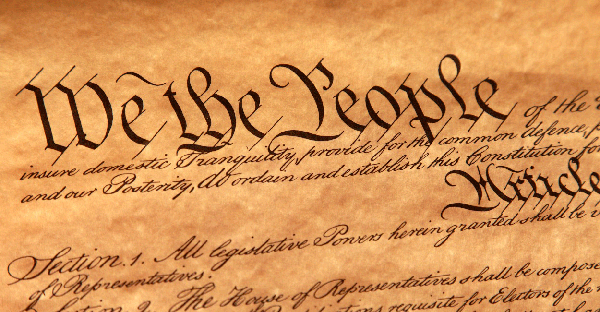
“The ‘common good’ quarrel on the Right hinges on a single question: does government exist chiefly to secure liberty, or to serve the common good? Put differently: are political communities meant to erect as few guardrails as possible so diverse peoples can actualize their choices? Or is the point of societies to embody a particular conception of the good life? And should, or how could, the government deploy its power to ensure those ends? Perhaps the ‘general Welfare,’ as the expressed purpose of government named in our Constitution, deserves more of our attention — even if we ask legitimate questions about the scope of its reach in achieving it.”
Yup, the very phrasing of the question is ripe with presumptions and intended to beg the question to leas to the preferred outcome. The first rule of such debates is to not concede the loaded question, and it’s as loaded as a fully chambered revolver used to play this little game of Russian Roulette.
Rather than play that game, let us posit a more honest question: Does government serve as a restrained and limited tool to maintain laws that rise above the rulers that are conducive towards both liberty and virtue; or is government simply the means by which some collective society with a collective will, as divined by an enlightened few, determine the “good life” that people have been ordered into living?
Indeed it is quintessentially American, and our long heritage before our founding tracing back to the tossing off of the “Norman Yoke” with the recognition of a separation of society and state, for our government to be limited in power and scope, tasked with maintaining the minimal amount of powers and laws that are conducive towards people ordering themselves via the blessing of liberty into what has become the greatest country on Earth. The question of the scope of that limited government, and the particulars thereof, is a very different thing from that scope being unlimited.
Societies are not constructed and morality can not be imposed, as the myriad socialist societies that have destroyed Europoe, and beyond, have aptly demonstrated. Nor is the “General Welfare” a grant beyond the Leftism even the Supreme Court foolishly allowed in South Dakota v. Dole (1987) and United States v. Butler (1936).
Continue reading →