From the journal of Steven H. Cullinane...
2007 October 16-31 Wednesday, October 31, 2007 8:28 PM
For All Hallows' Eve:
On Time
Anthony Hopkins on time:
"For me time is God, God is
time.... I'm fascinated by the fact that we can't grasp anything about
time. The magical, supernatural force that is with us every second is
time." --Cinema Blend
"For me time is God, God is time. It's an equation, like an
Einstein equation." --Washington Square News
A Marxist on time:
"God demands scrutiny beyond his menacingly comic aspects. Primarily,
the [Saramago] Gospel's God is time, and not truth, the other
attribute he asserts. Saramago, a Marxist (an eccentric one), and not a
Christian, subverts St. Augustine on the theodicy of time. If time is
God, then God can be forgiven nothing, and who would desire to forgive
him anyway?"
"At one point during 'Slipstream,' Hopkins's character stumbles upon a
Dolly Parton impersonator while Parton's wonderful song, 'Coat of Many
Colors,' plays on the soundtrack. I told Hopkins that I thought
he used the tune-- which is about a multi-hued coat that little Dolly's
grandmother made for her out of random pieces of cloth when the future
superstar's family was dirt poor-- as a sort of commentary on the
patchwork structure of 'Slipstream' itself. Hopkins smiled
broadly and his eyes lit up. Yes, he said, that's exactly what he
was doing. He said he even tried to get Parton to appear in the
movie, but she was booked and couldn't do it."
"Our existence is beyond understanding. Nobody has an
answer. I sense that life is such a mystery. To me, God is
time."
Related material:
"Have you ever worried about your memory, because it
doesn't seem to recall exactly the same past from one day to the next?
Have you ever thought that the whole universe might be a crazy,
mixed-up dream? If you have, then you've had hints of the Change War...
It's been going on for a billion years and it will last
another billion or so. Up and down the timeline, the two sides--
'Spiders' and 'Snakes'-- battle endlessly to change the future and the
past. Our lives, our memories, are their battleground. And in the midst
of the war is the Place, outside space and time, where Greta Forzane
and the other Entertainers provide solace and r-&-r for tired time
warriors."
-- Publisher's description of Fritz Leiber's Big Time.
This trinity of figures is taken from Descartes' Rule Twelve in Rules for the Direction of
the Mind. It seems to be meant to suggest an analogy between
superposition of colors and superposition of shapes.
Note that the first figure is made up of vertical lines, the second of
vertical and horizontal lines, and the third of vertical, horizontal,
and diagonal lines.
Leon R. Kass recently suggested that the Descartes
figures might be replaced by a more modern concept-- colors as
wavelengths. (Commentary, April 2007). This in turn suggests an analogy to
Fourier series decomposition of a waveform in harmonic analysis.
R. B. Kitaj was an American artist who became influential in Britain
with figurative and Pop Art paintings that ran against the grain of
1960s and '70s abstraction.
Ileana Sonnabend’s eye, shrewdness and lasting alliance with her first
husband, Leo Castelli, made her one of the most formidable contemporary
art dealers of her time.
We interpret what we see, select the most workable of
multiple choices. We live entirely, especially if we are writers, by
the imposition of a narrative line upon disparate images, by the
'ideas' with which we have learned to freeze the shifting
phantasmagoria which is our actual experience.
Or at least we do for a while. I am talking here about
a time when I began to doubt the premises of all the stories I had ever
told myself, a common condition but one I found troubling."
"He has come
to be fascinated... by the kabbalah, finding in it parallels to the
world of art and ideas. Every morning, after a long walk, he winds up
at a Westwood café surrounded by pretty UCLA students where he
studies the writings of Emmanuel Levinas,
before working for an hour on his memoirs."
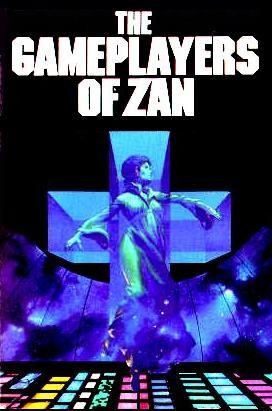
"The Game in the Ship cannot be approached as
a job, a vocation, a career, or a recreation. To the contrary, it is
Life and Death itself at work there. In the Inner Game, we call the
Game Dhum Welur, the Mind of God. And that Mind is a terrible
mind, that one may not face directly and remain whole. Some of the
forerunners guessed it long ago-- first the Hebrews far back in time,
others along the way, and they wisely left it alone, left the Arcana
alone."
Thursday, October 18, 2007 3:14 PM
For Deborah Kerr:
"During the war, she read children's stories on BBC radio. She made
movies, too, among them 'Penn of Pennsylvania'...."
Recent Log24 entries have parodied the use of the
phrase "deep beauty" as the title of the Oct.
3-4 physics symposium of that name, which was supported by a grant
from the John Templeton Foundation and sponsored by the Department of
Philosophy at Princeton University.
Such parody was in part suggested by the symposium's sources of
financial and academic support. This support had, in the view of some,
the effect of linking the symposium's topic, the mathematics of quantum
theory, with both religion (the Templeton Foundation) and philosophy (a field
sometimes associated in popular thought-- though not
at Princeton-- with quantum
mysticism.)
As a corrective to the previous parodies here, the following material
on the mathematician Harish-Chandra may help to establish that there
is, in fact, such a thing as "deep beauty"-- if not in physics,
religion, or philosophy, at least in pure mathematics.
"Almost immediately upon his arrival in Princeton he began working at a
ferocious pace, setting standards that the rest of us may emulate but
never achieve. For us there is a welter of semi-simple groups:
orthogonal groups, symplectic groups, unitary groups, exceptional
groups; and in our frailty we are often forced to treat them
separately. For him, or so it appeared because his methods were always
completely general, there was a single group. This was one of the
sources of beauty of the subject in his hands, and I once asked him how
he achieved it. He replied, honestly I believe, that he could think no
other way. It is certainly true that he was driven back upon the
simplifying properties of special examples only in desperate need and
always temporarily."
"It is difficult to communicate the grandeur of Harish-Chandra's
achievements and I have not tried to do so. The theory he created still
stands-- if I may be excused a clumsy simile-- like a Gothic cathedral,
heavily buttressed below but, in spite of its great weight, light and
soaring in its upper reaches, coming as close to heaven as mathematics
can. Harish, who was of a spiritual, even religious, cast and who liked
to express himself in metaphors, vivid and compelling, did see, I
believe, mathematics as mediating between man and what one can only
call God. Occasionally, on a stroll after a seminar, usually towards
evening, he would express his feelings, his fine hands slightly
upraised, his eyes intent on the distant sky; but he saw as his task
not to bring men closer to God but God closer to men. For those who can
understand his work and who accept that God has a mathematical side, he
accomplished it."
For deeper views of his work, see
Rebecca A. Herb, "Harish-Chandra and His Work" (pdf), Bulletin of
the American Mathematical Society, July 1991, and