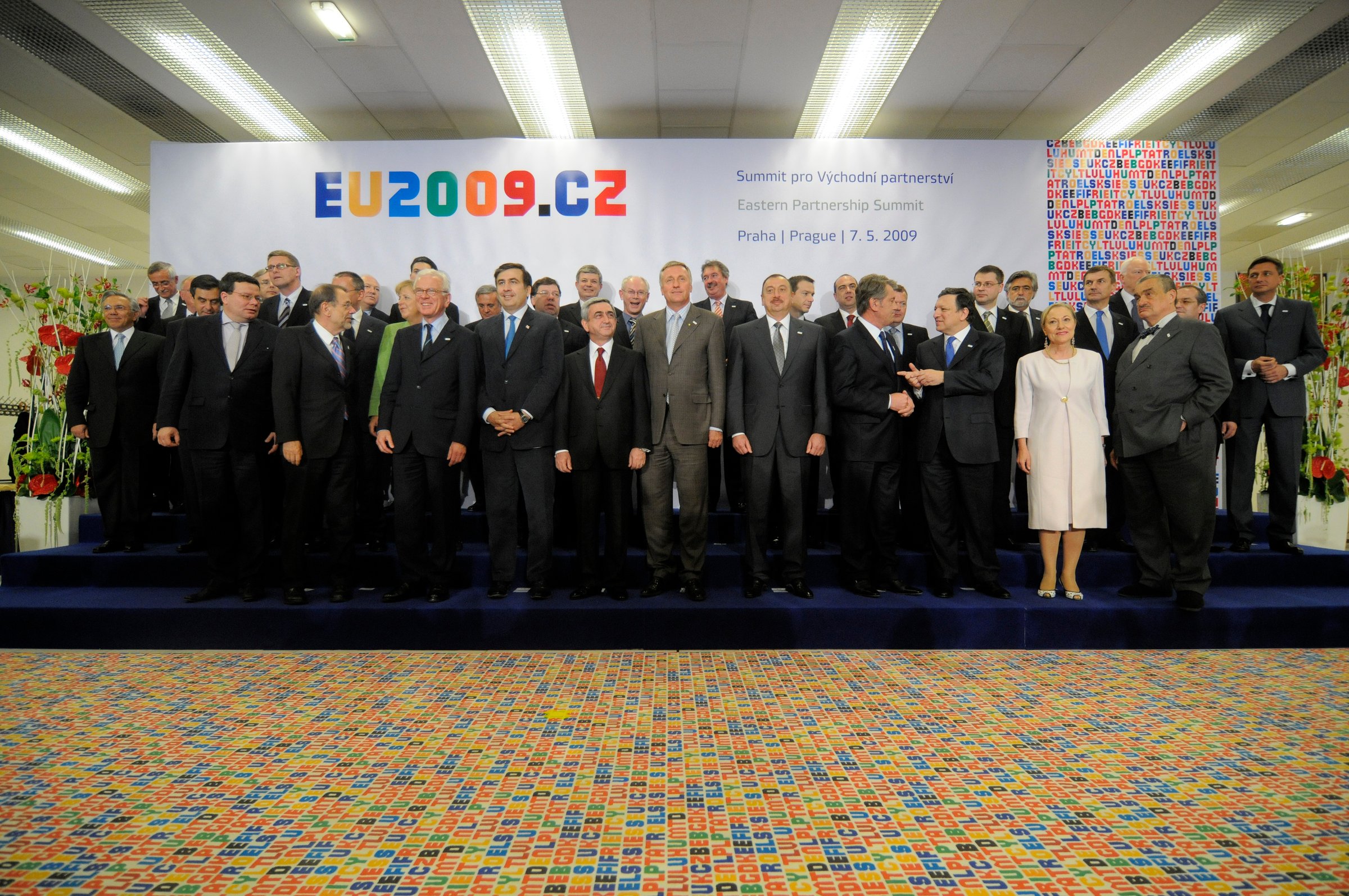
Poland and Sweden have in a joint strategy paper indicated the EU is unlikely to invite any of its post-Soviet neighbours to join the bloc in the next 10 years.
Polish foreign minister Radek Sikorski and Swedish foreign minister Carl Bildt set out their vision for the EU’s future relations with neighbouring countries in a letter on 6 October to EU foreign policy chief Catherine Ashton and neighbourhood commissioner Stefan Fuele.
The letter noted that Armenia, Azerbaijan, Belarus, Georgia, Moldova and Ukraine could one day become EU members, unlike countries in north Africa and the Middle East. “Some [countries bordering the EU] are European and thus enjoy special status in accordance with the treaties, others will remain neighbours of Europe,” it said.
But the four-page-letter nowhere said the EU should give the group ‘an enlargement perspective.’ It instead set out an everything-but-enlargement vision in which the six gradually adopt the EU rulebook, the acquis communautaire, move toward free trade and visa-free travel and take part in more EU projects, including police, military and migration-related schemes.
To this end, it called for a “well-prepared and substantial” summit between EU leaders and the six countries in Budapest on 26 May.
It also recommended that the EU split in two its European Neighbourhood and Partnership Instrument (ENPI), a €1.7 billion a year budget line, currently used to fund projects in all 16 of its neighbourhood policy countries.
Around €600 million a year would go to the eastern group, on top of a €90 million a year special allocation for the six under the EU’s Eastern Partnership policy.
 Andrew Rettman